Classics Challenge: May Prompt – Literary Movement

This month’s topic in the Classics Challenge is about literary movement and where the book you’re reading fits within the movement.
the end of the affair

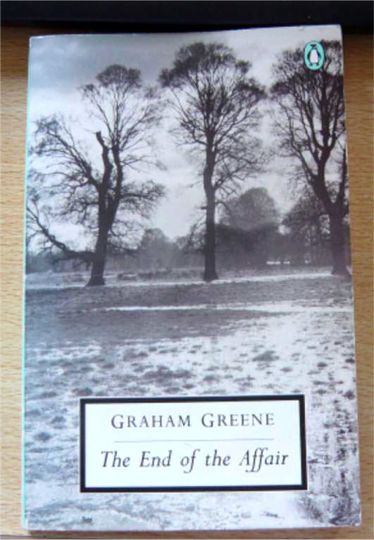
I’ve recently read Graham Greene’s The End of the Affair, published by Penguin as one of the Twentieth Century Classics. It was originally published in 1951.

It’s very difficult, or at least I think it is, to place this book within a ‘literary movement’. I’m not the only one because William Golding wrote:

Graham Greene was in a class by himself  – He will be read and remembered as the ultimate twentieth-century chronicler of consciousness and anxiety.’ 

So maybe he fits into the ‘stream of conciousness’ movement, because The End of the Affair is full of Maurice Bendrix’s thoughts and feelings, but I don’t think it’s quite that. It moves backwards in time recollecting past events, but it certainly reveals what is going on in Maurice’s mind.

Maurice’s love affair with his friend’s wife, Sarah, had begun in 1944 during the London Blitz. They had met at a party held by Sarah’s husband, Henry. The affair had ended suddenly after his house had been bombed by a V1 and Sarah had not explained why. Two years later Maurice, still obsessed by Sarah employed Parkis, a private detective to find out the truth. So it’s maybe a romantic novel, inspired by Greene’s affair with a married woman ‘C’ (Lady Catherine Walston), but then again, maybe not. The story is narrated by Maurice but includes his reading of Sarah’s diary, which reveals her increasing fascination with religion, specifically with Catholicism. Some describe The End of the Affair as the last of Greene’s Catholic Novels (the others being Brighton Rock, The Power and the Glory and The Heart of the Matter), but Greene didn’t like that label. Nevertheless, The End of the Affair is a study of love and hate, of desire, of jealousy, of pain, of faithfulness, and of the interaction between God and people.

At the beginning Maurice states that: ‘this is a record of hate, far more than of love’. He struggles to believe in God and is full of desperation and anger. He is tormented by his efforts to understand:

But I don’t want Your peace and I don’t want Your love. I wanted something very simple and very easy: I wanted Sarah for a lifetime and You took her away. With Your great schemes You ruin our happiness like a harvester ruins a mouse’s nest: I hate You, God, I hate You as though You existed. (page 191)

It’s a powerful novel that, for me, defies being categorised. Emotional, passionate and intense it’s a  dark and compelling book, with more emphasis on character than on plot. God, whether the characters believe in ‘him’ or not, has a major part. I knew before I read this book that Greene was a convert to Roman Catholicism, but the doubts about belief and the depth of criticism of Christianity both surprised and interested me, more than the question of the affair.

Here’s a selection of passages that I noted as I read:

  • Maurice is in Henry’s study, a room Maurice feels Henry never uses: ‘I doubted whether the set of Gibbon had once been opened, and the set of Scott was only there because it had – probably – belonged to his father, like the bronze copy of the Discus Thrower. And yet he was happier in his unused room simply because it was his: his possession. I thought with bitterness and envy: if one possesses a thing securely, one need never use it.’ (page 13) How true is that I wondered? – to me the unread books on my shelves are less my own than the read books.
  • Maurice is a novelist. Throughout the book he ponders on the nature of writing, characterisation and so on. In this passage he considers his habits of working and he effects outside events have on his ability to write, listing all the obstacles that had never affected him before, concluding that: So long as one is happy one can endure any discipline: it was unhappiness that broke down the habits of work.  (pages 34-5)
  • I wondered how much of this novel is autobiographical – not just the affair, but Maurice’s own character and beliefs seem to be based on Greene’s own life and personality. Maybe that’s an unfair assumption, but I do think it’s true for his passages on writing. Another passage reveals: ‘So much of a novelist’s writing, as I have said, takes place in the unconscious: in those depths the last word is written before the first word appears on paper. We remember the details of our story, we do not invent them.’ (page 35)
  • And on the existence of God/Devil: ‘I have never understood why people who can swallow the enormous improbability of a personal God boggle at a personal Devil. I have known so intimately the way that demon works in my imagination.’ (page 59)

I can’t say that I enjoyed this novel, but it is well written, full of ideas and questions packed within its pages – a tragedy about conflict and doubt.
Crime Fiction Alphabet 2012: Letter A

Kerrie’s Crime Fiction Alphabet begins this week with the letter A.Letter A

Here are the rules:

By Friday of each week participants try to write a blog post about crime fiction related to the letter of the week.

Your post MUST be related to either the first letter of a book’s title, the first letter of an author’s first name, or the first letter of the author’s surname, or even maybe a crime fiction “topic”. But above all, it has to be crime fiction.
So you see you have lots of choice.
You could write a review, or a bio of an author, so long as it fits the rules somehow.
(It is ok too to skip a week.)

My choice for the letter A is Arthur Conan Doyle and The Sign of Four, sometimes called The Sign of the Four. Set in 1888 this is the second Sherlock Holmes book written by Sir Arthur Conan Doyle, published in 1890.

Description from Goodreads:

Yellow fog is swirling through the streets of London, and Sherlock Holmes himself is sitting in a cocaine-induced haze until the arrival of a distressed and beautiful young lady forces the great detective into action. Each year following the strange disappearance of her father, Miss Morstan has received a present of a rare and lustrous pearl. Now, on the day she is summoned to meet her anonymous benefactor, she consults Holmes and Watson.

My thoughts:

Although I have a copy of this book on my Kindle, I listened to an audiobook of the novel, narrated by Derek Jacobi. Holmes is bored, hence the cocaine and Dr Watson is concerned about the effect on his health, although he hesitates to protest at his use of the drug because:

Again and again I had registered a vow that I should deliver my soul upon the subject, but there was that cool, nonchalant air of my companion which made him the last man with whom one could care to take anything approaching to a liberty. His great powers, his masterly manner, and the experience of his many extraordinary qualities, all made me diffident and backward in crossing him.

So they are both keen to investigate the mystery Mary Morstan presents to them. Holmes is intrigued by the mystery, involving the murder of Bartholomew Sholto, the Agra treasure stolen during the Indian Mutiny of 1857 and a secret pact between the four thieves – the ‘Four’ of the title, resulting in a chase down the River Thames in a super-fast steam launch.

It’s narrated by Dr Watson, who falls in love with Mary during the course of the investigation, but it is only at the end of the novel that he plucks up his courage to propose to her. Derek Jacobi does an admirable job, with easily distinguishable voices and reasonable versions of the women’s voices. The story is complex and fast-paced, with Holmes seemingly solving the mystery from clues which he then explains to Watson. But I thought the last chapter was too long, explaining Jonathan Small’s involvement in the theft of the treasure and his attempts to retrieve it, but as Dr Watson is the narrator and he didn’t know any of this I suppose it was the only way of including it.

There are a number of minor characters that stand out, even though they have minimal involvement and are only sketched in. I’m thinking of the Scotland Yard Inspector, Athelney Jones, who Holmes describes as ‘not a bad fellow’. He arrests the whole of Sholto’s household, even his brother. There is also Toby, the dog, described as an ‘ugly long haired, lop-eared creature, half spaniel and half lurcher, brown and white in colour, with a very clumsy waddling gait.’ Also notable are the Baker Street Irregulars, a gang of ‘dirty and little street-Arabs‘ Holmes employs to chase down the criminals. He pays them a shilling a day, with a guinea prize for the first boy to find the vital clue.

All in all, an enjoyable ‘read’ and as I was listening I could visualise the scenes. It begins and ends with Holmes reaching for his cocaine.

Saturday Snapshot

This scene has become very familiar to me over the last four weeks:

Edinburgh Cancer Centre view of Edinburgh skyline2

It’s the Edinburgh skyline I can see from the Edinburgh Western General Hospital. The tall spire towards the left of the photo is the Scott Monument in Princes Street Gardens. Moving to the right of that is the fortress that is Edinburgh Castle and below that the green dome is the copper-clad dome of West Register House, one of the buildings of the National Archive of Scotland, in Charlotte Square.

And this is why – it’s the view from the Edinburgh Cancer Centre, where I’ve been going for the last four weeks. (Last week I wrote about being diagnosed with a breast cancer – see this post.)

Edinburgh Cancer Centre entranceIt’s not as grim inside as it looks outside – it’s quite nice actually. I’ve got two more sessions of radiotherapy next week and then that is the end of my treatment, apart from follow-up appointments and a bone density scan. I’ll be glad to get back to ‘normal’. Maybe then I’ll get back to writing about books – I’ve got quite a pile lined up to review.
See more Saturday Snapshots on Alyce’s blog At Home With Books.

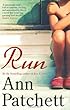
Book Beginnings: Run by Ann Patchett

Way back in 2008 I read The Magician’s Assistant by Ann Patchett and because I enjoyed it I wanted to read more of her books. The Magician’s Assistant is about families with strongly drawn characters and from the opening of Run it looks as though it too has family as its theme.

Bernadette had been dead two weeks when her sisters showed up in Doyle’s living room asking for the statue back. They had no legal claim to it, of course, she would never have thought of leaving it to them, but the statue had been in their family for four generations, passing down the maternal line from mother to daughter, and it was their intention to hold with tradition. Bernadette had no daughters.

Further down the opening page it seems that Bernadette had an uncanny resemblance to the statue, which looked like her, ‘as if she had modeled in a blue robe with a halo stuck to the back of her head.’ The opening leads me into the story, making me want to read on.

Ann Patchett’s latest novel State of Wonder is shortlisted for this year’s Orange Prize for Fiction – the winner will be announced on 30 May. Her novel Bel Canto was the 2002 Orange Prize winner.

For more Book Beginnings on Friday see Gilion’s blog Rose City Reader.


Sunday Selection

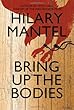
It’s not often that I buy a book and start reading it straight away, mainly because I’ll be already reading one or more and also because I have a huge stack of unread books. But Bring Up the Bodies arrived in the post at just the right time, as I’d just finished reading one book and was ready for the next.

Bring Up the Bodies by Hilary Mantel is the sequel to Wolf Hall, which I read and loved in 2010.  I’ve been looking forward to reading it ever since I finished reading Wolf Hall. So, even with a large backlog of books to be read, I just had to start Bring Up the Bodies straight away. It’s like catching up with friends you haven’t seen for a while – it begins in September 1535, just a few days after Wolf Hall finished. Thomas More was executed and now Henry VIII and his retinue are staying at Wolf Hall, the home of the Seymour family. And so, the story continues. This book covers the fall of Anne Boleyn, but like Wolf Hall, it’s about the career of Thomas Cromwell, Secretary to the king, Master of the Rolls, Chancellor of Cambridge University, and deputy to the king as head of the church in England.

I’m now on page 101, a quarter of the book read, and am trying to read it as slowly as possible, soaking up the atmosphere and Hilary Mantel’s richly descriptive words. Interestingly, I’ve noticed that every now and then, she qualifies who ‘he‘ is: ‘he, Cromwell‘, removing the ambiguity found in Wolf Hall. I hadn’t realised until I read the Author’s Note that this is not the end of Thomas Cromwell or the end of Hilary Mantel’s efforts to write about him:

This book is of course not about Anne Boleyn or about Henry VIII, but about the career of Thomas Cromwell, who is still in need of attention from biographers. Meanwhile, Mr Secretary remains sleek, plump and densely inaccessible, like a choice plum in a Christmas pie; but I hope to continue my efforts to dig him out. (page 410)

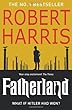
But I’ve also realised that I need to read Fatherland by Robert Harris, because this is the book we’ll be discussing at my face-to-face book group at the end of May and I hadn’t started it yet. So this morning I began to read it.

Whilst Bring Up the Bodies is most definitely historical fiction, Fatherland is more difficult to categorise. It’s set in Germany in 1964, but not the historical Germany of that date, because Hitler is approaching his 75th birthday, and Germany had won the Second World War – it’s historical fiction that never was – an alternative history. And yet many of the characters actually existed, their biographies are correct up to 1942 and Harris quotes from authentic documents in the book. The Berlin of the book is the Berlin that Albert Speer planned to build. What is definite is that this is a murder mystery, beginning with the discovery of the naked body of an old man, lying half in a lake on the outskirts of Berlin. The homicide investigator is Xavier March of the Kriminalpolizei and the victim is a member of the Nazi Party. It promises to be a thrilling page-turner.

I don’t think I’ll have any trouble reading the two books in tandem, as there’s no chance that I’ll mix up the characters or plots. :)

Saturday Snapshot

I couldn’t decide what to choose for today’s Saturday Snapshot, so I took pot luck and picked a photo at random from the loose photos waiting to be sorted.

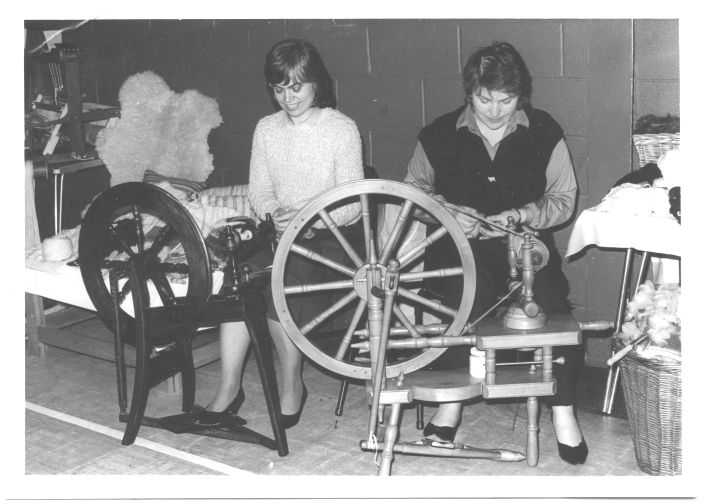
 This photo was taken years ago, when I used to belong to a spinning group.  We had an open spinning day, demonstrating how to spin. That’s me, on the left of the photo using the smaller, dark wood spinning wheel. You can tell how old this photo is because I’ve got dark hair and am not wearing glssses (I had contact lenses).

We spun the wool from fleeces, first of all carding the unwashed wool, thick with lanolin – very good for your hands! I knitted the finished wool, making mittens and a cardigan. But eventually I gave up spinning as really I preferred knitting and it’s hard to spin enough wool at  the right ply to make a garment successfully.

It’s good to have a record of a hobby from the past and I enjoyed remembering my spinning days! We also dyed the wool and made felt.

See more Saturday Snapshots at Alyce’s blog At Home With Books.