Saturday Snapshot: more cat pictures!

This time it’s the Cheshire Cat!

Last Sunday was my granddaughter’s birthday. Her party had an Alice in Wonderland theme and so instead of pin the tail on the donkey it was stick the smile on the Cheshire Cat.

I drew a cartoon version of the Cat and M and I painted it in pink and purple stripes:

here’s the Cheshire Cat minus its smile:

and here with smiles added by the children blindfolded:

For more Saturday Snapshots see Alyce’s blog At Home With Books.

Full Tilt by Dervla Murphy

Dervla Murphy was born in County Waterford, Ireland. In a Book Beginnings post I wrote about how when she was ten she decided she wanted to cycle to India. And that is what she did 21 years later.

Full Tilt: Dunkirk to Delhi on a Bicycle, first published in 1965  is an account of her journey in 1963, which took her through Europe, Persia (Iran), Afghanistan, over the Himalayas to Pakistan and into India. She travelled on her own, with a revolver in her saddle bag. I’m full of admiration for her courage and determination.

Reading this book made me wonder about the countries she cycled through and how they’ve changed since the early 1960s. It would certainly be a different experience if anyone tried to do the same these days! T

Here are a few quotes to give a taste of the book:

The border between Persia and Afghanistan

The only indication of the Persian-Afghan frontier is a seven-foot stone pillar, conspicuous from far across the desert, which lucidly announces ‘Afghanistan’.  Here I stopped to photograph Roz [her bicycle]. Three miles further on a long branch served as Customs barrier and beside it lay a very young soldier in a very ragged uniform, sound asleep with one hand on his rifle. I quietly raised the barrier for myself and continued towards the Customs and Passport Office two hundred yards ahead.

There, no one took the slightest notice of either my kit or my passport, no uniformed officials appeared and no series of dingy, uncomfortable offices had to be visited. (page 47)

The concept of time:

… people here have no concept of time as we understand it. The majority wear watches as ornaments and I was diverted to discover that they can’t read the time and don’t see why they should learn! Yesterday is over, today is something to be enjoyed without fuss, and tomorrow – well, it’s sinful to plan anything for the future because that’s Allah’s department and humans have no business to meddle with it. (page 58)

Dervla Murphy loved the Afghan way of life and deplored the modernisation of countries:

The more I see of life in these ‘undeveloped countries’ and of the methods adopted to ‘improve’ them, the more depressed I become. It seems criminal that the backwardness of a country like Afghanistan should be used as an excuse for America and Russia to have a tug-of-war for possession. (page 69)

Her thoughts on the attitude of Westerners:

… what an artificial life is led by the foreign colonies in these Asian cities! The sense of their isolation from the world around them is quite stifling. At a dinner party tonight I met a European couple who have been in Kabul for eighteen months without once entering the home of an ordinary Afghan – and they are not exceptions. The attitude is that the ‘natives’ are people to be observed from  a discreet distance and photographed as often as possible, but not lived among. The result is boredom and an obsessional longing for home leave, (page 101)

This was not her attitude as she stayed with local people wherever she could, accepting their food and lodgings which was given freely – they would not let her pay for anything and would have been offended if she had insisted.

Her essentials for a five-month trip – she needed less than I would want!

… the further you travel the less you find you need and I see no sense in frolicking around the Himalayas with a load of inessentials. So, I’m down to two pens, writing paper, Blake’s poems, map, passport, compass, comb, toothbrush, one spare pare of nylon pants and nylon shirt – and there’s plenty of room left over for food as required from day to day. It’s a good life that teaches you how little you need to be healthy and happy, if not particularly clean! (page 105)

Her views on ‘Progress’:

The more I see of unmechanized places and people the more convinced  I become that machines have done incalculable damage by unbalancing the relationship between Man and Nature.

people now use less than half their potential forces because ‘Progress’ has deprived them of the incentive to live fully. (page 149)

… I don’t know what the end result of all this ‘progress’ will be – something pretty dire, I should think. We remain part of Nature, however startling our scientific advances, and the more successfully we forget or ignore this fact, the less we can be proud of being men. (pages 149 – 150)

I enjoyed Full Tilt, as much for her descriptions of the places she visited as for her thoughts along the way. I’m not sure that I would find her easy company though!

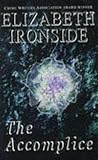
The Accomplice by Elizabeth Ironside: Book Notes

I first came across Elizabeth Ironside on Bev’s blog My Reader’s Block during the Crime Fiction Alphabet meme. I liked the sound of her books, so when I saw The Accomplice in my local library I immediately borrowed it.

Elizabeth Ironside is the pseudonym of Lady Catherine Manning, wife of Sir David Manning the former British Ambassador to the United States (from 2003-2007). Her first novel A Very Private Enterprise won the Crime Writers’ Association (CWA) John Creasey Award for Best First Mystery of 1985, and Death in the Garden was shortlisted for the CWA Gold Dagger for Best Mystery of 1995. The Accomplice is her third novel, published in 1996.

This is one of the most fascinating mysteries I’ve read for a while. It’s historical crime fiction, moving back in time to Latvia before and during the Second World War and present day Russia and Britain.

Summary (from the back cover):

‘Zita Dauncey’s tragic past and difficult present seem firmly under control. Until a child’s skeleton is dug up in her friend Jean’s rose bed, and (Xenia) a mysterious young woman arrives from Russia.

Jean’s English ordinariness hides her original identity as Yevgenia Chornoroukya: a woman whose history includes two lovers, two exiles and all the desperate compromises she makes to escape the horrors of eastern Europe in 1945. And quite possibly, the murder of a child.’

My view:

I liked the way Ironside wove together the past and the present, although at first I thought there was too much about Jean’s background, but it grew on me as I became fascinated with her history and life in Russia during the war years.

This is a complex book, with plenty of interesting characters, all of whom are well-rounded characters who came to life as I read, some with their annoying ways, like Xenia and others, like Zita, who I came to like a lot – for example, Zita’s son, Tom has cerebral palsy and Xenia’s view is that “physical disability shows moral distortion“, quoting Stalin’s withered arm, Richard III, Attila the Hun (club foot) “And Hitler, you only have to look at him to see he was unsafe and insane.“(pages 99 – 100)

Xenia is a scheming, manipulative character. She claimed to be related to Jean but actually she had no idea whether they were or not.  Jean’s reaction to her seemed to indicate she had something to hide or fear – and just what that was gradually surfaces.

Along with that strand of the book there are the questions about the identity of the child’s skeleton found buried in the rose garden, how long ago it was buried and the implications for Jean who claimed to know nothing about it.

This is a well paced book building gradually to a climax, a book that I wanted to finish but was sad when it came to the end, leaving me with some questions still unanswered. I enjoyed it very much and I hope to read more of Elizabeth Ironside’s books.

A Very Private EnterpriseDeath in the GardenThe AccompliceThe Art of Deception
A Good Death
 List and images from Fantastic Fiction.

December Prompt – Wrap Up, A Classics Challenge 2012

I’ve completed A Classics Challenge 2012, hosted by Katherine Cox at November’s Autumn. The aim was to read seven works of Classic Literature in 2012, but only three of the seven could be re-reads. I’ve really enjoyed taking part in this because it’s more than just read a book. Katherine’s monthly prompts provided a new way of thinking about the books and the authors. I’ve also enjoyed reading the views of the other participants.

Each month Katherine posted a prompt, which was general enough that no matter which Classic you were reading or how far into it you were, you would be able to answer it.

This is the final Prompt:

Link to your favorite Classic Literature post you’ve written this year, it doesn’t have to be related to this challenge. Just something you’d enjoy sharing.

Make a list of what you read for the challenge, you could compare it to your original list drawn up late 2011 when you were planning what to read, link to the posts you’ve written for the challenge, how many authors you’ve read or any little stat or detail you’d like to share.

My original list:

  • Emma by Jane Austen
  • The Woman in White by Wilkie Collins.
  • Three Men in a Boat by Jerome K Jerome
  • Wives and Daughters by Elizabeth Gaskell.
  • Kidnapped by Robert Louis Stevenson.
  • Our Mutual Friend by Charles Dickens.
  • The Voyage Out by Virginia Woolf.

What I actually read:

I think my favourite prompt was June’s prompt, which was to create a visual tour using quotes from the book you are reading; a series of images that closely represents how you see the scene or description. It doesn’t have to absolutely follow the text but it must reflect the mood. For this I used A Tale of Two Cities, in which I concentrated on London scenes – where Doctor Manette lived in Soho.

Now I look forward to next year and taking part in Katherine’s Turn of the Century Literary Salon.

November’s Crime Fiction Pick of the Month

I read seven books in November. Six were fiction, five of those being crime fiction and two were non-fiction* – two memoirs. I read two of the books on my new Kindle Fire.

  1. Murder by Yew by Suzanne Young (Kindle)
  2. The Whispers of Nemesis by Anne Zouroudi (from TBR books) (Kindle)
  3. The Warden by Anthony Trollope
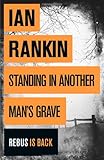
  4. Standing in Another Man’s Grave by Ian Rankin
  5. Adventures of a One-Breasted Woman* by Susan Cummings (review copy)
  6. At Bertram’s Hotel by Agatha Christie
  7. Full Tilt: Dunkirk to Delhi by Bicycle* by Dervla Murphy

My Crime Fiction Pick of the Month is Standing in Another Man’s Grave by Ian Rankin. I wrote about the opening of the book in this post.

Summary from Amazon:

It’s twenty-five years since John Rebus appeared on the scene, and five years since he retired. But 2012 sees his return in STANDING IN ANOTHER MAN’S GRAVE. Not only is Rebus as stubborn and anarchic as ever, but he finds himself in trouble with Rankin’s latest creation, Malcolm Fox of Edinburgh’s internal affairs unit. Added to which, Rebus may be about to derail the career of his ex-colleague Siobhan Clarke, while himself being permanently derailed by mob boss and old adversary Big Ger Cafferty. But all Rebus wants to do is discover the truth about a series of seemingly unconnected disappearances stretching back to the millennium. The problem being, no one else wants to go there – and that includes Rebus’s fellow officers. Not that any of that is going to stop Rebus. Not even when his own life and the careers of those around him are on the line.

My view:

I’ve read all of the other Rebus books and the Fox books and so was very keen to read this latest book from Ian Rankin. I liked it – I liked it a lot. It was like meeting up again with an old acquaintance. Rebus is older and fatter but he hasn’t really changed. He still likes working best on his own, taking risks, and having a few too many drinks and a smoke. He can’t keep away from police work and is currently working for SCRU – the Serious Crime Review Unit, a Cold Case unit of retired police officers (like the TV series New Tricks).  Nina Hazlitt contacts SCRU (I like the acronym) about her daughter Sally who has been missing since 1999, convinced that it linked up with the disappearance of other young women, all in the vicinity of the A9. Rebus then links it with the current case of Annette McKie, aged 15, who has recently gone missing after getting off a bus at a petrol station in Pitlochry, also on the A9.

Rebus manages to assist in the current investigations, thanks to Siobhan Clark, who is now a Detective Inspector, although he is not a serving policeman. This involves him in travelling up and down the A9 and surrounding areas. The hardback copy of the book has coloured endpapers illustrating OS maps of the area, although if you want to follow the routes closely  it’s best to use another map as well:

I  was engrossed in the book and liked the way Rankin included characters from earlier books, such as Big Ger Caffety and in particular Malcolm Fox. Rebus does not like Fox, describing seeing him, ‘sliming his way around HQ‘ and he tells Siobhan not ‘to hang sound those scumbags.’ Fox, meanwhile, has got his eye on Rebus and the dislike is mutual, as he tells Siobhan:

John Rebus should be extinct, Clarke. Somehow the Ice Age came and went and left him still swimming while the rest of us evolved. (page 85)

I liked Fox in The Complaints and The Impossible Dead, but in this book he comes over as a changed character, vindictive and out to get Rebus. The contrast between the two characters is strong, with Fox twenty years younger, a stone and a half lighter, with a smarter appearance, looking as though he ‘could have been middle management in a plastic company of Inland Revenue.’ They meet in the police cafeteria where Fox has a banana and a glass of water, whereas Rebus has a bottle of Irn Bru and a caramel wafer, belching as he drinks, and looking a good deal scruffier. (page 73)

I don’t want to give away the plot, and will just say that I think the ending lets the rest of the book down. The identity of the killer came as a surprise to me and I thought that Rebus had maybe gone too far in acting on his own initiative, so risky! I had to re-read the book just to make sure I hadn’t missed something. Having said that, I was delighted with Standing in another Man’s Grave. I wondered, along with Rebus himself, how he would fit in with the changes:

‘The job’s changed, Siobhan.  Everything’s … ‘ He struggled to find the words. ‘It’s like with Christine Esson. Ninety percent of what she does is beyond me. The way she thinks is beyond me. (page 188)

At the beginning of the book, Rebus is considering applying  to rejoin the police force, as the retirement had recently been changed, so that those of his vintage are eligible. Whether he does, or not, is left open at the end. But I suspect that he will and that he and Fox will finally cross swords. I hope the next book will not be too long in coming.

See what others have chosen as the Pick of the Month for November.