Another jigsaw makes Heidi yawn:
 It’s so boring – nothing to chase, so she’s off:
 For more Saturday Snapshots see Alyce’s blog At Home With Books.
Another jigsaw makes Heidi yawn:
It’s so boring – nothing to chase, so she’s off:
For more Saturday Snapshots see Alyce’s blog At Home With Books.
I’ve read about half of Agatha Christie’s books ranging from her first books in the 1920s to the later ones in the 1970s and the quality of her writing does change, with some of the later books being rather loosely plotted and meandering. Cat Among the Pigeons is one of her later books, first published in 1959 and it’s one of the best of these later novels.
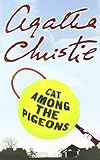
It’s set mainly in an exclusive and expensive girls’ school, Meadowbank, in England, said to be based on her daughter Rosalind’s school. The summer term has just started and there are some new members of staff as well as some new pupils, including Princess Shaista from Ramat, a small and rich Arab state in the Middle East, which has just suffered a revolution. Her fiancé Prince Ali Yusuf the Hereditary Sheik, has been murdered and his family jewels have disappeared.
The success of the school is down to Miss Bulstrode, the headmistress and founder of Meadowbank, but she is thinking of retiring. Miss Chadwick, who had helped Miss Bulstrode to found Meadowbank would like to be her successor, but Miss Bulstrode has other ideas. Will it be Miss Vansittart, who is her second in command, or one of the other teachers who would be able to develop the school in line with modern educational thinking? Miss Bulstrode is not sure. She is busy greeting one of the parents when her attention is distracted by one of the mothers approaching clearly in a state of advanced intoxication, so she misses something else that could very well be important. And although she feels uneasy:
There was nothing to tell her that within a few weeks Meadowbank would be plunged into a sea of trouble; that disorder, confusion and murder would reign there, that already certain events had been set in motion … (page 27)
The new staff members are not all fitting in very well. There is Miss Springer, the new Games Mistress, who is not popular with the girls and asks too many personal questions, Mlle Angele Blanche, the new French teacher, whose teaching leaves much to be desired, Ann Shapland, Miss Bulstrode’s new and efficient secretary, and last but not least Adam Goodman, the handsome young new gardener, who is good at his job and has other talents too.
As well as Princess Shaista, Jennifer Sutcliffe is new to the school this term. She’s an uncomplicated character who lives mainly for tennis. She makes friends with Julia Upjohn, who is a much more thoughtful, observant character. So when Miss Springer is found shot dead in the new Sports Pavilion, followed not long after by the murder of Miss Vansittart, it’s Julia who decides to contact Hercules Poirot.
There are several possible motives and suspects and Agatha Christie combines the murder stories with a thriller element by introducing Colonel Pikeaway, who it is hinted is in charge of British Intelligence – ‘We know all about things here. That’s what we’re for.‘ (page 46) and the mysterious Mr Robinson, who is most decidedly not an Englishman although his voice was English with no trace of an accent.
Poirot, of course, although arriving very late in the investigations, works it all out and explains what had happened. But Julia also has worked it out and without giving too much away I’m quoting this passage where she is writing an essay on the contrasting attitudes of Macbeth and Lady Macbeth to murder:
Macbeth, Julia had written, liked the idea of murder and had been thinking of it a lot, but he needed a push to get him started. Once he got started he enjoyed murdering people and had no more qualms or fears. Lady Macbeth was just greedy and ambitious. She thought she didn’t mind what she did to get what she wanted. But once she’d done it, she found she didn’t like it after all. (page 239)
There in a nutshell are the motives for the murder – a ruthless disregard of the value of life and greed and ambition.
It’s a dull, grey day here today and snow is forecast for later on:
 High up in a tree, a birds’s nest left from last year:

It’s a day to sit, curled up with a book in front of the fire:

For more Saturday Snapshots see Alyce’s blog At Home With Books.
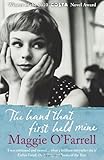 I’ve just finished reading Maggie O’Farrell’s book, The Hand That First Held Mine, which won the 2010 Costa Novel Award. I loved it, but it’s such a sad story. It’s beautifully written, so much so that it took me a while to realise that for the most part it’s written in the present tense.
This is a book set in two time periods about two families and immediately I wondered what the link could be. There’s Lexie Sinclair who we meet at the end of the 1950s and Elina and her boyfriend Ted in the present day. Lexie is young and in love with journalist Innes Kent. Elina is struggling after the traumatic birth of her baby and Ted is worried about her. Then strange things happen to Ted as forgotten memories of his childhood rise to the surface of his mind.
It wasn’t too hard to work out the link, but that doesn’t detract from the story – it just makes it all the more poignant. I wrote about the opening of the book in a Book Beginnings post, but I think it’s worth repeating here:
Listen. The trees in this story are stirring, trembling, readjusting themselves. A breeze is coming in gusts off the sea, and it is almost as if the trees know, in their restlessness, in their head-tossing impatience, that something is about to happen.
The garden is empty, the patio deserted, save for some pots with geraniums and delphiniums shuddering in the wind. A bench stands on the lawn, two chairs facing politely away from it. A bicycle is propped against the house but its pedals are stationary, the oiled chain motionless. A baby has been put out to sleep in a pram and it lies inside its stiff cocoon of blankets, eyes obligingly shut tight. A seagull hangs suspended in the sky above and even that is silent, beak closed, wings outstretched to catch the high thermal draughts.
When I first read those words I could visualise the scene, feel the breeze and found myself holding my breath, waiting with bated breath to find out what was going to happen. What happened was a wonderful and moving story that kept me captivated to the end as Ted gradually realises the truth. As the epigraph from Matthew Arnold says:
And we forget because we must.
Maggie O’Farrell has a new book out Instructions for a Heatwave, and four earlier books. The full list is (via Fantastic Fiction):
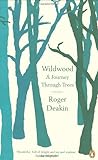
Roger Deakin was a writer, broadcaster and film-maker with a particular interest in nature and the environment. He completed the manuscript for Wildwood, his second book, just before he died in 2006. As the sub-title explains it’s about Deakin’s journeys through a wide variety of trees and woods in various parts of the world. It’s a memoir, a travelogue and also it’s about the interdependence of human beings and trees, or in his own words:
Wildwood is about the element of wood, as it exists in nature, in our souls and in our lives. (page x)
I think parts of this book are brilliant and fascinating, but my eyes glazed over in other parts as I got lost in all the facts and details that he recounts, which were just too much at times for me. But sometimes his writing is poetical, full of imagery. For example in writing about pencils he concludes:
The fine-grained, slow grown mother of all pencils is incense cedar from the forests of Oregon, where a single tree may grow 140 feet high, with a trunk five feet across, enough cedar wood to make 150,000 pencils. It is the incense cedar that infuses pencils with the nutty aroma I remember as I open my pencil-box. In a scooped out hollow in my Oregon pine work table in front of me lies a smooth, round pebble from the Hebrides. It sits snugly in the wood, like the pencil between finger and thumb, and like the hidden vein of graphite, poised inside the cedar to spin itself into words like gossamer from the spider. (page 30)
I love the image that last simile brings to my mind. I also marked these passages: ‘The pencil whispers across the page and is never dogmatic.‘ And this, ‘Rub your finger long enough on a soft-pencilled phrase and it will evaporate into a pale-grey cloud. In this way, pencil is close to watercolour painting.’ (both from page 29)
He wrote about Walnut Tree Farm, his house in Suffolk. It was a ruin when he bought it and he took enormous delight in renovating and restoring it, including personally shaping and repairing every single timber beam – all 323 of them. His love of trees stemmed from his early years and his school days when in the sixth form he and his school friends camped in the New Forest where their Biology teacher filled them with enthusiasm, setting them to studying and mapping the natural history of a stretch of the woodland, bog and heathland.
He covers a huge area of natural history, not just trees, but also plants, birds, moths, hedges, as well as the uses of wood for living, working and pleasure. He also describes his journeys to numerous places – not just in Britain, but also to the Pyrenees, Bieszczady, Australia, east to Kazakhstan, China, and the walnut forests of Kyrgyzstan. There is so much to take in – I really think this book deserves an index!
I liked the southern English chapters best, as the further afield he went it seemed more of a travel book. It’s a book of several parts and maybe it would have been more of a whole if Deakin had lived to see it through to publication. I think it’s a bit fragmented.
My favourite chapters cover the work of David Nash, a sculptor in wood and the paintings by Mary Newcomb. Deakin visited David Nash’s studio at Blaenau Ffestiniog, where he was particularly drawn to the Cracking Box made of oak:
As if entering the wild life of the wood, or at least taking its side, Nash has put as many difficulties in his way in the making of the box as he can. … The anarchic work thumbs its nose at the basic rules of woodwork, triumphantly so, because it holds together in spite of the wriggling of the wood as it warps and cracks. The more the wood struggles , the tighter the grips of the oak pegs in their augured sockets. (pages 154 -5)
Mary Newcomb was a Suffolk painter, who Deakin described as belonging ‘in the greenwood tradition, peering unnoticed from behind leaves like the Green Man’.. (page 179) (There is also has a chapter on the Green Man.) I hadn’t heard of Mary Newcomb and was intrigued by Deakin’s description of her work in which people seem to be part of the landscape, where proportion is very often skewed as in children’s art or ‘naive’ painting.
I also liked the chapter on walnuts, entitled Among Jaguars, describing how shapes of delicate walnut veneer are cut for the dashboards and door panels of Jaguar cars, and how the rare walnut burr veneer is produced. Walnuts figure quite prominently in Wildwood, with chapters on the walnut forests of Ferghana Valley in Kyrgyzstan.
Throughout the book Deakin referred to other books – one that stands out for me is Thomas Hardy’s The Woodlanders, one of my favourites of Hardy’s books, full of beautiful descriptions of the landscape and woods.
Overall, then I found this an interesting book, with some outstanding chapters. It’s not a book to read quickly and some parts are written much more fluently than others, but it’s full of fascinating information and meditations on the natural world. One final quotation:
To enter a wood is to pass into a different world in which we ourselves are transformed. It is no accident that in the comedies of Shakespeare, people go into the greenwood to grow, learn and change. It is where you travel to find yourself, often, paradoxically , by getting lost. Merlin sends the future King Arthur as a boy into the greenwood to fend for himself in The Sword in the Stone. There, he falls asleep and dreams himself, like a chameleon, into the lives of the animals and the trees. In As You Like It, the banished Duke Senior goes to live in the Forest of Arden like Robin Hood, and in Midsummer Night’s Dream the magical metamorphosis of the lovers takes place in a wood ‘outside Athens’ that is obviously an English wood, full of the faeries and Robin Goodfellows of our folklore. (page x)
I enjoyed all the books I finished reading in February and my Pick of the Month goes to two excellent books – Dead Water (Shetland series 5) by Ann Cleeves and The Redemption of Alexander Seaton by Shona MacLean, both books being crime fiction.

The other books I read are also fiction, although Memoirs of a Fox-Hunting Man by Siegfried Sassoon is fictionalised autobiography. Two of the books are from my stock of unread books bought before January 2013, two are books from my local library and one is an e-book borrowed from the Kindle Owners’ Lending Library.
The links are to my posts on the books – I have yet to write my thoughts about Agatha Christie’s Cat Among the Pigeons.
I’ve also been reading two non-fiction books in February and am still reading them – Quiet: the power of introverts in a world that can’t stop talking by Susan Cain and Wildwood: a Journey Through Trees by Roger Deakin. It takes me longer to read non-fiction than fiction as I read it more slowly, especially these two books that are packed with facts and ideas. But I’m nearing the end of both of them.
After that I’m planning to finish reading The Hand That First Held Mine by Maggie O’Farrell, which I first started reading last year and put to one side. I’ve had to start reading it again!
Other books waiting to be read, if not in March then later in the year are Memoirs of an Infantry Officer by Siegfried Sassoon, which I’ve borrowed from my local library. This is the next book in his fictionalised autobiography I’ll also be reading (because it’s my book group choice for March) The Kashmir Shawl by Rosie Thomas, a story of wartime, family secrets and forbidden love, set against in the 1940s in Kashmir.
I’ve got a pile of other books from the library which I’m itching to read soon – I think I’ll do a separate post on these books. I’m always tempted to borrow more books than I can possible read in the loan period, but that’s me! As if I don’t have enough of my own unread books to keep me going all year and beyond.
 BooksPlease