Saturday Snapshot: Spring Flowers

DaffodilsIt’s spring at last!

Yesterday was beautiful – sunny, with blue skies – but still quite cold and breezy. Today promises to be the same. The daffodils are out (actually they have been for a few days now). I like to see them growing but it’s been so windy recently that I rescued these and brought them inside.

See more Saturday Snapshots on Alyce’s blog At Home With Books.

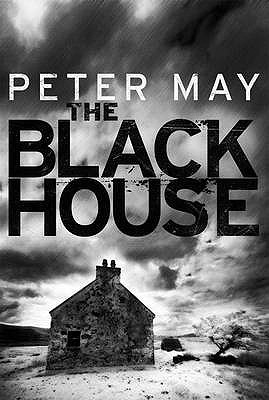
The Blackhouse by Peter May

I’ve had The Lewis Man, Peter May’s second book in his Lewis Trilogy since last year, but I haven’t read it yet as I’ve been meaning to read the trilogy in order. I’ve borrowed the first book, The Blackhouse, from the library and as I’ve just realised that it is due back next week – I thought I’d better start it.


It begins:

Prologue

They are just kids. Sixteen years old. Emboldened by alcohol, and hastened by the approaching Sabbath, they embrace the dark in search of love, and find only death.

A chilling beginning!

There is a murder, on the beautiful and desolate Isle of Lewis. Detective Inspector Fin MacLeod is sent to investigate. And there is a secret, something sinister lurking in the close-knit community. This is a mystery set in a place where ‘the past is ever near the surface, and life blurs into myth and history.’

It all looks very promising I think.

Book Beginnings ButtonBook Beginnings on Friday is hosted by  Gilion @ Rose City Reader.

W…W…W… Wednesdays

Image for weekly meme W... W... W...This is a weekly meme, hosted by MizB, over at €˜Should Be Reading’. I’ve been reading it for a while and have not contributed before. It is quite simply to answer the following three questions€¦

€¢ What are you currently reading?
€¢ What did you recently finish reading?
€¢ What do you think you’ll read next?

I’m currently reading two books:

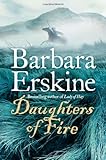
Daughters of Fire by Barbara Erskine. This is a long book, taking me longer to read than I like. I’ve read 66% (statistic from Goodreads). I am enjoying it, although wishing the pace would pick up. Maybe it will from now on.

Two thousand years ago, as the Romans invade Britannia, the princess who will become the powerful queen of the great tribe of the Brigantes, watches the enemies of her people come ever closer. Cartimandua’s world is, from the start, a maelstrom of love and conflict; revenge and retribution.

In the present day, Edinburgh-based historian, Viv Lloyd Rees, has immersed herself in the legends surrounding the Celtic queen. She has written a book and is working on a dramatisation of the young queen’s life with the help of actress, Pat Hebden.

Cartimandua’s life takes one unexpected turn after another as tragedy changes the course of her future. But the young queen has formidable enemies €“ among them Venutios, her childhood sparring partner, and Medb, a woman whose jealousy threatens not only her happiness but her life.

Viv’s Head of Department, Hugh Graham, hounds her as she struggles to hide her visions of Cartimandua and her conviction that they are real. Her obsession grows ever more persistent and threatening as she takes possession of an ancient brooch that carries a curse. Both Pat and Hugh are drawn into this dual existence of bitter rivalry and overwhelming love as past envelopes present and the trio find themselves facing the greatest danger of their lives.

The other book I’m reading is Balthazar Jones and the Tower of London Zoo by Julia Stuart. This is very different from Daughters of Fire and I like the contrast of this quirky book. I’ve only read 29%, so I’ve yet to decide whether I really like it.

Meet Balthazar Jones, Beefeater at the Tower of London. Married to Hebe, he lives and works in the Tower, as he struggles to cope with the tragic death of his son Milo, three years ago.

The Tower of London is its own magical world; a maze of ancient buildings, it is home to a weird and wonderful cast of characters – the Jones’s of course, as well as Reverend Septimus Drew, the Ravenmaster, and Ruby Dore, landlady of the Tower’s very own tavern, the Rack & Ruin. And, after an announcement from Buckingham Palace that the Queen’s exotic animals are to be moved from London Zoo to the Tower’s grounds, things are about to become a whole lot more interesting€¦

Komodo dragons, marmosets, and even zorillas (‘a highly revered yet uniquely odorous skunk-like animal from Africa’) fill the Tower’s menagerie €“ and it is Balthazar Jones’s job to take care of them. Things run far from smoothly, though €“ missing penguins and stolen giraffes are just two of his worries!

I’ve recently finished reading:

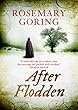
After Flodden by Rosemary Goring, historical fiction due out in June. I loved it.

This is a fantastic book and I’ll be writing more about it, but for now I’ll say that it’s a dramatic story of what happened to several of the characters involved in the Battle of Flodden that had taken place on 9 September 1513 between the forces of James IV of Scotland and Henry VIII of England. Well written, well researched this is a compelling and powerful book, bringing the characters and the Edinburgh and Borders of 1513 vividly to life.

What am I going to read next?

I’m not sure, as I have several new books crying out to be read as well as books that have been sitting unread on my bookshelves. It could very well be The Frozen Shroud, Martin Edward’s new Lake District mystery, but then again it could be something else.


New Rebus book out in November

Ian Rankin has announced the title of his new Rebus novel – Saints of the Shadow Bible, with Rebus back on the force.

It had to happen …

Malcolm Fox is investigating an old case from 30 years ago – one that Rebus worked on in a team that called itself ‘The Saints’ and swore a bond on something called a ‘Shadow Bible’.

We’ll have to wait until 7 November to find out if Rebus was a ‘Saint or a Sinner’.

BooksPlease is 6: A Celebration of Books

Today my blog is six years old. Reading has always been a great pleasure and I began my blog to try and capture some of that pleasure. So, I thought that for today’s anniversary post I’d look back at some of the books I’ve read over the last six years that stand out in my mind as being most enjoyable.

It’s difficult with so many books to choose from and there are plenty more I could highlight, but here are six of the best fiction books and six of the best non fiction. I think the books I’ve chosen show the range of books that I enjoy – historical fiction, crime fiction, contemporary fiction, autobiography, history, poetry (just a few poets) and philosophy/psychology.

Over these last six years I’ve seen blogs come and go and there have been times when I’ve considered giving up blogging, but somehow I’ve hung on and looking back over my blog to do this post has proved to me the value of keeping it – it’s not just a record of what I’ve read but also a reminder of what I thought of the books too. And I hope my posts do convey the pleasure reading gives me.

Fiction (one from each year)

2007 – 

Mistress of the Art of Death by Ariana Franklin. This is historical crime fiction set  in Cambridge in 1170 during the reign of Henry II. A child has been murdered and others have disappeared.The Jews are suspected and Henry is keen to find the culprit as the Jewish community in Cambridge are major contributors to his Exchequer. He enlists the help of Simon of Naples, who is accompanied by Adelia, a female doctor who specialises in studying corpses. I loved this book, reminiscent of The Canterbury Tales. The medieval world is vividly brought to life and it’s a fascinating murder mystery.

2008 – 

Atonement by Ian McEwan – a book that moved me to tears. It begins on a hot day in the summer of 1935 when Briony, then aged thirteen witnesses an event between her older sister Cecelia and her childhood friend Robbie that changed all three of their lives. It’s a captivating story of the use of imagination, shame and forgiveness, love, war and class-consciousness in England in the twentieth century.

From 2009 – 

Fire in the Blood by Irène Némirovsky – a gem of a book, this is  set in a small village based on Issy-l’Eveque between the two world wars. The narrator is Silvio looking back on his life and gradually secrets that have long been hidden rise to the surface, disrupting the lives of the small community.  It is an intense story of life and death, love and burning passion. It’s about families and their relationships €“ husbands and wives, young women married to old men,  lovers, mothers, daughters and stepdaughters.

From 2010 – 

Wolf Hall coverWolf Hall by Hilary Mantel – this is my favourite, so far, of Mantel’s trilogy about the story of Thomas Cromwell, the son of a blacksmith, and his political rise, set against the background of Henry VIII’s England.This first book in the trilogy is about his struggle with the King over his desire to marry Anne Boleyn. It transported me back to that time, with Mantel’s descriptions of the pageantry, the people, the places and the beliefs and attitudes of the protagonists. A wonderful book.

From 2011 – 

Blood HarvestBlood Harvest by S J Bolton. Crime fiction set in the fictional town of Heptonclough in Lancashire where the Fletcher family have just moved into a new house built on land right next to the boundary wall of the churchyard.  I was completely convinced not only by the setting but also by the characterisation that the place and the people in this book were real. It’s full of tension, terror and suspense and I was in several minds before the end as to what it was all about. I had an inkling but I hadn’t realised the full and shocking truth.

From 2012 – 

The Secret River 001The Secret River by Kate Grenville €“ this book completely captivated me and I could hardly wait to get back to it each time I had to put it down. It’s historical fiction, straight-forward story-telling following William Thornhill from his childhood in the slums of London to his new life in Australia in the early 19th century. Dramatic, vivid and thought-provoking, this novel raises several issues €“ about crime and punishment, about landownership, defence of property, power, class and colonisation.

Non Fiction:

2007 –

On Trying to Keep Still by Jenny Diski  about her travels during a year when she visited New Zealand, spent three months in a cottage in Somerset and went to sample the life of the Sami people of Swedish Lapland. This is also a personal memoir, and is about being still, being alone, wanting to be alone, phobias and the problems of coping with life and especially with aging.  I can indentify with her feelings such as not wanting to make a noise in case people notice that I’m there, not wanting others to worry about me, and worrying that others are worrying about me; feeling the need to do something such as going out for a walk €“ not the desire to do it for itself but the feeling that I should want to. It’s a moving, amusing, thought-provoking and original book.

2008 –

Our Longest Days  by the writers of Mass Observation, edited by Sandra Koa Wing. In August 1939, with war approaching, the Mass Observation Organisation asked its panel to keep diaries to record their daily lives and selections from fifteen of these diaries are included in Our Longest Days. Because they are personal accounts there is that sense of being actually there during the air raids, hearing Churchill’s speeches, reading the newspaper reports, experiencing the grief at the number of casualties and deaths and the terrible devastation of the war, the food and clothes rationing and the excitement of D-Day.

also from 2008:

Robert Frost (The Illustrated Poets series) – a slim little book with a selection of Frost’s verse illustrated by American, English and French painters of the nineteenth and twentieth centuries. Frost’s poems are written in deceptively simple language but they convey great depth of meaning. They are compact and powerful. And the illustrations are beautiful.

2009 – 

The Perfect Summer by Juliet Nicolson, a fascinating look at life in Britain during the summer of George V’s Coronation year, 1911.  It was one of the hottest years of the twentieth century and also a summer of discontent as the country was almost brought to a standstill by industrial strikes and the enormous gap between the privileged and the poor was becoming more and more obvious. It covers a wide spectrum €“ from King George’s accession to the throne to débutantes  politicians, poets, factory workers, writers, and women trade unionists. There is little about the suffragettes €“ they agreed a summer truce for the Coronation.

 2010 –

Agatha Christie: an Autobiography As well as being a record of her life as she remembered it and wanted to relate it, it’s also full of  her thoughts and reflections on life and writing. She wrote about her childhood, teenage years, friends and family, and her marriage to Archibald Christie; but although she wrote about their divorce she didn’t write about her disappearance in 1926. She wrote about her travels around the world, the two world wars, her interest and involvement with archaeology and her marriage to Max Mallowan.  I read it in short sections and felt quite sad when I came to the end. It was like having a daily chat with Agatha.

2011 –

Operation Mincemeat by Ben Macintyre – this is about the Allies’ deception plan code-named Operation Mincemeat in 1943, which underpinned the invasion of Sicily. It was framed around a man who never was. The plan was to take a dead body, equipped with false documents, deposit it on a beach in Spain, so that it would be passed over to the Germans and divert them from the real target. Totally outside my usual range of reading this was so far-fetched as to be almost like reading a fictional spy story. I marvelled at the ingenuity of the minds of the plans’ originators and the daring it took to carry it out.

PS – I’ve enjoyed compiling this post so much that I’m thinking of doing something similar for the paintings and places I’ve written about.

Canada, Indian Summer: Jigsaw

I began this jigsaw over 3 weeks ago  (see this post) – it’s taken me that long to finish it. I like to start a jigsaw and finish the edges before getting to the main part, but there were a few pieces that just wouldn’t fit – hence the gaps round the edge.Canada, Indian Summer in progress1I began by doing the blue pieces, followed by the orange/ red ones and then filled in the gaps, leaving (inevitably for me) the dark pieces.

Canada, Indian Summer in progress

And still some of the outside pieces seemed not to fit. Canada, Indian SummerUntil finally I found where they all went.

It’s a beautiful picture, but it was quite a difficult puzzle to do, mainly because of its shape and size – portrait, 50 x 70 cm, which meant leaning over the bottom half to do the top, as I do jigsaws on the floor! But because it’s a Ravensburger 1,000 piece puzzle all the pieces are individually shaped and fit together perfectly – they only interlock together in the right places.

Now I can get back to reading!