Six Degrees of Separation from The Museum of Modern Love to:

It’s time again for Six Degrees of Separation, a monthly link-up hosted by Kate at Books Are My Favourite and Best. Each month a book is chosen as a starting point and linked to six other books to form a chain. A book doesn’t need to be connected to all the other books on the list, only to the one next to it in the chain.
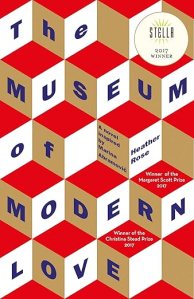
This month starts with The Museum of Modern Love by by Heather Rose (Kate’s pick was inspired by Sue’s recent post about writers and artists). I haven’t read this, but I would like to. This is the description on Amazon UK:

Arky Levin, a film composer in New York, has promised his wife that he will not visit her in hospital, where she is suffering in the final stages of a terminal illness. She wants to spare him a burden that would curtail his creativity, but the promise is tearing him apart. One day he finds his way to MOMA and sees Mariana Abramovic in The Artist is Present. The performance continues for seventy-five days and, as it unfolds, so does Arky. As he watches and meets other people drawn to the exhibit, he slowly starts to understand what might be missing in his life and what he must do.
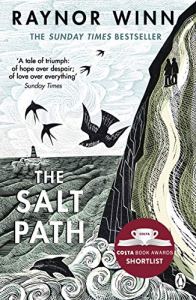
My first link is via a terminal illness to The Salt Path, Raynor Winn’s memoir about walking the South Coast Path when Moth her husband was diagnosed with a terminal illness. They were homeless, with no means of income except for £48 pounds a week. They had lost their home, business and livelihood, after investing in one of a friend’s companies that had failed. It is about the determination to live life, about overcoming pain and hardship, and the healing power of nature. It is about homelessness and the different reactions and attitudes of the people they met when they told them they were homeless.
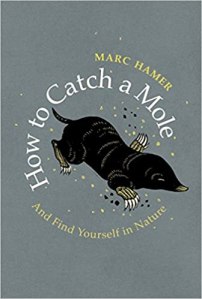
My second link is How to Catch a Mole by Marc Hamer, part memoir, part a nature study of the British countryside, part poetry, and, of course, about moles. After leaving school Marc Hamer was homeless for a while. He has worked in art galleries, marketing, graphic design and taught creative writing in a prison before becoming a gardener. And before writing this book he had been a traditional molecatcher for years.
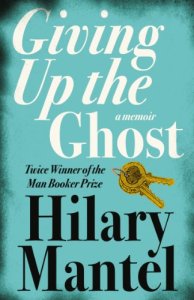
My third link is Hilary Mantel’s Giving Up the Ghost, a remarkable memoir. It came across to me as being clear, honest and very moving. She thought it was because of her that her parents were not happy and that without her they would have had a chance in life. It didn’t get any better when her father left home and she was left to live with two younger brothers, their mother and her mother’s lover. Home was a place where secrets were kept and opinions were not voiced. Her experience of ghosts at the age of 7 was horrifying as she felt as though something came inside her, ‘some formless, borderless evil’.
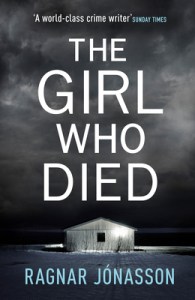
My fourth link is The Girl Who Died by Ragnar Jonasson, Icelandic noir, a mix of horror and psychological thriller, with a strong sense of place. Skálar is a close-knit community that doesn’t welcome newcomers, keeping its secrets well hidden. The only person who welcomes Una, to the village is Salka, the mother of Edda, one of the two girls Una is to teach. Her house is said to be haunted by the ghost of a young girl who had died fifty years earlier,
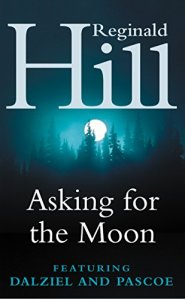
My fifth link is Asking for the Moon by Reginald Kill, a collection of four novellas. Two of them feature ghosts, Pascoe’s Ghost and Dalziel’s Ghost. But I think that the best one is the first story, The Last National Service Man which tells how Dalziel and Pascoe first met. Neither of them are impressed by the other. Dalziel thinks Pascoe is everything he dislikes – a graduate, well spoken, and a Southerner from south of Sheffield. Pascoe thinks Dalziel is an archetypical bruiser who got results by kicking down doors and beating out questions in Morse code on a suspect’s head.
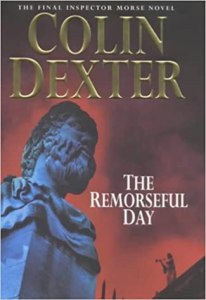
My final link is to the final Inspector Morse novel, The Remorseful Day by Colin Dexter. The plot is detailed, complex and as usual, with Morse, a puzzle type murder mystery with plenty of challenging clues. Sergeant Lewis is left to investigate the murder of nurse Yvonne Harrison that had remained unsolved for a year. When Morse phones to say he is feeling unwell Lewis is most concerned – Morse seldom mentioned his health, what is wrong with him?

The main focus of the book is on Morse and how he copes with his illness and his drinking habits. It becomes obvious just how alone he is in the world and how devastating his situation is to Lewis.

The first three books in my chain are memoirs and the other three are crime fiction/psychological thriller novels. Beginning in America it travels to the UK, then to Iceland, before ending back in the UK.

Next month (September 7, 2024), we’ll start with  After Story by Larissa Behrendt.

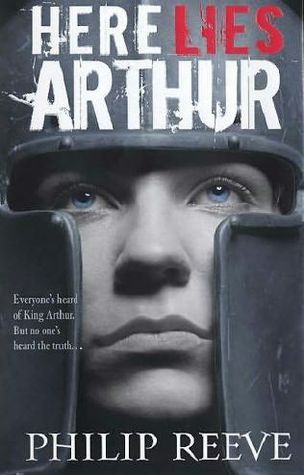
Throwback Thursday: Here Lies Arthur by Philip Reeve

Today I’m linking up with Davida @ The Chocolate Lady’s Book Review Blog for Throwback Thursday. It takes place on the Thursday before the first Saturday of every month (i.e., the Thursday before the monthly #6Degrees post). The idea is to highlight one of your previously published book reviews and then link back to Davida’s blog.

Here Lies Arthur by Philip Reeve. I first reviewed it on February 5, 2008.

My review begins:

This was one of the best books I read in 2007. Philip Reeve is a new author to me. Here Lies Arthur is an adventure story, set in Britain in AD 500. I have always been fascinated by the legend of King Arthur and this book tells his story, casting a new and original slant on the ‘facts’. Very little historical evidence has survived to give concrete information about life in Britain from the fifth to the sixth centuries. The picture Reeve paints is of a turbulent and harsh world, with Arthur as a war-leader in a land where opposing war-bands fight for supremacy. Arthur is not the romantic hero of legend but a dangerous, quick-tempered man, ‘solid, big-boned with a thick neck and a fleshy face. ‘A bear of a man.’

Click here to read my full review

WWW Wednesday: 31 July 2024

WWW Wednesday is run by Taking on a World of Words.

The Three Ws are:

What are you currently reading?
What did you recently finish reading?
What do you think you’ll read next?

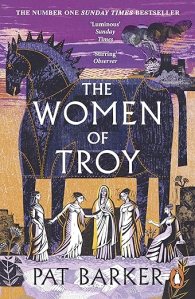
Currently I’m reading The Women of Troy by Pat Barker. this is the second book on The Women of Troy trilogy, a retelling of the classic Greek myth. I’ve recently read the first book, The Silence of the Girls (my review will follow shortly) which I loved. So far this second book looks as though it will be just as good. Troy has fallen but high winds are keeping the Greeks from sailing home.

Description from Goodreads:

Troy has fallen and the victorious Greeks are eager to return home with the spoils of an endless war—including the women of Troy themselves. They await a fair wind for the Aegean.

It does not come, because the gods are offended. The body of King Priam lies unburied and desecrated, and so the victors remain in suspension, camped in the shadows of the city they destroyed as the coalition that held them together begins to unravel. Old feuds resurface and new suspicions and rivalries begin to fester.

Largely unnoticed by her captors, the one time Trojan queen Briseis, formerly Achilles’s slave, now belonging to his companion Alcimus, quietly takes in these developments. She forges alliances when she can, with Priam’s aged wife the defiant Hecuba and with the disgraced soothsayer Calchas, all the while shrewdly seeking her path to revenge.

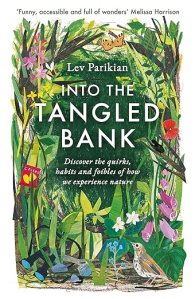
I’m also reading Into the Tangled Bank by Lev Parikian, non fiction about nature. It’s easy reading, Parikian writes with humour, in a chatty style, but also richly descriptive. I’m loving it, it is compulsive reading. He is a storyteller, so there are lots of anecdotes and stories, plus his thoughts on nature and how we view it. Amongst many other topics he ponders about the ethics of zoos – something that puzzles me too – and wonders if the definition of a nature lover is becoming that of one who loves nature programmes. There’s a lot packed into this book.

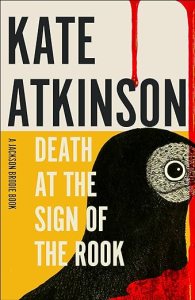
The last book I read was Death at the Sign of the Rook by Kate Atkinson, a review copy. My review will follow after the book is published on 22 August 2024. I have very mixed feelings about this book from loving parts of it to frustration at other parts.

Synopsis from Amazon:

The stage is set. The players are ready. By night’s end, a murderer will be revealed. 
Ex-detective Jackson Brodie is staving off a bad case of midlife malaise when he is called to a sleepy Yorkshire town, and the seemingly tedious matter of a stolen painting. But one theft leads to another, including the disappearance of a valuable Turner from Burton Makepeace, home to Lady Milton and her family. Once a magnificent country house, Burton Makepeace has now partially been converted into a hotel, hosting Murder Mystery weekends.

As paying guests, a vicar, an ex-army officer, impecunious aristocrats, and old friends converge, we are treated a fiendishly clever mystery; one that pays homage to the masters of the genre—from Agatha Christie to Dorothy Sayers.

What will I read next? At the moment I have no idea.

Top5Tuesday: Top 5 Books with Time Travel


Welcome to this week’s Top 5 Tuesday post. Top 5 Tuesday was created by Shanah at Bionic Book Worm, and it is now being hosted by Meeghan at Meeghan Reads. For details of all of the latest prompts for July to September, see Meeghan’s post here.

Meeghan writes: Ahh, the most outrageous travel of all — and the most unreal. Tell us about your fave books where the characters skip through time (or space). If you can’t think of any, a book that spans multiple eras will also do the trick.

I thought I hadn’t read many time travel books until I looked back, and found several. Here are five of them. I’ve not listed them in order of preference, nor have I included Audrey Niffenegger’s The Time Traveler’s Wife because I found it disappointing and irritating:

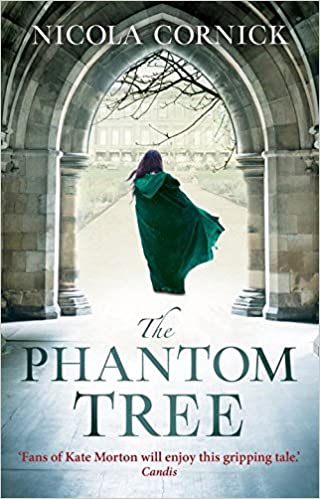
The Phantom Tree. The plot alternates between the Tudor period and the present day following the life of Alison Banestre (known as Bannister in the present day) as she moves between the centuries trying to find out what happened to Mary Seymour. It is a mystery, based on the true story of Mary Seymour, the daughter of Katherine Parr (Henry VIII’s sixth wife) and Thomas Seymour, who she married after Henry’s death.

Alison moves between the centuries, both forwards and backwards in time but then she found the gateway to the past had closed and she was trapped in the present day. She has to find another gateway where the past and the present meet, or some other means of connecting to the past.

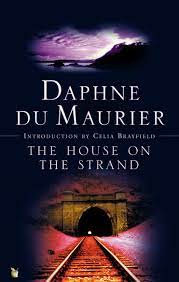
The House on the Strand. Dick Young moves between the present day and the 14th century set in Cornwall – around Par Sands and the Manor of Tywardreath. Dick is staying at Kilmarth (the house where Du Maurier lived after she was forced to leave Menabilly), the guest of his friend Magnus, a scientist researching the effect of a psychedelic drug. The drug produces hallucinations of time travel and as Dick moves in his mind to the 14th century he physically moves across the present day landscape crossed by roads and railway lines that he cannot see. The difference in the landscape plays a central part in the story.

A Wrinkle in Time by Madeleine L’Engle – The winner of the 1963 Newbery Medal this is the story of Meg and Charles Wallace Murry, searching for their father, a scientist, lost through a ‘wrinkle in time’, with wonderful characters such as Mrs  Whatsit, Mrs. Who and Mrs. Which to help them.

How to Stop Time by Matt Haig. Tom Hazard has a dangerous secret. He may look like an ordinary 41-year-old, but owing to a rare condition, he’s been alive for centuries. Tom tells his life story in flashbacks, switching back and forth in time between the present day and the past. 

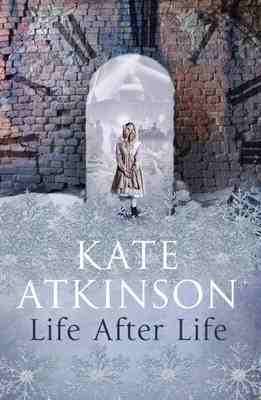
Life After Life by Kate Atkinson. Ursula Todd was born on 11 February 1910 at Fox Corner during a wild snowstorm. In the first version she was born before the doctor and the midwife arrived and she died, strangled by the umbilical cord around her neck. But in the second version the doctor had got there in time and saved her life, using a pair of small surgical scissors to snip the cord. 

During the book Ursula dies many deaths and there are several different versions that her life takes over the course of the twentieth century – through both World Wars and beyond. Each time as she approaches death she experiences a vague unease, before the darkness falls. 

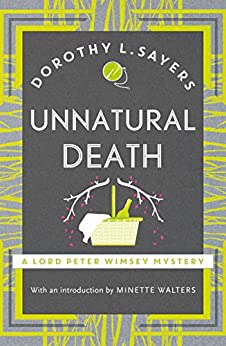
Unnatural Death by Dorothy L Sayers

From the back cover:

‘No sign of foul play,’ says Dr Carr after the post-mortem on Agatha Dawson. The case is closed. But Lord Peter Wimsey is not satisfied.

With no clues to work on, he begins is own investigation. No clues, that is, until the sudden, senseless murder of Agatha’s maid.

What is going on in the mysterious Mrs Forrest’s Mayfair flat? And can Wimsey catch a desperate murderer before he himself becomes one of the victims?

This is the third book in the Lord Peter Wimsey series by Dorothy L Sayers, first published in 1927. My copy was reprinted in 2016 and I bought it secondhand five years ago. I’ve been reading this series totally out of order – I’ve already read the first two and several of the later books too. I think they each read well on their own.

Miss Climpson makes her first appearance in Unnatural Death, helping Lord Peter, working undercover. She is an elderly spinster, who runs what Wimsey calls ‘My Cattery’, ostensibly a typing bureau, but actually an amateur detective/enquiry agency. As in the first two books he works with his friend, Inspector Charles Parker, who is a Scotland Yard detective. Bunter, his manservant, only has a very minor role in this book. I think it’s an interesting mystery, not so much about discovering who killed Agatha Dawson and her maid, Bertha, but more about how the murders were committed.

Uncertain Death is most definitely a book of its time – that is the early 20th century. There is much banter, wit and humour, and plenty of snobbery of all types, clearly showing the class distinctions between the working and upper classes. Racism is prevalent and also lesbianism, although that is not directly stated. It is a clever story, well told, with colourful characters. There is a biographical note at the end of the book that reveals much about Lord Peter’s background, about his early years, school and university, and his experiences during the First World War.

Top Ten Tuesday: Debut Novels I Enjoyed

Top Ten Tuesday is a weekly meme created by The Broke and the Bookish and now hosted by Jana at That Artsy Reader Girl. For the rules see her blog.

This week’s topic is Debut Novels I enjoyed.

Here they are:

Sometimes I Lie by Alice Feeney – a thriller.  I read it in just two sittings and when I got to the end I immediately had to turn back to the beginning and start reading it again.

Saving Missy by Beth Morrey. This really is a special book, full of wonderful characters, ordinary people drawn from life, about everyday events, pleasures and difficulties. 

Hotel on the Corner of Bitter and Sweet by Jamie Ford. This is a bitter sweet story of commitment and enduring hope and one that I loved.

Major Pettigrew’s Last Stand by Helen Simonson. A beautiful book about family relationships, about the importance of communication, of talking and sharing experiences and feelings and about friendships. And it’s a love story.

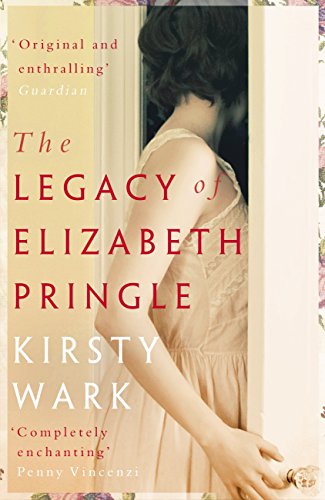
The Legacy of Elizabeth Pringle by Kirstie Wark. A gentle and leisurely paced book, packed with events, some of them dramatic and devastating in their effect on the characters’ lives.

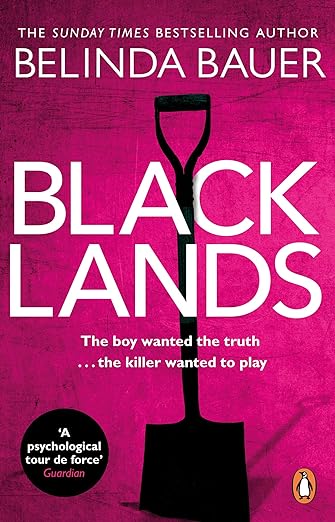
Blacklands by Belinda Bauer, about Arnold, a serial killer and a twelve year old boy, Stephen. This is a dark and chilling story that took me inside Stephen’s mind and the notorious serial killer Arnold .

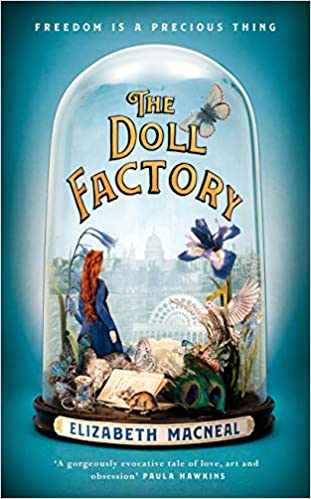
The Doll Factory by Elizabeth Macneal, set in the 1850s historical fiction, art history, and a love story as well as a dark tale of obsession, pulsing with drama, intrigue and suspense. It’s full of atmosphere, dark and gothic towards the end.

In the Woods by Tana French. It’s set in Ireland mainly around an archaeological dig of a site prior to the construction of a motorway. A little girl’s body is discovered on the site. Is her death connected to the disappearance of two twelve year-olds 20 years earlier?

After You’d Gone by Maggie O’Farrell. Alice is in a coma after being in road accident, which may or may not have been a suicide attempt. She has been grieving the death of her husband, John. What was it that Alice saw at Edinburgh station that shocked her so much?

Sacrifice by Sharon Bolton A bone chilling, spellbinding novel set on a remote Shetland island where surgeon Tora Hamilton makes the gruesome discovery, deep in peat soil, of the body of a young woman, her heart brutally torn out.