Sunday Selection

I finished reading The Owl Killers by Karen Maitland yesterday. It is a book that I’ve had for nearly three years and like many of the other unread books that I own, I wish I’d read it long before now – it’s good and I’ll be writing down my thoughts about it soon.

But it has got me thinking that I should spend more time reading books I’ve owned for more than a year and still haven’t got round to reading. I get sidetracked by new books and by library books and it’s got worse with the ease of having books to read on Kindle. There are all those free e-books and really cheap ones too, which may or may not be any good, and, click they’ve been downloaded.

So, as one of my aims this year is to reduce my massive backlog of unread books I’m going to concentrate on reading some of these for a while, all books I’ve owned a long time!

First up for consideration a selection of historical fiction (the blurbs are from Amazon):

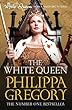
  • The White Queen by Philippa Gregory – the TV dramatisation of this book begins tonight on BBC1, maybe I should read it in tandem, or leave it for later? It’s the story of Elizabeth Woodville, the White Queen. A woman who won the love of a king and ascended to royalty by virtue of her beauty, Elizabeth fought tenaciously for the success of her family — her daughter who would one day unite the warring dynasties, and her two sons whose eventual fate has confounded historians for centuries: the Princes in the Tower.
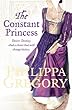
  • The Constant Princess – another Philippa Gregory book – Katherine of Aragon is born Catalina, the Spanish Infanta, to parents who are both rulers and warriors. Aged four, she is betrothed to Arthur, Prince of Wales, and is raised to be Queen of England. She is never in doubt that it is her destiny to rule that far-off, wet, cold land.
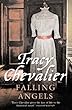
  • Falling Angels by Tracy Chevalier – January 1901, the day after Queen Victoria’s death: two families visit neighbouring graves in a fashionable London cemetery. One is decorated with a sentimental angel, the other an elaborate urn. The Waterhouses revere the late Queen and cling to Victorian traditions; the Colemans look forward to a more modern society. To their mutual distaste, the families are inextricably linked when their daughters become friends behind the tombstones. And worse, befriend the gravedigger’s son.
Then, a selection of crime fiction:

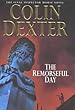
  • The Remorseful Day by Colin Dexter – The murder of Yvonne Harrison had left Thames Valley CID baffled. A year after the dreadful crime they are still no nearer to making an arrest. But one man has yet to tackle the case €“ and it is just the sort of puzzle at which Chief Inspector Morse excels. The final Morse book, which I bought after watching the TV version. I’ve just checked and this was way back in 2000! I decided at the time that I would read it later – I never meant it to be 12 years later! 
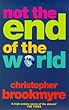
  • I’ve borrowed several Christopher Brookmyre books from our son and have been meaning to read them before now. I see from a bookmark that I did start Not the End of the World a while back. The crew of an oceanic research vessel goes missing in the Pacific along with their mini-submarine. An evangelical media star holds a rally next door to a convention in LA devoted to ‘nubile’ cinematic entertainment. The cops know there’s going to be trouble and they are not disappointed. What they didn’t foresee was the presence in their state of a Glaswegian photographer with an indecipherable accent and a strong dislike of hypocrisy, or of a terrorist who seems to have access to plutonium as well as Semtex. In his unique style, Christopher Brookmyre throws a harsh light on the selfish preoccupations of 1990s society and at the same time provides uproarious entertainment.
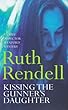
  • Kissing the Gunner’s Daughter by Ruth Rendell. It’s inevitable, I suppose that when I double shelve books that I forget I’ve got them. If I thought 12 years was a long time to have owned and not read a book, then I was astonished when I checked this book to find that I’ve had it since 1992! No!! It’s another book I bought after watching the TV version, which was broadcast in November 1992. I did start it – there’s a bookmark at the start of Chapter 6. I see from Amazon that the book has been reprinted several times since I bought my copy. The blurb is: The fifteenth book to feature the classic crime-solving detective, Chief Inspector Wexford. The thirteenth of May is famously the unluckiest day of the year. Sergeant Caleb Martin of Kingsmarkham CID had no idea just how terminally unlucky it would prove, as he embarked upon his last day on earth… Ten months later, Wexford is confronted with a murder scene of horrific brutality. At first the bloodbath at Tancred House looks like the desperate work of a burglar panicked into murder. The sole survivor of the massacre, seventeen-year-old Daisy Flory, remembers the events imperfectly, and her confused account of the fatal night seems to confirm this theory. But more and more, Chief Inspector Wexford is convinced that the crime lies closer to home, and that it has sinister links to the murder of Sergeant Martin…
That’s enough to be going on with for the time being.

Hilary Mantel at the Borders Book Festival

I was looking forward to Hilary Mantel’s talk last night at the Borders Book Festival in Melrose. I was not disappointed – far from it. It was a memorable evening as we sat in the packed Festival Marquee as Hilary Mantel and Kirsty Wark carried on their conversation. It was brilliant, or as Kirsty said at the end thanking Hilary – ‘it was absolutely fantastic’!

Here are some of my impressions:

Hilary Mantel is not only a fantastic writer she is also an articulate speaker – she is so enthusiastic about her subject and spoke with fluency, clarity, conviction and with power. She began by reading a short extract from Bring Up the Bodies, describing Thomas Cromwell, his appearance and his view of the portrait Hans Holbein had painted.The passage came to life as she spoke the words she had written.

After that the conversation between the two women flowed effortlessly. I’ve seen both on TV and read many of Hilary Mantel’s book but they both have so much more presence in person. It was magnetic and mesmerising as they talked about the process of writing – does Hilary Mantel write her historical novels sequentially moving forward through history? No, she doesn’t. She researches, surrounds herself with her notes, her ideas and jots down descriptions, sections of dialogue and scenes, so that at no point can she answer where she is up to in the book – she cannot tell you the year, how many pages she has written, only that she needs another eighteen months before it will be finished.

She lives in a parallel world – in the present and in the world of Cromwell and Henry VIII, plus all the characters, at one and the same time. It is always with her. When she started to write about Cromwell it was just going to be one book, but that soon changed and at present she is writing about the third book (The Mirror and the Light), leading up to Cromwell’s death. She tries as far as possible to be historically accurate, for the dialogue to be correct, but as a lot of what happened was not recorded – eg there is no transcript of Anne Boleyn’s trial – what she writes is her offering, her interpretation as it were.

I was pleased Kirsty Wark asked her about writing in the present tense (something I often have difficulty reading, but didn’t in either Wolf Hall or Bring Up the Bodies). I can’t remember precisely but I think Hilary Mantel replied that she saw the people as though the scenes were being acted out before and wrote it as it happened. If that is not what she said that is the impression I came away with. I only know that for me in these books it all came to life as I read it with an immediacy that I don’t often find in novels – I was there, not just an observer.

What does Hilary Mantel do in her ‘down time’, what does she read when she is not writing. Well, she doesn’t really have ‘down time’ and she doesn’t read novels when she is writing, she is so immersed in the world she is writing about that she can’t enter anyone else’s world. She reads round the subject, history, sociology etc.

What will she write next – more historical fiction or a contemporary novel? She is not sure – she’s thinking about writing about writing historical fiction – I do hope she does. Maybe not historical fiction itself, as that’s a huge project taking several years to research and plan. When she was 22 she had dreamed of writing historical fiction and wrote her novel about the French Revolution. Then she hadn’t realised that most people this side of the Channel weren’t really interested in the Revolution. Well, actually, I was and I’ve read that novel – A Place of Greater Safety and that’s another epic novel that kept me intrigued, even though I knew the outcome before I read it.

Kirsty Wark even touched on the question of the criticism Hilary Mantel had had over her comments about Kate Middleton. Her reply was a master of diplomacy, but it had upset her that her words had been taken out of context and she expressed her amazement at being woken one morning to find the press camped outside her house two weeks after her speech.

There were a few questions from the audience – would she write a prequel about Thomas Cromwell’s life on the continent, before the events in Wolf Hall. She liked that question but answered that she probably wouldn’t – there was little documentary evidence about all the places he’d been to and what he did, but I’m guessing she would have liked to have attempted it.

There was so much more said  – but I’ll stop here. It was a grand night out – an event I’m delighted to have experienced.

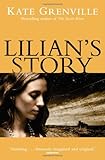
Lilian's Story by Kate Grenville: a Book Beginnings post

Book Beginnings ButtonBook Beginnings on Friday at Gilion’s blog Rose City Reader is the place to share the first sentence (or so) of the book you are reading, along with your initial thoughts about the sentence, impressions of the book, or anything else the opener inspires.

Lilian’s Story by Kate Grenville begins:

It was a wild night in the year of the Federation that the birth took place. Horses kicked down their stables. Pigs flew, figs grew thorns. the infant mewled and stared and the doctor assured the mother that a caul was a lucky sign. A girl? the father exclaimed, outside in the waiting room, tiled as if for horrible emergencies. This was a contingency he was not prepared for, but he rallied within a day and announced: Lilian. She will be called Lilian Una.

When I returned Sarah Thornhill by Kate Grenville to the library the other day Lilian’s Story was sitting on the shelf and because I’d enjoyed Sarah Thornhill and before that The Secret River I decided to borrow this book, even though I’ve got more than enough books of my own to keep me busy for a long time.

The back cover tells me that Lilian begins life as the daughter of a prosperous middle-class family and ends it as an eccentric bag-lady living on the streets, quoting Shakespeare for a living. I’m hoping it will be as good as the other two of Grenville’s books that I’ve read! This opening is promising, I think.

Wondrous Words

wondrous2Wondrous Words Wednesday is a weekly meme hosted by Kathy at Bermuda Onion where you can share new words that you’ve encountered or spotlight words you love.

I mentioned in my post on A Fearful Madness by Julius Falconer that there were some words I had to check in the dictionary. I’ve used the online Oxford English Dictionary (OED) to check the meaning of the following words

There are some words that I know I’ve looked up before and yet I just can’t remember what they mean and these are two of them:

Egregious: ‘After my consultation with the egregious Croft, I decided that action was what was needed.’ (page 70)

Egregious means:   ‘Remarkable in a bad sense; gross, flagrant, outrageous.’ The OED gives four definitions and I think this one fits the context the best. No wonder I can’t remember the meaning with four to chose from!

Exigent: ‘The woman was rough-tongued and exigent beyond belief: do this, do that, hurry up, I’m paying you enough, heaven knows, and so on.’ (page 177)

Exigent means: ‘Requiring a great deal; demanding more than is reasonable; exacting, pressing.’ I did know that after all!

Then there are these words:

Inchoate: ‘He murmured an inchoate prayer for guidance before rising and wandering at random round the church.’ (page 45)

Inchoate  – the OED gives two meanings: ‘Just begun, incipient; in an initial or early stage; hence elementary, imperfect, undeveloped, immature.’ and ‘Chaotic, disordered, confused; also, incoherent, rambling.’ I think the second meaning fits the context better.

Logorrhoeic: ‘Tea will do fine, thank you’. Ravensdale, unsure how best to break into the logorrhoeic flow without causing offence but impatient to hear whether she had any useful information for him or not, let her continue for a bit before broaching the subject of his visit. (page 115)

I thought this must have some connection with words and translated it in my head as ‘verbal diarrhoea’.

 Logorrhoea means ‘excessive volubility accompanying some forms of mental illness; also gen., an excessive flow of words, prolixity.’ I think logorrhoea sounds much better than ‘verbal diarrhoea’.

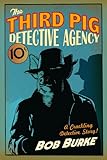
The Third Pig Detective Agency by Bob Burke

Reading The Third Pig Detective Agency by Bob Burke was a complete change of genre for me. It’s funny, a bit silly, a pastiche of American gumshoe crime fiction, and a fantasy  – indeed it’s a fairytale detective story. I did enjoy recognising all the fairy tale characters Bob Burke throws into the mix.

The Third Pig is Harry Pigg, who in his own words:

was the pig that built the house out of bricks while my idiot brothers took the easy route and went for cowboy builders and cheap materials.

Following his success at defeating the Big Bad Wolf, Harry became a detective, finding the two missing kids Hansel and Gretel and then identifying them as the murderers of the little old lady who lived in the gingerbread house.

But work for Harry had almost dried up, so when ‘an oriental gentleman the size and shape of a zeppelin‘, or in other words, Aladdin, the richest man in Grimmtown, accompanied by a sturdy white goat, none other than the eldest of the Gruff Brothers, demands his services, Harry can’t turn him down. Aladdin’s lamp had been stolen, an old battered lamp that he had kept under close guard, protected by hi-tech security and surveillance systems and Harry has to get it back for him. And so Harry sets out in pursuit of the lamp, aided or hindered by numerous characters, finding himself in all sorts of tricky and dangerous situations.

It’s a case of spot the characters from fairy tales and nursery rhymes and it’s most entertaining. Boy Blue, that lazy former shepherd tells Harry the lamp is rumoured to be a magic lamp, but Harry hates magic:

As a working detective it’s bad enough running the risk of being beaten up or thrown into a river with concrete boots on, without having to live with the possibility of being changed into a dung beetle or having a plague of boils inflicted on you. If you think humans were disgusting covered in boils, imagine how I might look.

And Harry just couldn’t have survived without the help of his Apprentice Gumshoe, Jack Horner, who rescues him several times.

There is no doubt that I’ll be reading more of Bob Burke’s books. the next one is The Ho Ho Ho Mystery which starts where The Third Pig Detective Agency ended when a very large lady dressed in black boots, bright red trousers and a hooded jacket came to see Harry and announced:

I need you to find my husband. He’s been kidnapped and it’s only two days to 25th December. If he’s not found soon we may have to cancel Christmas.

Carl’s Once Upon a Time VII challenge is coming to an end soon (21 June) and this is the fourth book I’ve finished. I may make five (my target for the challenge).

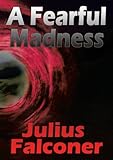
A Fearful Madness

I received A Fearful Madness by Julius Falconer as a free review copy through LibraryThing. I hadn’t come across any of Falconer’s books before but the LibraryThing Early Reviewers’ description interested me enough to request a copy:

A police investigation into the violent death of a part-time cathedral verger stalls for lack of incriminating evidence. However, three people have a close interest in clearing the matter up where the police have failed: the dead man’s sister, anxious to see justice done, and two of the police suspects, both released without charge but keen to clear their names.

Striking out on their own, each approaches the murder from a different perspective: book-trafficking on the black market; revenge by an extremist religious organisation for the dead man’s betrayal of them; and retaliation in a case of blackmail. The police continue to maintain that the murder was committed out of sexual anger, even though they have no proof apart from the circumstances of the verger’s death.

Eventually DI Moat and his assistant DS Stockwell, from the North Yorkshire Force, take a hand. Moat pays his predecessors in the investigation, both professional and amateur, the compliment of taking their findings seriously – but comes up with an idea of his own.

My view:

Julius Falconer uses language in a more formal way than many other modern authors. His sentences are carefully punctuated, his vocabulary is extensive (meaning there are some words I had to check in the dictionary – and one or two weren’t in my dictionary) and he uses many literary references and illusions. I like his style of writing, although in parts it does tend to be long-winded.

It’s a complex book, following each of the three investigations – some of which seem highly unlikely, but then they do say that truth is stranger than fiction.Two people had been suspected of murdering James Thwaites, the verger, but the police were unable to produce any evidence and the cases against them were dropped. It appeared he had been stealing rare and valuable books from the cathedral and selling them on the black market. I was intrigued by the book-trafficking business which on the one hand was highly organised involving the use of white van drivers, and on the other seemed remarkably lax!

A bearded man was seen outside Thwaites’s house on the evening of the murder and Matthias Biddulph, one of the original suspects, who had been in a relationship with Thwaites hires a private investigator to find him. Another possible motive for the murder is Thwaites’s involvement with an eccentric version of Christianity – the Anti-Church of Jesus Christ, set up in opposition to the Anglican Church, which his sister Serenity investigates.

For the most part, I rather enjoyed reading A Fearful Madness, although I had little idea how it would end – the verger’s will is of significance, but that only features towards the end of the book (unless I missed an earlier reference). I think this is possibly the weakest part of the book when the culprit confesses to the murder. Having said that, I liked it well enough to read more of Falconer’s books and have downloaded Jagger onto my Kindle.

Julius Falconer has written several books. Formerly, a teacher, he began writing detective novels in 2009. His website, with the sub-tile of Erudite Crime Novels for the Connoisseur,  includes details of his books and an account of The Falconer Style.

the letter JThis is my contribution to Kerrie’s Crime Fiction Alphabet for the letter J. In previous years I’ve contributed to the meme for each letter of the alphabet, but for this series I’m joining in only occasionally.