Cards on the Table by Agatha Christie

I think Cards on the Table is one of the best of Agatha Christie’s books. It was first published in 1936 and has been reprinted many times since then. My copy is a Pan Books edition published in 1951 with this cover:
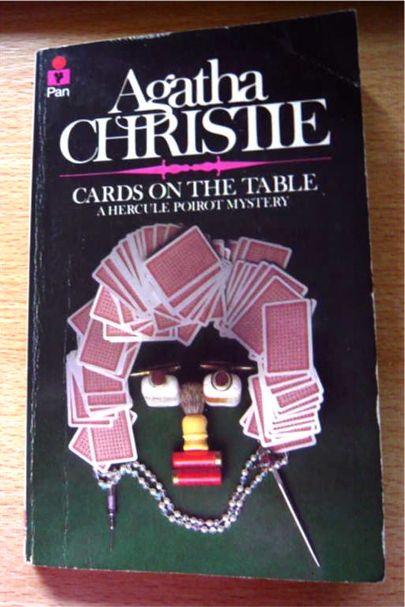
Cards on the Table

From the back cover:

Mr Shaitana is a collector. He collects snuff boxes, Egyptian antiquities … and … murderers.

His murderers are of the very finest. Not the second rate individuals who are caught and convicted. Delighting in his role as a modern Mephistopheles, Shaitana gathers his four murderers for an evening of cards.

Before the evening ends, Mr Shaitana will himself be a murder victim. How very fortunate that he invited a fifth guest to his gathering, M. Hercule Poirot.

One of the things that pleased me about this book is Agatha Christie’s Foreword in which she states that it is not the sort of detective story where the least likely person is the one to have committed the crime. This story has just four suspects and any one of them ‘given the right circumstances‘ might have committed the crime. She goes on to explain that there are four distinct types, the motives are peculiar to each person and each would employ a different method. She concludes:

The deduction must, therefore, be entirely psychological, but it is none the less interesting for that, because when all is said and done it is the mind of the murderer that is of supreme interest.

All of which suits Poirot down to the ground as he considers the psychology of each of the four suspects, Dr Roberts, a very popular doctor who may have killed a patient or two, Mrs Lorimer, a first-class bridge player and a widow who husband died under suspicious circumstances, Major Despard, a daring character, an explorer who possibly killed a botanist whilst on an expedition up the Amazon, and Anne Meredith, a young woman, a timid and careful bridge player, who may have poisoned her employer.

Poirot is not on his own, also at the bridge party were Superintendent Battle, a stolid officer from Scotland Yard (he first appeared in The Secret of Chimneys), Colonel Race, a Secret Service agent (he first appeared in The Man in the Brown Suit), and Mrs Ariadne Oliver, writer of popular detective fiction, (meeting Poirot for the first time). It helps if you can play bridge to understand  how Poirot uncovered the murderer, but it’s not necessary – I managed with just a minimal memory of the card game, and it all hinges on the psychology of the characters anyway.

As Ariadne Oliver is used by Agatha Christie to convey some of her own opinions I wondered whether this description of her physical appearance was how she viewed herself:

… she was an agreeable woman of middle age, handsome in a rather untidy fashion with fine eyes, substantial shoulders and a large quantity of rebellious grey hair with which she was continually experimenting. One day her appearance would be highly intellectual – a brow with the hair scraped back from it and coiled in a large bun in the neck – on another Mrs Oliver would suddenly appear with Madonna loops, or large masses of slightly untidy curls. On this particular evening Mrs Oliver was trying out a fringe. (page 13)

I think there is no doubt that Ariadne’s views on writing and on the character of her detective are Agatha Christie’s own views. For ‘Finn’ in the extract quoted below read ‘Belgian’:

… I regret only one thing – making my detective a Finn. I don’t really know anything about Finns and I’m always getting letters from Finland pointing out something impossible that he’s said or done. (page 55)

And this must be from her own experience too:

I’m always getting tangled up in horticulture and things like that. People write to me and say I’ve got the wrong flowers all out together. As though it mattered – and, anyway, they are all out together in a London shop. (page 110)

And this about writing?:

One actually has to think, you know. And thinking is always a bore. And you have to plan things. And then one gets stuck every now and then, and you feel you’ll never get out of the mess – but you do! Writing’s not particularly enjoyable. It’s hard work, like everything else. …

Some days I can only keep going by repeating over and over to myself the amount of money I might get for my next serial rights. That spurs me on, you know. So does your bank-book when you see how much overdrawn you are. …

‘I can always think about things,’ said Mrs Oliver happily. ‘What is so tiring is writing them down. I always think I’ve finished, and then when I count up I find I’ve only written thirty thousand words instead of sixty thousand, and so then I have to throw in another murder and get the heroine kidnapped again. It’s all very boring.’ (pages 110 – 111)

But back to the mystery, Mr Shaitana is murdered whilst his guests are playing bridge. Two games were set up – one made up of the four people he considered were murderers and the other in a separate room made up of the four detectives or investigators of crime. Mr Shaitana sat by the fire in the room with the murderers. When the four detectives finished their game they return to the other room where they find the game still in progress and Mr Shaitana still sitting by the fire – stabbed in the chest with an ornamental dagger.

What follows is that each detective carries out their own investigations and as I read I swung from one suspect to the other, but I was never really sure who the culprit was. Poirot is his usual brilliant self even though at one point he is astonished and upset at the possibility that he might be wrong:

‘Always I am right. It is so invariable that it startles me. But now it looks as though I am wrong. And that upsets me. (page 163)

But was he wrong?

Saturday Snapshots

This Saturday I’m continuing to post photos from our recent holiday in Scotland.

This is Loch Morlich  is in the Glenmore Forest Park, 300 metres above sea level, between Aviemore and Cairngorm Mountain.

Loch Morlich P1080591

Loch Morlich P1080595

There is a level circular walk around the Loch, which has a Sailing Club. I took the two photos shown above on a wet and cloudy afternoon when there weren’t many people around. I hadn’t expected to find a beach so close to the mountains and about 30 miles from the sea!

Later in the week on a brighter day we went back to Loch Morlich, just a bit further round the shore. This part of the Loch is the home of Loch Morlich Watersports Centre and we arrived just as groups of young people were leaving, so we had the beach to ourselves: :

Loch Morlich P1010773 There is a Beach Cafe:

Loch Morlich watersports 01

Loch Morlich Boathouse Cafe

Loch Morlich is managed by Forestry Commission Scotland and is the first and only fresh water loch to ever have received the Rural Beach Award in Keep Scotland Beautiful’s (KSB) Seaside Award campaign.Loch Morlich watersports 02

Click on the photos to enlarge.

For more Saturday Snapshots see Melinda’s blog West Metro Mommy.

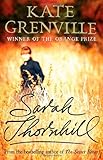
Sarah Thornhill by Kate Grenville

A few thoughts on Sarah Thornhill:

I wrote about the opening paragraphs of this book in a Book Beginnings post; paragraphs that made me want to read on with promise of a good story. And that is what I got – it’s basically a love story set in 19th century Australia, where the convicts, transported or ‘sent out‘ are  now called ‘old colonists‘.

There is prejudice – some people, those who had ‘come free‘,  thought being ‘sent out‘ meant you were tainted for all time, but for others having money and land overcame their distaste. And then there is the prejudice about the ‘blacks’. When Sarah, the daughter of William Thornhill, an ‘old colonist’ and now a landowner on the Hawkesbury River, falls in love with Jack Langland, whose mother was a native woman, racial prejudice and hatred rear their ugly heads.

I loved this book, which kept me captivated from start to finish, as the secrets of the Thornhill family are brought to light. I liked the narrative, told in Sarah’s voice, that of an uneducated young woman, struggling to understand what had happened and why. I found the dialogue convincing, and I could visualise the landscape and the hardships of life in that place and time. I was also totally involved with the characters, all of which made the book come alive for me.

I think it stands well alone, but it is the sequel to The Secret River and it does reveals a significant part of that book, so be aware of that if you haven’t read The Secret River.

Wondrous Words Wednesday

wondrous2Wondrous Words Wednesday is a weekly meme hosted by Kathy at Bermuda Onion where you can share new words that you’ve encountered or spotlight words you love.

I’ve recently read A Time of Gifts by Patrick Leigh Fermor, a book that I’ll be writing about in more detail. It’s his account of his journey in 1933/4 walking  to Constantinople. He uses many words that either were completely new to me or words that I wasn’t quite sure what they mean. As I was reading it on Kindle I was able to look up their meaning without too much distraction. Most of the words I didn’t know are described as ‘archaic’ and some of the words aren’t in the Kindle dictionary.

Here are just two:

  • imberb – ‘The figure of St John the Divine –  imberb, quizzically smiling, quill in hand and at ease in a dressing-gown with his hair flowing loose like an undress-wig …’

This isn’t in the Kindle dictionary and my guess was that it meant he had a beard. I was nearly right, but also completely wrong – the online Oxford English Dictionary has this definition: adjective from the French imberbe,  Latin imberbis – a rare word meaning beardless.

  •  flocculent – ‘Ragged and flocculent, fading to grey, scattered with specks of pink from the declining sun, varying in width as random fragments were dropping away and recohering and agitated with motion as though its whole length were a single thread, a thick white line of crowding storks stretched from one side of the heavens to the other.’
I like this sentence, which draws a clear picture for me of the storks flying across the scene in front of the setting sun, but wasn’t sure about ‘flocculent’ – a flock of storks?
It means having or resembling tufts of wool, having a loosely clumped texture from the Latin floccus.
 

First Chapter: The Drowning

First chapterEvery Tuesday Diane at  Bibliophile by the Sea hosts First Chapter First Paragraph Tuesday Intros, sharing the first paragraph or (a few) of a book she’s reading or thinking about reading soon.

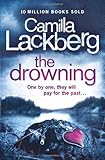
I bought a secondhand copy of this book I bought a few weeks ago and am looking forward to reading it. It’s The Drowning by Camilla Lackberg, a Swedish author whose books I keep seeing on other book blogs.

The Drowning begins:

He had known that sooner or later it would come to light again. Something like that was impossible to hide. Every word had led him closer to what was unnameable and appalling. what he had been trying for so many years to repress.

Now escape was no longer an option. He felt the morning air fill his lungs as he walked as fast as he could. His heart was pounding in his chest. He didn’t want to go there, but he had to. If someone was there, he would have to speak. If nobody was there he would continue on his way to work, as if nothing had happened.

This is a good opening that makes me want to read on, but I do have resevations after reading the Guardian blurb on the back cover – ‘Expert at mixing scenes of domestic cosiness with blood-curdling horror’. I don’t like horror – maybe I won’t be able to finish this book?

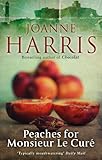
Peaches for Monsieur Le Curé by Joanne Harris

After I finished reading The Lollipop Shoes by Joanne Harris I was in two minds about reading her next book about Vianne Rocher Peaches for Monsieur Le Curé, but as I’d reserved it from the library and spurred on by other reviews I decided to read it. I was hoping I would like it more than The Lollipop Shoes.

From the book jacket:

When Vianne Rocher receives a letter from beyond the grave, she has no choice but to follow the wind that blows her back to the village in south-west France where, eight years ago, she opened up a chocolate shop. But Vianne is completely unprepared for what she finds there.Women veiled in black, the scent of spices and peppermint tea, and there, on the bank of the river Tannes, facing the square little tower of the church of Saint-Jerome, like a piece on a chessboard – slender, bone-white and crowned with a silver crescent moon – a minaret.

 Nor is it only the incomers from North Africa that have brought big changes to the community. Father Reynaud, Vianne’s erstwhile adversary, is now disgraced and under threat. Could it be that Vianne is the only one who can save him?

My view:

Peaches for Monsieur Le Curé is a diluted version of Chocolat; it is too long and drawn out for the story line. It’s told from two viewpoints, that of Vianne and Father Reynaud, but I found that this resulted in too much ‘telling’, too much explanation and repetition. This means that the storyline gets padded out with too much detail. It became predictable and I wanted it to end before it actually did. I read on to the end because I wanted to know what happened. Although I hadn’t foreseen the detail I had foreseen the end.

I should like it more than I did, because it is so similar to Chocolat, covering many of the same themes: fear of the outsider, religious conflict, intolerance and prejudice, with issues of gender and race. It’s also about how people interact and how their lives intersect and above all about the importance of communication, love, and understanding and respecting the others’ point of view. But, the magic is missing for me.