The Sense of an Ending by Julian Barnes

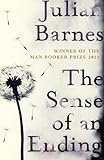
When Julian Barnes’s The Sense of an Ending first came out in 2011 I was initially interested in reading it, then was put off by a few critical reviews of it (something along the lines of it being about schoolboy-adolescent behaviour) and thought I’d look at it in the library before deciding whether or not to read it.  A year ago I saw it in a secondhand book shop (Barter Books) and bought it, after a quick glance told me it wasn’t just about adolescents, but I left it languishing on my bookshelves until the other day when I suddenly felt the urge to read it, I don’t know why! It seemed the right time.

Well, I really liked it (so much for reading reviews – it’s better to make up your own mind). It’s about memory and the effect of time, about ageing, about the nature of history and literature, about nostalgia and the question of responsibility.

It’s not a long book – just 150 pages – and I read it in two sittings. But its length belies its complexity and it’s actually quite a puzzle, because the narrator Tony knows that his memory is unreliable, that he can’t be sure of the actual events of his life. The best he can do is to be true to the impressions of those events that have remained with him. As he says at the beginning of the book:

… what you end up remembering isn’t always the same as what you have witnessed. (page 3)

Later on he realises that:

… as the witnesses to your life diminish there is less corroboration, and therefore less certainty, as to what you are or have been. (page 59)

The first part of the book is about Tony and his friends at school. There were three of them initially, then Adrian joined their clique. All of them were pretentious, but Adrian was rather different – he pushed them ‘to believe in the application of thought to life, in the notion that principles should guide actions.‘ (page 9)

Gradually, after they finished school and went their various ways through university, their contact with each other became less frequent. Tony’s relationship with his girlfriend, Veronica ends but he is less than happy when Adrian and Veronica began to see each other. Soon after Tony learns that Adrian committed suicide. Years later, after Tony has retired, he is shocked when he receives a letter telling him that Veronica’s mother has left him £500 and Adrian’s diary. However, Veronica has possession of the diary and refuses to hand it over to Tony, stating that she was not ready to part with it yet. The rest of the book concerns Tony’s efforts to get the diary and to work out what actually happened to Adrian.

Of course, it is not straight- forward as Tony meets with the brick wall that his memory has put between him and Veronica. And for the reader this poses a problem, because we see events through Tony’s words, what he says he did and thought, and what he thought about other people and their actions. He wants to know why Adrian committed suicide, what happened between him and Veronica, and how come her mother had Adrian’s diary. His memories are suspect and he knows it and it does not help him (or the reader) that Veronica is so unhelpful and tells him he ‘just doesn’t get it … You never did and you never will‘.

Just what did happen is never stated explicitly and the reader is left to puzzle it out with just a few clues. I’m not sure I got the whole picture, but I enjoyed trying to unravel the mystery. In the end I think it illustrates the nature of memory rather than being concerned about what actually happened, because as Adrian says:

History is that certainty produced at the point where the imperfections of memory meet the inadequacies of documentation. (page 17)

The Bookman's Tale by Charlie Lovett

When Alma Books contacted me to ask if I would like a review copy of The Bookman’s Tale: a novel of love and obsession by Charlie Lovett I was delighted. How could I resist a book about books, involving a search to discover the truth behind what could be a priceless Shakespearean manuscript? The book arrived the next day and I made the ‘mistake’ of looking at it whilst I drank a cup of coffee. I couldn’t put it down and by the end of the day I had read half the book.

The Bookman’s Tale

Synopsis from the back cover:

 A mysterious portrait ignites an antiquarian bookseller’s search – through time and the works of Shakespeare – for his lost love.

After the death of his wife, Peter Byerly, a young antiquarian bookseller, relocates from the States to the English countryside, where he hopes to rediscover the joys of life through his passion for collecting and restoring rare books. But when he opens an eighteenth-century study on Shakespeare forgeries, he is shocked to find a Victorian portrait strikingly similar to his wife tumble out of its pages, and becomes obsessed with tracking down its origins. As he follows the trail back to the nineteenth century and then to Shakespeare’s time, Peter learns the truth about his own past and unearths a book that might prove that Shakespeare was indeed the author of all his plays.

My view:

There are three different strands to this book, which interconnect and are interwoven throughout the book: the present day ie 1995 with Peter in England, the 1980s in America when Peter met and fell in love with Amanda, and the story of the Pandosto manuscript, a romance by Elizabethan poet Robert Greene, on which Shakespeare based The Winter’s Tale, from 1592 to 1879.

It began really well and Peter is not the only bookseller involved in the story – there is Bartholomew Harbottle in the Elizabethan/Stuart period and the Victorian Benjamin Mayhew both of whom play important roles. I really liked the historical sections and the details about the book trade and forgery is fascinating. I found the love story between Peter and his beloved Amanda rather cloying. Peter himself, suffers from an anxiety disorder and it is only his love for books and Amanda that seemed to make it possible for him to function at all – a good portrayal of an obsessive neurotic character.

By the second half of the book however, my enthusiasm for it began to droop a little as the chase around England became more frantic and a bit improbable. The many story lines as the book progressed became a series of cliff hangers, culminating in what seemed to me like something out of a cross between a Dan Brown novel, an Enid Blyton Famous Five book and a murder mystery. But, although there are just too many coincidence, twists and turns, and at times it is a bit melodramatic I still enjoyed it, swept along by the plot, an absorbing mix of historical fact and fiction, mystery and romance set in a book lovers’ world.

Charlie Lovett is a writer, teacher and playwright of plays for children. He is also a former antiquarian bookseller and an avid book collector. All this is evident in The Bookman’s Tale! He has a website with more information about the book and the sources he used.

First Chapter First Paragraph Tuesday Intros

First chapterEvery Tuesday Diane at Bibliophile by the Sea hosts First Chapter First Paragraph Tuesday Intros, to share the first paragraph or (a few) of a book she is reading or thinking about reading soon.

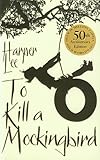
This week I’m featuring a book that I’ve known about for many years, but have never read until now. It is To Kill a Mockingbird by Harper Lee and although I haven’t finished it yet it’s promising to be one of the best books I’ve read for a long time. Although she had written some long short stories before this was her first novel (and only novel!) and published in 1960 it became an immediate best seller.

It begins:

When he was nearly thirteen my brother Jem got his arm badly broken at the elbow. When it healed, and Jem’s fears of never being able to play football were assuaged, he was seldom self-conscious about his injury. His left arm was somewhat shorter than his right ; when he stood or walked the back of his hand was at right-angles to his body, his thumb parallel to his thigh. He couldn’t have cared less, so long as he could pass and punt.

When enough years had gone by to enable us to look back on them, we sometimes discussed the events leading to his accident. I maintain that the Ewells started it all, but Jem, who was four years my senior, said it began the summer Dill came to us, when Dill first gave us the idea of making Boo Radley come out.

I’m not writing any more about it right now – not until I’ve finished it (less than 100 pages from the end) – except that it has captured my imagination completely and given me plenty to think about!

Tamburlaine Must Die by Louise Welsh

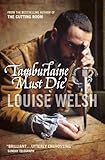
It was a treat to read Tamburlaine Must Die, a short book that I read in a day. I can’t remember when I last read a book in a day!

Sometimes novellas, such as this is with just 140 pages, can seem lacking, needing more depth of character or plot, leaving me feeling that it should really have been a full length novel, or an even shorter story. But Tamburlaine Must Die has an immediacy, that drew me in to the late Elizabethan world.

I wrote about the opening paragraph and synopsis on Tuesday and almost immediately after I began to read the book. Written in the first person and set in May 1593, it’s a tense, dramatic story of the last days of Christopher Marlowe, playwright, poet and spy. Accused of heresy and atheism, his death is a mystery, although conjecture and rumours abound. Louise Welsh has used several sources in writing this novella, but as she writes in the Author’s Note:

History has bequeathed us a tantalising framework of facts – the Elizabethans were as prolific as the Stasi when it came to official documents. Yet the facts can’t tell us the full tale and historian’s theories on Marlowe’s death are ultimately well informed, meticulously researched speculation.

We know that Marlowe dies in a house in Deptford. We know the date of his death and the three men present. We know the nature of the wound that killed him. Everything else is educated guesswork, or in this author’s case, a fiction.

Tamburlaine Must Die conveys the claustrophobic atmosphere of danger surrounding Marlowe; who can he trust, and who is behind the pseudonym of ‘Tamburlaine’, who posted a libellous handbill referencing Marlowe’s plays? He is very aware that death is just around the corner:

A dagger can find its way into a belly or a back before the victim spies it. I thought I felt the prickle of surveillance on my shoulders. And though I knew it was most likely the effect of my own blood running faster in my veins, I made my way from the crush of people, trying to keep note of who was around me, checking  if any faces lingered in the thinning crowd. (page 31)

As well as Marlowe, Louise Welsh throws in Dr Dee and Thomas Walsingham, Marlowe’s patron and refers to Walter Raleigh too. In such a brief book she has managed to convey the political and the seedy underworld of the Elizabethan period, the dishonesty and love of intrigue, the dangers of the plague and the threat of war. Has much changed since then, I wonder.

The Drowning by Camilla Lackberg: Book Notes

You can’t like every book you read and if I find I’m not enjoying a book I stop reading it. But it’s not always so straight forward because a book can begin well and hook you into the story, get your attention then begin to irritate because it takes so long to get there, and you read on. Then when you get to the end you heave a sigh of relief that you have finished it. It was just about OK.

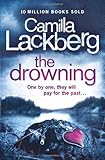
The Drowning by Camilla Lackberg is such a book. It began well – I wrote about the opening paragraphs in this post. They made me want to read on but I had some reservations because of the blurb on the back cover €“ €˜Expert at mixing scenes of domestic cosiness with blood-curdling horror’. Well, there is a lot of domestic cosiness and not really any blood-curdling horror. There are a few nasty scenes, but nothing that made me want to skim read, nothing in fact that I couldn’t read.

Synopsis from the back cover:

Christian Thydell’s dream has come true: his debut novel, The Mermaid, is published to rave reviews. So why is he as distant and unhappy as ever? When crime writer Erica Falck, who discovered Christian’s talents, learns he has been receiving anonymous threats, she investigates not just the messages but also the author’s mysterious past€¦

Meanwhile, one of Christian’s closest friends is missing. Erica’s husband, Detective Patrik Hedström, has his worst suspicions confirmed as the mind-games aimed at Christian and those around him become a disturbing reality.

But, with the victims themselves concealing evidence, the investigation is going nowhere. Is their silence driven by fear or guilt? And what is the secret they would rather die to protect than live to see revealed?

My view:

  • This is the sixth book in Camilla Lackberg’s  Fjällbacka series, so maybe I should have begun with the first book. However, I didn’t feel that I’d jumped into a series without understanding how the characters interacted, or that there were back stories that I should know, so I think it does work as a stand-alone book.
  • It’s written from several perspectives and has a second narrative interspersed with the main one. It’s not clear at first how these are related but it soon becomes apparent.
  • None of the characters came alive for me, apart from Erica  and Patrik and there was little I could visualise from the description of the location – it’s in Sweden, it’s cold and there is snow on the ground.
  • It’s unevenly paced, disjointed with snippets of information being passed between the characters and not shared with the reader, presumably to increase the suspense and tension, which it didn’t achieve for me. As a page-turner it just didn’t work, and I sighed mentally each time it came up.
  • The  description in places reminded me of an exercise I did on a training course in which you had to describe in detail how to make a cup of tea – decide to make a cup, pick up the kettle, take it to the tap etc. I am exaggerating, but you get the picture.
  • It’s predictable – I knew quite early on who the culprit was. That doesn’t necessarily mean it spoils a book, but in this instance it did because I kept on thinking, it’s … I couldn’t see why Erica and the police couldn’t see it either.
  • The ending was so irritating – a cliff hanger, aimed at getting you to read the next book??

I doubt I’ll read any of the other books in the series.