Books Read in June

I read 10 books in June. As usual they’re a mixed bag and I enjoyed some books more than others. I realised in May that I’d accumulated a number of review books, so I thought I’d better get reading them! The titles marked * are crime fiction and those in italics are non-fiction. With links to my posts they are:

  1. The Sea Change by Joanna Rossiter – a review copy, beautifully written, a dual time novel alternating between 1971 and the Second World War.
  2. Pictures at an Exhibition by Camilla Macpherson – a review copy, compelling reading and another a dual time period novel moving between the present day and the Second World War. 
  3. North Sea Cottage* by Dorte Hummelshoj Jakobsen – a review copy, yet another dual time novel of now and the 1940s, set in Denmark. Very atmospheric crime fiction as the discovery of a skeleton solves an earlier mystery.
  4. He Wants by Alison Moore – a fourth review novel, about ageing and unfulfilled expectations – sadly not really my cup of tea.
  5. Leaving Alexandria: a Memoir of Faith and Doubt by Richard Holloway – fascinating about his life, career and beliefs.
  6. The Garden of Evening Mists by Tan Twan Eng – still not sure what I think about this book, I may have to re-read it sometime.
  7. The Book of Lost Things by John Connolly – fantasy, a re-telling fairy tales and folk tales; it didn’t leave me with a chill down my spine, but just feeling rather sick at times.
  8. Sisters of Sinai by Janet Soskice – an excellent biography of twin sisters who discovered an ancient copy of the Gospels on Mount Sinai.
  9. The Discourtesy of Death* by William Brodrick – very good (post to follow).
  10. Mansfield Park by Jane Austen – a book I thought I’d read years ago, only to discover I hadn’t. It feels as though I’ve discovered a new author!

It’s hard to decide which one I enjoyed the most, but on balance I think it has to be Sisters of Sinai: How Two Lady Adventurers Found the Hidden Gospels by Janet Soskice

Sisters of Sinai

 As half the year has gone I thought it was a good time to see where I’m up to with the challenges I’m doing.

Reading Challenges progress up to 30 June (for details of these challenges see my Challenges page):

  • Mount TBR Reading Challenge €“ 30 of my own unread books. My target is 48.
  • Read Scotland Challenge €“11 books. My target 13+.
  • What’s in a Name 7 €“ I’ve completed 5 of the 6 sections €“ just  a €˜book with a school subject in the title’ to read.
  • Historical Fiction Challenge €“ 12 books. My target is 25 books.
  • Colour Coded Challenge €“ 3 books. The target is to read 9 books in the different colour categories.
  • The Agatha Christie Reading Challenge €“ 3 books. This is an open-ended challenge to read all her books. So far I have read 58.
  • My Kind of Mystery Challenge €“ 17 books. My target is 31+.
  • Once Upon a Time VIII Challenge €“ 5 books completing the Challenge for Quest the First.
  • Reading Non-Fiction in 2014 – this is my own ‘challenge’ to record the non-fiction I read. I’m aiming at reading at least 12 books this year and so far I’ve read 5 – with just 35% of Peter Ackroyd’s biography of Shakespeare to finish I’m nearly half way to my target.
Mansfield Park by Jane Austen

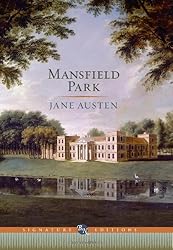
For years I’ve thought I’d read all of Jane Austen’s books, apart from Lady Susan/The Watsons/Sanditon, but then last year I wondered about Mansfield Park, and I realised I couldn’t remember much about it. At first I thought it was one of those books I must have read years ago and forgotten the detail. So, I thought I’d have a look at it again to refresh my memory, but when I looked for my copy I couldn’t find it and slowly I began to think I hadn’t read it at all and bought one. And, lo and behold it was totally new to me – I hadn’t even watched the TV version!

On the surface Mansfield Park is a simple story about a family and their relationships. Fanny Price, as a child of 10 goes to live with her wealthy aunt and uncle, Sir Thomas and Lady Bertram at Mansfield Park, where as the poor relation she is not treated badly, but not as cared for or as kindly as her cousins, but more as an unpaid servant dependent on the family for her welfare – a sort of Cinderella story.

But through the story, Jane Austen reveals the complicated interaction of society, shows the development of Fanny’s character and the depiction of a heroine who is good and gentle who matures throughout the novel. Fanny is an unassuming character who at first appears to be too self-effacing and timed, but who grows in strength of character. I think it’s a very clever portrayal because the reader sees things through Fanny’s eyes. Whilst at first I wanted to give her a shake and say pull yourself together, you’re being a doormat, I realised that Jane Austen was drawing a realistic portrait and waited to see how she would develop.

Like the other novels, Mansfield Park is full of detail of everyday life, its boredom as well as its entertainments and pleasures, the  balls and dinners. There is much in it about the houses and gardens, not only of the wealthy but also of the lower classes, such as Fanny’s parents home in Portsmouth – but they have servants themselves, so it is only comparative poverty. Seen mainly through Fanny’s eyes, it’s a study of morals, the damage caused by being unwanted and unloved.

There is, of course, so much more to say about this book – Mrs Norris’s snobbery, her obsession with  penny-pinching and her nasty, spiteful behaviour; the opinion of clergymen, seen through Mary Crawford’s mercenary eyes as she thinks about Edmund Bertram’s position; the flirty behaviour of the ‘charming’ Henry Crawford; the apparent coldness of Sir Thomas and his family’s distance from him; Lady Bertram’s languid life from her sofa; the disruption caused by the play and so on. There is also a gentle strain of humour and satirical observations about contemporary values, and even, with Mary Crawford’s pun on ‘Rears and Vices‘, a bawdy note.

Yes, I definitely like Mansfield Park and pleased it came up for me in the Classics Club Spin, which gave me the necessary push to read it in June.

Mount TBR Checkpoint 2: June 2014

It’s time for the second quarterly check-in post for Bev’s Mount TBR Reading Challenge 2014. The months are speeding by! Bev asks:

1. Tell us how many miles you’ve made it up your mountain (# of books read). 

I’ve read 30 of my TBRs, so I’m nearly at the top of Mt Vancouver with just six more books to go. The list of books I’ve read is here. These last three months I’ve read 6.5 books. I did much better in the first 3 months of the year as I only read from my own shelves then, reading 23.5 books. But after that I’ve read mainly library books and books I’ve recently acquired.

To reach my target of Mt Ararat (48 books) by the end of the year I really will have to concentrate on books I’ve had on my shelves since before the beginning of this year.

2. Use titles from your list to complete as many of the following as you can. If you haven’t read enough books to give you good choices, then feel free to use any books yet to be read from your piles. I’ve given my answers as examples. Feel free to add words (such as “a” or “the” or others that clarify) as needed.

My Day in Books

I began the day with Ethan Frome
before breakfasting on Five Little Pigs. (No, I really wouldn’t eat even one little pig!!)

On my way to work I saw Mansfield Park
and walked by Cannery Row
to avoid The Crow Trap
but I made sure to stop at The Thirty-Nine Steps.

In the office, my boss said, The Grass is Singing
and sent me to research Shakespeare’s Restless World .

At lunch with Nemesis
I noticed  The Lost Army of Cambyses
playing a game of Not Dead Enough.

When I got home that night,
I studied [the] Cloud Atlas
because I’m interested in  The Sea Change
and I decided that They Do it with Mirrors.

Sisters of Sinai by Janet Soskice

Sisters of Sinai

The full title of this book is Sisters of Sinai: How Two Lady Adventurers Found the Hidden Gospels. This is biography so well written that it almost reads like a novel. In fact, if this was a novel I would think it was a most unlikely story of twin sisters in the latter half of the nineteenth century, travelling to St Catherine’s Monastery at Mount Sinai where they discover one of the earliest copies of the Gospels written in ancient Syriac.

Janet Soskice has written a compelling account of two Scottish sisters – Agnes and Margaret Smith born in 1843 in Irvine, a town south-west of Glasgow. Their mother died two weeks after they were born and they were brought up by their father, John Smith. He was unusual in that he gave his daughters an unconventional education for that period. He approved of independence of mind and foreign travel. The girls had an aptitude for languages and mastered French, German, Spanish and Italian whilst they were still quite young – helped by visits to each country. Their taste for learning, travels and adventure was set for life with long hours of study and plenty of exercise. Add to this intensely-held Presbyterian beliefs and Bible study.

John Smith inherited a huge sum of money (today’s equivalent would be around £7 million) from a relative. He died when the twins were 23 leaving his fortune to them (which had built up considerably by then); they were very rich indeed. They decided to have a trip down the Nile. And that was just the beginning; their lives were transformed.

They learnt Greek, Arabic, Hebrew and Syriac and they returned to Egypt and Sinai many times, befriending the monks of St Catherine, despite their religious differences, and getting embroiled in disputes with Cambridge academics who were initially very reluctant to accept that these two middle-aged (by then) women with no university qualifications (women were not permitted to receive degrees from the university at that time), could possibly have found anything of value or interest to them.

What they discovered in a ‘dimly lit little room  below the prior’s quarters’ in the monastery was a dirty volume, its leaves nearly all stuck together, written in Syriac. It was a collection of lives of women saints, but written underneath that was something else that was clearly an earlier text – of the Gospels. This was a palimpsest – the earliest writing having been scraped off and overwritten at a later date, the old ink becoming visible at a later date through the effects of the atmosphere. This eventually proved that the Gospels had been written much earlier than had previously been thought, moving the date back to the late second century.

Not only is that remarkable in itself, but it is astonishing to me that these two middle-aged women travelled to Egypt, Sinai, Jerusalem and beyond at the latter half of the nineteenth century across the desert on camel or walking miles on foot. Their courage and resolve overcame all the difficulties they encountered, coping with physical discomfort and  dishonest dragomen abroad and the hostility and scepticism at home.

I would never have known of this enthralling book if it hadn’t been for Cath’s review of it on Read-Warbler. I was intrigued and looked for it in my library straight away and was delighted to find that there was a copy in another branch.  Biographies and historical books are probably my most favourite of non-fiction books and accounts of  the Bible and how it came to be compiled have long been of interest to me, but I hadn’t come across these two sisters before. Janet Soskine has thoroughly researched her subject and the book is complemented by a ‘select’ bibliography that runs to nearly 5 pages and an extensive index.

This is an excellent non-fiction book, just right for Peggy Ann’s Read Scotland 2014 Challenge.

Today's post is brought to you by the letter…

Simon T of Stuck In A Book has started another meme. He randomly generates a letter for you and then you have to name your favourite book, author,song, film and favourite object beginning with that particular letter.

  My letter is L

I didn’t find it very easy – in some cases I had too much choice and in others (eg favourite object) very little choice.

Favourite Book – here is where I’m spoilt for choice, with Lark Rise to Candleford (Flora Thompson), The Last Enchantment (Mary Stewart), Les Liaisons Dangereuses (Pierre Choderlos de Laclos), The Last Time They Met (Anita Shreve) and The Light Years (Elizabeth Jane Howard) in the running. but I’ve decided on

Little Boy Lost by Marghanita Laski, a book I read a couple of years ago. It’s a beautiful book – one of those that once I start reading I can’t put down, and yet a book that I don’t want to finish as I’m enjoying it so much. This book is emotional, heart-wrenching and nerve-wracking, full of tension, but never sentimental.

Favourite Author … well it could be Marghanita Laski, Harper Lee, Laurie Lee, Donna Leon or Andrea Levy, but it has to be:

Penelope Lively, an all-time favourite and I’ve read more of her books than the other authors’.

Favourite Song …  Let It Be by the Beatles

Favourite Film … for the letter L it has to be The Lord of the Rings, which could equally as well be my favourite book, especially as I prefer the book (my own images etc).

Favourite Object … I found this the hardest one of all and in the end I decided on this:

This is my Lakeland electric yoghurt maker, which I’ve had for years and use every week. It makes lovely yoghurt. All you do is put in a couple of spoons of natural yoghurt and some milk and the yoghurt maker does the rest. I strain it to make it even thicker – like Greek yoghurt. 

Thinking of ‘objects’ on a wider scale there are of course, Libraries!

 If you’d like to join in go on over to Simon’s post (link back at the top) and wait for your letter.

Once Upon a Time VIII Challenge Completed

Once upon a time viiiCarl’s Once Upon a Time Challenge for this year ended on 21 June and I exceeded my expectations – well, it wasn’t hard as I aimed very low with The Journey, which was to read at least one book within one of the four categories of Fairy Tale, Folklore, Fantasy and Mythology. So I went on to the First Quest which was to read at least 5 books that fit somewhere within those categories.

Quest the first

I read:

  1. The Last Enchantment by Mary Stewart
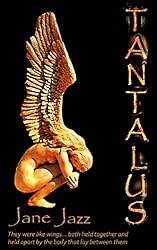
  2. Tantalus by Jane Jazz
  3. The Wicked Day by Mary Stewart
  4. The Graveyard Book by Neil Gaiman
  5. The Book of Lost Things by John Connolly

I initially wanted to read from my own to-be-read books, but as usual I actually read books that appealed to me at the moment of choosing what to read next, but two of them were books I’ve owned for some years – The Last Enchantment, an excellent book and The Book of Lost Things, not such an excellent book in my opinion.

Choosing a favourite out of these books is not easy but by a short head it’s Jane Jazz’s début novel TantalusThere is so much in this book that I loved €“ the characters, the story, the charged emotions and longing, the setting (in Yorkshire and Tuscany), and the art €“ the paintings and the sculpture. 

Tantalus is a perfect title for the novel as according to Greek myth Tantalus was famous for eternal punishment by being made to stand in a pool of water beneath a fruit tree with low branches, with the fruit ever eluding his grasp, and the water always receding before he could take a drink.

Thanks to Carl for hosting and I’m already looking forward to September and his R.I.P. Challenge.