Every Friday Book Beginnings on Friday is hosted by Gillion at Rose City Readerwhere you can share the first sentence (or so) of the book you are reading. You can also share from a book you want to highlight just because it caught your fancy.
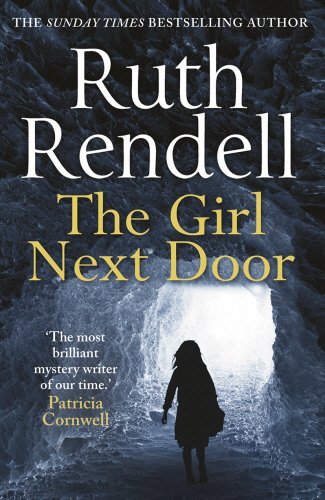
I’m featuring The Girl Next Door by Ruth Rendell, one of my TBRs, a book that’s been sitting on my bookshelves since 2016. It’s one of her later novels, a stand-alone book.
ChapterOne:
He was a handsome man. A handsome boy, his mother called him, because she started praising his looks when he was five.
Also every Friday there is The Friday 56, hosted by Freda at Freda’s Voice, but she is taking a break and Anne at My Head is Full of Books has taken on hosting duties in her absence. You grab a book and turn to page 56 (or 56% of an eBook), find one or more interesting sentences (no spoilers), and post them.
Unlike other users of Baldwin’s Hill, who were afraid of pregnancy or, in the case of the girls, of not being virgins when they were married, he and Daphne went ‘all the way’, as the phrase had it. She didn’t get pregnant, though he had done nothing to prevent it.
Description from Amazon UK
Beneath the green meadows of Loughton, Essex, a dark network of tunnels has been dug. A group of children discover them. They play there. It becomes their place.
Seventy years on, the world has changed. Developers have altered the rural landscape. Friends from a half-remembered world have married, died, grown sick, moved – or disappeared.
Work on a new house called Warlock uncovers a long buried grisly secret: the bones of two severed hands are discovered in a box, and an investigation into a long-buried crime of passion begins.
The friends, who played together as children, begin to question their past.And a weary detective, more concerned with current crimes, must investigate a case of murder.
Spell the Month in Books is a linkup hosted by Jana on Reviews From the Stacks on the first Saturday of each month. The goal is to spell the current month with the first letter of book titles, excluding articles such as ‘the’ and ‘a’ as needed. That’s all there is to it! Some months there are optional theme challenges, such as “books with an orange cover” or books of a particular genre, but for the most part, any book you want to use is fair game!
The optional theme this month isYour Favourite Genre. I’ve chosen books combining two of my favourite genres historical fiction and crime fiction into Historical Crime Fiction.
The links in the titles of each book are to my own posts.
An intriguing and mystifying book that entranced me from the beginning to the end. The story has a timeless feel to it but it is set somewhere towards the end of the nineteenth century. It’s a mystery beginning in the Swan Inn at Radcot, an ancient inn, well-known for its storytelling, on the banks of the Thames. A badly injured stranger enters carrying the drowned corpse of a little girl. It’s mystifying as hours later the dead child, miraculously it seems, takes a breath, and returns to life. The mystery is enhanced by folklore, by science that appears to be magic, and by romance and superstition.
Set in Northumberland in 1809, this book is based on a true story – that of Karen Charlton’s husband’s ancestors. Kirkley Hall manor house is mysteriously burgled. When suspicion falls on Jamie Charlton, he and his family face a desperate battle to save him from the gallows. Stephen Lavender, the detective employed by Nathaniel Ogle, the owner of Kirkley Hall was also a real historical figure, a detective, who later became the Deputy Chief Constable of Manchester after the formation of the police force by Sir Robert Peel. This is the type of historical fiction that I like. The characters come across as real people, with real problems in a real time and place (Northumberland 1809 – 1811).
T is for Tamburlaine Must Die by Louise Welsh. This is a novella, written in the first person and set in May 1593. It’s a tense, dramatic story of the last days of Christopher Marlowe, playwright, poet and spy. Accused of heresy and atheism, his death is a mystery, although conjecture and rumours abound. It conveys the claustrophobic atmosphere of danger surrounding Marlowe; who can he trust, and who is behind the pseudonym of ‘Tamburlaine’, who posted a libellous handbill referencing Marlowe’s plays? In such a brief book Louise Welsh has managed to convey the political and the seedy underworld of the Elizabethan period, the dishonesty and love of intrigue, the dangers of the plague and the threat of war.
O is for Oscar Wilde and the Candlelight Murders by Gyles Brandreth. It’s set in 1889 – 1890, fin-de-siècle London and Paris and the mystery begins with Oscar Wilde finding the naked body of Billy Wood, a 16 year old boy in the candle-lit room in a small terraced house in Westminster, close to the Houses of Parliament. Billy’s throat has been cut and he is laid out as though on a funeral bier, surrounded by candles, with the smell of incense still in the air. It’s a combination of fiction and fact, with both real and imaginary characters. Wilde with the help of his friends Arthur Conan Doyle and Robert Sherard sets out to solve the crime.
B is for The Body in the Ice by A J MacKenzie. It’s the 2nd Hardcastle and Chaytor Mystery set in Romney Marsh and the surrounding countryside in 1796-7. This is the period after the end of the American War of Independence, so Britain and America are at peace, but Britain and revolutionary France are at war with the constant threat of a French invasion. That winter was exceptionally harsh and cold and on Christmas Day in the village of St Mary in the Marsh, on the Kent coast Amelia Chaytor is spending the day with her friends, spinsters Miss Godfrey and Miss Roper when their maidservant bursts in and announces that she has seen someone at New Hall stables, frozen into the ice face down. Previously two men had been seen arriving at the Hall and at first it looks as though one of them has killed the other as they have both disappeared.
E is for An Expert in Murder, a very detailed and intricate murder mystery by Nicola Upson. She has a passion for the theatre and it shines through to great advantage in this book, set in the theatrical world of the 1930s – March, 1934 to be precise, as the final week of Josephine Tey’s play Richard of Bordeaux begins. Josephine is travelling from her home in Inverness to London by steam train when she meets an enthusiastic fan, Elspeth Simmons, who boarded the train at Berwick-upon-Tweed. They arrive in London, but then Elspeth is murdered and soon afterwards Bernard Aubrey, the theatre owner is also found dead, poisoned. Detective Inspector Archie Primrose, a friend of Josephine’s investigates. It’s a blend of fact and fiction.
R is for A Rustle of Silk by Alys Clare, first in a series featuring Dr Gabriel Taverner, set in the early years of 17th century England. It begins in April 1603 when former ship’s surgeon Gabriel Taverner has settled in Devon near his family and he is trying to set up a new practice as a physician. The local coroner, Theophilus Davey asks him to examine a partially decomposed body found beside the river. At first it looks as though it was suicide, but on realising that it’s his brother-in-law, Jeromy, Gabriel and Theophilus are convinced that he was murdered.
The next link up will be on November 2, 2024 when the theme will be: Food or Autumn Decorations on the Cover
It’s time again for Six Degrees of Separation, a monthly link-up hosted by Kate atBooks Are My Favourite and Best. Each month a book is chosen as a starting point and linked to six other books to form a chain. A book doesn’t need to be connected to all the other books on the list, only to the one next to it in the chain.
This month starts with ColmTóibín’s Long Island, the sequel to Brooklyn. I haven’t read this book, so this is the description on Amazon UK:
A man with an Irish accent knocks on Eilis Fiorello’s door on Long Island and in that moment everything changes. Eilis and Tony have built a secure, happy life here since leaving Brooklyn – perhaps a little stifled by the in-laws so close, but twenty years married and with two children looking towards a good future.
And yet this stranger will reveal something that will make Eilis question the life she has created. For the first time in years she suddenly feels very far from home and the revelation will see her turn towards Ireland once again. Back to her mother. Back to the town and the people she had chosen to leave behind. Did she make the wrong choice marrying Tony all those years ago? Is it too late now to take a different path?
My first link is from the word ‘Island‘ in 100 Days on Holy Island by Peter Mortimer. The island is also known as Lindisfarne. This sense of being an outsider pervades the book. He always felt an ‘outsider’, not accepted by the locals. He wasn’t there as a tourist, nor had he gone to settle there, but he went with the intention of seeing how he coped with living there for one hundred days and writing about it.
My second link is The Rising Tide by Ann Cleeves, the 10th Vera Stanhope mystery novel. It’s set on the Holy Island of Lindisfarne a tidal island just off the coast of Northumberland, only accessible across a causeway when the tide is out. DCI Vera Stanhope and her team investigate the death of Rick Kelsall who was discovered hanged from the rafters of his small bedroom on Holy Island. He is one of a group of friends who have met for a reunion each year on the island for the past fifty years
My third link is another book with the word ‘tide‘ in the title – A Dark and Twisted Tide by Sharon Bolton. This is such a terrifying novel, particularly if like me, you have a fear of drowning. Police Constable Lacey Flint thinks she’s safe. Living on the river, she’s never been happier. Until she finds a body floating on the surface, as she wild-swims in the Thames.
My fourth link is The Marlow Club Murderby Robert Thorogood a ‘cosy’ murder mystery. Seventy-seven year old Judith Potts is happy with her life, living in an Arts and Crafts mansion on the River Thames, although there are hints that there is something in her past she wants to forget. It’s the height of summer, in the grip of a heatwave, and Judith decides to take all her clothes off and go for swim in the Thames. She was enjoying herself when she hears a shout from her neighbour’s house on the opposite riverbank, followed by a gunshot. Later, when she goes to investigate, she finds him, dead in the river, with a bullet hole in the centre of his forehead. Judith is a crossword compiler, who writes cryptic clues.
So My fifth link is Puzzled: Secrets and Clues from a Life in Words by David Astle, a real life cryptic crossword compiler, a Melbourne-based writer of non-fiction, fiction and drama. He co-hosts Letters and Numbers (the Australian version of Countdown) as the dictionary expert, and his crosswords appear in Australian papers The Age and Sydney Morning Herald. Beginning with a Master Puzzle, he leads us through each of the clues, chapter by chapter, revealing the secrets of anagrams, double meanings, manipulations, spoonerisms and hybrid clues. More than a how-to manual and more than a memoir, Puzzled is a book for word junkies everywhere.
My final link is Last Seen Wearing by Colin Dexter the second book in the Inspector Morse books. Inspector Morse is perplexed when a letter of reassurance arrives from young Valerie Taylor, missing for more than two years and presumed dead, in a case that takes a bizarre turn when a mysterious body turns up. This book, like all of Dexter’s books, is a most complicated mystery, one of the ‘puzzle’ types. Dexter, himself, constructed crossword puzzles and made Morse a crossword aficionado. Morse is puzzled by this case, his brain seething in ceaseless turmoil, until he realised that if he shuffled the suspects and possibilities like the letters in an anagram the answer would come to him.
The books in my chain are a mix of crime fiction novels, and non fiction (Puzzled and 100 Days on Holy island). What is in your chain, I wonder?
Next month (November 2, 2024), we’ll start with Sally Rooney’s latest release, Intermezzo.
Top 5 Tuesday was created by Shanah at Bionic Book Worm, and it is now being hosted by Meeghan at Meeghan Reads. It’s time to talk about all the shiny new books coming out in October, November and December 2024. What are the books you can’t wait to hold in your hands the most? For details of all of the latest prompts for October to December, see Meeghan’s post here
Here are five books I’m looking forward to reading and they are all coming out this month! They are all by authors whose books I’ve loved.
Death Rites by Sarah Ward – 3 October. This is the first in a new series, a dark and atmospheric crime thriller (Carla James Crime Thrillers Book 1).
Archaeology professor Carla James is reeling following the death of her husband. Desperate for a change of scene, she takes a job at an elite New England college. On her first day, Carla is asked to represent the department at a murder site. She initially believes there is nothing notable about the scattered debris that surrounds the body, but there is more to the case than meets the eye. This victim is just the latest in a series of unsolved deaths. Nothing obvious links them but Carla is convinced – there is a methodical killer operating in the shadows.
Can she uncover the truth before she becomes the next victim?
Midnight and Blue by Ian Rankin – 10 October. It’s the 25th Inspector Rebus book. I’ve read all the others, so I have to read this one!
John Rebus spent his life as a detective putting Edinburgh’s most deadly criminals behind bars. Now, he’s joined them…
As new allies and old enemies circle, and the days and nights bleed into each other, even the legendary detective struggles to keep his head. That is, until a murder at midnight in a locked cell presents a new mystery. They say old habits die hard… However, this is a case where the prisoners and the guards are all suspects, and everyone has something to hide. With no badge, no authority and no safety net, Rebus walks a tightrope – with his life on the line.
But how do you find a killer in a place full of them?
Olifantshoek, Southern Africa, 1688. When the violent Cape wind blows from the south-east, they say the voices of the unquiet dead can be heard whispering through the deserted valley. Suzanne Joubert, a Huguenot refugee from war-torn France, arrives in search of her cousin — the notorious she-captain and pirate commander Louise Reydon-Joubert — who landed at the Cape of Good Hope more than sixty years before, then disappeared without a trace . . .
Franschhoek, Southern Africa, 1862. Nearly one hundred and eighty years after Suzanne’s perilous journey, another intrepid and courageous woman of the Joubert family — Isabelle Lepard — has journeyed to the small frontier town once known as Oliftantshoek in search of her long-lost relations. Intent on putting the women of her family back into the history books, she quickly discovers that the crimes and tragedies still shadow the present. And now, Isabelle faces a race against time if she is to discover the truth, and escape with her life . . .
In the darkness of an old asylum, a young man unscrews the lid from a bottle of sleeping pills.
In the nearby village, two couples begin their day. Local doctor, Eric Parry, mulling secrets, sets out on his rounds, while his pregnant wife sleeps on in the warmth of their cottage. Across the field, in a farmhouse impossible to heat, funny, troubled Rita Simmons is also asleep, her head full of images of a past life her husband prefers to ignore. He’s been up for hours, tending to the needs of the small dairy farm he bought, a place where he hoped to create a new version of himself, a project that’s already faltering.
There is affection – if not always love – in both homes: these are marriages that still hold some promise. But when the ordinary cold of an English December gives way to violent blizzards – a true winter, the harshest in living memory – the two couples find their lives beginning to unravel.
Where do you hide when you can’t leave home? And where, in a frozen world, could you run to?
One afternoon many years ago, James Rebanks met an old woman on a remote Norwegian island. She lived and worked alone on a tiny rocky outcrop, caring for wild Eider ducks and gathering their down. Hers was a centuries-old trade that had once made men and women rich, but had long been in decline. Still, somehow, she seemed to be hanging on.
Back at home, Rebanks couldn’t stop thinking about the woman on the rocks. She was fierce and otherworldly – and yet strangely familiar. Years passed. Then, one day, he wrote her a letter, asking if he could return. Bring work clothes, she replied, and good boots, and come quickly: her health was failing. And so he travelled to the edge of the Arctic to witness her last season on the island.
This is the story of that season. It is the story of a unique and ancient landscape, and of the woman who brought it back to life. It traces the pattern of her work from the rough, isolated toil of bitter winter, to the elation of the endless summer light, when the birds leave behind their precious down for gathering, like feathered gold.
Slowly, Rebanks begins to understand that this woman and her world are not what he had previously thought. What began as a journey of escape becomes an extraordinary lesson in self-knowledge and forgiveness.
When Benet was about fourteen, she and her mother had been alone in a train carriage – and Mopsa had tried to stab her with a carving knife. It has been some time since Benet had seen her psychologically disturbed mother. So when Mopsa arrives at the airport looking drab and colourless in a dowdy grey suit, Benet tries not to hate her. But when the tragic death of a child begins a chain of deception, kidnap and murder in which three women are pushed to psychological extremes, family ties are strained to the absolute limit…
The Tree of Hands by Ruth Rendell is one of my TBRs. It’s a book I bought nine years ago from Barter Books in Alnwick. I don’t know why I haven’t read it before now as it is really good – one of the best books I’ve read this year, and one of her best standalone books. I read it this year as one of my 20 Books of Summer.
Why I enjoyed it so much is that it thoroughly gripped me and made me want to read on and on. It’s a psychological thriller, full of suspense, with several twists and turns that made me unsure how it would end. I was delighted by the final twist!
Benet’s son, James aged four dies from croup whilst in hospital soon after Mopsa, her mother with a history of mental illness, comes to visit. Meanwhile Carol, a young widow with three kids, two of them in care, is living nearby with Barry, her younger boyfriend. He adores her but she doesn’t want to marry him, content for him to do all the housework and look after Jason her two year old son when he is not being looked after by babysitters. The trouble starts when Mopsa kidnaps Jason and brings him back to Benet as a replacement for James.
The tree of hands in the title is taken from the collage on the hospital playroom wall:
On the white paper base sheet had been drawn a tree with a straight brown trunk and branches and twigs, and all over the tree, on the branches, nestling among the twigs, protruding like fungus from the trunk, were paper hands. All were exactly the same shape, presumably cut out by individual children using a template of an open hand with the fingers spread slightly apart. (page 46)
Benet found them horrible, as though the hands were begging for relief, or freedom, or oblivion. She thought there was a mad quality about them, ‘all the hands upraised, supplicating, praying.’ And she fell forward in a faint when the doctor told her James had died.
This is a dark and disturbing book about what happens to Jason, Benet, Carol and Barry. It’s well written and I could easily visualise the characters and the setting. It’s emotionally challenging and it both fascinated and horrified me in equal measure. It won the CWA Silver Dagger Award in 1984, an award given annually by the Crime Writers’ Association of the United Kingdom since 1960 for the best crime novel of the year.
NB I’m currently reading Rendell’s The Girl Next Door because I enjoyed The Tree of Hands so much.
Every Friday Book Beginnings on Friday is hosted by Gillion at Rose City Readerwhere you can share the first sentence (or so) of the book you are reading. You can also share from a book you want to highlight just because it caught your fancy.
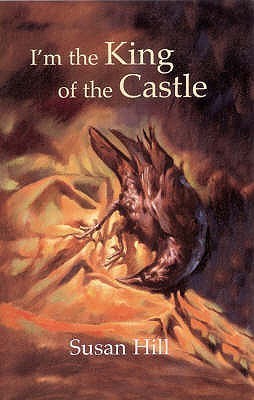
I’m featuring I’m the King of the Castle by Susan Hill, a book I’ve just started to read. I don’t know when I acquired it, but it must have been over 20 years ago. It’s a secondhand hardback book, published in 1970 by Hamish Hamilton. And the reason I’ve eventually got round to reading it is because it is just right for The 1970 Club with Simon and Kaggsy during the 14th- 20th October.
ChapterOne:
Three months ago , his grandmother died, and then they had moved to this house.
Also every Friday there is The Friday 56, hosted by Freda at Freda’s Voice, but she is taking a break and Anne at My Head is Full of Books has taken on hosting duties in her absence. You grab a book and turn to page 56 (or 56% of an eBook), find one or more interesting sentences (no spoilers), and post them.
‘He wrote home, ‘I like it here very much, it is smashing here.’
‘He is a brave little boy, Mrs Helena Kingshaw had said, reading the letter, and weeping a little.
At St Vincent’s School, Kingshaw said, ‘let me stay here for ever and ever.
Description from Amazon UK for the Mass Market paperback edition published in 2014
‘Some people are coming here today, now you will have a companion.’
But young Edmund Hooper doesn’t want anyone else in Warings, the large and rambling Victorian house he shares with his widowed father. Nevertheless Charles Kingshaw and his mother are soon installed and Hooper sets about subtly persecuting the fearful new arrival.
In the woods, Charles fights back but he knows that his rival will always win the affections of the adults – and that worse is still to come . . .
I’m the King of the Castle by Susan Hill is a chilling novel that explores the extremes of childhood cruelty. What do you think, does this book appeal to you? What are you currently reading?