 Best wishes everyone for a happy, healthy and book-filled 2015.
The Way Through The Woods by Colin Dexter: Mini Review
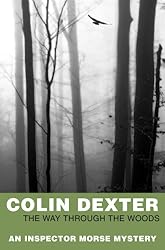 I really enjoyed reading Colin Dexter’s The Way Through The Woods, the tenth book in his Inspector Morse series. It’s nicely complicated and full of puzzles as Morse aided by Sergeant Lewis investigate the case of a beautiful young Swedish tourist who had disappeared on a hot summer’s day somewhere near Oxford twelve months earlier. After unsuccessfully searching the woods of the nearby Blenheim Estate the case was unsolved, and Karin Eriksson had been recorded as a missing person.
A year later Morse is on holiday at Lyme Regis when The Times published an article on the missing woman together with an anonymous poem that had been sent in that the police thought could help pinpoint the whereabouts of her body. This sets in motion more letters to The Times and ultimately to Morse being assigned to re-open the case.
I was completely engrossed in this book, trying to follow all the possible interpretations of the poem and the witness statements as Morse and Lewis go over the old evidence and turn up new information. This involves a trip to Wales for Morse and one to Sweden for Lewis, Wytham Woods is searched and a body is found – but whose is it? This book sees the first appearance of forensic pathologist, Dr Laura Hobson. But it’s not just the mystery, the crossword type clues, the characterisation and all the twist and turns that make this book so enjoyable, it’s the writing, the descriptions of the scenery and locations bringing them vividly to my mind.
This book has been sitting unread on my shelves for three years and is the last of my to-be-read books of 2014. An excellent book!
Corvus: A Life With Birds by Esther Woolfson
 Corvus by Esther Woolfson is a remarkable book about the birds she has has had living with her; birds that were found out of the nest that would not have survived if she had not taken them in.
‘Corvus’ is a genus of birds including jackdaws, ravens, crows, magpies and rooks. The specific birds Esther Woolfson has looked after are a rook, called Chicken (short for Madame Chickieboumskaya), a young crow, a cockatiel, a magpie, two small parrots and two canaries. But it all started with doves, which live in an outhouse, converted from a coal store into a dove-house, or as they live in Aberdeen in Scotland, a doo’cot.
Although the book is mainly about the rook, Chicken, Esther Woolfson also writes in detail about natural history, the desirability or otherwise of keeping birds, and a plethora of facts about birds, their physiology, mechanics of flight, bird song and so on. As with all good non-fiction Corvus has an extensive index, which gives a good idea of the scope of the book. Here are just a few entries for example under ‘birds’ the entries include – aggression in, evolution of, navigation, in poetry, speeds of, vision, wildness of, wings’…
It’s part memoir and part nature study and for me it works best when Esther Woolfson is writing about Chicken and the other birds living in her house, how she fed them, cleared up after them, and tried to understand them. Although at times I had that feeling I get when I visit a zoo – these are wild birds kept captivity and I’m not very comfortable with that, I am reassured by Esther Woolfson’s clarification that reintroducing these birds to the wild was unlikely to be successful and indeed they lived longer than they would have done in the wild. Though Chicken and Spike (and the other birds) live domesticated lives they are still wild birds:
I realise that if ‘wild’ was once the word for Chicken, it still is, for nothing in her or about her contains any of the suggestions hinted at by the word ‘tame’. Chicken, Spike, Max, all the birds I have known over the years, live or lived their lives as they did by necessity or otherwise, but were and are not ‘tame’. They are afraid of the things they always were, of which their fellow corvids are, judiciously, sensibly; of some people, of hands and perceived danger, of cats and hawks, of things they do not know and things of which I too am afraid. ‘Not tamed or diminished’. (pages 115-6)
At times, where Esther Woolfson goes into intricate detail, for example in the chapter on ‘Of Flight and Feathers‘ I soon became completely out of my depth, lost in the infinity of specialised wing shapes and the complexities of the structure of feathers. But that is a minor criticism, far out weighed by her acute observations of the birds, her joy in their lives and her grief at their deaths – her description of Spike’s unexpected death and her reaction is so moving:
I wept the night he died. Sitting in bed, filled with the utter loss of his person, I felt diminished, bereft. I talked about him, but not very much, in the main to members of the family, who felt the same, but to few others.
It’s the only way, this compact and measured grief, for those of us who are aware that there has to be proportion in loss and mourning; we laugh at ourselves for our grief, trying to deal with this feeling that is different in quality, incomparable with the loss of a human being.
…
We felt – we knew – that something immeasurable had gone. (page 209)
Anyone who has lived through the death of a loved animal can recognise that sense of loss.
Corvus is a beautiful book and I have learned so much by reading it. I must also mention the beautiful black and white illustrations by Helen Macdonald – I think this is the Helen Macdonald who was awarded the 2014 Samuel Johnson Prize for Non-Fiction for H is For Hawk.
Esther Woolfson was brought up in Glasgow and studied Chinese at the Hebrew University of Jerusalem and Edinburgh University. Her acclaimed short stories have appeared in many anthologies and have been read on Radio 4. She has won prizes for both her stories and her nature writing and has been the recipient of a Scottish Arts Council Travel Grant and a Writer’s Bursary. Her latest book, Field Notes from a Hidden City (Granta Books), was shortlisted for the 2014 Thwaites Wainwright Prize for Nature and Travel Writing. She lives in Aberdeen. For more information see her website.
Mount TBR 2014: Final Checkpoint
It’s time for the Final Checkpoint for Bev’s 2014 Mount TBR Challenge. This is my favourite challenge as it really encourages me to read from my own bookshelves. It’s the most simple challenge €“ read your own books €“ that is, books you’ve owned prior to January 1, 2014.
My target for 2014 was to reach Mt Ararat and I made it to the top (50 books read) and even a short way up Mt Kilimanjaro, reading a total of 53 of my TBR books!
_view_from_plane_under_naxcivan_sharur.jpg)
These are the books I read with links to my posts:
- Cloud Atlas by David Mitchell
- The Uncertain Midnight by Edmund Cooper
- Not Dead Enough by Peter James
- Cannery Row by John Steinbeck
- Shakespeare’s Restless World by Neil MacGregor
- The Crow Trap by Ann Cleeves
- Playing With Fire by Peter Robinson
- Five Little Pigs by Agatha Christie
- The Grass is Singing by Doris Lessing
- Dying in the Wool by Frances Brody
- Crucible by S G MacLean
- The Steel Bonnets by George MacDonald Fraser €“ reached Pike’s Peak
- The Thirty-Nine Steps by John Buchan
- Ethan Frome by Edith Wharton
- The Breaker by Minette Walters
- Purple Hibiscus by Chimamanda Ngozi Adichie
- Her Fearful Symmetry by Audrey Niffenegger
- Death Under Sail by C P Snow
- They Do It With Mirrors by Agatha Christie
- The English by Jeremy Paxman
- The King’s Evil by Edward Marston
- The Office of the Dead by Andrew Taylor
- The Time Machine by H G Wells
- The Last Enchantment by Mary Stewart €“ Mont Blanc
- The Lost Army of Cambyses by Paul Sussman
- Nemesis by Agatha Christie
- The Sea Change by Joanna Rossiter
- Pictures at an Exhibition by Camilla Macpherson
- The Book of Lost Things by John Connolly
- Mansfield Park by Jane Austen
- Midnight in St Petersburg by Vanora Bennett
- Shakespeare: a Biography by Peter Ackroyd
- Charles Dickens: a Life by Claire Tomain
- The Shadows in the Street by Susan Hill
- Dark Matter by Philip Kerr
- Put On By Cunning by Ruth Rendell €“ Mount Vancouver
- The Goldfinch by Donna Tartt
- Wycliffe and the House of Fear by W J Burley
- The Moving Finger by Agatha Christie
- The Brimstone Wedding by Barbara Vine
- The Brief History of the Dead by Kevin Brockmeier
- In Our Time by Melvyn Bragg
- A Study in Scarlet by Sir Arthur Conan Doyle
- Blue Heaven by C J Box
- Service of All the Dead by Colin Dexter
- Portrait in Sepia by Isabel Allende
- An Awfully Big Adventure by Beryl Bainbridge
- The Call of the Wild by Jack London
- Seven White Gates by Malcolm Saville €“ TBR €“ Mt. Ararat!
- The Adventure of the Christmas Pudding by Agatha Christie
- Cause of Death by Patricia Cornwell
- Corvus: a Life with Birds by Esther Woolfson
- The Way Through the Woods by Colin Dexter
The Year in Review According to Mount TBR: Using the titles of the books you read this year, please associate as many statements as you can with a book read on your journey up the Mountain.
Describe yourself: A Study in Scarlet
Describe where you currently live: Blue Heaven
If you could go anywhere where would you go?: Shakespeare’s Restless World via The Time Machine
Every Monday morning I look like: a Portrait in Sepia
The last time I went to the doctor/therapist was because: I ate too much Dark Matter
The last meal I ate was at: Midnight in St Petersburg
When a creepy guy/girl asks me for my phone number, I know it would be: Playing With Fire
Ignorant politicians make me think they are: the Cause of Death
Some people need to spend more time looking for: The Way through the Woods
My memoir could be titled: An Awfully Big Adventure
If I could, I would tell my teenage self: to beware of The Shadows in the Street
I’ve always wondered why: The Grass is Singing
Thanks, Bev for hosting and for your encouragement this year to climb mountains €“ I’m looking forward to climbing more mountains next year.
Cause of Death by Patricia Cornwell
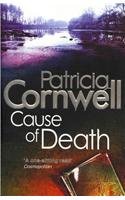 Cause for Death is the seventh book in the Dr Kay Scarpetta murder mystery series. It’s a secondhand copy that had been on my TBR shelves for several years and I think I must have started to read it before as the opening chapter seemed very familiar.
It begins well enough when a reported is found dead in the Elizabeth River in Virginia on New Year’s Eve.
From the back cover:
New Year’s Eve and the final murder scene of Virginia’s bloodiest year takes Scarpetta thirty feet below the Elizabeth River’s icy surface. A diver, Ted Eddings, is dead, an investigative reporter who was a favourite at the Medical Examiner’s office. Was Eddings probing the frigid depths of the Inactive Shipyard for a story, or simply diving for sunken trinkets? And why did Scarpetta receive a phone call from someone reporting the death before the police were notified?
The case envelops Scarpetta, her niece Lucy, and police captain Pete Marino in a world where both cutting-edge technology and old-fashioned detective work are critical offensive weapons. Together they follow the trail of death to a well of violence as dark and forbidding as water that swirled over Ted Eddings.
However, although the murder investigation was interesting I wasn’t all interested in the terrorist/FBI/religious fanatics scenes that followed. I don’t think I’ll bother reading any more of these books.
A Christmas Carol in Prose
I’m reading A Christmas Carol for the umpteenth time. It’s one of my favourite books but I hadn’t noticed before its full title: A Christmas Carol in Prose Being A Ghost Story of Christmas.
This is the cover of my current copy, showing Mr Fezziwig’s Ball:

Here’s an extract from the end of the book when Scrooge wakes up on Christmas Day a changed man:
He dressed himself “all in his best”, and at last got out into the streets. The people were by this time pouring forth, as he had seen them with the Ghost of Christmas Present; and walking with his hands behind him, Scrooge regarded every one with a delighted smile. He looked so irresistibly pleasant, that three or four good-humoured fellows said, “Good morning, sir! A merry Christmas to you!” and Scrooge said often afterwards, that of all the blithe sounds he had ever heard, those were the blithest in his ears.
so I’m ending this post by wishing everyone a Merry Christmas! And as Tiny Tim said, “God bless Us, Everyone!”
 BooksPlease