Books Read in July 2015

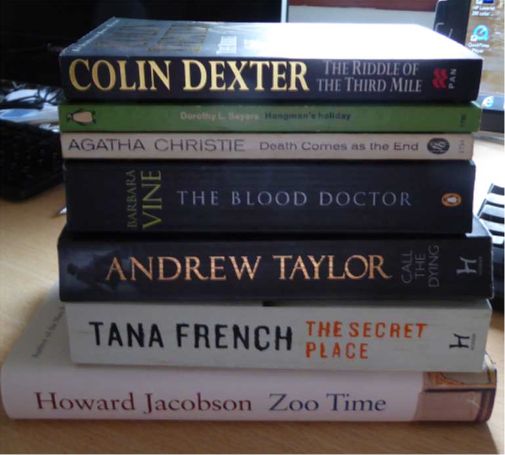
July has been great for reading and I’ve not done badly writing reviews either. I’d not been reading many of my TBR books up to July but I changed all that this month by reading 6 of them. And I added to my non-fiction reading with 2 more books. In total I read 11 books, one of which is a re-read and I loved even more than the first time I read it – The Shipping News.

They are – in the order I read them and with links to my posts:

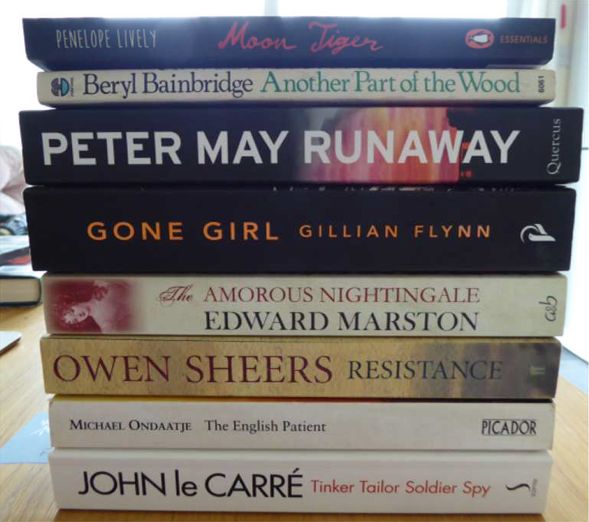
  1. The Day of the Lie by William Brodrick (TBR)
  2. The Man with The Wooden Hat by Jane Gardam (TBR)
  3. Last Friends by Jane Gardam (TBR)
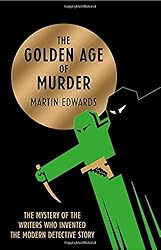
  4. The Golden Age of Murder by Martin Edwards (NF)
  5. The Outcast by Sadie Jones (TBR)
  6. Stephen Hawking: His Life and Work by Kitty Ferguson (NF, LB)
  7. Five Red Herrings by Dorothy L Sayers (LB)
  8. The Shipping News by Annie Proulx (a re-read)
  9. Zen There Was Murder by H R F Keating (TBR)
  10. The Remorseful Day by Colin Dexter (TBR)
  11. The Outcast by Elly Griffiths (LB)

I’m planning to write reviews for The Shipping News and The Remorseful Day.

As for The Outcast by Elly Griffiths. I did enjoy it but it’s written in the present tense, (as are all of her Ruth Galloway books) which kept intruding making me more conscious of the writing style rather than being totally absorbed in the story. I liked the mix of past and present, although in this book I felt the balance is tilted more in favour of the present and the archaeological element is played down. I liked the introduction to Ruth’s brother Simon and a new character, Frank is also a plus.

It’s so hard to decide which is my Book of the Month and choosing between fiction and non fiction makes it even harder, but it has to be Martin Edwards’ The Golden Age of Murder, which as I said in my post is a tour de force, comprehensive and crammed full of fascinating information about the period and the authors.

Martin Edwards’ love of Golden Age fiction shines throughout the book, (skilfully writing about books without giving away any spoilers) and his book has spurred me on to read more books from this period.

But I also want to highlight The Day of the Lie by William Brodrick, because although it is hard reading in parts, it’s a meaty, layered book, delving into the past, uncovering secrets and revealing crimes. and it’s so well researched, bringing the past to life.

The Man in the Wooden Hat and Last Friends by Jane Gardam

These are companion novels to Old Filth, which I read years ago. The Man in the Wooden Hat is written from the perspective of Old Filth’s wife, Betty.

Blurb:

Filth (Failed In London, Try Hong Kong) is a successful lawyer when he marries Elisabeth in Hong Kong soon after the War. Reserved, immaculate and courteous, Filth finds it hard to demonstrate his emotions. But Elisabeth is different – a free spirit. She was brought up in the Japanese Internment Camps, which killed both her parents but left her with a lust for survival and an affinity with the Far East. No wonder she is attracted to Filth’s hated rival at the Bar – the brash, forceful Veneering. Veneering has a Chinese wife and an adored son – and no difficulty whatsoever in demonstrating his emotions . . .

How Elisabeth turns into Betty and whether she remains loyal to stolid Filth or is swept up by caddish Veneering, makes for a page-turning plot in a perfect novel which is full of surprises and revelations, as well as the humour and eccentricities for which Jane Gardam’s writing is famous.

I suppose you could read this book without reading Old Filth first, but it certainly helps to know what happens in the first book from the husband’s point of view. Both books follow the lives of husband and wife over 50 years, but as The Man in the Wooden Hat is told from Betty’s point of view I got a totally different view of events, particularly of the couple’s relationship with Old Filth’s arch rival in Hong Kong, fellow lawyer Terry Veneering.

Last Friends revisits the same events telling Terry Veneering’s story from Dulcie Williams’ perspective. Dulcie is the widow of “Pastry Willy” Williams, a judge who was also in the foreign service with Old Filth and Veneering. She provides the back stories of these characters, and throws yet more light on the events told in the first two books.

Blurb:

Old Filth and The Man in the Wooden Hat told with bristling tenderness and black humour the stories of that Titan of the Hong Kong law courts, Old Filth QC, and his clever, misunderstood wife Betty. Last Friends, the final volume of this trilogy, picks up with Terence Veneering, Filth’s great rival in work and – though it was never spoken of – in love.

Veneering’s were not the usual beginnings of an establishment silk: the son of a Russian acrobat marooned in northeast England and a devoted local girl, he escapes the war to emerge in the Far East as a man of panache, success and fame. But, always, at the stuffy English Bar he is treated with suspicion: where did this blond, louche, brilliant Slav come from?

Veneering, Filth and their friends tell a tale of love, friendship, grace, the bittersweet experiences of a now-forgotten Empire and the disappointments and consolations of age.

The three books together form a memorable trilogy, of love and life, humour and heartbreak in colonial Hong Kong and the contrasting setting of the English countryside. Maybe Old Filth is the outstanding book, but maybe that is because I read it first and loved it so much, that the others don’t quite live up to it.

I’ve had both these books for a couple of years, so both qualify for the Mount TBR Reading Challenge 2015, and The Man in the Wooden Hat for the 10 Books of Summer Challenge and the Colour Coded Challenge (the dominant colour of the  cover is white) too.

Partners in Crime – The Secret Adversary: Tommy and Tuppence

Well, I suppose I should have expected this – I was looking forward to the new BBC1 series of the Tommy and Tuppence stories, Partners in Crime advertised as ‘loosely based‘ on Agatha Christie’s novels, but the first episode was last night ,The Secret Adversary was disappointing to say the least as not much of Agatha Christie’s story was left.  I knew it had been moved to the 1950s instead of the 1920s and was wondering what else had been changed.

Well, practically everything else, so much so that most of it bore no resemblance to the original. It was not only the wrong era but also the characters were different – TV Tommy, as David Walliams played him for most of the episode, is a bumbling fool who had not taken part in the War due to being wounded by a delivery van (I think that’s what the TV Tommy said), with a vacant look on his face , and obsessed with bees. Tommy and Tuppence as described by Agatha Christie are ‘˜an essentially modern-looking couple’, childhood friends who after the First World War were both stony broke and who decided to set up a joint venture under the name of the Young Adventurers Ltd, initially intending to hire themselves out to commit crimes.The ‘real’ Tommy had been wounded in the War, not once but twice, Tommy and Tuppence never met Jane Finn and Julius Hersheimmer was a young white man who says he is Jane’s cousin – not her uncle. I could go on!

OK, so it was easy watching, Jessica Raine made a good, meddling and determined Tuppence and it was amusing at times. But to enjoy this I’ll have to forget it has any connection with Agatha Christie whatsoever and I don’t know that I can do that, for the next five episodes. It’s so annoying to keep saying ‘it’s not like that in the book’.

The Golden Age of Murder by Martin Edwards

Although I read a lot of crime fiction my knowledge of the authors and their books written during the ‘Golden Age’ so far has been limited to Agatha Christie, Dorothy L Sayers, Margery Allingham, and Michael Innes so when I saw that Martin Edwards had written The Golden Age of Murder: The Mystery of the Writers Who Invented the Modern Detective Story I thought it would be the ideal book to find out more. And I was absolutely right and the works of a whole host of authors has been opened up to me.

This is the story of the writers who formed the Detection Club between the two World Wars. Edwards sets the authors and their works in context – that period when Britain was recovering from the horrors of the First World War, living through an age of austerity as unemployment grew, the cost of living soared leading to the General Strike whilst the rich partied and saw the beginnings of the end of the British Empire. But the writers and the works although well grounded in their own time and culture have a lasting appeal and influence on current story telling and film and television.

The Club grew out of the dinners Anthony Berkeley and his wife Peggy hosted at their home in the late 1920s, attended by people including Agatha Christie, Dorothy L Sayers, Douglas and Margaret Cole, Ronald Knox, Henry Wade, H C Bailey and John Rhode. Eventually the Club was formed, with Rules and a Constitution and a Committee. The members benefited in various ways, meeting fellow detective novelists, discussing ideas, supporting each other and even working together on collaborative writing projects – such as The Floating Admiral, in which a dozen writers each wrote one chapter. The main aim of the Club was to encourage and maintain a high standard of work in writing detective novels.

I was fascinated by the number of real crimes that influenced the writers, both current at the time and crimes from the past. Their interest as they discussed these cases, such as Dr Crippen’s poisoning of his wife, in turn inspired them not only to write but also to play the detective themselves. Indeed, Edwards shows that the image of the Golden Age as ‘cosy’ murder mysteries is false:

Their novels are often sneered at as ‘cosy’, and the claim that their characters were made from cardboard has become a lazy critical cliché. The very idea that detective fiction between the wars represented a ‘Golden Age’ seems like a misty-eyed nostalgia of an aged romantic hankering after a past that never existed.

The best detective novels of the Thirties

were exhilarating, innovative and unforgettable. They explored miscarriages of justice, forensic pathology and serial killings long before these topics became fashionable (and before the term’serial killer’ was invented). …

The climax of one of Berkeley’s novels was so shocking that when Alfred Hitchcock came to film it, even the legendary master of suspense, the man who would direct Psycho, lost his nerve. He substituted a final scene that was a feeble cop-out in comparison to Berkeley’s dark and horrific vision. (page 9)

There is no way I can do justice to this book in a short post; it is simply a tour de force, comprehensive, crammed full of fascinating information about the period and the authors.

Martin Edwards’ love of Golden Age fiction shines throughout the book, (skilfully writing about books without giving away any spoilers) and has spurred me on to read more books from this period.

Agatha Christie: Tommy and Tuppence

Tomorrow night sees the start of a new six part series on BBC1 – Partners in Crime. According to the Radio Times the episodes are loosely based on The Secret Adversary, the first of the Tommy and Tuppence stories and N or M?, the third story.

But, as I have come to expect with TV/film adaptations, this is not the original story as the action has been transposed from 1922 and 1940 (the original settings of these two books) to the 1950s. Still I have great hopes for the series, with David Walliams as Tommy and Jessica Raine as Tuppence, although I’m wondering what else has been changed.

This is what I wrote about The Secret Adversary in January 2011:

The Secret Adversary was first published in 1922. It was Agatha Christie’s second book and the first featuring Tommy and Tuppence. In this book they have just met up after World War One, both in their twenties: ‘˜an essentially modern-looking couple’. They are both stony broke and decide to set up a joint venture under the name of the Young Adventurers Ltd, initially intending to hire themselves out to commit crimes.

A Mr Whittington overhears their conversation and offers Tuppence their first assignment, but when she tells him her name is ‘˜Jane Finn’ he acts very strangely and thinks she is blackmailing him. From then on Tommy and Tuppence set out to find Jane Finn, a name Tommy had overheard from a conversation in the street.

Reading it reminded somewhat of Enid Blyton’s adventure books, mixed up with P G Wodehouse’s books. It’s a spy/detective story that is fast and furious with Tommy and Tuppence landing themselves in all sorts of dangerous situations. It’s also full of red herrings and they’re never very sure who they can trust. Tommy and Tuppence advertise for information relating to Jane Finn and have two responses. One is from Mr Carter, from British Intelligence who tells them that Jane Finn, a survivor from the torpedoed Lusitania, was handed a certain document ‘“ a secret agreement, with a ‘˜new and deadly significance’. The second response is from Mr Julius P Hersheimmer, a young American, who says he is Jane’s cousin and wants to find her.

Just who is the mysterious Mr Brown, the secretive mastermind behind a plot to unite all of England’s enemies, overthrow the government and cause anarchy?  There is no clue to his real identity, he remains elusive and always in the background. But it becomes clear that he is one of two people and as I read I swung from believing it to be one character to the other.

One point of interest is the brief mention of Inspector Japp, of Scotland Yard. His role in this is merely incidental.

I enjoyed this book and I liked Tommy and Tuppence, who by the end realise they are in love. Agatha Christie only wrote five books featuring this couple. Unlike Miss Marple and Hercule Poirot, Tommy and Tuppence age as the books were written (links to my posts):

Format: Kindle Edition
File Size: 378 KB
Print Length: 229 pages
Source: Project Gutenberg E-Book

Book Beginnings: The Outcast Dead

Book Beginnings ButtonEvery Friday Book Beginnings on Friday is hosted by Gillion at Rose City Reader where you can share the first sentence (or so) of the book you are reading, along with your initial thoughts about the sentence, impressions of the book, or anything else the opener inspires.

This week’s book is The Outcast Dead by Elly Griffiths, which I’m planning to read soon. It begins:

‘And we ask your abundant blessing, Lord, on these, the outcast dead.

There is a murmured response from the group gathered on the bank below the castle walls. But Ruth Galloway, standing at the back, says nothing. She is wearing the expression of polite neutrality she assumes whenever God is mentioned. This mask has stood her in good stead over the years and she sees no reason to drop it now. But she approves of the Prayers for the Outcast Dead. This brief ecumenical service is held every year for the unknown dead of Norwich: the bodies thrown into unmarked graves, the paupers, the plague victims, forgotten, unmourned, except this motley collection of archaeologists, historians and sundry hangers-on.

Friday 56Also every Friday there is The Friday 56, hosted by Freda at Freda’s Voice.

These are the rules:

  1. Grab a book, any book.
  2. Turn to page 56, or 56% on your eReader.
  3. Find any sentence (or a few, just don’t spoil it) that grabs you.
  4. Post it.
  5. Add the URL to your post in the link on Freda’s most recent Friday 56 post.

Page 56:

Ruth drinks her cold cappuccino and wonders how Cathbad always manages to make her feel so guilty. It’s not her fault that his friend’s been arrested.

Blurb:

Forensic archaeologist Ruth Galloway has excavated a body from the grounds of Norwich Castle, once a prison. The body may be that of Victorian murderess Jemima Green. Called Mother Hook for her claw-like hand, Jemima was hanged for the murder of five children.

DCI Harry Nelson has no time for long-ago killers. Investigating the case of three infants found dead, one after the other, in their King’s Lynn home, he’s convinced that their mother is responsible.

Then a child goes missing. Could the abduction be linked to the long-dead Mother Hook? Ruth is pulled into the case, and back towards Nelson.

I always enjoy the Ruth Galloway books, despite the fact that they are written in the present tense, so I’m hoping this one is just as good as the earlier books. This is the sixth in the series. (I’m behind with this series ‘“ the seventh book was published earlier this year.) They are a mix of modern day murder mysteries and archaeology, with an added element of the supernatural.