Each month, a new post dedicated to the HF Challenge will be created where you can add the links for the books you have read. To participate, you only have to follow the rules:
Everyone can participate! If you don’t have a blog you can post a link to your review if it’s posted on Goodreads, Facebook, Instagram or Amazon, or you can add your book title and thoughts in the comment section if you wish.
Add the link(s) of your review(s) including your name and book title to the Mister Linky we’ll be adding to the monthly post (please use the direct URL that will guide us directly to your review) Any sub-genre of historical fiction is accepted (Historical Romance, Historical Mystery, Historical Fantasy, Young Adult, History/Non-Fiction, etc.)
During the following 12 months you can choose one of the different reading levels:
20th Century Reader – 2 books Victorian Reader – 5 books Renaissance Reader – 10 books Medieval – 15 books Ancient History – 25 books Prehistoric – 50+ books
But first here is what I read for last year’s challenge when I was hoping to reach the Ancient History level – 25 books. However, I read just 11 books, taking me just over the Renaissance Reader level. And I didn’t manage to write review posts for all of them.
Spell the Month in Books is a linkup hosted by Jana on Reviews From the Stacks on the first Saturday of each month. The goal is to spell the current month with the first letter of book titles, excluding articles such as ‘the’ and ‘a’ as needed. That’s all there is to it! Some months there are optional theme challenges, such as “books with an orange cover” or books of a particular genre, but for the most part, any book you want to use is fair game!
The theme this month is New, interpreted as you wish: new releases, recent acquisitions, “new” in the title, etc, new-to-you books, new additions to your TBR list, recently published books, or something else that you connect with the word ‘New’.
These books are all recent additions to my TBR List or my Books I Want to Read List. The links go to the descriptions on Amazon.
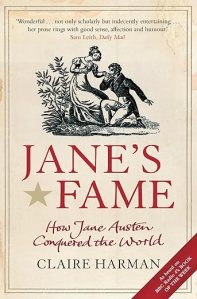
Award-winning biographer Claire Harman traces the growth of Jane Austen’s fame, the changing status of her work and what it has stood for – or has been made to stand for in English culture – in a wide-ranging study aimed at the general reader.
This is a story of personal struggle, family intrigue, accident, advocacy and sometimes surprising neglect as well as a history of changing public tastes and critical practices. Starting with Austen’s own experience as a beginning author (and addressing her difficulties getting published and her determination to succeed), Harman unfolds the history of how her estate was handled by her brother, sister, nieces and nephews, and goes on to explore the eruption of public interest in Austen in the last two decades of the nineteenth century, the making of her into a classic English author in the twentieth century, the critical wars that erupted as a result and, lastly, her powerful influence on contemporary phenomena such as chick-lit, romantic comedy, the heritage industry and film.
Part biography and part cultural history, this book does not just tell a fascinating story – it is essential reading for anyone interested in Austen’s life, works and remarkably potent fame.
Bestselling author and environmentalist Jonathan Drori follows in the footsteps of Phileas Fogg as he tells the stories of 80 magnificent trees from all over the globe.
In Around the World in 80 Trees, Jonathan Drori uses plant science to illuminate how trees play a role in every part of human life, from the romantic to the regrettable. From the trees of Britain (this is a top search term), to India’s sacred banyan tree, they offer us sanctuary and inspiration – not to mention the raw materials for everything from aspirin to maple syrup. 25 February 2024
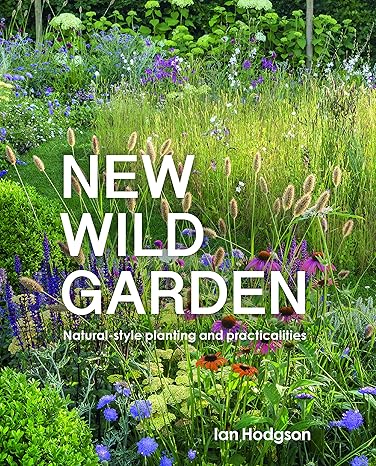
New Wild Garden combines new approaches to a more naturalistic design with the practical side of growing wildflowers and shows how to incorporate wildflowers, real meadows and a looser meadow-style planting into gardens and wild spaces.
With serious concern into the decline of pollinators and habitats, meadows are currently the focus of enormous creativity. Gardeners, wildlife lovers, professional designers and seed manufacturers are all pushing the envelope of what can be grown, the pictorial effects that can be achieved, and the benefits that this provides for gardeners and wildlife.
This book includes 15 step-by-step projects and an essential plant list, as well as offering inspiration to gardeners and an overview of the most influential movement in garden design over recent decades.
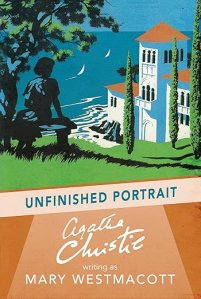
Bereft of the three people she has held most dear – her mother, her husband and her daughter – Celia is on the verge of suicide. Then one night on an exotic island she meets Larraby, a successful portrait painter, and through a long night of talk reveals how she is afraid to commit herself to a second chance of happiness with another person, yet is not brave enough to face life alone. Can Larraby help Celia come to terms with the past or will they part, her outcome still uncertain?
Famous for her ingenious crime books and plays, Agatha Christie also wrote about crimes of the heart, six bittersweet and very personal novels, as compelling and memorable as the best of her work.
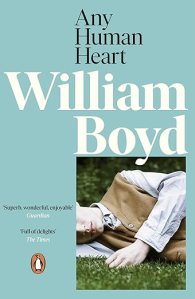
Every life is both ordinary and extraordinary but Logan Mountstuart’s contains more than its fair share of both. As a writer who finds inspiration with Hemingway and Virginia Woolf, a spy recruited by Ian Fleming and betrayed in the war and an art-dealer in ’60s New York, Logan mixes with the movers and shakers of his times. But as a son, friend, lover and husband, he makes the same mistakes we all do in our search for happiness.
Here, then, is the story of a life lived to the full – and a journey deep into a very human heart.
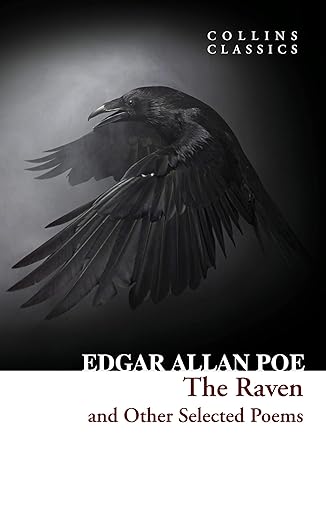
This selection of Edgar Allan Poe’s poetical works includes some of his best-known pieces, including the triumphant, gleeful ‘The Bells’, the tragic ode ‘Annabel Lee’ and his famous gothic tour de force, ‘The Raven’. Some present powerful, nightmarish images of the macabre and bizarre, while others have at their heart a profound sense of love, beauty and loss. All are linguistic masterpieces that demonstrate Poe’s gift for marrying rhythm, form and meaning.
An American writer of primarily prose and literary criticism, Edgar Allen Poe never ceased writing poetry throughout his turbulent life, and is today regarded as a central figure of American literary romanticism. He died in 1849.
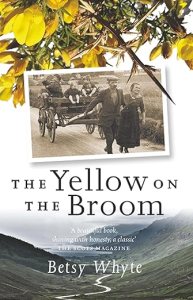
Not only is it a fascinating insight into the life and customs of traveller people in the 1920s and 1930s, it is also a thought-provoking account of human strength and weakness, courage and cowardice, understanding and prejudice by a sensitive and entertaining writer.
The next link up will be on February 1, 2025 when the theme be Valentine’s Day/something sweet on the cover.
What are you currently reading? What did you recently finish reading? What do you think you’ll read next?
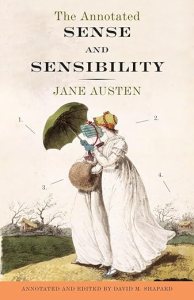
Currently I’m reading Sense and Sensibility by Jane Austen, annotated by David M. Shapard. Jane Austen is one of my favourite authors and I’ve read all of her novels, beginning with Pride and Prejudice, which I’ve reread over the years many times, and watched TV and film adaptations. This year is the 250th anniversary of Jane Austen’s birth, so this is an ideal time to reread some of her books and I’m joining Brona at This Reading Life in her Austen 2025 project to reread her books, along with the Classics Club’s Sync Read (or readalong).
I first read Sense and Sensibility when I was at school but have never reread it. It’s about the three Dashwood sisters and their widowed mother as they leave their family estate at Norland Park after their father’s death when their half-brother John inherited the estate.
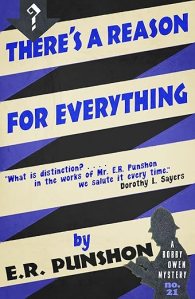
The last book I read was There’s a Reason for Everything by E R Punshon, the 21st in the Bobby Owen mystery series, first published in September 1945. Bobby Owen had recently been promoted from Inspector to the Deputy Chief Constable of Wychshire. I enjoyed this complicated novel with murders, a missing painting allegedly by Vermeer, dodgy fine art dealers and an abandoned country mansion, Nonpareil, once the home of the Tallebois family, and known as a haunted house.
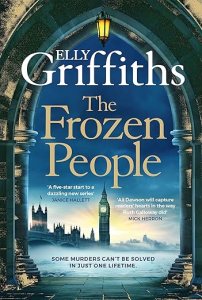
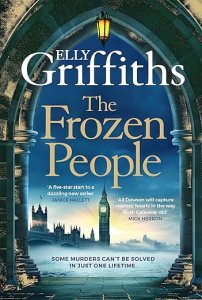
What will I read next? I’m not sure, there are so many I want to read. It will probably be The Frozen People by Elly Griffiths as I have a NetGalley proof copy and the book is due to be published on the 13th of February. It’s the first in a new series – AnAliDawson.
Description on Amazon:
Ali Dawson and her cold case team investigate crimes so old, they’re frozen – or so their inside joke goes. Most people don’t know that they travel back in time to complete their research.
The latest assignment sees Ali venture back farther than they have dared before: to 1850s London in order to clear the name of Cain Templeton, the eccentric great-grandfather of MP Isaac Templeton. Rumour has it that Cain was part of a sinister group called The Collectors; to become a member, you had to kill a woman…
Fearing for her safety in the middle of a freezing Victorian winter, Ali finds herself stuck in time, unable to make her way back to her life, her beloved colleagues, and her son, Finn, who suddenly finds himself in legal trouble in the present day. Could the two cases be connected?
Top 5 Tuesday was created by Shanah at Bionic Book Worm, and it is now being hosted by Meeghan at Meeghan Reads. For details of all of the latest prompts for January to March, see Meeghan’s post here.
The topic this week is Top 5 anticipated reads for Q1 2025. It’s time to talk about all the shiny new books coming out in January, February and March in 2025. What are the books you can’t wait to hold in your hands the most?
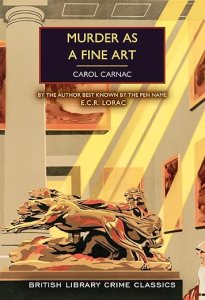
When a civil servant at the newly formed Ministry of Fine Arts is found crushed beneath a monstrous marble bust after dark, it appears to be the third instance in a string of fatal accidents at the department. Already disturbed by rumours of forgeries and irregularities in the Ministry’s dealings, Minister Humphry David is soon faced with the possibility that among his colleagues is a murderer – though how the bust could have been made an instrument of death is a masterstroke of criminal devilment. Taking charge of the case, Inspector Julian Rivers of Scotland Yard enters a caustic world of fine art and civil service grievances to unveil a killer hiding in plain sight.
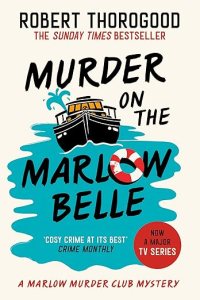
Murder on the Marlow Belle (The Marlow Murder Club Mysteries, Book 4) by Robert Thorogood Publication date 16 January 2025
Verity Beresford is worried about her husband. Oliver didn’t come home last night so of course Verity goes straight to Judith Potts, Marlow’s resident amateur sleuth, for help. Oliver, founder of the Marlow Amateur Dramatic Society, had hired The Marlow Belle, a private pleasure cruiser, for an exclusive party with the MADS committee but no one remembers seeing him disembark. And then Oliver’s body washes up on the Thames with two bullet holes in him – it’s time for the Marlow Murder Club to leap into action.
Oliver was a rather complicated chap and he wasn’t short of enemies. Judith, Suzie, and Becks are convinced they’ll crack the case in no time. But things are not as they seem in the Marlow Amateur Dramatic Society, and the gang will need to keep their wits about them, otherwise a killer may sail away scot-free …
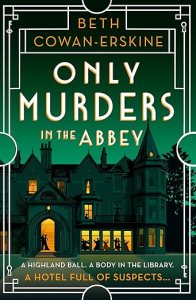
Loch Down Abbey is full of guests for a Highland Ball. Including several uninvited members of the Inverkillen clan, the Abbey’s former residents. Housekeeper Mrs MacBain thinks her biggest challenge will be finding suitable rooms for everyone and keeping the peace at cocktail hour.
Until the morning after the ball, when one of the guests is discovered inside the Abbey’s library – as dead as a doornail.
Who would have had motive to want them dead? And how did they manage to commit their crime and escape while keeping the door locked from the inside? With an Abbey full of suspects and secrets, it is down to Mrs MacBain to catch the killer before they strike again…
Ali Dawson and her cold case team investigate crimes so old, they’re frozen – or so their inside joke goes. Most people don’t know that they travel back in time to complete their research.
The latest assignment sees Ali venture back farther than they have dared before: to 1850s London in order to clear the name of Cain Templeton, the eccentric great-grandfather of MP Isaac Templeton. Rumour has it that Cain was part of a sinister group called The Collectors; to become a member, you had to kill a woman…
Fearing for her safety in the middle of a freezing Victorian winter, Ali finds herself stuck in time, unable to make her way back to her life, her beloved colleagues, and her son, Finn, who suddenly finds himself in legal trouble in the present day. Could the two cases be connected?
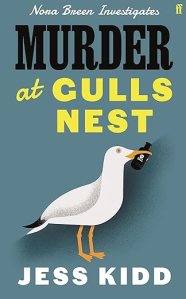
Somewhere in the north, a religious community meets for Vespers. Here on the southeast coast, Nora Breen prepares for braised liver and a dining room full of strangers.
After thirty years in a convent, Nora Breen has thrown off her habit and set her sights on the seaside town of Gore-on-Sea. Why there? Why now? Instinct tells her it’s better not to reveal her reasons straight away. She takes a room at Gulls Nest guest house and settles in to watch and listen.
Over disappointing – and sometimes downright inedible – dinners, Nora realises that she was right to keep quiet: her fellow lodgers are hiding something. At long last, she has found an outlet for her powers of observation and, well, nosiness: there is a mystery to solve, and she is the only person for the job.
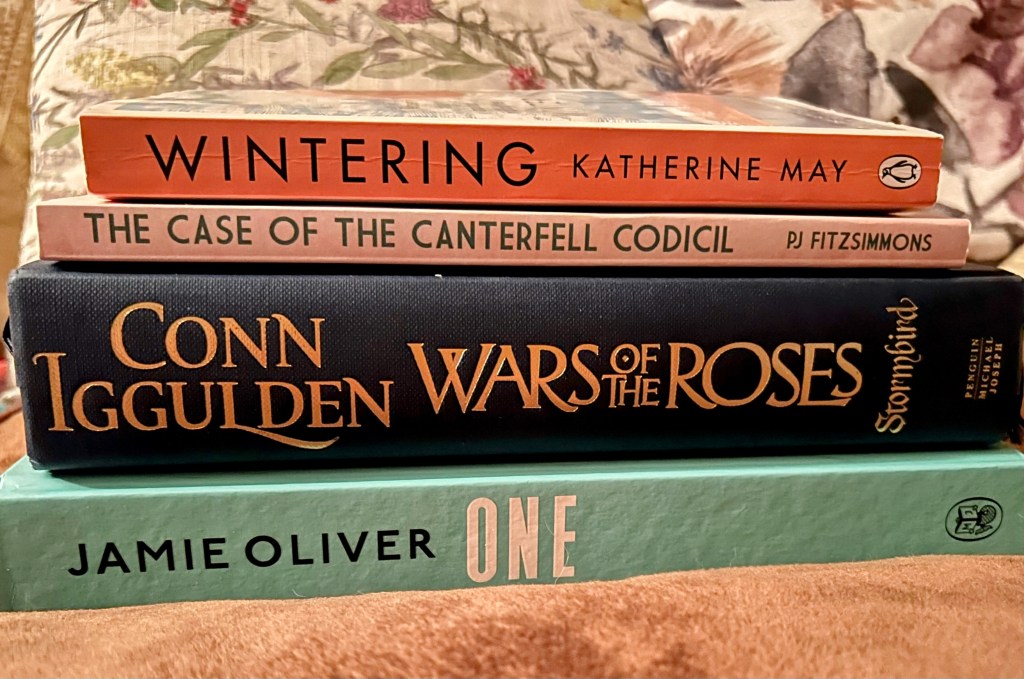
I’ve always loved books and whenever anyone asked me what I’d like for my birthday or Christmas the answer was always ‘books, please’ . So l was delighted this last Christmas to receive four books!
Two of them are books that were on my wish list and the other two were complete surprises.
I’ve got some of Jamie’s books, and this one looks like a good addition. In his introduction he writes ‘With a twinkle in my eye I want to position this book as one that is absolutely dedicated to the art of minimal washing up – you cook each recipe in just one pan or tray … it’s about making your life easier.’ I like the idea of minimal washing up and will be cooking quite a lot of these recipes.
It has over 120 recipes for tasty, fuss-free and satisfying dishes cooked in just one pan. What’s better: each recipe has just eight ingredients or fewer, meaning minimal prep (and washing up) and offering maximum convenience. With chapters including Veggie Delights, Celebrating Chicken, Frying Pan Pasta, Batch Cooking, Puds & Cakes, it all looks simply delicious.
Historical fiction has long been a great favourite of mine. I absolutely loved Sharon Penman’s The Sunne in Splendour that made me want to know more about the Wars of the Roses.So, when I found Iggulden had written a trilogy about the civil war I was keen to read it. I’ve read some of Iggulden’s other historical fiction novels and loved them, so I’m looking forward to reading this.
King Henry V – the great Lion of England – is long dead. In 1437, after years of regency, the pious and gentle Henry VI, the Lamb, comes of age and accedes to the English throne. His poor health and frailty of mind render him a weakling king -Henry depends on his closest men, Spymaster Derry Brewer and William de la Pole, Duke of Suffolk, to run his kingdom.
Yet there are those, such as the Plantagenet Richard, Duke of York, who believe England must be led by a strong king if she is to survive. With England’s territories in France under threat, and rumours of revolt at home, fears grow that Henry and his advisers will see the country slide into ruin. With a secret deal struck for Henry to marry a young French noblewoman, Margaret of Anjou, those fears become all too real.
As storm clouds gather over England, King Henry and his supporters find themselves besieged abroad and at home. Who, or what can save the kingdom before it is too late?
The Case of the Canterfell Codicil (Anty Boisjoly Mysteries Book 1) by PJ Fitzsimmons (not on my wish list). This was a complete surprise for me as I don’t know anything about this book, or the author. It’ll be good reading a new-to-me author and I do like locked room mysteries.
1920s gadabout Anty Boisjoly takes on his first case when his Oxford chum is facing the gallows, accused of the murder of his wealthy uncle.
Not one but two locked-room murders later, Boisjoly’s pitting his wits and witticisms against a subversive butler, a senile footman, a single-minded detective-inspector, an errant goat, and the eccentric conventions of the pastoral Sussex countryside to untangle a multi-layered mystery of secret bequests, ancient writs, love triangles, revenge, and a teasing twist in the final paragraph.
The Case of the Canterfell Codicil is a classic, cosy, locked-room mystery with an improbable plot inspired by Agatha Christie and prose in the style of an homage to PG Wodehouse.
Wintering: The power of rest and retreat in difficult times by Katherine May (a surprise, not on my wish list). It’s a memoir covering quite a wide range of topics, not just about winter, or rest and retreat. I’ve seen this book is one people either praise it or criticise it, so I’m keen to know what I think of it.
Wintering is a poignant and comforting meditation on the fallow periods of life, times when we must retreat to care for and repair ourselves. Katherine May thoughtfully shows us how to come through these times with the wisdom of knowing that, like the seasons, our winters and summers are the ebb and flow of life.
A moving personal narrative interwoven with lessons from literature, mythology and the natural world, May’s story offers instruction on the transformative power of rest and retreat. Illumination emerges from many sources: solstice celebrations and dormice hibernation, C.S. Lewis and Sylvia Plath, swimming in icy waters and sailing arctic seas.
Ultimately, Wintering invites us to change how we relate to our own fallow times. May models an active acceptance of sadness and finds nourishment in deep retreat, joy in the hushed beauty of winter, and encouragement in understanding life as cyclical, not linear. A secular mystic, May forms a guiding philosophy for transforming the hardships that arise before the ushering in of a new season.
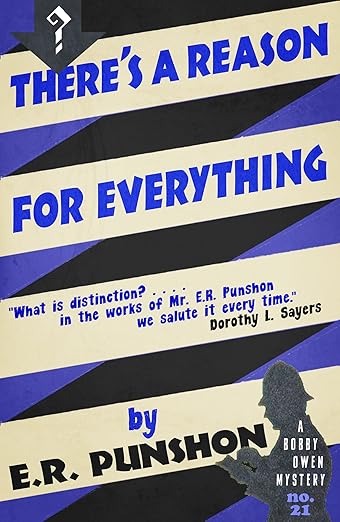
There’s a Reason for Everything by E R Punshon is the third book I’ve read for Dean Street Press December, hosted by Liz at Adventures in Reading, Running and Working from Home. I’d never read anything by him before, or even heard of him, but it was one of the books Dean Street Press was giving away free in November 2021, so I was lucky to receive it. It’s the 21st in the Bobby Owen mystery series, first published in September 1945, and Bobby has recently been promoted from Inspector to Deputy Chief Constable of Wychshire.
The first thing to say is that I enjoyed it and the second thing is that it is a complicated novel with murders, a missing painting allegedly by Vermeer, dodgy fine art dealers and an abandoned country mansion, Nonpareil, once the home of the Tallebois family, and known as a haunted house.
Description from Amazon:
With a slow gesture of one lifted hand, Bobby pointed. There, in a space between the prostrate stag and posturing goddess, was a human leg, a twisted, motionless leg in a strained, unnatural position.
Bobby Owen, now Deputy Chief Constable of Wychshire, finds himself taking part in a ghost hunt at legendary haunted mansion Nonpareil. What he discovers is the very real corpse of a paranormal investigator. It seems that among the phantoms there are fakes – but will that end up including a priceless painting by Vermeer?
Nonpareil, where much of the action tales place, dominates the book. It is enormous, with many rooms, now boarded up and in darkness, connected by a
far-stretching labyrinth of corridors and of rooms, room upon room, one opening from another, all in gloom alleviated by the spare daylight that here and there struggled through chinks and cracks in the boarded windows. (page 83)
The silence is intense in the all-pervading gloom, with great shadows where a man could lurk unseen and in its east and west wings space enough to hide an army. The picture gallery, a long, lofty, narrow room, with windows on one side and niches between the windows where shrouded statues stand, is darker even than anywhere else in the house. A sense of danger, spookiness and foreboding pervades the book and it has a great sense of place.
The characters are just as mysterious, apart from the police, of course. Are they who they say they are? I was perplexed for quite some time until I began to see what was behind the bewildering confusion in Punshon’s narrative. I think this is a cleverly constructed plot, with ingenious puzzles to piece together before all the answers are revealed. I was quite pleased to find out at the end that I’d worked out one of the clues correctly.
I’ll certainly look for more of Punshon’s books to read. There are 35 Bobby Owen mysteries, 1 Inspector Carter mystery and 4 novels.
About the authorfrom Dean Street Press:
E.R. Punshon was born in London in 1872.
At the age of fourteen he started life in an office. His employers soon informed him that he would never make a really satisfactory clerk, and he, agreeing, spent the next few years wandering about Canada and the United States, endeavouring without great success to earn a living in any occupation that offered. Returning home by way of working a passage on a cattle boat, he began to write. He contributed to many magazines and periodicals, wrote plays, and published nearly fifty novels, among which his detective stories proved the most popular and enduring.



 BooksPlease