Six Degrees of Separation: From Never Let Me Go to A Fear of Dark Water

Six Degrees of Separation is a monthly link-up hosted by Kate at Books Are My Favourite and Best. Each month, a book is chosen as a starting point and linked to six other books to form a chain. A book doesn’t need to be connected to all the other books on the list, only to the one next to it in the chain.

This month’s chain begins with:

Never Let Me Go

When I read Never Let Me Go by Kazuo Ishiguro in 2006 I thought it was very chilling and disturbing in its implications. I didn’t know what it was all about before I read it, so when I realised it quite took my breath away. I noted this quotation ‘… you’ve been told and not been told.’ And as I don’t want to give away the plot all I’m saying is that this book is about love, friendship and memory.
The Remains of the Day

My first book is another book by  Kazuo Ishiguro, The Remains of the Day, a book that I liked much more than Never Let Me Go. I read it years ago and have also seen the film of the book, with Anthony Hopkins as Stevens, the aging butler at Darlington Hall, looking back on his life. It’s a sad and moving book about life between the two World Wars. Stevens reminisces about his relationship with Darlington Hall’s housekeeper, Miss Kenton and his unspoken feelings for her.
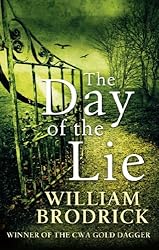
Another book with the word ‘day’ in the title is The Day of the Lie by William Broderick. This is the fourth of his Father Anselm books – a series I love, although this is not my favourite book of the series. It is set in post-Second World War Poland, covering  the early 1950s, the early 1980s and the present day. Father Anselm’s old friend John has asked him to investigate who had betrayed  Roza Mojeska. She had been part of an underground resistance movement, had been arrested and tortured by the secret police. Like his other books this is a complicated and layered book, delving into the past, uncovering secrets and revealing crimes.

Schindler's ListSchindler’s List by Thomas Keneally is also set in Poland – Nazi-occupied Poland during the Second World War. I haven’t read this book yet, although I have watched the film directed by Steven Spielberg more than once. It’s an unforgettable story, all the more extraordinary for being true. Oskar Schindler, a German business man risked his life to protect and save the lives of more than a thousand Jews. The book based on numerous eyewitness accounts. It won the Booker Prize in 1982.

The Secret RiverThe Secret River by Kate Grenville was  shortlisted for the Booker Prize in 2006. It completely captivated me when I read it in 2012. It’s historical fiction  following the life of William Thornhill from his childhood in the slums of London to Australia. He was a Thames waterman transported for stealing timber in 1806. It’s about his struggle for survival after he was pardoned and became a waterman on the Hawkesbury River and then a settler with his own land and servants. It’s beautifully written and raises several issues ‘“ about crime and punishment, about landownership, defence of property, power, class and colonisation.

Standing WaterAnother book set in Australia, but this time in the present day is Standing Water by Terri Armstrong. It’s a fascinating story set in and near the fictional town of Marrup in the Western Australia Wheatbelt, an area suffering from drought ‘“ there’s been no rain for a couple of years. I was completely engrossed in this book, which is about friendships, sibling rivalry, parent/child relationships, and love and betrayal. The characters are convincing and the setting is superb. I could feel the heat, see the landscape, the farms, the plants, birds and the Dog Rock, a huge rock overlooking a panorama of flat land below its sixty foot height, with tiny caves at its base.

A Fear Of Dark Water (Jan Fabel, #6)Which leads me to A Fear of Dark Water by Craig Russell, the last link in the chain. The water in this book is the result of a massive storm that hit Hamburg, flooding the city, just as a major environmental summit is about to start. This is crime fiction – a serial rapist and murderer is still at large in the city and when the flood waters recede a headless torso is found washed up. I thoroughly enjoyed this fast paced and complex, multi-layered crime novel that kept me guessing right to the end.

From Never Let Me Go to A Fear of Dark Water took me from a disturbing view of the future to a disturbing view of the present via the UK, Poland, Australia and Germany. Where does your chain take you?
 

Landscapes: John Berger on Art

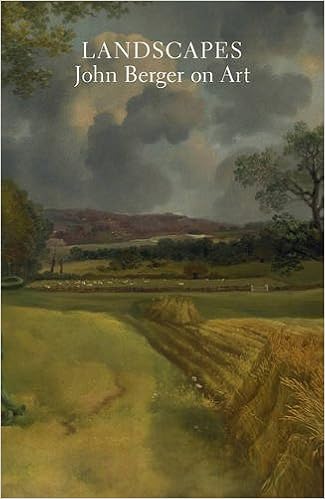
Landscapes : John Berger on Art, edited by Tom Overton is a collection of essays by art critic, novelist, poet, and artist John Berger written over the past 60 plus years. However both the title and the cover art – a painting of a landscape – led me to think it would discuss landscapes. But I should have taken more note of this sentence in the blurb-‘Landscapes offers a tour of the history of art, but not as you know it.‘ It is definitely not art as I know it but it is a “landscape” of Berger’s thoughts on his life, on people and ideas that have influenced him, artists and authors that he liked and disliked, with very little in it about landscapes. There are essays on his life, people, ideology, philosophy and on art history and theory about the nature and meaning of art.

Having said that there are sections that I liked and enjoyed, such as the chapters on The Ideal Critic and the Fighting Critic and on Cubism. Knowing next to nothing about cubism and not liking the cubist paintings I have seen, I think I now understand what the artists were attempting, moving away from art that imitated nature to their representation of reality on a two dimensional plane to portray a more complex image of reality.

I am obviously not the target audience for this book!

  • Format: Kindle Edition
  • File Size: 1131 KB
  • Print Length: 272 pages
  • Publisher: Verso (1 Nov. 2016)

I received a copy of this book from Netgalley.

My Friday Post: Rather Be the Devil

Every Friday Book Beginnings on Friday is hosted by Gillion at Rose City Reader where you can share the first sentence (or so) of the book you are reading, along with your initial thoughts about the sentence, impressions of the book, or anything else the opener inspires.

Ian Rankin’s latest book was published yesterday and it arrived in the post as I’d pre-ordered it back in March. It’s Rather Be the Devil, the 21st Rebus book.  I immediately started reading it.

Rather Be the Devil (Inspector Rebus, #21)

It begins:

Rebus placed his knife and Fork on the empty plate, then leaned back in his chair, studying the other diners in the restaurant.

‘Someone was murdered here, you know,’ he announced.

Blurb

Some cases never leave you.

For John Rebus, forty years may have passed, but the death of beautiful, promiscuous Maria Turquand still preys on his mind. Murdered in her hotel room on the night a famous rock star and his entourage were staying there, Maria’s killer has never been found.

Meanwhile, the dark heart of Edinburgh remains up for grabs. A young pretender, Darryl Christie, may have staked his claim, but a vicious attack leaves him weakened and vulnerable, and an inquiry into a major money laundering scheme threatens his position. Has old-time crime boss Big Ger Cafferty really given up the ghost, or is he biding his time until Edinburgh is once more ripe for the picking?

In a tale of twisted power, deep-rooted corruption and bitter rivalries, Rather Be the Devil showcases Rankin and Rebus at their unstoppable best.

Also every Friday there is The Friday 56, hosted by Freda at Freda’s Voice.

Friday 56

These are the rules:

  1. Grab a book, any book.
  2. Turn to page 56, or 56% on your eReader.
  3. Find any sentence (or a few, just don’t spoil it) that grabs you.
  4. Post it.
  5. Add the URL to your post in the link on Freda’s most recent Friday 56 post.

Page 56:

‘So what’s this all about?’ Chatham enquired.

‘It’s just a feeling I got, right back at the start of the original investigation. The feeling we were missing something, not seeing something.’

I see that even in retirement Rebus just can’t stop being a detective!

October 2016: Reading Review

October was a very good reading month for me. I read 9 books and have reviewed 8 of them (the links are to my posts):

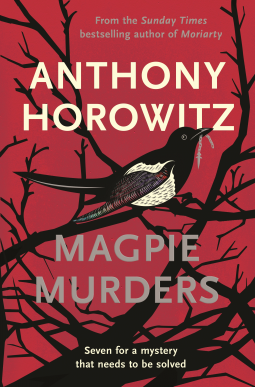
  1. Magpie Murders by Anthony Horowitz – a really satisfying read, with believable characters, set in beautifully described locations, tantalisingly mysterious and so, so readable. I loved it.
  2. Joyland by Stephen King – a ghost story, a love story, a story of loss and heartbreak. It’s also a murder mystery and utterly compelling to read.
  3. Accidents Happen by Louise Millar – At first I was enjoying this book ‘“ it’s very readable, but I didn’t think it was plausible and I couldn’t suspend my disbelief.
  4. The Black Caravel by Harry Nicholson set in 1536 this is a fascinating story about ordinary people set against the background of national affairs and how it affects their lives. I really enjoyed it.
  5. The Blood Card by Elly Griffiths – a most entertaining book, with a convincing cast of characters. The mystery is expertly handled, with plenty of suspense and lots of twists and turns as the separate plot strands are intricately woven together. I loved it.
  6. The Songlines by Bruce Chatwin – a fascinating account of Chatwin’s visit to Australia to find out about the Songlines and the myths of the legendary totemic beings who sang the world into existence as they wandered over the continent in the Dreamtime.
  7. Autumn by Ali Smith – a  poignant and cutting novel about modern life, how we got to where we are, and the mood of the country post-Brexit. It’s a remarkable book.
  8. The Dark Flood Rises by Margaret Drabble – this novel explores the ending of life, the nature of ageing, and life and death. But it is by no means depressing or morbid. I liked it very much. It’s densely layered, thought provoking and moving.
  9. Another Day Gone by Eliza Graham  – another excellent book – review to follow.

For most of the month I was also reading The Fishing Fleet: Husband Hunting in the Raj by Anne de Courcy. I had hoped to have finished it before the end of October but I’m reading it very slowly. I’ve read 44% and have decided to put it on hold for a while. It’s non-fiction and I shall be able to pick it up where I left off without having to go back to the beginning!

My book of the month. and also my Crime Fiction Pick of the Month, is the brilliant Magpie Murders by Anthony Horowitz. It’s a a puzzle-type of crime fiction combining elements of the vintage-style golden age crime novel with word-play and cryptic clues and allusions to Agatha Christie and Arthur Conan Doyle. It’s also a novel within a novel, with mystery piled upon mystery. I loved it.

Arrowood by Laura McHugh

ArrowoodArrowood promised a lot – a mystery set in a creepy old house, called Arrowood, in Keokuk, Iowa, one of the grand houses that line the Mississippi River. Arden Arrowood’s little twin sisters had disappeared from the house when Arden was eight and they were four. Arden had last seen them in the back of a gold coloured car driven away from the house. But their bodies had never been found and no evidence had been found to convict the owner of the car, Harold Singer. Seventeen years after her grandfather’s death Arden inherits the family home and returns, determined to discover what had actually happened to her sisters.

It had all the elements that should have made this story very spooky and full of psychological suspense – ghostly sounds, creaky floorboards, voices coming from the walls and bath water seeping from under the bath. But yet, I didn’t find it scary. As the family secrets are slowly revealed, drip fed through flashbacks, and the unreliability of memory surfaced I felt the tension ooze out of the book.

It’s a shame because at first the tension is great, the atmosphere convincing and the characters clearly formed. I like the historical aspects – the connection with the Underground Railway (used in the 19th century by slaves escaping from the southern states) – and the descriptive writing about the setting in Iowa, together with the sense of nostalgia for the time and place Arden had left behind. As a character study it worked very well but as a psychological and suspense filled novel it fell short for me. An enjoyable read nevertheless.

  • Format: Kindle Edition
  • File Size: 2294 KB
  • Print Length: 278 pages
  • Page Numbers Source ISBN: 1780891938
  • Publisher: Cornerstone Digital (11 Aug. 2016)
  • Source: review copy

Thanks to the publisher and Netgalley for giving me access to an advance copy.

First Chapter, First Paragraph

First chapterEvery Tuesday Diane at Bibliophile by the Sea hosts First Chapter First Paragraph Tuesday Intros to share the first paragraph sometimes two, of a book that she’s reading or planning to read soon.

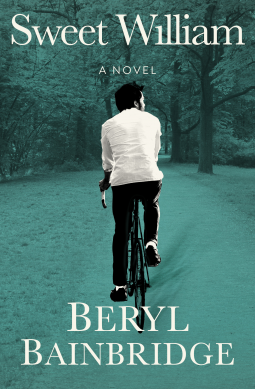
My opener this week is from Sweet William by Beryl Bainbridge, a book Greta from Open Road Integrated Media offered me on NetGalley as I’ve recently reviewed The Bottle Factory Opening. 

Sweet William was first published in 1975 – this e-book edition is due to be published 29 November 2016.

It begins:

In the main entrance of the air terminal a young man stood beside a cigarette machine, searching in the breast pocket of his blue suit for his passport. A girl, slouching in a grey coat, as if she was too tall, passively watched him.

‘It’s safe,’ he said, patting his pocket with relief.

Blurb

Romantic comedy meets social satire in this delirious novel about sexual freedom versus British tradition in swinging 1960s London.

When dull professor Gerald leaves London for the United States, his fiancée, Ann, is a bit afraid and sad to see him go’”never has he looked so handsome and masculine as when he’s about to board the plane. But a few days later at a religious service, Ann is beckoned to sit next to a stranger with yellow curls and a nose like a prizefighter’s. Her heart inexplicably begins to race; she feels like she has the flu. This stranger, William McClusky, tells Ann in his Scottish accent that he is a playwright who will be interviewed on TV the very next day. Furthermore, he promises to have a television dropped by her house so she can watch him! From this first bizarre seduction, Ann is infatuated, and in the days following, William begins to take over her life.

In the throes of the affair, Ann gives up her BBC job, helps a friend get an abortion, encourages adultery, and writes a break-up letter to her fiancé. Her engagement to Gerald had been rushed, after all, and was designed to serve her mother’s desires more than her own. With William, on the other hand, everything feels different. But is this new man really who he says he is? Is he a genius or a fraud, a compassionate soul or a cheater? Perhaps William is simply a means by which Ann can play out her dangerous fantasies and finally take part in the swinging sixties. Only one thing is certain: Now that she’s with him, there’s no turning back.

An ironic investigation into the art of self-deception and the repercussions of sexual freedom, this blend of black comedy and social satire showcases the wit of award-winning author Beryl Bainbridge, and affirms her status as a mainstay in twentieth-century British literature.

I’ve read a few of Beryl Bainbridge’s books (see below) and loved each one, so I’m really hoping to love this one too.

Dame Beryl Margaret Bainbridge, DBE was an English novelist. She won the Whitbread Awards prize for best novel in 1977 and 1996 and was nominated five times for the Booker Prize. She was described in 2007 as ‘a national treasure’. In 2008, The Times newspaper named Beryl Bainbridge among their list of The 50 greatest British writers since 1945.