Spell the Month in Books – December 2024

Spell the Month in Books is a linkup hosted by Jana on Reviews From the Stacks on the first Saturday of each month. The goal is to spell the current month with the first letter of book titles, excluding articles such as ‘the’ and ‘a’ as needed. That’s all there is to it! Some months there are optional theme challenges, such as “books with an orange cover” or books of a particular genre, but for the most part, any book you want to use is fair game!

The optional theme this month is Christmas or Nonfiction and I’ve chosen the Nonfiction option as I don’t read many Christmas-related books. The descriptions are taken from my posts on the books, where they exist.

D is for The Dancing Bear by Frances Faviell, the pen name of Olivia Faviell Lucas, painter and author.

After the war, in 1946, she went with her young son, John, to Berlin where Richard Parker, her second husband, had been posted as a senior civil servant in the post-war British Administration. It was here that she befriended the Altmann family, which prompted her first book The Dancing Bear (1954), a memoir of the Occupation seen through the eyes of both occupier and occupied.It covers the years from Autumn 1946 to Autumn 1949, with an Epilogue dated Autumn 1953. Her memoir is mainly about her friendship with the Altmann family – Frau Maria Altmann, her husband, Oskar and her children, Ursula, who works for a group of American service men, Lilli, a ballet dancer and son, Fritz, who was a member of the Hitler Youth and is now involved in the Black Market. Their eldest son. Kurt. is missing in Russia. Berlin had been divided into four sectors by the Allies – Britain, the United States, France and the Soviet Union – and Frances is horrified by the conditions she found. There were deaths from hunger and cold as the winter approached and queues for bread, milk, cigarettes, cinemas, buses and trams.

E is for Elizabeth Macarthur: a Life at the Edge of the World by Michelle Scott Tucker

This is an extremely readable biography of a fascinating woman. It’s well researched and provides an insight into the early years of Australia’s colonial history. Elizabeth was born on 14 August 1766 in Devon, England and she married John Macarthur in October 1788. In June 1789 they sailed with their first child, Edward, to New South Wales where John joined his regiment, the New South Wales Corps, in the recently established colony of New South Wales.

For sixty years, Elizabeth ran the family farm in Parramatta, west of Sydney town – on her own during her husband’s long absences abroad, when she was responsible for the care of their valuable merino flocks, as well as the Camden Park estate and the direction of its convict labourers. By the time Macarthur came back from his second absence, he was overwhelmed by mental illness, and they spent the last few years of his life apart. He died in 1834. The house and gardens of her farm, aptly named ‘Elizabeth Farm’ is now an ‘access all areas’ museum. In 1850, she died in her daughter and son-in-law’s house at Watson’s Bay outside Sydney, overlooking the Pacific Ocean.

C is for Come Tell Me How You Live by Agatha Christie Mallowan

Agatha Christie had visited the Middle East in 1929 travelling on the Orient Express to Istanbul and then on to Damascus and Baghdad. She visited the excavations at Ur and returned there the following spring where she met archaeologist Max Mallowan – by the end of the summer they had decided to marry, which they did on 11 September 1930.

It’s her memoir in answer to her friends’ questions about what life was like when she accompanied Max on his excavations in Syria and Iraq in the 1930s. The emphasis in the book is on the everyday life on a dig and Agatha took an active part, helping to catalogue, label and clean the items they found as well as taking photographs and developing them. She also found time to spend on writing her books. So, although she gives a detailed account of how they worked, how they employed workmen for the excavations and servants who looked after Max and his team of archaeologists, there is not much about what they found.

She described the local people in her Epilogue as people, who know how to laugh and how to enjoy life, who are idle and gay, and who have dignity, good manners, and a great sense of humour, she also recorded their disputes: ‘Quarrelling is, in any case, almost continuous.‘ And ‘Syria is full of fiercely fanatical sects of all kinds, all willing to cut each other’s throats for the good cause! 

E is for Elizabeth’s Rival: The Tumultuous Tale of Lettice Knollys, Countess of Leicester by Nicola Tallis – I haven’t read this yet, it’s one of my TBRs.

Cousin to Elizabeth I – and very likely also Henry VIII’s illegitimate granddaughter – Lettice Knollys had a life of dizzying highs and pitiful lows. Darling of the court, entangled in a love triangle with Robert Dudley and Elizabeth I, banished from court, plagued by scandals of affairs and murder, embroiled in treason, Lettice would go on to lose a husband and beloved son to the executioner’s axe. Living to the astonishing age of ninety-one, Lettice’s tale gives us a remarkable, personal lens on to the grand sweep of the Tudor Age, with those closest to her often at the heart of the events that defined it.

In the first ever biography of this extraordinary woman, Nicola Tallis’s dramatic narrative takes us through those events, including the religious turmoil, plots and intrigues of Mary, Queen of Scots, attempted coups, and bloody Irish conflicts, among others. Surviving well into the reign of Charles I, Lettice truly was the last of the great Elizabethans. (Amazon UK)

M is for The Mystery of Princess Louise by Lucinda Hawksley.

Princess Louise was Victoria’s sixth child – her fourth daughter, born on 18th March 1848. It was an agonising and terrifying birth in a year of revolution and rebellion, a time when royal families throughout Europe were being deposed and in Britain the working classes were agitating for higher pay, better working conditions and more legal rights. There is so much detail about her life in this book, packed with intrigues, scandals and secrets.

She had a difficult childhood, disliked and bullied by her mother and she often rebelled against the restrictions of life as a princess. She had an unhappy marriage to John Campbell, the Marquess of Lorne, later the 9th Duke of Argyll, a homosexual, and went with him to Canada in 1882 when he was appointed as Governor-General. Her relationship with Canada became a love-hate one, but began and ended with Canadian adoration.

The scandals arose about whether she had had an illegitimate child and her long term love affair with the sculptor Joseph Boehm. The mystery is still unresolved as Louise’s files in the Royal Archives are closed and her husband’s family archives are inaccessible.

B is for Breathtaking by Rachel Clarke, a palliative care doctor.

Her book recounts her experiences during the first four months of 2020, when she worked on the Covid-19 wards in the Oxford University Hospitals system. Taken from her diary that she kept at the time it has an immediacy as she records her insomnia, her fears for her family and also the tremendous resilience, courage and empathy that she and the rest of the hospital staff had. Although it is a grim account, it is also uplifting to know the care they took of their patients and the attentiveness to their patients’ needs despite the fact that many of the staff were not trained in intensive care and had never dealt with anything like this before. Breathtaking records the compassion and kindness of numerous people, and pays tribute to both NHS staff and volunteers in dealing with such a distressing and immensely horrific situation.

E is for The English: a Portrait of a People by Jeremy Paxman

I like Paxman’s style of writing, I could almost hear him speaking as I read. He’s a person who has grown on me over the years and  lately I’ve enjoyed his TV documentaries too. It’s always been entertaining to watch his interviews, even if I didn’t agree with his views – or his aggressive approach. It’s toned down in this book, but every now and then his acerbic nature comes across. He writes about food, sport, football hooligans, language, individualism, education, religion, ‘John Bull’, cities and the countryside – the English idyllic village, class structure and social tone, attitudes to women, business and trade to name but a few topics. It’s well researched and very readable, with a bibliography listing all the books he mentions plus others that presumably he has used. It seems there really is no such thing as ‘the English’ – we’re a mixture of all sorts, or as Paxman puts it, The English are a mongrel race‘. (page 59)

R is for The Riviera Set by Mary S Lovell

This is the story of a house and those who peopled it between the years 1930 and 1960. In 1930 Maxine Elliott, an American, commissioned the architect Barry Dierks to build  the Chateau de l’Horizon on the land she had bought on a narrow stretch of rocks with a small promontory between Cannes and Juan-les-Pins. This is the part of the book I enjoyed the most, first of all about Maxine herself, then the description of the construction of the Chateaux and the years that Maxine owned it and lived there. Maxine really came into her own there as a superb hostess. Regular visitors included Winston Churchill, Cole Porter, Noel Coward, Somerset Maugham among many others – famous actors and actresses as well as members of the aristocracy and politicians. 

The Duke and Duchess of Windsor, who lived nearby before the Second World War, were also visitors. The picture painted of them is not flattering – and there was much talk about how to address Wallis and whether the women should curtsy to her. By the time the War approached Maxine had lost her sparkle, suffering from ill health and she died in March 1940.

The Chateau was bought by Aly Khan, the Aga Khan’s heir presumptive at the time. There is quite a lot about his time there, his womanising, his marriage to Rita Hayworth and the social scene of the post-war period up to 1960. It is a fascinating and entertaining book about a pampered, luxurious and decadent world.

The next link up will be on January 4, 2025 when the theme will be: New; this could be new-to-you books, new additions to your TBR list, recently published books, or something else that you connect with the word ‘New’.

Six Degrees of Separation from Sandwich by Catherine Newman to A Shilling for Candles by Josephine Tey

It’s time again for Six Degrees of Separation, a monthly link-up hosted by Kate at Books Are My Favourite and Best. Each month a book is chosen as a starting point and linked to six other books to form a chain. A book doesn’t need to be connected to all the other books on the list, only to the one next to it in the chain.
This month starts with Sandwich by Catherine Newman, a book set in Cape Cod, described as a moving, hilarious story of a family summer vacation full of secrets, lunch, and learning to let go.

My first link is The Widow’s War by Sally Gunning. This is historical fiction set in 1761 about a whaler’s wife, Lyddie, in the Cape Cod village of Satucket in Massachusetts, living with the daily uncertainty that her husband Edward will simply not return. And when her worst fear is realised, she finds herself doubly cursed. She is overwhelmed by grief, and her property and rights are now legally in the hands of her nearest male relative: her daughter’s overbearing husband, whom Lyddie cannot abide. She decides to challenge both law and custom for control of her destiny, but she soon discovers the price of her bold “war” for personal freedom to be heartbreakingly dear.

My second link is a book about another widow, The Widow’s Tale by Mick Jackson. It’s narrated by the widow and is rather rambling as befits a woman in her sixties on the verge of a nervous breakdown. Her husband has died, she’s taken it badly, and goes to live in a rented cottage on the bleak Norfolk coast, shunning other people. She drinks to forget herself, sits in pubs alone, doing the crossword and reading a book to pass the time. She drives out to places she once knew, goes for solitary walks,  gets stuck in the saltmarshes, and is definitely quirky and obsessional.

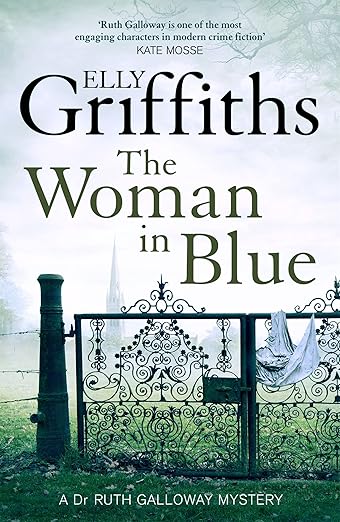
Elly Griffith’s character, archaeologist Ruth Galloway also lives in a cottage on the Norfolk coast. So, My third link is The Janus Stone. Ruth is called in to investigate when builders, demolishing a large old house in Norwich, uncover the skeleton of a child – minus the skull – beneath a doorway. Is it some ritual sacrifice or just plain straightforward murder? The house was once a children’s home. When DCI Harry Nelson meets the Catholic priest who used to run it he tells him that two children did go missing forty years before – a boy and a girl. They were never found. When carbon dating proves that the child’s bones predate the children’s home, Ruth is drawn more deeply into the case. But as spring turns to summer it becomes clear that someone is trying very hard to put her off the scent by frightening her half to death…

More missing children are the subject of My fourth link. It’s On Beulah Height by Reginald Hill. When a child goes missing during one long, hot dry summer it reminds Dalziel of the three little girls who had gone missing 15 years earlier from the village of Dendale in Yorkshire just before it was flooded to provide a new reservoir. No bodies were ever found. Once again during another hot summer the waters of the reservoir recede and the old village re-emerges from the depths.

This book is tightly plotted with many twists that made me change my mind so many times I gave up trying to work out who the murderer was and just read for the pleasure of reading. Hill’s descriptive writing is rich and full of imagery.

There is a bird on the cover of On Beulah Height, so My fifth link is to another book with a bird on the coverThe Crow Trap by Ann Cleeves, the first Vera book. Rachael, Anne and Grace are all staying at Baikie’s an isolated cottage on the North Pennines whilst they carry out an environmental survey. When Rachael arrives at the cottage she is confronted by the body of her friend Bella Furness, who it appears has committed suicide. Then Grace is found dead and the mystery really begins and it is down to DI Vera Stanhope, to get to the bottom of the mystery. Vera is a great character and even though I do like Brenda Blethyn’s portrayal of her in the TV series, I prefer her as she is in the books –  a woman in her fifties, who looks like a bag lady. 

My final link is A Shilling for Candles by Josephine Tey in which Inspector Alan Grant also investigates an apparent suicide. A young and beautiful film star, Christine Clay was found dead beneath the cliffs of the south coast. But he soon discovers that it was in fact murder as a coat button was found twisted in her hair and he suspects a young man, Robin Tisdall who had been staying with Christine in a remote cottage near the beach, especially when it is revealed that she has named him as a beneficiary in her will. Tisdall has lost his coat and so the search is on to find it to prove either his innocence or guilt.

The books in my chain are mainly a mix of crime and historical fiction.

What is in your chain, I wonder?

Next month (January 4, 2025), we’ll start with the 2024 Booker winner, Orbital by Samantha Harvey.

The Christmas Book Hunt by Jenny Colgan

Summary from Amazon:

A heartwarming meet-cute short story from the Sunday Times bestselling author of The Christmas Bookshop. A Christmas mission…

Mirren’s beloved great-aunt Violet is seriously ill. Her one Christmas wish is to be reunited with a long-lost hand-illustrated book from her childhood, a challenge Mirren gladly accepts to give Violet some much-needed festive cheer.

An enchanting journey…

With no sign of the cherished volume online, Mirren falls into the fascinating world of rare books. From London to snowy Hay-on-Wye and Edinburgh’s cobbled streets, she chases leads from bookshop to bookshop—and bumps into mysterious, charming Theo, who, unbeknownst to her, is searching for the same book for reasons of his own…

The start of a new chapter?

As the two join forces to track the book down before time runs out for Violet, will Mirren find her Christmas miracle—and maybe even a kiss under the mistletoe… ?

I normally don’t choose to read romantic stories, and I’m not a fan of short stories but The Christmas Book Hunt by Jenny Colgan sounded interesting because of the book connection. Although it’s described as a short story, at over 100 pages I think it is really a novella. It looked at first as though I was going to find it too cutesy but once the story got going I began to enjoy it. Mirren is looking for a copy of A Child’s Garden of Verses by Robert Louis Stevenson, a particular one that had belonged to her Great Aunt Violet. It was a special edition, with hand-drawn plates by Aubrey Beardsley and now Great Aunt Violet, who is in hospital seriously ill would love to see the book for Christmas. I loved that book as a child, so this is what made the story irresistible for me. It’s easy reading and I read it quickly.

I also liked the story of Mirren’s search in various bookshops in various places in England and Scotland trying to track down what had happened to that particular version of the book. She went to the book town Hay-on-Wye, bookshops in Edinburgh and a secondhand bookshop in Northumberland that sounds very like Barter Books in Alnwick, my favourite bookshop. I was not so keen on the romance element as the relationship develops between Mirren and Theo, who is not the person he appears to be. There are one or two coincidences that cropped up towards the end of the book that I thought were rather remarkable and conveniently tied up all the ends. But overall it was the book element that I found most satisfying.

Top 5:Books:Book Covers

Top 5 Tuesday was created by Shanah at Bionic Book Worm, and it is now being hosted by Meeghan at Meeghan Reads. For details of all of the latest prompts for October to December, see Meeghan’s post here.

Today the topic is Book Covers: What are some of your favourite covers that you have seen this year? Maybe these were reprints, redesigns or alternate covers that came out this year, or maybe they are brand new books!!

These are books I’ve read this year – one new and the rest books that were on my TBR shelves. I love them for their combination of colours, and the scenery.

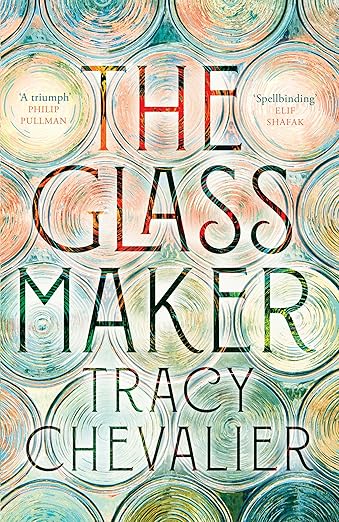
Where Water Lies by Hilary Tailor – her second novel published in June this year.

Every morning is the same for Eliza: she swims in Hampstead Ponds, diving into her memories, reliving the heady days of her teenage friendship with Eric and Maggie. The obsession, the adoration, and the sense of belonging she always craved was perfect, until everything was destroyed in a single afternoon. With guilt never far from the surface, she still asks herself: what really happened that day?

Then one morning, on a street corner, the past collides with the present. Eliza is now a respected member of the community and the carefully constructed life she has built comes crashing down. Should she track down the one person who may be able to forgive her? Or should she keep the past where it belongs?

Soon Eliza begins to wonder: will learning the truth set her free – or will it only drag her down deeper?

The Children’s Book by A S Byatt

From the renowned author of Possession, The Children’s Book is the story of the close of what has been called the Edwardian summer: the deceptively languid, blissful period that ended with the cataclysmic destruction of World War I. In this compelling novel, A.S. Byatt summons up a whole era, revealing that beneath its golden surface lay tensions that would explode into war, revolution and unbelievable change — for the generation that came of age before 1914 and, most of all, for their children.

Famous author Olive Wellwood writes a special private book, bound in different colours, for each of her children. In their rambling house near Romney Marsh they play in a story-book world – but their lives, and those of their rich cousins and their friends, the son and daughter of a curator at the new Victoria and Albert Museum, are already inscribed with mystery. Each family carries its own secrets.

They grow up in the golden summers of Edwardian times, but as the sons rebel against their parents and the girls dream of independent futures, they are unaware that in the darkness ahead they will be betrayed unintentionally by the adults who love them.

Into the Tangled BanK: Discover the Quirks, Habits and Foibles of How We Experience Nature by Lev Parikian

This is non fiction about nature. It’s easy reading, Parikian writes with humour, in a chatty style, but also richly descriptive. I loved it, it is compulsive reading. He is a storyteller, so there are lots of anecdotes and stories, plus his thoughts on nature and how we view it. Amongst many other topics he ponders about the ethics of zoos – something that puzzles me too – and wonders if the definition of a nature lover is becoming that of one who loves nature programmes. There’s a lot packed into this book.

Great Meadow by Dirk Bogarde, first published in 1992, Great Meadow is volume five of Bogarde’s best-selling memoirs.

A recollection of his childhood, from 1927 to 1934 when he was a 19 year old, living in a remote cottage in the Sussex Downs with his sister Elizabeth and their strict but loving nanny, Lally. For the children it was an idyllic time of joy and adventure: of gleaning at the end of summer, of oil lamps and wells, of harvests and harvest mice in the Great Meadow.

With great sensitivity and poignancy, this memoir captures the sounds and scents, the love and gentleness that surrounded the young boy as the outside world prepared to go to war.

The Hog’s Bank Mystery by Freeman Wills Croft

This is a British Library Crime Classic, first published in 1933, during the Golden Age of detective fiction between the two world wars. Dr James Earle and his wife live near the Hog’s Back, a ridge in the North Downs in the beautiful Surrey countryside. When Dr Earle disappears from his cottage, Inspector French of Scotland Yard is called in to investigate. At first he suspects a simple domestic intrigue – and then begins to uncover a web of romantic entanglements beneath the couple’s peaceful rural life.

Dean Street December

DeanStreetDecember is hosted by Liz @ Adventures in reading, running and working from home. Dean Street Press is a publisher devoted to republishing lost gems of vintage literature, from Golden Age Detective novels to middlebrow novels by twentieth century women writers. Read from DSP, review the book(s) you’ve read and link them up on the post on Liz’s blog.

These are the Dean Street Press books I have on my Kindle ready to read – I’m aiming to read at least some of these:

  1. Arrest the Bishop? by Winifred Peck
  2. The Draycott Murder Mystery by Molly Thynne
  3. Evenfield by Rachel Ferguson
  4. A Harp in Lowndes Square by Rachel Ferguson
  5. A House on the Rhine by Francis Faviell
  6. The Other Side of the Moon: David Niven by Sheridon Morley
  7. The Red Lacquer Case by Patricia Wentworth
  8. Thalia by Francis Faviell
  9. There’s a Reason for Everything by E.R. Punshon
  10. Who Pays the Piper? by Patricia Wentworth

The Uncommon Appeal of Clouds: Book Beginnings & The Friday 56

Every Friday Book Beginnings on Friday is hosted by Gillion at Rose City Reader where you can share the first sentence (or so) of the book you are reading. You can also share from a book you want to highlight just because it caught your fancy.

I’m featuring The Uncommon Appeal of Clouds by Alexander McCall Smith, an Isabel Dalhousie book, that I’ve borrowed from my local lbrary.

Chapter One:

‘Mozart’ said, Isabel Dalhousie. And then she added, Stinivasa Ramamjan .

Also every Friday there is The Friday 56, hosted by Freda at Freda’s Voice, but she is taking a break and Anne at My Head is Full of Books has taken on hosting duties in her absence. You grab a book and turn to page 56 (or 56% of an eBook), find one or more interesting sentences (no spoilers), and post them.

But then, we can misjudge each other so easily, she thought; so easily.

Description from Amazon:

As a mother, wife, employer and editor of the Review of Applied Ethics, Isabel Dalhousie is aware that to be human is to be responsible. So when a neighbour brings her a new and potentially dangerous puzzle to solve, once again Isabel feels she has no option but to shoulder the burden.

A masterpiece painting has been stolen from Duncan Munrowe, old-fashioned philanthropist, father to two discontented children, and a very wealthy man. As Isabel enters into negotiations with the shadowy figures who are in search of a ransom, a case where heroes and villains should be clearly defined turns murky: the list of those who desire the painting – or the money – lengthens, and hasty judgement must be avoided at all cost. Morals, it turns out, are like Scottish clouds: complex, changeable and tricky to get a firm grip on; they require a sharp observational eye, a philosophical mindset, and the habit of kindness. Fortunately for those around her, Isabel Dalhousie is in possession of all three.

I’ve read some of his other Isabel Dalhousie books and enjoyed them. So I’m hoping to enjoy this one too. I really like the gentle pace of these books and what I find so fascinating is that whilst not a lot actually happens, a lot goes on in Isabel’s head.

What do you think, does this book appeal to you? What are you currently reading?