Desert Notes and River Notes by Barry Lopez

Blurb:
Two of Lopez’s collections of short fiction in one exhilarating and profoundly beautiful volume 
To National Book Award’“winning author Barry Lopez, the desert and the river are landscapes alive with poetry, mystery, seduction, and enchantment. In these two works of fiction, the narrator responds viscerally and emotionally to their moods and changes, their secrets and silences, and their unique power.
 
Desert Notes portrays the mystical power of an American desert, and the reflections it sparks in the characters who travel there. River Notes, a companion piece, celebrates the wild life forces of a river, calling readers to think deeply on identity and about the hopefulness of their onward journeys, with a lyrical collection of memories, stories, and dreams. From an evocative tale of finding a hot spring in a desert to a meditation on the thoughts and dreams of herons, Lopez offers enthralling stories that enable us to see and feel the rhythms of the wilderness. These sojourns bring readers a specific sense of the darkness, light, and resolve that we encounter within ourselves when away from home.
 
This ebook features an illustrated biography of Barry Lopez including rare images and never-before-seen documents from the author’s personal collection.

My Thoughts:

At times I wasn’t sure what I was reading about as some of the writing didn’t seem to make much sense to me. This is imaginative writing describing the sensations evoked by the desert and the river but I was disoriented between the observation of nature and obsessive and passionate intensity of imagining being in/part of the places and creatures Lopez describes.

I was never sure who the narrator was, at times an unnamed ‘I’ and then a similarly unnamed ‘he’. At times I was thinking of abandoning the book and then a passage appealed to me and I read on. I preferred the stories in River Notes, of being by the river, observing the salmon for example returning to spawn, and the  more straight-forward approach in Hanner’s Story, in which a river guide talks about the history of a community named Sheffield and the stories about the idyllic and far-fetched stories about these people. But overall I didn’t enjoy this book, and although I liked some of the descriptive writing, I was more baffled than enlightened.

  • Format: Kindle Edition
  • File Size: 7049 KB
  • Print Length: 144 pages
  • Publisher: Open Road Media (25 Jun. 2013)
  • Source: I received a free electronic copy of this collection from Netgalley, Barry Holston Lopez, and Open Road Media
  • My Rating: 1½ ˜…

To-Be-Read Books

It’s time for a check of my TBRs. I started listing books on LibraryThing in April 2007, so books I listed in 2007 as ‘to read’ are mainly books I owned before then. Currently I have 319 books listed as TBRs, which is far too many (and that isn’t counting e-books on my Kindle), so I’m going through them to see if I really do want to read them – I did when I first got them, but maybe not now?

I’m beginning by looking at the books I added in 2007 and here are 10 of the oldest books in my catalogue. Some of them I’ve started and put back on the shelves for a variety of reasons:


  • A Dead Language by Peter Rushforth – I really wanted to read this and have started it at least twice. I stopped reading it because of its size ‘“ it’s too heavy to read in bed and it’s very long. I loved Rushforth’s Pinkerton’s Sister and it was whilst I was trying to find out more about that book that I came across the world of book blogs ‘“ which then led me to writing my own blog.
  • Thomas Hardy: The Time-Torn Man by Claire Tomalin – I stopped reading this partway in as I decided I needed to read more of Hardy’s own books before going further. I’ve read a few more of his books, but have never got back to this biography. I will get back to it.
  • Helen of Troy: A Novel by Margaret George – another long book, not started.
  • Martin Chuzzlewit (Wordsworth Classics) by Charles Dickens – I have started this, but this edition is in a very small font! I’ll probably read it on Kindle.

  • The Liar by Stephen Fry – I haven’t started this one. It’s Fry’s debut novel, described on the front cover as ‘Brilliant’, ‘Hilarious’ and ‘sublime’. Will I find it funny? I’m not sure.
  • 1599: A Year in the Life of William Shakespeare by James Shapiro – I started it but can’t remember any specific reason I haven’t finished this book.
  • Human Traces by Sebastian Faulks – another one I haven’t started. A novel about the early days of psychiatry.
  • A Long Walk to Freedom: The Autobiography of Nelson Mandela -I must have read about half of this book before I stopped. It was so long ago that I can’t remember why I didn’t finish it.
  • Band of Brothers by Stephen E Andrews – brotherhood on the battlefields in World War Two. Another book I’ve started a couple of times. I’ve watched the TV adaptation and I have a feeling that it’s better than the book.
  • The Olive Readers by Christine Aziz – not started. Dystopian fiction in which the Readers are smuggling and storing books in a secret library.

If there are any books here that you’ve loved or think are not worth reading do let me know.

My Friday Post: An Uncertain Place

Book Beginnings ButtonEvery Friday Book Beginnings on Friday is hosted by Gillion at Rose City
Reader
 where you can share the first sentence (or so) of the book you are reading, along with your initial thoughts about the sentence, impressions of the book, or anything else the opener inspires.

My opening this week is from An Uncertain Place by Fred Vargas*, another book that has sat unread on my shelves for a while.

An Uncertain Place (Commissaire Adamsberg, #8)

Commissaire Adamsberg knew how to iron shirts. His mother had shown him how you should flatten the shoulder piece and press down the fabric round the buttons. He unplugged the iron and folded his clothes into his suitcase. Freshly shaved and combed, he was off to London, and there was no getting out of it.

Also every Friday there is The Friday 56, hosted by Freda at Freda’s Voice.

Friday 56

These are the rules:

  1. Grab a book, any book.
  2. Turn to page 56, or 56% on your eReader.
  3. Find any sentence (or a few, just don’t spoil it) that grabs you.
  4. Post it.
  5. Add the URL to your post in the link on Freda’s most recent Friday 56 post.

From Page 56:

Since London, and perhaps since Danglard had presented such an encyclopedic account of Highgate Cemetery, the commissaire had been feeling he ought perhaps to try harder to remember names, phrases, sentences. His memory for them had always been poor, though he could recall a sound, a facial expression or a trick of the light years later.

Blurb (Goodreads):

Commissaire Adamsberg leaves Paris for a three-day conference in London. With him are a young sergeant, Estalère, and Commandant Danglard, who is terrified at the idea of travelling beneath the Channel. It is the break they all need, until a macabre and brutal case comes to the attention of their colleague Radstock from New Scotland Yard.

Just outside the baroque and romantic old Highgate cemetery a pile of shoes is found. Not so strange in itself, but the shoes contain severed feet. As Scotland Yard’s investigation begins, Adamsberg and his colleagues return home and are confronted with a massacre in a suburban home. Adamsberg and Danglard are drawn in to a trail of vampires and vampire-hunters that leads them all the way to Serbia, a place where the old certainties no longer apply.

I have just started to read this book this morning and so far it looks very promising, rather quirky and bizarre.

*Fred Vargas is the pseudonym of the French historian, archaeologist and writer Frédérique Audoin-Rouzeau.  Her crime fiction policiers have won three International Dagger Awards from the Crime Writers Association, for three successive novels: in 2006, 2008 and 2009.

A Place of Execution by Val McDermid

For years I’ve steered clear of reading any of Val McDermid‘˜s books and the reason is that I can’t stand to watch the violence and torture scenes in TV series such as Wire in the Blood, based on her Tony Hill/Carol Jordan series. But then I thought that maybe I wasn’t being fair to judge a writer’s work on films based on the books, and I read Cleanskin, one of the Quick Reads series, aimed at ‘adults who’ve stopped reading or find reading tough, and for regular readers who want a short, fast read.’ I enjoyed it and I’ve been meaning to read one of her full length books ever since.

There are many to choose from but I decided to read A Place of Execution, one of her standalone books. The book was made into a 3-part TV drama shown on ITV 1 in 2008, which I didn’t see. It is one of my TBRs.

A Place of Execution

Blurb:

In the Peak District village of Scarsdale, thirteen-year-old girls didn’t just run away. So when Alison Carter vanished in the winter of ’63, everyone knew it was a murder.

Catherine Heathcote remembers the case well. A child herself when Alison vanished, decades on she still recalls the sense of fear as parents kept their children close, terrified of strangers.

Now a journalist, she persuades DI George Bennett to speak of the hunt for Alison, the tantalising leads and harrowing dead ends. But when a fresh lead emerges, Bennett tries to stop the story ‘“ plunging Catherine into a world of buried secrets and revelations.

My thoughts:

This is an excellent psychological thriller, full of tension and suspense, set in the Derbyshire village of Scardale, an isolated community of about ten houses, where everyone is related, a place that had a reputation of being a law unto itself. So everyone could tell Detective Inspector George Bennett the time that Alison Carter left home taking her dog for a walk. But despite extensive searches her body is never found, although they do find her dog in the woodland, tied to a tree with elastoplast wound round its muzzle.

A Place of Execution spans the years from 1963 when Alison went missing up to 1998 when Catherine Heathcote, a journalist decided to write a book about the case. It had Bennett’s first major investigation and he’d been determined to find out what had happened to Alison. The majority of the book is about his investigation and the meticulous searches he and his team carried out until the case was resolved. But why in 1998 after going over the details of the case with Catherine did he suddenly write to her begging her to abandon the book?

The sense of place and time is so well done in this book and the characterisation is so good that I felt I knew these people. Even when the case appears to have been resolved there is something more, something hidden that still needs to be revealed. I had an inkling about what it was but I had by no means guessed all of it. But the clues were all there.

There are many layers in A Place of Execution. The villagers are a close-knit community suspicious of outsiders and reluctant to talk to the police. I realised towards the end of the book that the way that Val McDermid has structured the book allows for a great deal of deception and that things are not always what they seem. I loved it and I shall definitely be reading more of her books.

Paperback, 624 pages
Published February 6th 2006 by Harper Collins (first published June 7th 1999)

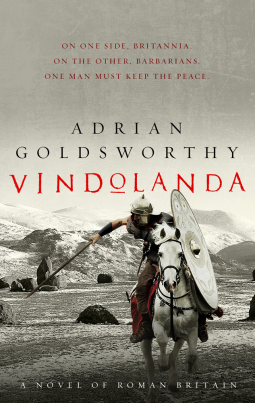
Vindolanda by Adrian Goldsworthy

AD 98: The bustling army base at Vindolanda lies on the northern frontier of Britannia and the entire Roman world. In twenty years’ time, the Emperor Hadrian will build his famous wall, but for now defences are weak, as tribes rebel against Roman rule, and local druids preach the fiery destruction of the invaders.

Flavius Ferox is a Briton and a Roman centurion, given the task of keeping the peace on this wild frontier. But it will take more than just courage to survive life in Roman Britain…

I was quickly drawn into Vindolanda by Adrian Goldsworthy, a novel set in northern frontier of Britain in 98 AD. It’s full of historical detail. Whilst some characters are based on real people about whom little is known apart from their names, most of the characters are fictional, including the main character, centurion Flavius Ferox.  He is based at a small fort called Syracuse (a fictional fort) near the garrison of Vindolanda (modern Chesterholm). Vindolanda is south of Hadrian’s Wall and predates its construction.

The story begins with the arrival of Vindex, the head of the native scouts and a minor son of a chieftain of the Brigantes tribe, who announces that there is a force of at least sixty barbarians in the area planning an attack on the road to Coria (modern day Corbridge). He needs Ferox’s help in hunting these marauders. This is just the start of a series of skirmishes, ambushes and full scale battles. There is at least one traitor in the Roman army informing the tribes of the army’s movements and Ferox is charged with finding out who it is.

I enjoyed reading Vindolanda and the insight it gives into the early period of British history. Adrian Goldsworthy’s Historical Note at the end of the book is excellent, explaining just what is fictional and what is fact in his novel. After Boudicca’s defeat in AD 60 there was little resistance to the Romans in southern Britain, but it was different in northern Britain where there were frequent outbursts of violence, raids and warfare.

There are sections in the Historical Note about the Roman army describing its structure and tactics, on the period before the construction of Hadrian’s Wall, on tribes and druids. The most interesting section for me is the one on Vindolanda and the Writing Tablets found there. These are wooden tablets written in ink on thin sheets of wood. Hundreds of them have survived, most are mundane containing details of daily life, letters, accounts and give an idea about the food they ate and of the social life of the commanders and their families. Among them are details about the commanding officer around AD 98, the Prefect Flavius Cerialis and his wife, Sulpicia Lepidina, both of whom are major characters in the novel.

Vindolanda is a most enjoyable and informative book. I have just one criticism of it, which is purely personal because my eyes always glaze over during battle scenes (both in books and on screen) and in this book there is just too much detail about the battles for me interrupting the storyline, even though the scenes are graphic and fast-paced.

My thanks for the advance review copy I received courtesy of NetGalley and the publishers, Head of Zeus.

  • Hardcover
  • Expected publication: June 1st 2017 by Head of Zeus
  • ISBN13 9781784974688
  • Source: Review copy
  • My rating: 4*

The Author 

Adrian Goldsworthy has a doctorate from Oxford University. His first book, THE ROMAN ARMY AT WAR was recognised by John Keegan as an exceptionally impressive work, original in treatment and impressive in style. He has gone on to write several other books, including THE FALL OF THE WEST, CAESAR, IN THE NAME OF ROME, CANNAE and ROMAN WARFARE, which have sold more than a quarter of a million copies and been translated into more than a dozen languages. A full-time author, he regularly contributes to TV documentaries on Roman themes.

For more information see his website.

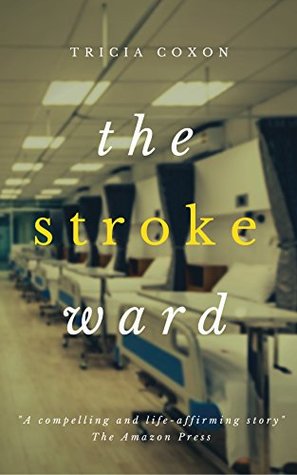
The Stroke Ward by Tricia Coxon

‘Life is fragile on the stroke ward’

The Stroke Ward: A portrait of a century of life in the north east of England, told through the lives of six very different women

The Stroke Ward: A portrait of a century of life in the north east of England, told through the lives of six very different women by Tricia Coxon is a beautiful book. First of all I have to say that I know the author. However, she did not ask me to read her book and I bought my copy. I am absolutely delighted to say that I enjoyed it immensely. It is fiction, inspired by Tricia’s three week sojourn in a stoke ward in Northumberland when she began to imagine the lives and history of the women on the ward, their past and what the future would hold for them.

I was quickly drawn into the story exploring the lives of the six stroke patients and the nurses who cared for them.  Tricia Coxon writes beautifully, vividly conveying the trauma and catastrophic effects of a sudden stroke, the confusion and loss of dignity and independence.  It is a moving story as each woman remembers the past, seeing themselves at various stages in their lives:

When night falls and the lights are dimmed, the stroke ward is full of memories. Shadowy, misty and delicate, they fill space like a spider’s web quivering on a frosty bush. (Loc 53)

All the women have different memories and are distinct characters. I felt I knew these women, that I was there in the ward with them, that I was inside their minds, living their memories with them. Meg is the one I was most drawn to. She can remember the past with vivid accuracy. When she was a small girl Meg’s father went on the Jarrow March to 10 Downing Street in London in 1936 to present a petition against the mass unemployment and extreme poverty in the north-east of England. When he returned Meg and the family were thrilled when Ellen Wilkinson came to tea – a special tea party. She was the local MP who had accompanied them on the March and had tried to improve their working and living conditions. But she is now confused about what has happened to her, hardly able to move, and suffering from anxiety and increasing dementia she needs specialist care. I was in tears as I read her story.

I loved the stories of these women’s lives and how Tricia has woven into them events such as the Jarrow March, the Spanish Civil War and a touching incident in Virginia Woolf’s life when she stayed at an Inn in Wooler whilst recovering from a nervous breakdown.  I also loved the warmth, the depth of compassion and dedication she portrays in the nurses’ care for their patients.

The Stroke Ward is a gem of a book that explores the nature of love and loss, friendship and family, and life and death. I loved it.

  • Kindle Edition, 186 pages
  • Published April 3rd 2017 by Tyne Bridge Publishing
  • Source: I bought my copy
  • My Rating: 5*

Amazon UK link

Amazon US link