Penguin UK Viking|21 February 2019 |517 pages|e-book |Review copy|4*
The Wych Elm by Tana French is a long book and it starts very slowly, so it’s a book to savour rather than one to rush through. I was engrossed in this psychological thriller, a standalone book, as dark family secrets gradually came to light. It isn’t a page-turner and yet it is full of mystery and suspense about a family in crisis.
Toby Hennessy, the narrator, is twenty eight. He’s a good looking and charming young man from an affluent and supportive family who love him. He has had an easy start to life, everything had just seemed to fall into place for him. He works for an art gallery in the centre of Dublin, where he does the gallery’s PR and is thinking of getting a place together with his girl friend, Melissa. But then his luck and his life change dramatically when he is brutally attacked by burglars in his flat, leaving him in a terrible state, physically and psychologically damaged. The first mystery is to find out why he was burgled and so savagely beaten. The police investigation doesn’t get very far and Toby is left to solve it himself – for a while at least.
He then learns that his Uncle Hugo has terminal cancer and he and Melissa go to stay with him at the Hennessy family home, the Ivy House, to care for Hugo and to recuperate. Their large family – his parents, his aunts and uncles, and his cousins, Susanna and Leo – descend on Ivy House for lunch every Sunday and one Sunday afternoon Susanna’s young children discover a human skull in the hollow trunk of a wych elm, the biggest tree in the garden.
So there is a second mystery to be solved – and one that is slowly unravelled taking Toby back to his teenage years and he realises that there was so much going on in his friends’ and cousins’ lives that he had just not known about. It’s as though he was cocooned within his own comfortable bubble, totally unaware of the bullying and struggles that other people had to face. He really finds it hard to come to terms with this. Much of the rest of the book is made up of long conversations with his uncle and cousins and the police investigations.
The Wych Elm is an intense book, digging deeply into the nature of privilege, luck and empathy, with the dynamics of relationship, with memory and coming to terms with the past and with death. There were times when I wasn’t sure just how reliable Toby was as a narrator and then I wondered which of the other characters were telling the truth. The account of Hugo’s illness, the way he copes with it and his family’s reactions are completely convincing. This is a nuanced book, with several complex layers and when I wasn’t reading it I was still thinking about it. I thoroughly enjoyed it.
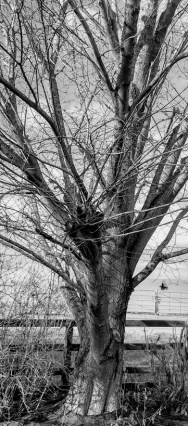
My thanks to the publishers, Penguin UK, for my review copy via NetGalley.A Wych Elm in our garden – you couldn’t hide a body in this tree!
Poisoned Pen Press|2 October 2018 |227 pages|e-book |Review copy|2.5*
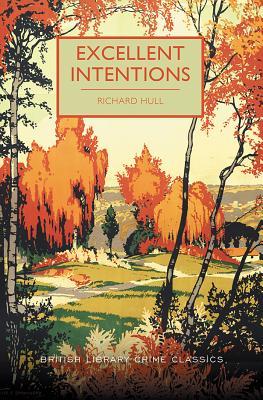
This edition, published in association with the British Library, has an introduction by Martin Edwards. It was first published in 1938 by Faber and Faber. It’s the second book by Richard Hull that I’ve read. However, I didn’t think Excellent Intentions was as enjoyable as the first one, The Murder of My Aunt.
Henry Cargate, of Scotney End Hall, died on a train for London, from a heart attack brought on when he inhaled snuff laced with potassium cyanide. He was an unpleasant man, the most disliked person in the village of Scotney End and several people were suspected of murdering him. One of those suspects (who is not named until near the end of the book) was arrested and is on trial for his murder. The potassium cyanide crystals, mixed into Cargate’s snuff had been bought to destroy a wasps’ nest. So, Inspector Fenby’s investigation concentrates on the limited opportunities available for the murderer to add the poison to Cargate’s snuffbox, which he kept in his study.
The book begins as the counsel for the prosecution makes his opening speech and makes his case for the judge and jury. It then follows the trial through its various stages to the verdict and subsequent appeal.
My problem with this book is that it is so very factual and focused on the times that no one was in Cargate’s study, concentrating on four people that Fenby suspected had an opportunity to tamper with the snuff, and on the position of the bottle of potassium cyanide – whether it was on the desk or on the window sill. It’s clever, but it’s also repetitive and very long-winded. But, I liked the twist in the conclusion.
My thanks to the publishers, Poisoned Pen Press, for my review copy via NetGalley.
This is qualifies for the Mount TBR Challenge and for the Calendar of Crime Challenge for September in the category of the author’s birth month.
Every Tuesday First Chapter, First Paragraph/Intros ishosted by Vicky of I’d Rather Be at the Beach sharing the first paragraph or two of a book she’s reading or plans to read soon.
This week I’m featuringAn Advancement of Learningby Reginald Hill, one of the books I’m currently reading.
There had been a great deal of snow that December followed by hard frost. A few days before Christmas a thaw set in, temperatures rose steeply, the snow became slush. The sun greedily sucked up the moisture until it saturated the air and impinged on all the senses.
Blurb (Amazon)
All is not well at Holm Coultram College: lecturers having affairs with students, witches’ sabbaths, a body buried under a statue.
Detective Superintendent Dalziel, despite his cynical view of academics, doesn’t feel murder fits in here – let alone a rash of killings. But when he and DS Pascoe are sent to investigate a disinterred corpse at Holm Coultram College, that’s exactly what they find…
~~~
This is the second Dalziel and Pascoe book. I’ve read some of the later books in the series and am now going back to the early ones that I haven’t yet read. I first came across Dalziel and Pascoe via the TV adaptations and I think I remember watching the TV version of this one several years ago. Maybe it’s because I saw the TV versions before I read the books that I enjoy both so much – Warren Clark as Dalziel was so right in the role.
A story of guilt, betrayal and secrets, set in colonial era Ceylon.
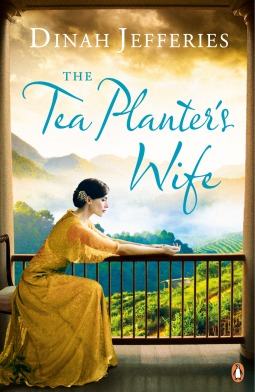
The Tea Planter’s Wife by Dinah Jefferies begins in Ceylon (now called Sri Lanka) in 1913, with a scene showing a woman leaving a house, cradling a baby with one arm. She had left a letter behind and I wondered what was in that letter and about the significance of her choosing to wear her favourite dress – a vivid sea green dress she wore the night she was certain the baby was conceived. It didn’t become clear until nearly the end of the book.
Move on twelve years to 1923, when 19 year old Gwendolyn Hooper arrives at the same house, the home of a tea planter, Laurence, an older man, a widower she had met and married in England after a whirlwind romance. The house is set in beautiful flower-filled gardens, sloping down to a shining silver lake and rising up behind the lake a tapestry of green velvet made up of rows of tea bushes where women in brightly coloured saris were plucking the tea leaves. Gwen is enchanted by the scene and is eagerly anticipating her new life with Laurence.
But this is not the idyllic life she expected – there are secrets, locked doors and a caste system and culture that is alien to her. Laurence, no longer as passionate about her as he had been in England, leaves her alone more than she would like. But with the help of one of the servants, Naveen and Savi Ravasinghe, a Sinhalese artist, she begins to settle into life on the plantation, even though it’s obvious that Laurence disapproves of Savi. In turn, Gwen is not happy about the way a glamorous American woman, Christina flirts with Laurence.
There is a mystery, too, surrounding the death of Caroline, Laurence’s first wife and when she finds a tiny overgrown grave no one wants to talk about it. The arrival of Laurence’s younger sister, Verity, only adds to Gwen’s problems – she’s bitter and twisted and it looks as though she has moved in permanently. So, when Gwen becomes pregnant she hopes that will improve her relationship with Laurence, especially as he is delighted that she is expecting twins. This is in many ways such a sad and tragic story – none more so than what happened when the babies were born and Gwen is faced with a terrible dilemma, one that she feels she must keep hidden from Laurence.
This is historical fiction set in a time and place that I know very little about, but I thought the setting in Ceylon, was beautifully described, exotic and mysterious. It was a time of unrest too, with political and racial tension between the Sinhalese and Tamil workers and the British plantation owners. Gwen was horrified by the living conditions of the plantation workers but her attempts to improve them and provide basic medical treatment weren’t very successful. I thought the portrayal of Gwen’s character was well done, a young woman with a charming husband, older than her and initially their relationship reminded me of Max and his second wife in Daphne Du Maurier’s Rebecca, but the similarity ended there as the story developed.
In her Author’s Note at the end of the book (don’t read it before you read the book as it gives away the main secret) Dinah Jefferies explains that the idea for this novel came from her mother-in-law who told her stories passed down by her family, which included tea planters in Ceylon and also in India in the 1920s and early 1930s. They led her to think about the attitudes to race and the typical prejudices of that time – in particular about how such attitudes and assumptions could spell tragedy for a tea planter’s wife who lived an extraordinarily privileged life. She also includes a list of books that she had found useful whilst researching her book.
I’m not sure that I want to read any more of Dinah Jefferies’s books as although I did enjoy The Tea Planter’s Wife and it held my interest to the end, I also thought much of it was predictable and in places a bit too sentimentally melodramatic for me.
Every Friday Book Beginnings on Friday is hosted by Gillion at Rose City Reader where you can share the first sentence (or so) of the book you are reading, along with your initial thoughts about the sentence, impressions of the book, or anything else the opener inspires.
This week I’m featuringWild Fireby Ann Cleeves, one of the books I’m planning to read soon. It’s the 8th and last book in her Shetland series.
Emma sat on the shingle bank and watched the kids on the beach below build a bonfire. They’d dragged pieces of driftwood into a pile; it was something to do to relieve their boredom. Nothing much happened in Deltaness.
Turn to page 56, or 56% on your eReader. If you have to improvise, that is okay.
Find any sentence (or a few, just don’t spoil it) that grabs you.
Post it.
Add the URL to your post in the link on Freda’s most recent Friday 56 post.
Page 56:
‘It’s a suspicious death,’ Perez said. ‘None of us know yet how or why Emma died.’
‘But it wasn’t suicide, was it? there was no way she could have done that to herself.’
Perez didn’t answer.
Blurb (Amazon)
Drawn in by the reputation of the islands, a new English family move to the area, eager to give their autistic son a better life. But when a young nanny’s body is found hanging in the barn of their home, rumours of her affair with the husband begin to spread like wild fire.
With suspicion raining down on the family, DI Jimmy Perez is called in to investigate. For him it will mean returning to the islands of his on-off lover and boss Willow Reeves, who will run the case.
Perez is already facing the most disturbing investigation of his career, when Willow drops a bombshell that will change his life forever. Is he ready for what is to come?
~~~
I’ll be sad to come to the end of Ann Cleeves’s books about Perez but I think she’s right to end it with this book – as she says in this article ‘I decided to finish writing about the islands while I was still enjoying it. I’d hate to start repeating myself, boring my readers, losing enthusiasm for my characters. This feels like the right time for it to end.‘
The TV series continues though – the first episode of series 5 was on shown BBC 1 on Tuesday night! The adaptations have expanded the books. As Ann Cleeves explains: ‘From series three, the format moved away from self-contained adaptations to longer, six-episode original stories. These allowed plots and characters to develop and for some of the action to move away from the islands.’
He had started to remove his clothes as logic had deserted him, and his skin was cracked. Whatever had been going through Cameron’s mind when he was alive, he didn’t look peaceful in death.
Little, Brown|7 February 2019 |384 pages|e-book |Review copy|4.5*
As I loved Force of Nature by Jane Harper I was absolutely delighted when Caollin Douglas at Little, Brown Publishing asked me if I wanted to take part in the blog tour for Jane Harper’s latest book, The Lost Man. I wasn’t disappointed – I loved it.
Blurb:
Did Cameron walk to his death under the unrelenting sun of the Australian Outback? If not, what happened? Set in the unfamiliar, isolating and disorientating landscape of the Outback, The Lost Man combines intrigue, surprise and intellect to create a gripping and thrilling narrative.
Two brothers meet at the remote border of their vast cattle properties under the unrelenting sun of the outback. In an isolated part of Australia, they are each other’s nearest neighbour, their homes hours apart.
They are at the stockman’s grave, a landmark so old that no one can remember who is buried there. But today, the scant shadow it casts was the last hope for their middle brother, Cameron. The Bright family’s quiet existence is thrown into grief and anguish.
Something had been troubling Cameron. Did he choose to walk to his death? Because if he didn’t, the isolation of the outback leaves few suspects…
My thoughts:
This is essentially a family drama and is very much character-driven, set in an isolated part of Australia hundreds of miles from anywhere and revolving around the death of Cameron Bright. There are three Bright brothers – Nathan the oldest, then Cameron and the youngest brother, Bub. They have a vast cattle ranch in the Queensland outback.
The book begins with the discovery of Cameron’s body lying at the the base of the headstone of the stockman’s grave – a headstone standing alone, a metre high, facing west, towards the desert, in a land of mirages. It provides the only bit of shade for miles around. He had obviously died an agonising death in the intense forty-five degrees of heat, crawling round the headstone in search of its shade as the earth rotated around the sun. Nathan and Bub meet at the site and can’t understand why he was there – his car was found several kilometres away and at first they assumed he had just walked away to end his life, but that didn’t seem to make sense. Nathan just can’t believe Cameron would do that. There is little actual police investigation and so Nathan delves into the past on his own looking for answers. He is astonished at what he finds.
Nathan is a solitary man, divorced and living alone, a three hours’ drive from the rest of the family. There is a mystery surrounding his isolation not just from his family but also from the small town, three hours drive away. Whereas, Cameron, who took over the ranch after his father died, is well liked, married with two little girls. The youngest brother, Bub, meanwhile is an angry young man, resentful of the way Cameron runs the business, mainly because he thinks his views are being ignored. As Nathan tries to fathom what had happened hidden passions and resentments begin to surface and it becomes clear that this is a dysfunctional family. He realises there was a lot about his family he had never known.
Throughout the book the Australian outback looms large, a huge and isolated territory, red earth stretching for hundreds of miles, with its unbearable heat, dust and, at times, the threat of flood. But it’s the characters, as their past history and relationships are exposed and they became real personalities, that made the book such compelling reading for me. I liked the storytelling, the details of the legends surrounding the stockman, the drama of the family grieving over Cameron’s death – and the mystery of his death – was it suicide or murder, and if it was murder who had killed him and why?
It’s a powerful and absorbing book and after I finished it I wondered about the title – just which one of the men was the ‘Lost Man‘. I’m still not sure, maybe they all were …
Source: Review copy as part of The Lost Man blog tour, via NetGalley– Thank you.
About the Author
Jane Harper is the author of the international bestsellers The Dry and Force of Nature.
Her books are published in more than 36 territories worldwide, with film rights sold to Reese Witherspoon and Bruna Papandrea. Jane has won numerous top awards including the CWA Gold Dagger Award for Best Crime Novel, the British Book Awards Crime and Thriller Book of the Year, the Australian Book Industry Awards Book of the Year and the Australian Indie Awards Book of the Year. Jane worked as a print journalist for thirteen years both in Australia and the UK and now lives in Melbourne.
 Penguin UK Viking|21 February 2019 |517 pages|e-book |Review copy|4*


 These are the rules:


 BooksPlease