Bookshelf Travelling for Insane Times

Judith at Reader in the Wilderness hosts this meme – Bookshelf Travelling for Insane Times.  I am enjoying this meme, looking round my actual bookshelves and re-discovering books I’ve read or am looking forward to reading. The idea is to share your bookshelves with other bloggers.

This is really a Friday meme, but once more I’m late writing my post!

For this week’s post I’ve been looking through some of my oldest books.
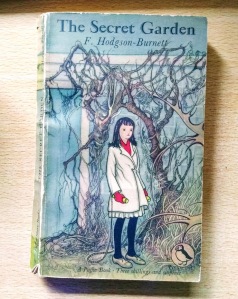
The Secret Garden

First is a book from my childhood, The Secret Garden by Frances  Hodgson-Burnett. It is now yellowing and a bit battered, but still in one piece. In the description at the front of the book the editor writes: Girls like it most, and between the ages of nine and fourteen – and, be warned, keep your copy carefully. You will want to go back and read it over and over again. I can’t remember how old I was, but the editor was right – I did read it over and over again.  I’ve wanted a walled garden ever since I read about the secret garden that Mary found at her Uncle’s house, Misselthwaite Manor in Yorkshire. It’s about the magic of nature, that makes plants and people grow and develop, the magic of the power of positive thinking and prayer, of the healing power of the mind, and of laughter and love.
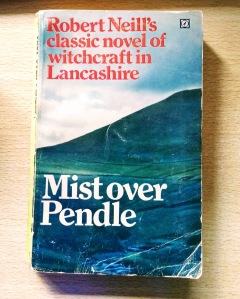
Mist over PendleNext a book I read as a teenager – Mist Over Pendle by Robert Neill. Set in rural Lancashire in the early 17th century it tells the story of Margery Whitaker, an orphan who went to live with her relatives on the Lancashire and Yorkshire border. People have died, apparently from belladonna poisoning and two old crones are suspected of witchcraft. Margery and her cousin Roger investigate whether they really were witches. I found it fascinating and it was probably the book that started me off reading historical fiction.
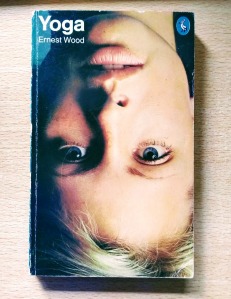
YogaI began doing yoga when I was in my thirties and Yoga by Ernest Wood is one of several books I bought at the time. It’s not just a book about the yoga breathing practices or the yoga postures – and there are no photos demonstrating them – it’s more about the classical background of yoga and its goals – the awakening of the higher spirit, bodily and mental health and the benefits of yoga in daily life. So, there are chapters on the ethics and morality of yoga, yoga and the intellect, yoga and vitality and the basic philosophy of yoga.
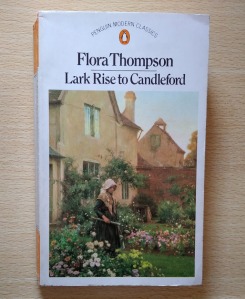
Lark Rise mineAnd finally a book I read in my forties. I’d had a really bad case of flu which meant that I couldn’t even lift my head off the pillow, never mind pick up a book! But when  I was recovering I read and loved Flora Thompson’s book Lark Rise to Candleford. It’s a trilogy including in addition to Lark Rise, Over to Candleford and Candleford Green. It’s a record of country life at the end of the 19th century, based on the author’s experiences during childhood and youth. It chronicles May Day celebrations and forgotten children’s games as well as the daily lives of farmworkers and craftsmen, and her friends and relations.
Catching Up

I’ve found that this lockdown period has affected my blogging as I haven’t been writing about the books I’ve read recently. I’ve been doing posts that don’t really need much concentration – lists of books, book beginnings and so on. So now I have a few books that I’ve read but not reviewed. Here’s what I thought about two of them. These are just brief reviews – more like notes really.

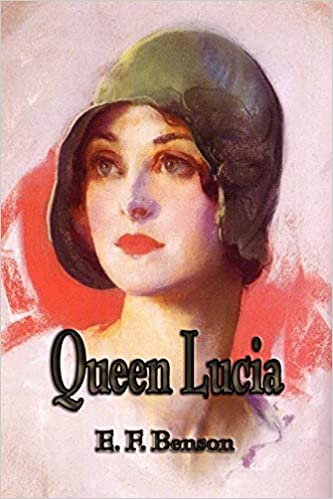
Queen Lucia

Queen Lucia has been on my radar for years ever since I began blogging and I bought a copy several years ago. When I saw that Simon and Karen were hosting the 1920 Club I realised it would be ideal as it was first published in 1920. However, time got the better of me and I finished reading it too late to add it the 1920 Book Club – but better late than never. 

I know other bloggers love E F Benson’s Mapp and Lucia books, but they have never really appealed to me. I don’t read many comic novels. But I did enjoy it more than I thought I would, although I think his style of writing is an acquired taste, using satire, irony, exaggerations and ridicule to expose people’s stupidities or vices – not my usual genre of books.  However, it is easy reading and it took my mind off the horrors of the coronavirus whilst I was reading. It is a book of its time and definitely not PC by today’s standards.

Queen Lucia is actually Mrs Emmeline Lucas, who presides over the residents of the village of Riseholme as its self-appointed queen. She is a most unlikeable character, totally self-centred and manipulative, aided by her friend, George Pillson who worships her. But as the events described in the novel unfold he rebels and works to undermine her. I disliked her pretentious tastes and her lust for power. She irritated me immensely with her baby talk, her pretence that she can speak Italian and her methods of riding roughshod over everyone. A rather more sympathetic character is Daisy Quantock, who introduces a mysterious Indian guru to the village before Lucia managed to present him as her protege.

The whole book has an artificial and silly feel about it but about half way through I found I was just going with the flow as I really  wanted to know what happened next. There are five more Mapp and Lucia novels, and as I’ve found an e-book containing all six for just 49p – Make Way for Lucia, I shall probably read more of them sometime.

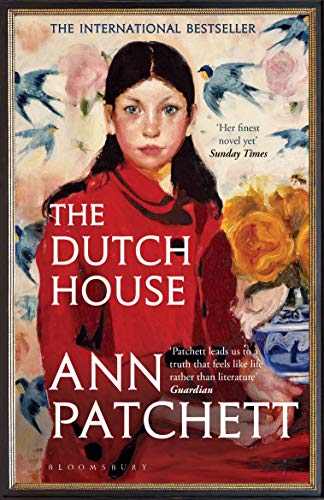
The Dutch House

I decided to read The Dutch House by Ann Patchett as so many other bloggers have written glowing reviews, but I wasn’t as keen on it as others. Its about a dysfunctional family.  The Conroys, Danny, Maeve and their mother, Elna and father, Cyril  who lived in the Dutch House, but when Danny was just three his mother left home.  Cyril remarried, and his second wife, Andrea, the mother of two young girls, was the epitome of the  wicked stepmother. When their father dies he leaves the Dutch House, to Andrea.  She shows her true  colours and insists Danny and Maeve have to move out of their home. The house itself is described in detail. It was built by a Dutch couple called VanHoebeek in 1922 when it was in the open country just outside Philadelphia and their presence is still a strong influence on  the Conroy family.

The novel moves backwards and forwards in time, from 1946 to the present, and at times I was not sure what happened when (probably my lack of concentration caused my confusion). Danny and Maeve are both obsessed with the house, to the detriment of their own lives. Their mother, Elna meanwhile had a totally different reaction to the house, never liking it and I was intrigued about her – what made her leave her children – and I was suspicious about that had happened to her and even if she was she still alive. The pain her children felt when she left to be replaced by a wicked stepmother is immense. But it is the loss of their inheritance rather than the loss of their mother, that has left them with bitterness, and anger.

I thought the book began well, but somewhere in the middle and definitely towards the end I did get rather bored with the story, so much so that I was relieved to finish it. It was not just such a good choice of book for me – or maybe it was the wrong time for me to read it.

The Classics Club Spin Result

Classics Club
The spin number in The Classics Club Spin was announced yesterday. It’s number … 6

which for me is The Return of the Native by Thomas Hardy. The rules of the Spin are that this is the book for me to read by 1 June, 2020.

The Return of the Native

I’m delighted with this as I’ve been meaning to read it for years and never got round to it.

‘To be loved to madness – such was her great desire’

Eustacia Vye criss-crosses the wild Egdon Heath, eager to experience life to the full in her quest for ‘music, poetry, passion, war’. She marries Clym Yeobright, native of the heath, but his idealism frustrates her romantic ambitions and her discontent draws others into a tangled web of deceit and unhappiness.

Early readers responded to Hardy’s ‘insatiably observant’ descriptions of the heath, a setting that for D. H. Lawrence provided the ‘real stuff of tragedy’. For modern readers, the tension between the mythic setting of the heath and the modernity of the characters challenges our freedom to shape the world as we wish; like Eustacia, we may not always be able to live our dreams. (Amazon)

Did you take part in the Classics Spin? What will you be reading?

Bookshelf Travelling for Insane Times

Judith at Reader in the Wilderness hosts this meme – Bookshelf Travelling for Insane Times.  I am enjoying this meme, looking round my actual bookshelves and re-discovering books I’ve read or am looking forward to reading. The idea is to share your bookshelves with other bloggers. Any aspect you like:

1. Home.
2. Books in the home.
3. Touring books in the home.
4. Books organized or not organized on shelves, in bookcases, in stacks, or heaped in a helter-skelter fashion on any surface, including the floor, the top of the piano, etc.
5. Talking about books and reading experiences from the past, present, or future.

Whatever you fancy as long as you have fun basically.

This is really a Friday meme, but what with one thing and another, it is now Sunday and I have only just finished writing this post! I am so behind with everything these days.

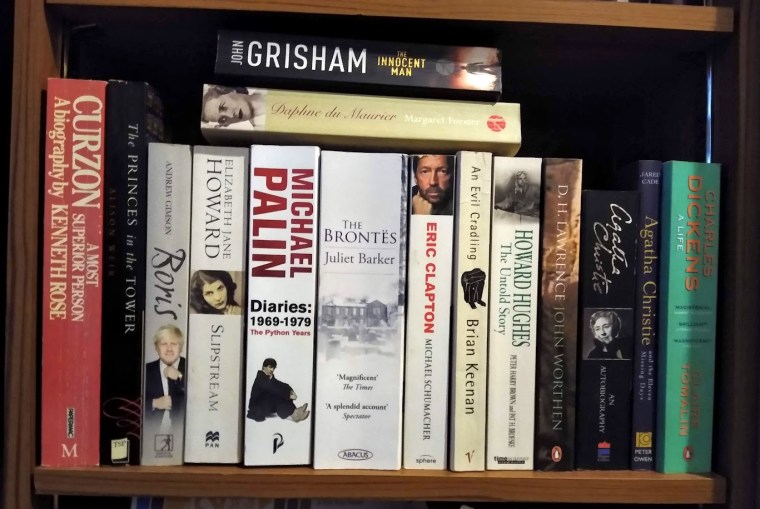
If you were to visit our house as soon as you came in you would see a wall lined with bookshelves. The first bookcase has six shelves – the top two are filled with OS maps, then there are three shelves of biographies and autobiographies, with the bottom shelf containing random books. The photo below shows one of the shelves of autobiographies/biographies.

Biographies

I have read some of these books – those marked with an *. From the left (as you look at the screen) they are:

*Curzon: A Most Superior Person, a biography by Kenneth Rose. George Nathaniel Curzon was the first and last Marquess of Kedleston, who in 1898 became the Viceroy of India. I bought this book after we visited Kedleston Hall in Derbyshire, several years ago. It’s been the home of the Curzon family since the 12th century.

Next to that is *The Princes in the Tower by Alison Weir. I first read this book many years ago. In it she examined the available evidence of the disappearance of the princes in 1483 at the time her book was first published in 1992.

Then comes Boris: the Rise of Boris Johnson by Andrew Gimson, published in 2012. I bought this book secondhand several years ago after Boris had been elected as Mayor of London and it is an updated version of his earlier biography to include his time as the Mayor of London.

After that are two autobiographies that I have started reading, but haven’t finished yet. They are Elizabeth Jane Howard’s Slipstream, and Michael Palin’s Diaries 1969 – 1979: the Python YearsNext The Brontes by Juliet Barker, inspired by my visit to their family home in Howarth.

The biography of Eric Clapton by Michael Schumacher is my husband’s book. I’d probably enjoy it though as I like his music too.

I was stunned when I read *An Evil Cradling by Brian Keenan, about the time he was kidnapped by fundamentalist Shi’ite militiamen and held in the suburbs of Beirut for four and a half years between 1986 and 1990.

I haven’t read the next book, Howard Hughes: the Untold Story by Peter Brown and Pat H. Broeske, although my husband has – he thought it was excellent. It’s the book that inspired Martin Scorses’s film, The Aviator.

I’ve read the next four books, John Worthen’s *D H Lawrence: the Life of an Outsider, Agatha Christie’s *An Autobiography, * Agatha Christie and the Eleven Missing Days by Jared Cade and *Charles Dickens: A Life by Claire Tomalin.

On top of the rest, because I couldn’t fit them in anywhere else, are two more books – one I have read, a biography of *Daphne du Maurier by Margaret Forster and John Grisham’s The Innocent Man, another book my husband has read but I haven’t yet. It tells the true story of Ron Williamson, who was arrested, tried, found guilty of the rape and murder of a cocktail waitress. He was sent to Death Row.

Classics Club Spin

63269-classic2bspin

It’s time for another Classics Club Spin.  I was wondering if one was due, so I’m pleased to find it is, especially as I haven’t made much progress with reading any off my list recently.

    • Before Sunday 19th April 2020, create a post that lists twenty books of your choice that remain “to be read” on your Classics Club list. This is your Spin List.  I only have 9 unread books left on my list so I’ve listed them twice and added two more books that I’d like to read.
    • You have to read one of these twenty books by the end of the spin period.
    • On 19th April the folks at The Classics Club will post a number from 1 through 20. The challenge is to read whatever book falls under that number on your Spin List by 1st June 2020.


      1. The Riddle of the Third Mile by Colin Dexter
      2. Little Dorrit by Charles Dickens
      3. Parade’s End by Ford Maddox Ford
      4. Smallbone Deceased by Michael Gilbert
      5. Far from the Madding Crowd by Thomas Hardy
      6. The Return of the Native by Thomas Hardy
      7. Love in the Time of Cholera by Gabriel Garcia Marquez
      8. Framley Parsonage by Anthony Trollope
      9. Orlando by Virginia Woolf
      10. The Riddle of the Third Mile by Colin Dexter
      11. Little Dorrit by Charles Dickens
      12. Parade’s End by Ford Maddox Ford
      13. Smallbone Deceased by Michael Gilbert
      14. Far from the Madding Crowd by Thomas Hardy
      15. The Return of the Native by Thomas Hardy
      16. Love in the Time of Cholera by Gabriel Garcia Marquez
      17. Framley Parsonage by Anthony Trollope
      18. Orlando by Virginia Woolf
      19. I’ll Never Be Young Again by Daphne du Maurier
      20. How Green Was My Valley by Richard Llewellyn

Have you read any of these and loved them? Any that you didn’t enjoy?

My Friday Post: Caught Out in Cornwall by Janie Bolitho

Book Beginnings Button

Every Friday Book Beginnings on Friday is hosted by Gillion at Rose City Reader where you can share the first sentence (or so) of the book you are reading, along with your initial thoughts about the sentence, impressions of the book, or anything else the opener inspires.

Caught Out in Cornwall


Caught Out in Cornwall by Janie Bolitho is one of the books I borrowed from the library before it closed because of COVID-19. So now I have plenty of time to finish reading it!

A small crowd began to gather. One minute, apart from a few distant dog walkers, Rose Trevelyan was alone on the beach; the next a dozen people had arrived to witness the ensuing drama.

A yacht is drifting dangerously, its mast snapped as a lifeboat goes to its rescue.

Also every Friday there is The Friday 56, hosted by Freda at Freda’s Voice.

30879-friday2b56These are the rules:

  1. Grab a book, any book.
  2. Turn to page 56, or 56% on your eReader. If you have to improvise, that is okay.
  3. Find any sentence (or a few, just don’t spoil it) that grabs you.
  4. Post it.
  5. Add the URL to your post in the link on Freda’s most recent Friday 56 post.

Page 56:

‘So, tell me about your interesting day.’

‘Did you hear about that little girl that’s gone missing?’

‘Yes. Have they found her yet?’

Rose shook her head sadly before describing her part in it.

Blurb

When Rose Trevelyan sees a young girl being carried away by someone who appears to be her father, she thinks nothing of it. Until, that is, the appearance of a frantic mother who cannot find her child. Beth Jones is only four years old, and her mother is adamant that the man Rose saw taking her away must be a stranger.

Wracked with guilt for not intervening, Rose once again finds herself entangled in a criminal investigation. As time passes, it becomes clear that the chances of getting Beth back unharmed are very bleak indeed . . .

~~~

This is the seventh and last book in the Rose Trevelyan series featuring Rose, an artist and photographer. I’ve read and enjoyed two of the earlier books.