My Classics Club Spin book is The Return of the Native by Thomas Hardy. The closing date to read it is today, but I’ve still got 25% left to read. I am loving this book and will write more about it after I’ve finished reading it.

My Classics Club Spin book is The Return of the Native by Thomas Hardy. The closing date to read it is today, but I’ve still got 25% left to read. I am loving this book and will write more about it after I’ve finished reading it.

For the past few years I’ve taken part in 20 Books of Summer, hosted by Cathy at 746 Books. You simply list twenty books (there are also ten and fifteen book options) and read them during the summer months. It’s not so simple for me though as I’ve never managed to read all the books I list, often changing my mind when it comes to choosing which book to read next. But I’ve decided to have a go again this year.
This event starts today and finishes on 1 September. Here’s my list:
This list is made up of NetGalley books, some of which I should have read well before now and of books from my TBR list – also ones I’ve been meaning to read for ages. There’s a lot of crime fiction!
Some are Kindle books and some – shown in the photo below are physical books:
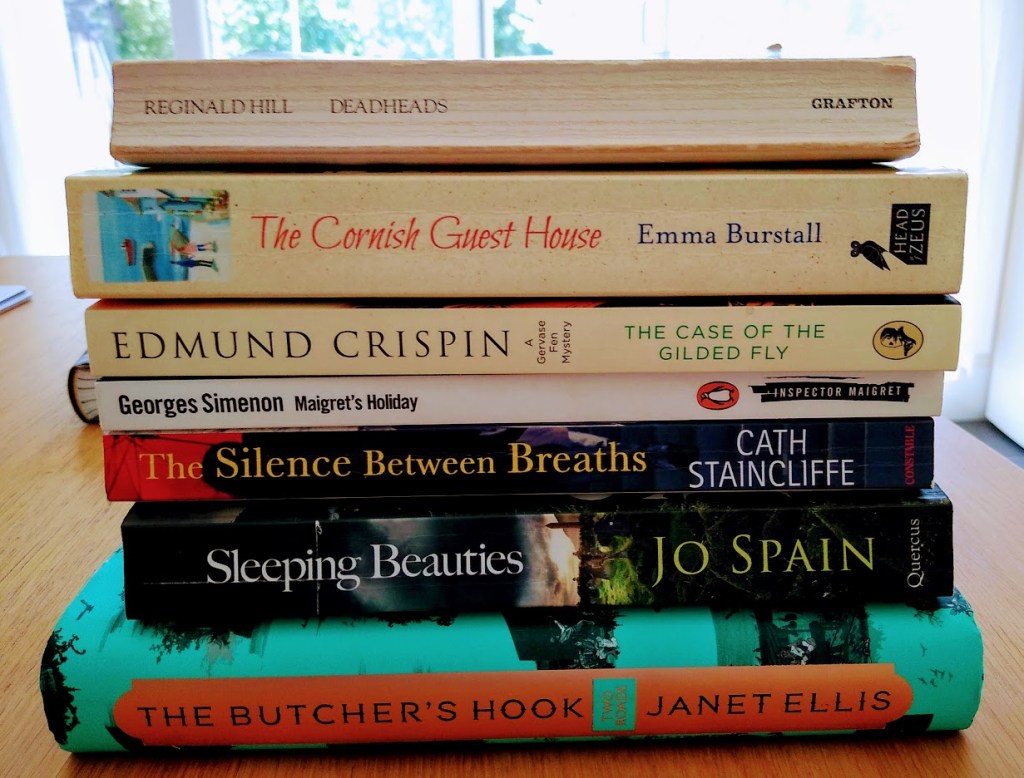
Fortunately Cathy is is willing to bend the rules so that you can change the list if you want to or simply swap books if you don’t fancy reading the books you’ve listed. And you can drop your goal to either the 15 or 10 book options if you like! I think I’ll be doing one of these options!
Which book would you read first? And are you taking part too?
Judith at Reader in the Wilderness hosts this meme – Bookshelf Travelling for Insane Times. I am enjoying this meme, looking round my actual bookshelves and re-discovering books I’ve read or am looking forward to reading. The idea is to share your bookshelves with other bloggers. Any aspect you like:
Whatever you fancy as long as you have fun basically. My shelf this week is a mixed shelf, mainly poetry books.
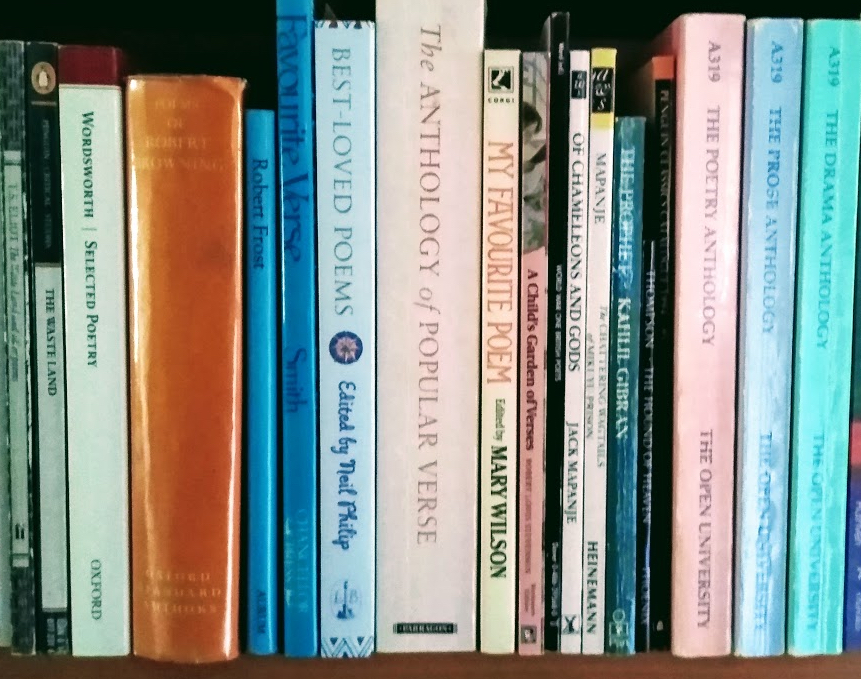
I’m just going to pick out a few, starting with my childhood favourite, A Child’s Garden of Verses by Robert Louis Stevenson. This is not the copy I had as a child as that disappeared years ago. I learnt lots of these by heart and used to recite them out loud. One of my favourite which was so true for me as a child is Bed in Summer. Older children would be playing in the road, but I had to go to bed and I would look out of the window and wish I was outside with them. This brings it all back!
Bed in Summer
In winter I get up at night
And dress in yellow candlelight.
In summer quite the other way,
I have to go to bed by day.

I have to go to bed and see
The birds still hopping on the tree,
Or hear the grown-up people's feet
Still going past me in the street.

And does it not seem hard to you,
When all the sky is clear and blue,
And I should like so much to play,
To have to go to bed by day?
Next is William Wordsworth: Selected Poetry. Wordsworth’s poem Daffodils was another poem I loved to recite, but I also love My Heart Leaps Up When I Behold:
My heart leaps up when I behold
A Rainbow in the sky:
So was it when my life began;
So is it now I am a Man;
So be it when I grow old,
Or let me die!
The Child is Father to the Man;
And I could wish my days to be
Bound each to each by natural piety.
Then The Waste Land and other poems by T S Eliot. I studied The Waste Land as part of an OU course I took and my copy is surrounded by pencil notes that I made then. I don’t think I’d have read it if it hadn’t been part of the course, but I’m glad I did, although I’m sure I didn’t understand some of it.
Of the other poems in this collection Journey of the Magi is my favourite. It begins:
'A cold coming we had of it,
Just the worst time of year
For a journey, and such a long journey:
The ways deep and the weather sharp,
The very dead of winter.'
One of my favourite poems is in The Poetry Anthology for the OU. It is Not Waving But Drowning by Stevie Smith:
Nobody heard him, the dead man
But still he lay moaning;
I was much further out than you thought
And not waving but drowning.

Poor chap, he always loved larking
And now he's dead
It must have been too cold for him his heart gave way
They said.

Oh, no, no, no, it was too cold always
(Still the dead one lay moaning)
I was much too far out all my life
And not waving, but drowning.

An Air That Kills is the first book in Andrew Taylor’s in his Lydmouth crime series. I’ve read several of his other books and thoroughly enjoyed them, but none in this series. It has a slow beginning but once it had established the characters and set the scene the pace picks up. The setting is Lydmouth, a small market town on the Welsh/English border just after the end of the Second World War.
It begins as journalist, Jill Francis arrives to stay with her friends, Philip and Charlotte in Lydmouth, to recover from a bad experience – the details are are only revealed later in the book. Also new to the town is Inspector Richard Thornhill, who is finding it difficult to adjust to working in the local police force. There’s been a spate of burglaries and there are whispers that a black marketeer is heading to their area. So there is plenty going on and then workmen digging out a drain discover a wooden box containing baby’s bones, an old brooch and some scraps of yellowed newspaper. When Major Harcutt, the local historian was consulted he found that there could be a connection to an old murder trial.
Harcutt is elderly, living on his own and estranged from his daughter, Antonia. But when he is involved in a road accident and is then burgled Charlotte contacts Antonia and she reluctantly returns home to help him. Meanwhile, Jill is persuaded to help Inspector Thornhill in his investigation into the mystery of the baby’s bones.
It’s a good mix of police investigation, and personal stories, including those of Richard and Jill, of Jill and Philip and Charlotte, of Harcutt and his daughter, and the burglar and the black marketeer. There is a strong sense of time and place – I thought the 1950s setting was well done. I enjoyed the interaction between the characters and and will definitely read on in the series to see how the relationship between Jill and Richard develops.
‘The dead cannot speak. But they still have a story to tell.’
I’ve enjoyed two of Susie Steiner’s earlier books so I was keen to read her latest book, Remain Silent and once more I was totally immersed in the story. It’s the 3rd Manon Bradshaw book and I loved it.
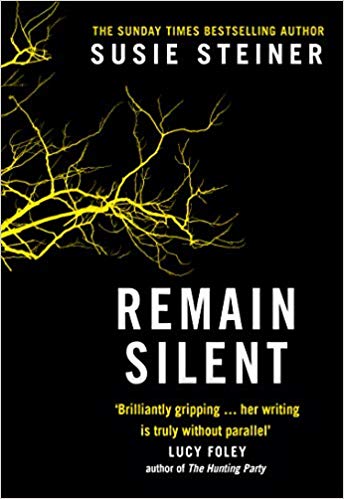
The Borough Press | 28 May 2020 | 368 pages | review copy | 4*
‘By turns warm and witty, gripping and terrifying, heartbreaking and uplifting, Susie Steiner’s fourth book is both a literary tour de force and one of the finest crime novels of recent years.’ (extract from the publishers’ blurb)
My thoughts:
This is not just a police procedural and a gripping mystery it is a tragedy, a scathing look at modern life, centred on the exploitation of immigrant labour, racism and abuse that some of the foreign workers have to endure.
Manon Bradshaw is a Detective Inspector, a working mother with a young toddler, Teddy, her adopted teenage son, Fly and her partner, Mark Talbot who has recently been diagnosed with cancer. She is working in the Major Crime Unit on cold cases on a part-time basis and is not getting on well with her new boss, Detective Superintendent Gloria McBain. Despite that when she finds the body of Lukas Balsys hanging from a tree with a note attached saying ‘The dead cannot speak’, McBain puts her in charge of the investigation into his death – did he commit suicide or was he murdered?
The story, as in the earlier books, has a complicated plot. This one revolves around the plight of a group of Lithuanian immigrants living and working in terrible conditions under a cruel gang master, Edikas. There is a large cast of characters – as well as the Lithuanians and the police there is a local racist group leading a campaign of hatred with protest marches and the threat of violence. All come over as incredibly real people, with the star characters being Manon, Lukas, his friend Matis and Elise who falls in love with Lukas, despite her racist father’s hatred of the immigrants.
This has all the ingredients of a successful crime novel for me. Although it starts off slowly building up a picture of the characters and their situation, it is gripping and intense, dealing with problems of prejudice and downright hatred and xenophobia – a most thought-provoking and shocking novel.
Susie Steiner is a novelist and freelance journalist. She began her writing career as a news reporter first on local papers, then on the Evening Standard, the Daily Telegraph and The Times. In 2001 she joined The Guardian, where she worked as a commissioning editor for 11 years. In May 2019 she was diagnosed with a brain tumour (Grade 4 Glioblastoma) and spent most of 2019 undergoing treatment: six hours of brain surgery, chemo radiation, and six cycles of chemotherapy. My best wishes for her recovery. For more information see her website, susiesteiner.co.uk

WWW Wednesday is run by Taking on a World of Words.
The Three Ws are:
What are you currently reading?
What did you recently finish reading?
What do you think you’ll read next?
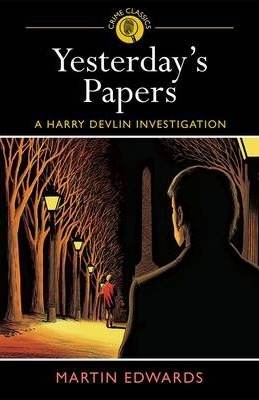
Currently reading:

Recently Finished: I’ve just finished Sword by Bogdan Teodorescu, translated by fellow blogger Marina Sofia – A shadowy killer stalks the streets of Bucharest, seeking out victims from among the Roma minority. But this is not the usual police procedural as it focuses on the effect the serial killings have on the political scene. I’ll write more about it later on.
Reading Next: I’m never really sure, but it could be Dead Man’s Footsteps by Peter James. I’m reading his Superintendent Grace books in order and this is the 4th one.
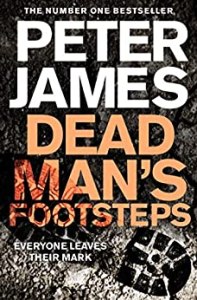
Amid the tragic unfolding mayhem of the morning of 9/11, failed Brighton businessman and ne’er-do-well Ronnie Wilson sees the chance of a lifeline: to shed his debts, disappear and reinvent himself in another country. Six years later the discovery of the skeletal remains of a woman’s body in a storm drain in Brighton leads Detective Superintendent Roy Grace on an enquiry spanning the globe, and into a desperate race against time to save the life of a woman being hunted down like an animal in the streets and alleys of Brighton.
What do you think – which one would you read next?
This post has taken me hours to write using the new Block Editor which I find most confusing. I’m wondering how other WordPress users are getting on – any tips that would help me would be most welcome!
 BooksPlease