
Happy New Year!

I’m linking up today with Davida @ The Chocolate Lady’s Book Review Blog for Throwback Thursday. It takes place on the Thursday before the first Saturday of every month (i.e., the Thursday before the monthly #6Degrees post). The idea is to highlight one of your previously published book reviews and then link back to Davida’s blog.
I’ve been looking at the books I reviewed in 2007 for my Throwback Thursday posts. Today I’ve chosen to highlight The Testament of Gideon Mack by James Robertson, which I wrote about on 13 December 2007.

From the opening paragraph:
I started it with great enthusiasm and found it a compelling book to read. It is a psychological mystery concerning the nature of belief, faith, and truth. It starts with an account of the disappearance and death of Gideon Mack and the discovery of a manuscript written by him shortly before he was last seen. It is clear right from the start that there is mystery and uncertainty surrounding his disappearance, death and the discovery of his body. The book centres on the manuscript with an epilogue containing ‘notes’ written by a journalist investigating the mystery, considering whether the manuscript was ‘anything other than the ramblings of a mind terminally damaged by a cheerless upbringing, an unfulfilled marriage, unrequited love, religious confusion and the stress and injury of a near-fatal accident?’
It’s a macabre story and it left me with several questions – mainly about what was real, what was imagined and what was illusion!
James Robertson (born 1958) is a Scottish writer who grew up in Bridge of Allan, Stirlingshire. He is the author of several short story and poetry collections, and has published four novels: The Fanatic, Joseph Knight, The Testament of Gideon Mack, and And the Land Lay Still. Joseph Knight was named both the Scottish Arts Council Book of the Year and the Saltire Society Book of the Year in 2003/04. The Testament of Gideon Mack was long-listed for the 2006 Man Booker Prize. And the Land Lay Still was awarded the Saltire Society Book of the Year Award in 2010. Robertson has also established an independent publishing imprint called Kettillonia, which produces occasional pamphlets and books of poetry and short prose, and he is a co-founder and the general editor of the Scots language imprint Itchy Coo, which produces books in Scots for children and young people. He lives in rural Angus. (Goodreads)
You can find more about the book at scotgeog.com, a website authored by James Robertson
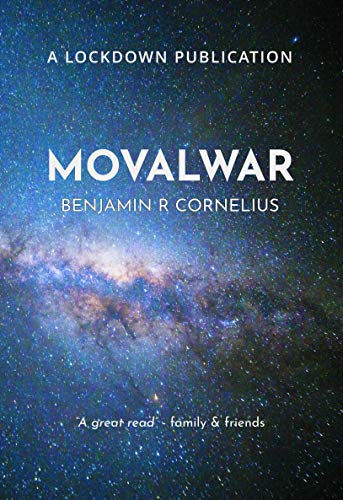
Benjamin Cornelius is 11 years old. He’s my friend’s great-nephew, and I was delighted to read his book Movalwar. He wrote it during the pandemic when he was in lockdown with his family. I was most impressed with it – his storytelling, his imagination and his command of language. It gripped me right from the first start and I just had to read on. It’s about two eleven year-old boys, Alfie and Ben and their exciting and dangerous journey to save the fate of two worlds.
With no school because of the pandemic, the boys’ adventure begins when Alfie has a dream demanding that he goes to Movalwar through a secret lake to return a mysterious possession that controls that evil kingdom. Then he finds a box in his grandparents’ attic, containing a multi-coloured gemstone that reveals a map showing mountains, islands, seas and jungles. And so their adventure begins as he and Bobby set out to find the entrance to the evil kingdom.
Meanwhile the pandemic has reached a peak, no cure has been found, the rate of infection is rising and a vaccine has yet to be created. London has been plunged into chaos. And in Movalwar Alfie’s and Bobby’s lives are in increasing danger. Will they succeed?
I liked the mix of fantasy and real life in this tense, fast-paced book that kept me absorbed in the story all the way through. Ben also designed the lovely cover for his book. I hope Ben will continue to write more stories – he says he is currently enjoying thinking of new ideas for another story.
It’s Christmas 1845 and Haworth is in the grip of a freezing winter.
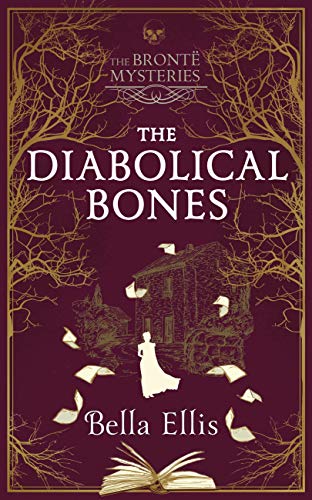
Hodder and Stoughton|5 November 2020| 309 pages| e-book| Review copy|4*
The Diabolical Bones is the second novel by Bella Ellis about the Brontë sisters. It’s historical fiction that brings the period (1845) and the setting vividly to life. It begins with Charlotte in 1852 looking back to that December of 1845 when her brother and sisters had still been alive and they had faced the hidden horror that lay within Top Withins Hall. This is a dark story, as the four Brontës discover – it involves not only murder, but also the occult and child exploitation. It highlights what life was like in the mid nineteenth century, the living conditions and the inequalities between the well-to-do and the poor.
Charlotte, Emily and Anne and their brother, Branwell became real people before my eyes, seeing them in their home in the Parsonage at Howarth. And together they make a formidable team as they set about discovering the truth about the bones of a child hidden in a chimney in the oldest part of Top Withins Hall, an ancient house high up on the moors above Howarth.
The Hall is the home of the Bradshaw family, known by Tabby, the Brontes’ housekeeper as a ‘bad lot’. She is steeped in the local superstitions and folklore and believes the land where the Bradshaws live is where the ‘hidden folk’ live. It fills her with horror as she tells the sisters about the children of Adam and Eve who live among the rocks and woodland, moors and rivers, unseen. In the past people would leave out offerings for them to keep away ill fortune. She warns them that now that there is a heavy price to be paid – and that the discovery of the bones is just the start of it.
There are links to other Brontë books in the names of some of the characters – for example, imagine finding Mrs Grace Poole, the guardian of the mad woman in the attic in Jane Eyre in charge of an orphanage. And I was delighted to find Emily in particular was inspired by Top Withins Hall and the events that took place there to write a novel, because its resemblance to Wuthering Heights struck me immediately. The more I read the more I could believe that the Brontë family were just as Bella Ellis has described them.
Bella Ellis’ is the Brontë inspired pen name for the author Rowan Coleman, who has been a Brontë devotee for most of her life – and it shows so well in this book. The setting is superb, the characters are ‘real’ and the book is well plotted. It was only towards the end that I suspected the identity of the main culprit and the danger that the four siblings had to face. I do hope there will be a third Brontë book.
My thanks to Hodder & Stoughton for an e-book review copy via NetGalley

The topic this week is My Favourite Books of 2020. This is difficult as I’ve read so many good books this year. So these are just 10 of them that came to mind when I was deciding which ones are my favourites. I’ve listed them in a-z author order:

A Thousand Moons by Sebastian Barry – his second book continuing the story of Thomas McNulty and John Cole, and Winona, the young Indian girl they had adopted. This is beautifully written, poetically and lyrically describing the landscape and with convincing characters from the American West of the 1870s. They are living and working on a farm in Tennessee, but then things go disastrously wrong. First racism rears its ugly head and then Winona is brutally attacked.

Oliver Twist by Charles Dickens his second novel, published in three volumes in November 1839. It’s full of terrific descriptions of the state of society at the time – the grim conditions that the poor suffered, the shocking revelations of what went on in the workhouse, and the depiction of the criminal underworld – the contrast of good and evil.
The Searcher by Tana French, a novel full of suspense and tension. After twenty five years in the Chicago police force, Cal has recently moved to a village in Ireland, wanting to build a new life after his divorce. He wants a quiet life in which nothing much happens. But he gets involved in the search for Brendan, a missing 19 year-old.
The Year Without a Summer: One Event, Six Lives, a World Changed by Guinevere Glasford – a novel about how the volcanic eruption of Mount Tambora on Sumbawa Island in Indonesia in 1815 had a profound and far reaching impact on the world. It led to sudden cooling across the northern hemisphere, crop failures, famine and social unrest in the following year.
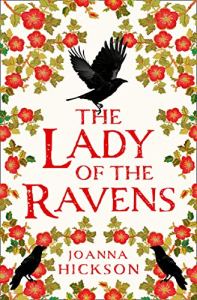
The Lady of the Ravens by Joanna Hickson, historical fiction about the early years of Henry VII’s reign as seen through the eyes of Joan Vaux She was a lady in waiting to Elizabeth of York, whose marriage in 1486 to Henry united the Houses of Lancaster and York after the end of the Wars of the Roses. The fictional element is in the story of Joan’s fascination for and care of the ravens of the Tower of London firmly believing in the legend that should the ravens leave the Tower for good then the crown will fall and ruin will return to the nation.
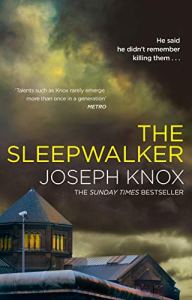
The Sleepwalker by Joseph Knox, the third Detective Aidan Waits novel, crime fiction that is dark, violent and absolutely brilliant. Waits is a disturbed and complex character, other police officers don’t trust him or want to work with him. He plays very close to the edge and has little regard for his own safety.
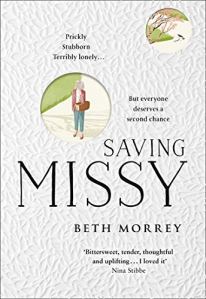
Saving Missy by Beth Morey – a novel about love and loss, family relationships, friendship, loneliness, and guilt but also about the power of kindness. It moved me to tears (not many books do that) but it is not in the least sentimental. Missy (Millicent) Carmichael is seventy nine, living on her own in a large house, left with sad memories of what her life used to be, a wife, mother and grandmother, but now she is alone. Her husband, Leo is no longer with her, her son and his family are in Australia and she and her daughter are estranged after a big row. And there is something else too, for Missy has a guilty secret that is gnawing away at her.

The Last Day by Andrew Hunter Murray – dystopian fiction. I was gripped by the story of a world coming to an end and the effects that had on the planet and the population. Set in 2059, thirty years after the earth had finally stopped spinning The Last Day presents a totalitarian world, and gives such a vivid picture of what life has become for the people who live on the burning sun side of the planet. There is, of course, no night, but there is a curfew during the ‘night’ hours.

Fresh Water for Flowers by by Valérie Perrin, translated from the French by Hildegarde Serle. An emotional and moving story about the caretaker at a cemetery in a small town in Bourgogne, Violette, her estranged husband, Phillippe, his miserable parents and their young daughter, Leonine. What happened to Leonine is especially tragic. This is a story of love and loss – and hope.
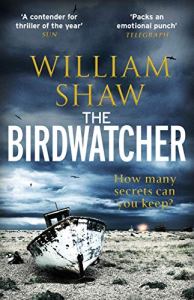
The Birdwatcher by William Shaw – a character-driven murder mystery, with a dramatic climax. Sergeant William South is a birdwatcher, a methodical and quiet man. A loner, South is not a detective and has always avoided being involved in investigating murder. But he is assigned to investigate the murder of a fellow birdwatcher. Alternating with the present day story is the story of Billy, a thirteen year old living in Northern Ireland during the ‘Troubles’.
Recently I watched the 2020 film of The Secret Garden. The first thing so say it is that it is not like Frances Hodgson Burnett’s book. The basic premise is the same – Mary Lennox is an orphaned child who goes to live with her uncle in Yorkshire where she discovers a secret garden. I’m not going to describe the differences between the book and the film – there are so many – but the main difference is the garden itself. And that is what disappointed me the most about the film.
The ‘garden’ is not a garden – it is a huge version of maybe the Amazon rain forest, a digital fantasy, nothing like the garden in the book. And Misselthwaite Manor has been morphed into Misselthwaite Hall, a huge palatial building dominating the Yorkshire skyline. And what has become of Ben Weatherstaff, the gardener and Mrs Sowerby, Dickon and Martha’s mother? They are just not in the film!
If you don’t like modern versions of old favourites, then steer clear of this film – it is nothing like the book. It’s CGI ‘magic’ is simply not the real Magic of the natural world.
This is what I wrote about the book when I last re-read it 8 years ago. I’m tempted to read it again to obliterate the film from my imagination.

I read The Secret Garden several times as a child and the story has stayed with me ever since. For years my picture of the ideal garden has been a walled garden, just like the secret garden. The story can be read on different levels. As a child it seemed to me to be a straight forward story of Mary Lennox, orphaned after her parents died of cholera in India. Up until the age of nine she had lived a cosseted life looked after by servants, in particular her Ayah, ignored by her parents. After their death she was sent to live at Misselthwaite Manor, on the bleak Yorkshire moors, with her uncle, who was a hunchback recluse, who took little interest in her. Soon after Mary’s arrival, her uncle went abroad leaving her again in the care of servants. These were very different from the servants in India and Mary struggled to adjust.
Soon after she discovers she is not the only child in the house, when she finds Colin, her cousin, a hypochondriac, unable to walk, who believes he won’t live to grow up. Both Mary and Colin are selfish children, hating both themselves and the adults in their lives. Both also hate the outdoors, but encouraged by Martha, her maid, Mary wanders in the gardens of the Manor house and comes across a walled garden, which apparently has no door. There seems no way to get inside it – until guided by a robin, she finds an old key buried in the earth. I loved the descriptions of the Yorkshire countryside, the garden and how under the influence of Martha and her younger brother Dickon and even the grumpy gardener, Ben Weatherstaff, Mary blossomed as the year progressed along with the garden.
Reading it now I can see it is full of symbolism using nature, the Bible and myths, that I never noticed as a child. The image of the garden is used as both paradise lost and paradise regained. As the garden is nurtured and begins to blossom so do Mary and Colin, through springtime and into summer, culminating in the autumn when both are brought to full health. Dickon is accompanied by a young fox, a lamb, a crow and tame squirrels, reminiscent of St. Francis of Assisi and plays his pipe to charm the animals, like Pan. His mother, Mrs. Sowerby, is a plain-speaking down-to-earth Yorkshire woman, full of common sense and wisdom, who through Dickon and Martha helps the children, feeding Mary and Colin with both her words and wholesome food. At times I thought the language becomes over sentimental and a bit syrupy (I never thought that as a child). But there are descriptions that still appeal to me, such as this description of the roses in the garden:
And the roses – the roses! Rising out of the grass, tangled round the sundial, wreathing the tree trunks, and hanging from their branches, climbing up the walls and spreading over them with long garlands falling in cascades – they came alive day by day, hour by hour. Fair, fresh leaves and buds – and buds – tiny at first, but swelling and working Magic until they burst and uncurled into cups of scent delicately spilling themselves over their brims and filling the garden air. (page 210 in my copy)
Above all it is the power of Magic that is invoked in this book. The magic of nature, that makes plants and people grow and develop, the magic of the power of positive thinking and prayer, of the healing power of the mind, and of laughter and love. Sometimes it seemed too simplistic and yet at the same time I was swept along with the sentiments and enjoying the experience of re-reading this book.
 BooksPlease