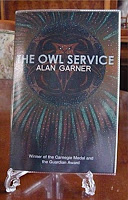
Today I’m looking back to 8th January 2008 when I wrote about The Owl Service by Alan Garner. I’d borrowed this book from my local library. First published in 1967 this book won both the 1968 Guardian Award for Children’s Fiction and the 1967 Carnegie Medal. This is an all-time classic, combining mystery, adventure, history and a complex set of human relationships.
Here is an extract from my post:
The Owl Service is not just a children’s book – it’s for anyone who likes a good story with a mixture of mystery, adventure and history. The setting is very important – it is in Wales, that beautiful Land of My Fathers (well, in my case my mother). It’s always a mysterious, magical place, and although the sun does shine it is usually shrouded in cloud and pouring rain whenever I visit.
The basis of the story is the Welsh legend from The Mabinogionabout Lleu and his wife Blodeuwedd who was made for him out of flowers. It’s a tragic story because Blodeuwedd and her lover Gronw murdered Lleu, who was then brought back to life by magic. Lleu then killed Gronw by throwing a spear, which went right through the stone behind which Gronw was hiding; Blodeuwedd was then turned into an owl.
Alan Garner was born in Congleton, Cheshire, in 1934. His began writing his first novel at the age of 22 and is renowned as one of Britain’s outstanding writers. He has won many prizes for his writing, and, in 2001 he was awarded the OBE for services to literature. He holds four honorary doctorates and is a Fellow of the Society of Antiquaries of London and a Fellow of the Royal Society of Literature .
The topic this week is Books Written Before I Was Born (These can be books you’ve read or want to read!) (submitted by Davida Chazan @ The Chocolate Lady’s Book Review Blog).
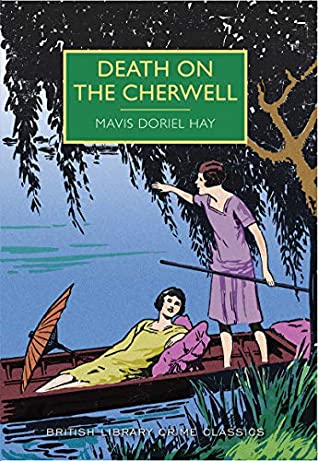
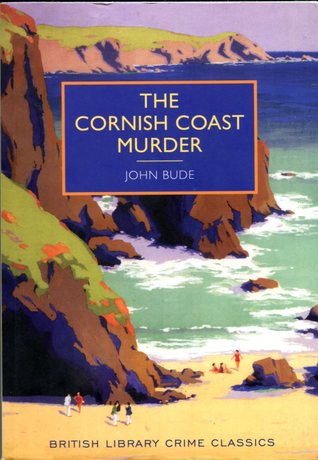
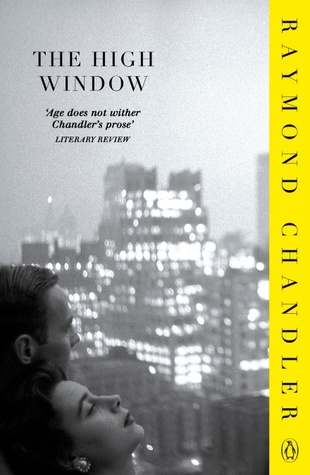
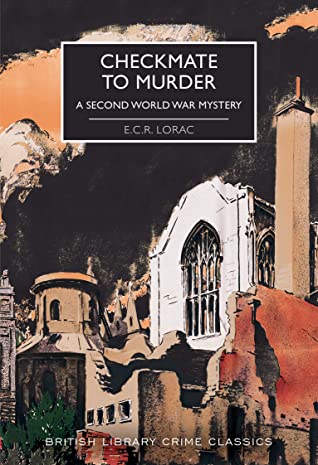
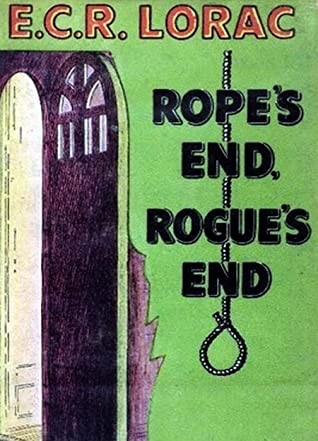
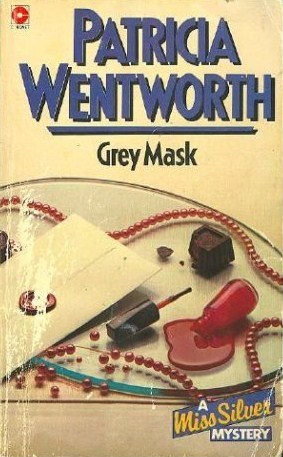
My list is of crime fiction I’d like to read (linked to Goodreads for descriptions of the books).
Every Friday Book Beginnings on Friday is hosted by Gillion at Rose City Readerwhere you can share the first sentence (or so) of the book you are reading. You can also share from a book you want to highlight just because it caught your fancy.
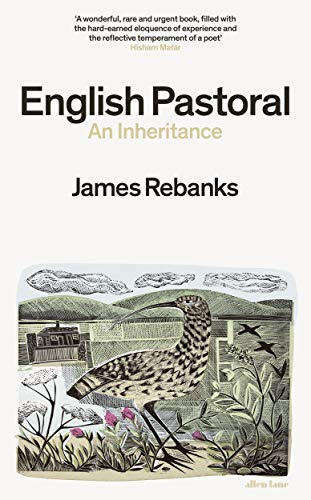
The black-headed gulls follow in our wake as if we are a little fishing boat out at sea. The sky is full of winged silhouettes and screaming beaks, and streaks of white seagull shit splatter like milk down on to the soil. I am riding in the tractor, crammed in behind my grandfather.
Also every Friday there is The Friday 56, hosted by Freda at Freda’s Voice. *Grab a book, any book. *Turn to Page 56 or 56% on your ereader . If you have to improvise, that is okay. *Find a snippet, short and sweet, but no spoilers!
These are the rules:
Grab a book, any book.
Turn to page 56, or 56% on your eReader. If you have to improvise, that is okay.
Find any sentence (or a few, just don’t spoil it) that grabs you.
Post it.
Add the URL to your post in the link on Freda’s most recent Friday 56 post.
Grab a book, any book.
Turn to page 56, or 56% on your eReader. If you have to improvise, that is okay.
Find any sentence (or a few, just don’t spoil it) that grabs you.
Post it.
Add the URL to your post in the link on Freda’s most recent Friday 56 post.
About the book:
As a boy, James Rebanks’s grandfather taught him to work the land the old way. Their family farm in the Lake District hills was part of an ancient agricultural landscape: a patchwork of crops and meadows, of pastures grazed with livestock, and hedgerows teeming with wildlife. And yet, by the time James inherited the farm, it was barely recognisable. The men and women had vanished from the fields; the old stone barns had crumbled; the skies had emptied of birds and their wind-blown song.
English Pastoral is the story of an inheritance: one that affects us all. It tells of how rural landscapes around the world were brought close to collapse, and the age-old rhythms of work, weather, community and wild things were lost. And yet this elegy from the northern fells is also a song of hope: of how, guided by the past, one farmer began to salvage a tiny corner of England that was now his, doing his best to restore the life that had vanished and to leave a legacy for the future.
This is a book about what it means to have love and pride in a place, and how, against all the odds, it may still be possible to build a new pastoral: not a utopia, but somewhere decent for us all.
The topic this week is New-to-Me Authors I Read in 2020. I read 28 new-to-me authors in 2020 – some were debut novels and others were books I’d wanted to read for years. These are 10 of them:
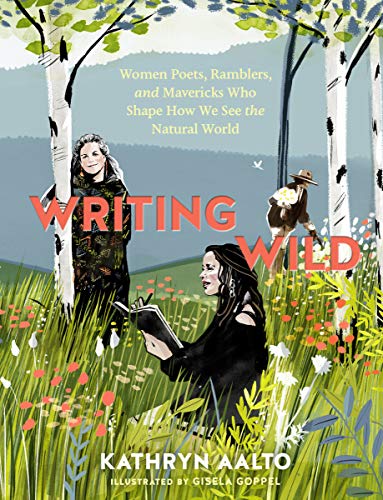
!. Kathryn Aalto – Writing Wild – nonfiction, highlighting the work of 25 women writers, covering two hundred years of women’s history through nature writing. I already knew some, but others were new to me and I would like to read several of their works, such as Andrea Wulf’s book The Brother Gardeners in which she explores how England became a nation of gardeners
2. Miles Burton – The Secret of High Eldersham – a Golden Age crime classic, first published in 1930. The landlord of the Rose and Crown Inn in the village of High Eldersham was found dead slumped in a chair, having been stabbed in the neck. The local police don’t feel able to deal with the murder so call in help from Scotland Yard.
3. Patti Callahan – Becoming Mrs Lewis – a novel about Helen Joy Davidman and C S Lewis, written as though Joy herself is telling their story it is intense, passionate and very personal and I felt very uncomfortable reading it – as though I was eavesdropping on the characters.
4. Eleanor Catton – The Luminaries – historical fiction set in New Zealand in the 1860s, during its gold rush and it has everything – gold fever, murder, mystery and a ghost story too. I became fully absorbed in the story during the week it took me to read. it
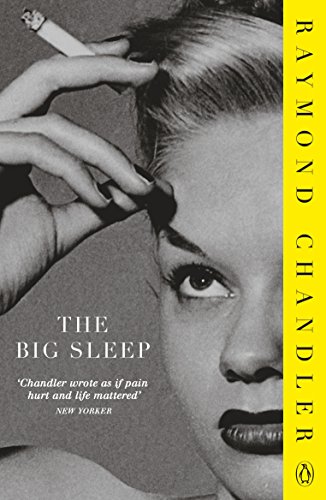
5. Raymond Challoner – The Big Sleep – first published in 1939, an excellent example of ‘hardboiled’ crime fiction, which generally featured a private eye with a whisky bottle in a filing cabinet, a femme fatale, and rich and usually corrupt clients. I enjoyed it and will probably read more of the Philip Marlow books.
6. Takashi Hiraide – The Guest Cat – a novella about a cat that made itself at home with a couple in their thirties who lived in a small rented house in a quiet part of Tokyo and how that changed their lives. As a cat lover how could I resist this book? It is only short, 146 pages but it packs so much within those pages. And there was a lot that struck chords with me.
7. Andrew Taylor Murray – The Last Day – the story of a world coming to an end and the effects that had on the planet and the population. It presents a totalitarian world, and gives a vivid picture of what life has become for the people who live on the burning sun side of the planet.
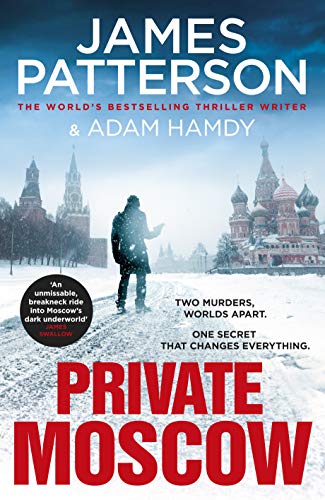
8. James Patterson – Private Moscow – the 15th book in James Patterson’s Private series, this is a change from the type of books usually read – an action packed, fast paced mystery thriller. I enjoyed it, but I’m not sure I want to read the other books in the series.
9. Valérie Perrin – Fresh Water for Flowers – I loved this novel, a story of love and loss – and hope. Violette, the caretaker at a cemetery in a small town in Bourgogne, is a character I really warmed to; she is optimistic, brave, creative and caring. I do want to read more of her books!
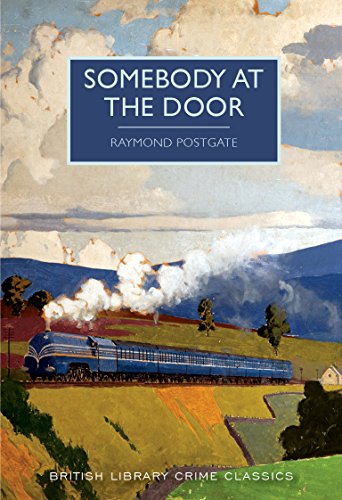
10. Raymond Postgate – Somebody at the Door – another Golden Age murder mystery, first published in 1943. It’s set in 1942 and it gives a vivid picture of what life was like in wartime England. Henry Grayling was on the 6.12 train from Euston, travelling home to Croxburn from work in London – but when he arrived home he was seriously ill and died later that evening.
This month I have caught up with reading two of Jane Casey’s Maeve Kerrigan books, and having read these two in quick succession I’m feeling as though I’ve overdosed on crime fiction. Too many murders in quick succession. I need to space them out.
Maeve is a Detective Sergeant with the Metropolitan Police – in the first six books she was a detective constable – and her boss Detective Inspector Josh Derwent are the two main characters. They have a confrontational working relationship and their spiky relationship is a recurring theme in the books. In fact they are both strong characters described in depth and completely believable. They’ve both changed as the series has grown, which is why it’s better to read the books in sequence to see how have they’ve developed.
The first book in Jane Casey’s Maeve Kerrigan series was The Burning, published in 2010, but I didn’t get round to reading it until February 2015. I was hooked immediately and read the next five books in quick succession by the end of August 2015. These are all police procedurals, fast-paced novels, with intriguing and complex plots and developing the relationships between the main characters. So, I think that although the books read well as stand-alones, it helps enormously to read them in order, especially to follow the relationship between Maeve and DI Josh Derwent.
Blurb: A year ago, Leo Stone was convicted of murdering two women and sentenced to life in prison. Now he’s been freed on a technicality, and he’s protesting his innocence. DS Maeve Kerrigan and DI Josh Derwent are determined to put Stone back behind bars where he belongs, but the more Maeve digs, the less convinced she is that he did it. Then another woman disappears in similar circumstances. Is there a copycat killer, or have they been wrong about Stone from the start?
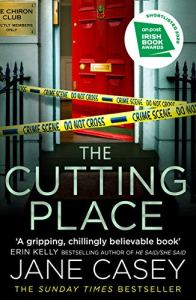
Blurb Everyone’s heard the rumours about elite gentlemen’s clubs, where the champagne flows freely, the parties are the height of decadence . . . and the secrets are darker than you could possibly imagine.
DS Maeve Kerrigan finds herself in an unfamiliar world of wealth, luxury and ruthless behaviour when she investigates the murder of a young journalist, Paige Hargreaves. Paige was working on a story about the Chiron Club, a private society for the richest and most privileged men in London. Then she disappeared.
It’s clear to Maeve that the members have many secrets. But Maeve is hiding secrets of her own – even from her partner DI Josh Derwent. Will she uncover the truth about Paige’s death? Or will time run out for Maeve first?
~~~
I enjoy crime fiction because I like trying to work out happened and why. But I don’t like reading about horrific murders that are described in gory technicolour detail. Whilst there are brutal murders in these books they’ve not been too much for me to read. They are gritty stories but in The Cutting Place the murders and abuse of women and the violence involved is just a step too far for me. One of the changes in Maeve’s life came about in that book was when she acquired a new boy friend – the lawyer Seth Taylor – I didn’t like him straight away and I was right. Now I would like to know what happens next between Maeve and Josh as it seems to me that their relationship took a significant turn in The Cutting Place! So, I am hoping there will be a 10th book.
Jane Casey’s writing makes compelling reading, always satisfying even if her books take me to places and situations that appal and terrify me. Her books are down to earth and based on real life. As she explains at the end of the book, she is married to a criminal barrister ‘who makes sure her writing is realistic and as accurate as possible.’
Her next book is a standalone thriller, The Killing Kind, to be published 27 May 2021, featuring barrister Ingrid Lewis – one to look out for.
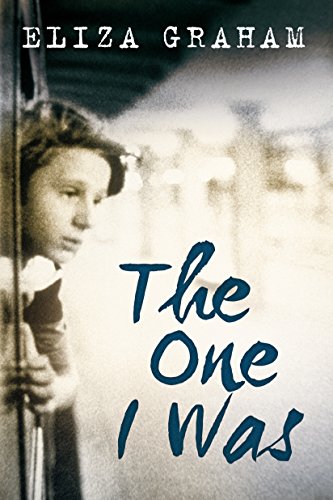
I downloaded The One I Was by Eliza Graham soon after it was published in May 2015 and I’ve just got round to reading it. It was worth waiting for as I really enjoyed it and think it is one of the best books I’ve read recently. It’s historical fiction split between the present and the past following the lives of Benny Gault and Rosamund Hunter.
It begins in the present as Rosamund goes to Fairfleet, her childhood home, to nurse Benny Gault, who first came to Fairfleet in 1939, having fled Nazi Germany on a Kindertransport train. As an adult he bought the house and now he is dying of cancer. It’s a difficult time for Rosamund as she has painful memories of her life at Fairfleet and she is wary about returning – so much so that she doesn’t tell Benny of her connection to the house.
Throughout the book events from both their pasts are revealed, and gradually they discover the connections between them and they come to terms with the traumas that have haunted them. This is a novel about friendship, palliative care, redemption and forgiveness across generations. I was totally engrossed in both their life stories as the various strands of the story eventually combined. Although it was Benny’s story that appealed to me the most – particularly his early life in Germany and the story of how he came to live at Fairfleet – I was also fascinated by the story of Rosamund’s grandmother, one of the few women pilots who flew Spitfires for the Air Transport Auxiliary.
This is obviously a well researched book and Eliza Graham has listed the books she had found invaluable whilst writing The One I Was.
I’ve read just two of Eliza Graham’s books, Playing With the Moon and Another Day Gone (linked to my reviews). I hope to read more of her books this year:
Playing with the Moon (2007) Restitution (2008) Jubilee (2010) The History Room (2012) The One I Was (2014) Another Day Gone (2016) The Lines We Leave Behind (2018) The Truth in Our Lies (2019) You Let Me Go (2021) – publication date 25 March 2021








 BooksPlease