Can’t-Wait Wednesday: Circus of Wonders

Can’t-Wait Wednesday is a weekly meme hosted by Wishful Endings, to spotlight and discuss the books we’re excited about that we have yet to read. Generally they’re books that have yet to be released. This is my first Can’t-Wait Wednesday post!

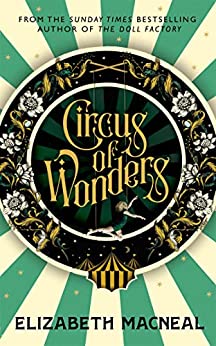
In 2019 one of the best books I read was The Doll Factory by Elizabeth Macneal, so I am really looking forward to read her next book, Circus of Wonders, which isn’t published until 13 May! Luckily for me I have an ARC via NetGalley.

Description

The spellbinding new novel from the author of the Sunday Times bestselling The Doll Factory.

1866. In a coastal village in southern England, Nell picks violets for a living. Set apart by her community because of the birthmarks that speckle her skin, Nell’s world is her beloved brother and devotion to the sea.

But when Jasper Jupiter’s Circus of Wonders arrives in the village, Nell is kidnapped. Her father has sold her, promising Jasper Jupiter his very own leopard girl. It is the greatest betrayal of Nell’s life, but as her fame grows, and she finds friendship with the other performers and Jasper’s gentle brother Toby, she begins to wonder if joining the show is the best thing that has ever happened to her.

In London, newspapers describe Nell as the eighth wonder of the world. Figurines are cast in her image, and crowds rush to watch her soar through the air. But who gets to tell Nell’s story? What happens when her fame threatens to eclipse that of the showman who bought her? And as she falls in love with Toby, can he detach himself from his past and the terrible secret that binds him to his brother?

Moving from the pleasure gardens of Victorian London to the battle-scarred plains of the Crimea, Circus of Wonders is an astonishing story about power and ownership, fame and the threat of invisibility.

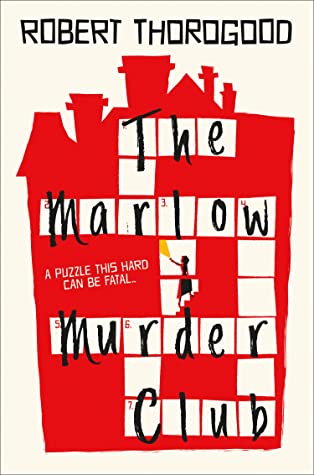
The Marlow Murder Club by Robert Thorogood

HQ| 7 January 2021|347 pages| Kindle review copy via Netgalley| 3*

I hadn’t read any of Robert Thorogood’s books, but I thought I’d enjoy The Marlow Murder Club based on the blurb. It begins well. Seventy-seven year old Judith Potts is happy with her life, living in an Arts and Crafts mansion on the River Thames, although there are hints that there is something in her past she wants to forget. It’s the height of summer, in the grip of a heatwave, and Judith decides to take all her clothes off and go for swim in the Thames. She was enjoying herself when she hears a shout from her neighbour’s house on the opposite riverbank, followed by a gunshot. Later, when she goes to investigate, she finds him, dead in the river, with a bullet hole in the centre of his forehead.

It’s set in Marlow, which is what attracted me to the book as it’s a place I know quite well. The main characters are Judith, Suzie and Becks, who together discover who killed Stefan. They’re all quirky personalities with secrets they’re keeping hidden. Detective Sergeant Tanika Malika leads the police team and eventually when more bodies turn up she agrees that the three woman can help with the official investigation.

The Marlow Club Murder is a ‘cosy’ murder mystery, easy to read and fast paced. Judith is a crossword compiler, who writes cryptic clues so I really enjoyed that aspect of the book, and the relationship between her, Suzie and Becks is well-drawn. But there is quite a lot of repetition as Judith and her friends go over the evidence that they’ve gathered several times and the solution to the murder mystery is easy to predict. The ending is very rushed and let down by convenient coincidences. Overall, I think it’s light, easy reading that is quite entertaining, and the relationship between the three women is what kept me reading to the end of the book.

My thanks to the publishers and NetGalley for my review copy.

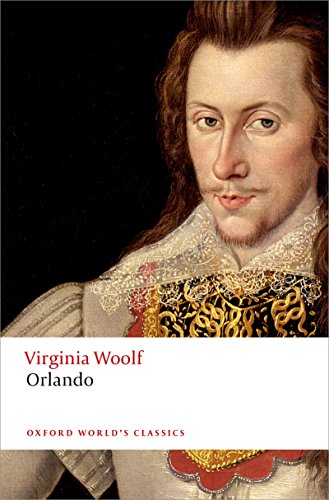
Orlando by Virginia Woolf

Rating: 4 out of 5.

Orlando: a Biography has been on my TBR shelves for nearly five years now, so I was glad it came up in the Classics Club spin as this gave me the push to actually read it. I won Orlando in one of Heaven Ali’s Woolfalong giveaways in May 2016 and I’m sorry that I haven’t read it before now. I did start it when I first got it, but found it a bit ‘difficult to get into it’ and left it on my bookshelves for while – the while turned out to be nearly five years!

I’ve read some of Virginia Woolf’s books before – Mrs Dalloway, To The Lighthouse, Kew Gardens (a short story), Flush: a biography of Elizabeth Barrett Browning’s dog, A Room of One’s Own and The Three Guineas (in one volume and more recently, I’ve read The Voyage Out, and Death of a Moth and other essays.

Synopsis:

Orlando tells the tale of an extraordinary individual who lives through centuries of English history, first as a man, then as a woman; of his/her encounters with queens, kings, novelists, playwrights, and poets, and of his/her struggle to find fame and immortality not through actions, but through the written word. At its heart are the life and works of Woolf’s friend and lover, Vita Sackville-West, and Knole, the historic home of the Sackvilles. But as well as being a love letter to Vita, Orlando mocks the conventions of biography and history, teases the pretensions of contemporary men of letters, and wryly examines sexual double standards.

My thoughts:

Orlando is a fictionalised biography of Vita Sackville-West, based on her life. They had met in 1922 when Woolf was 40 and Vita was 30, when Wolf described her as ‘lovely’ and ‘aristocratic’. I was a bit overwhelmed at times reading Orlando – such a fantastical novel, spanning 500 years. There are copious literary, historical, and personal allusions and despite continually referring to the Explanatory Notes at the end of the book I’m sure I missed a lot of them. And it makes for a fragmentary reading experience, having to stop reading and flip backwards and forwards between the text and the notes, so that I was a bit confused about the story and what happened when.

But having said that the plot is extraordinary, beginning towards the end of Elizabeth I’s reign when Orlando is a young nobleman, and continuing for the next five hundred years to the start of the twentieth century. You have to completely suspend your disbelief, not just for the length of his life, but also for his/her gender as in the late 17th century whilst he is an ambassador for Charles II he falls into a trance for seven days, only to find when he comes to that ‘he’ has become a young woman. As a woman she lives with a group of Turkish gypsies and then returns to England in the 18th century, when she has difficulty in being identified as a woman. In the 19th century she falls in love with a young romantic traveller, finally finding freedom in finishing the poem she began in the 16th century and in experiencing the delights of motoring in the early years of the 20th century.

What I’ve described here is just the bare bones of the book, because there are many vivid passages – such as her description of the ‘Great Frost’ of 1608, when the Thames was frozen for six weeks and Frost Fairs were held on the ice. It hit the country people the hardest:

But while the country people suffered the extremity of want, and the trade of the country was at a stand still, London enjoyed a carnival of the utmost brilliance. The Court was at Greenwich, and the new King seized the opportunity that his coronation gave him to curry favour with the citizens. He directed that the river, which was frozen to a depth of twenty feet and more for six or seven miles on either side should be swept, decorated and given all the semblance of a park or pleasure ground with arbours, mazes, alleys, drinking booths, etc at his expense. For himself and his courtiers, he reserved a certain space immediately opposite the Palace gates; which railed off from the public only by a silken rope, became at once the centre of the most brilliant society in England. (pages 22-23)

She also writes about writing and about books, about the nature of gender, and about the position of women in society over the centuries. One theme that fascinates me is her depiction of the passage of time, particularly in the final section of the book set as the 20th century reached 1928 (the year Orlando was published). Overall it is a book steeped in history showing how the passage of time had changed both the landscape and climate of England along with its society – and I have only scratched the surface in this post. It is a book packed with detail that deserves to be read more than once to appreciate it fully.

  • Publisher : OUP Oxford; 2nd edition (11 Dec. 2014)
  • Language : English
  • Paperback : 288 pages
  • ISBN-10 : 019965073X
  • ISBN-13 : 978-0199650736
Six Degrees of Separation from Redhead by the Side of the Road to Hercule Poirot’s Christmas

It’s time again for Six Degrees of Separation, a monthly link-up hosted by Kate at Books Are My Favourite and Best. Each month a book is chosen as a starting point and linked to six other books to form a chain. A book doesn’t need to be connected to all the other books on the list, only to the one next to it in the chain.

This month the chain begins with Redhead by the Side of the Road by Anne Tyler.

I haven’t read this book, although reading the description it does appeal to me. It’s about Micah Mortimer, who lives in a basement flat in Baltimore, and runs his own tech business. His steady life is upset when his partner Cassia tells him she’s facing eviction because of a cat and a teenager arrives at his door claiming to be his son. And his eyesight isn’t too good.

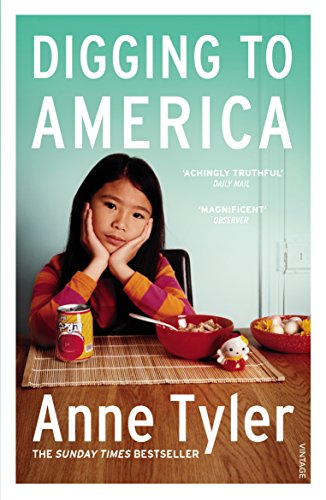
The first link is to another book by Anne Tyler – Digging to America, also set in Baltimore. It’s about two contrasting families who adopted two Korean babies. They met at Baltimore airport, waiting for the babies to arrive.

The second link is to The Frank Business by Olivia Glazebrook. The link is an airport – in this book Frank dropped down dead at London Heathrow airport, having travelled from his home in France. He died of a congenital heart defect.

The third link is to Deaf Sentence by David Lodge in which a character has a different type of defect – Desmond Bates has defective hearing. He is having to come to terms with his increasing deafness and also with his retirement from the academic world. He still hankers after his position as a Professor of Linguistics. 

In The Silent World of Nicholas Quinn by Colin Dexter, Quinn was deaf. He was a member of the Oxford Examinations Syndicate and was found dead in his north Oxford home. Chief Inspector Morse tracks down the killer through the insular and bitchy world of the Oxford Colleges.

The Case of the Gilded Fly by Edmund Crispin, a locked room mystery is also set in Oxford with Gervase Fen, an Oxford Professor of English Language and Literature at the fictional St Christopher College. First published in 1944 this is one of the Golden Age mysteries.

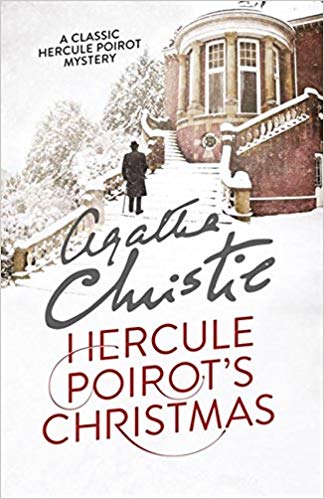
My final link is to Hercule Poirot’s Christmas by Agatha Christie, another locked room mystery. Poirot investigates the death of Simeon Lee, the head of the Lee family. None of his family like him, in fact most of them hate him and there are plenty of suspects for his murder. He is found dead with his throat cut in a locked room – locked from the inside.

Well, I ended up with crime fiction again! Where will your chain end up?

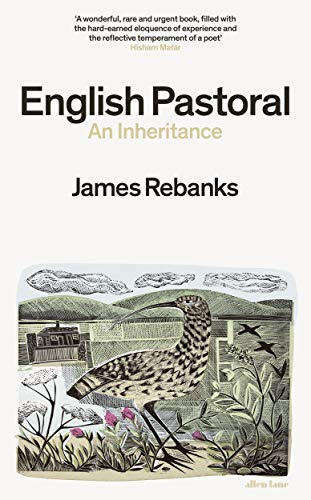
English Pastoral by James Rebanks

Penguin| 3 September 2020| 283 pages| Kindle review copy via Netgalley| 5*

English Pastoral: An Inheritance by James Rebanks is an absolutely marvellous book, the best book I’ve read this year and although it’s still February I can’t imagine that I’ll read a better book all year.

About the book:

As a boy, James Rebanks’s grandfather taught him to work the land the old way. Their family farm in the Lake District hills was part of an ancient agricultural landscape: a patchwork of crops and meadows, of pastures grazed with livestock, and hedgerows teeming with wildlife. And yet, by the time James inherited the farm, it was barely recognisable. The men and women had vanished from the fields; the old stone barns had crumbled; the skies had emptied of birds and their wind-blown song.

English Pastoral is the story of an inheritance: one that affects us all. It tells of how rural landscapes around the world were brought close to collapse, and the age-old rhythms of work, weather, community and wild things were lost. And yet this elegy from the northern fells is also a song of hope: of how, guided by the past, one farmer began to salvage a tiny corner of England that was now his, doing his best to restore the life that had vanished and to leave a legacy for the future.

This is a book about what it means to have love and pride in a place, and how, against all the odds, it may still be possible to build a new pastoral: not a utopia, but somewhere decent for us all.

It is inspirational as well as informative and it is beautifully written. I enjoyed his account of his childhood and his nostalgia at looking back at how his grandfather farmed the land. And I was enlightened about current farming practices and the effects they have on the land, depleting the soil of nutrients.

But all is not doom and gloom as Rebanks also explains what can be done to put things right, how we can achieve a balance of farmed and wild landscapes, by limiting use of some of the technological tools we’ve used over the last 50 years so that methods based on mixed farming and rotation can be re-established. By encouraging more diverse farm habitats, rotational grazing and other practices that mimic natural processes we can transform rural Britain.

I loved this book and came away with much to think about and also hope for the future.

My thanks to the publishers and NetGalley for the review copy, and as it is such an excellent book, after reading the review copy, I bought the e-book.

My Friday Post: Ice Bound by Jerri Nielsen

Every Friday Book Beginnings on Friday is hosted by Gillion at Rose City Reader where you can share the first sentence (or so) of the book you are reading. You can also share from a book you want to highlight just because it caught your fancy.

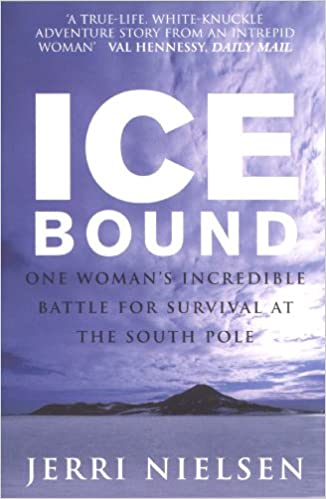
I’m reading Ice Bound: One Woman’s Incredible Battle for Survival at the South Pole by Jerri Nielsen.

It begins:

If this story is to begin anywhere, it should begin in the night. I have always been a night person. When the sun goes down, my spirits rise.

Also every Friday there is The Friday 56, hosted by Freda at Freda’s Voice. *Grab a book, any book. *Turn to Page 56 or 56% on your  ereader . If you have to improvise, that is okay. *Find a snippet, short and sweet, but no spoilers!

These are the rules:

  1. Grab a book, any book.
  2. Turn to page 56, or 56% on your eReader. If you have to improvise, that is okay.
  3. Find any sentence (or a few, just don’t spoil it) that grabs you.
  4. Post it.
  5. Add the URL to your post in the link on Freda’s most recent Friday 56 post.
  1. Grab a book, any book.
  2. Turn to page 56, or 56% on your eReader. If you have to improvise, that is okay.
  3. Find any sentence (or a few, just don’t spoil it) that grabs you.
  4. Post it.
  5. Add the URL to your post in the link on Freda’s most recent Friday 56 post.

Page 56:

I quickly learned to keep the head of my stethoscope in my bra to avoid giving my patients frostbite when I lifted their three to five layers of clothing. Fully undressing patients was impractical here.

~~~

About the book – from the back cover:

Dr Jerri Nielsen made international headlines worldwide when, as the only doctor at the Amundsen-Scott South Pole Research Station she diagnosed herself with breast cancer. The world’s media anxiously followed the immense efforts she and her fellow ‘polies’ took to treat her, the frantic drops of essential supplies and the final high-risk mission to airlift her out.

[This] is not just a powerful account of her struggle for survival, but also a thrilling adventure story about how a small community copes in the most hostile environment on earth, and a moving personal voyage of self-discovery and courage. But at its core lies a romance that makes even these pale into insignificance – Jerri’s realization that, dangers and discomforts and even cancer notwithstanding, she would rather be in the terrible beauty of Antarctica than anywhere else on earth.