Can’t-Wait Wednesday is a weekly meme hosted by Wishful Endings, to spotlight and discuss the books we’re excited about that we have yet to read. Generally they’re books that have yet to be released.
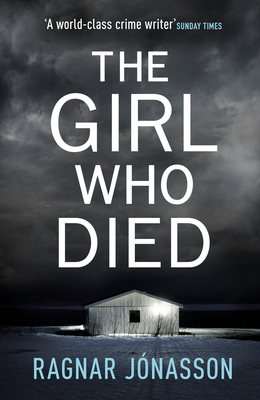
This week I’m featuring The Girl Who Died by Ragnar Jónasson, release date 3 June 2021. I’ve read just two of Ragnar Jónasson’s books in his Icelandic Hulda series and enjoyed both of them. So, I’m keen to read this one, which is a standalone novel.
Description
‘TEACHER WANTED ON THE EDGE OF THE WORLD . . .’.
Una knows she is struggling to deal with her father’s sudden, tragic suicide. She spends her nights drinking alone in Reykjavik, stricken with thoughts that she might one day follow in his footsteps.
So when she sees an advert seeking a teacher for two girls in the tiny village of Skálar – population of ten – on the storm-battered north coast of the island, she sees it as a chance to escape.
But once she arrives, Una quickly realises nothing in city life has prepared her for this. The villagers are unfriendly. The weather is bleak. And, from the creaky attic bedroom of the old house where she’s living, she’s convinced she hears the ghostly sound of singing.
Una worries that she’s losing her mind.
And then, just before midwinter, a young girl from the village is found dead. Now there are only nine villagers left – and Una fears that one of them has blood on their hands . . .
What upcoming release are you eagerly anticipating?
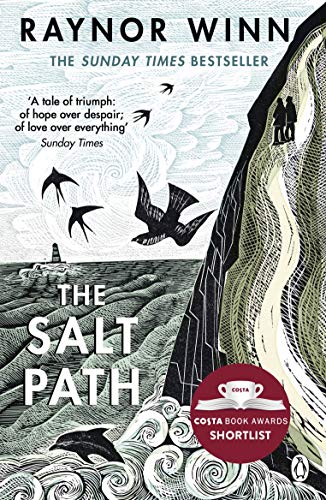
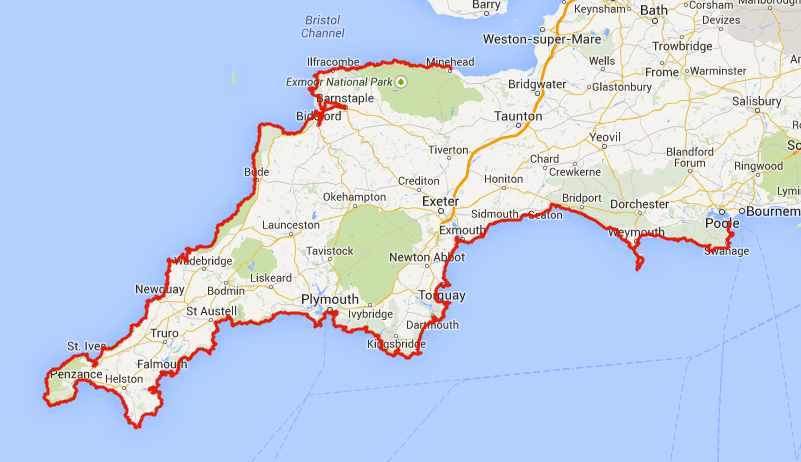
Just days after Raynor learns that Moth, her husband of 32 years, is terminally ill, their home is taken away and they lose their livelihood. With nothing left and little time, they make the brave and impulsive decision to walk the 630 miles of the sea-swept South West Coast Path, from Somerset to Dorset, via Devon and Cornwall.
Carrying only the essentials for survival on their backs, they live wild in the ancient, weathered landscape of cliffs, sea and sky. Yet through every step, every encounter and every test along the way, their walk becomes a remarkable journey.
The Salt Path is an honest and life-affirming true story of coming to terms with grief and the healing power of the natural world. Ultimately, it is a portrayal of home, and how it can be lost, rebuilt and rediscovered in the most unexpected ways.
I first wrote a short post about The Salt Path in this post. I bought the book in 2018 and was keen to read it, but so many other books intervened, and it was only when I saw Raynor Winn on Kate Humble’s Coastal Walks programme on the South West Coastal Path that I remembered about her book.
Raynor and Moth Winn, a couple in their 50s, were homeless, with no means of income except for £48 pounds a week. They had lost their home, business and livelihood, after investing in one of a friend’s companies that had failed. They found out that they were liable to make payments towards the debts of the company, were taken to court and ended up losing not only their savings but also their farm and home.
Despite finding out that Moth has a rare terminal illness, they decided to walk the South Coast Path. He had been diagnosed with corticobasal degeneration (CBD), a brain disease for which there is no cure or treatment apart from pain killers and physiotherapy. The consultant told him that he shouldn’t tire himself, or walk too far and to take care on the stairs. Their decision to walk the Path and camp wild seemed to me both brave and foolhardy and I read this book with absolute amazement that they could take themselves away from medical care and set off, almost totally unprepared and not fit enough to walk 630 miles along a coast path.
At first it was really difficult as Moth struggled with pain and exhaustion, and it horrified me that he could carry on in that condition. They had reached the Valley of Rocks in north Devon, when he sat down on the rocks. He felt he was eighty and was so tired that he hurt everywhere:
Can’t tell if I’m half asleep, or wide awake. It’s like my head’s in fog and I’m walking through treacle. This is the most bollockingly stupid thing we’ve ever done. I want to lie down.(page 58)
He had been taking Pregabalin to ease the nerve pain and had been told not to just stop taking them because of the immense list of withdrawal symptoms. But that is what he had done – they had left his supplies behind them, ready to put in the rucksack, but had forgotten them. Fortunately after a while the pain lessened, he felt much better and his head was clearer. The walking had helped!
They had little to live on, their diet involved lots of rice and noodles, supplemented with wine gums and foraging for blackberries, mushrooms and dandelions. They took it at their own pace, following Paddy Dillon’s Walking Guide of the trail from Minehead on the Somerset coast right round Devon and Cornwall to Poole in Dorset, stopping to pick up their money and buy supplies along the route. But as winter was on the way when they reached Lantic Bay and Pencarrow Head they decided to take up a friend’s offer to stay with her for the winter free of rent if they could help with her building and on her farm.
However, once they stopped walking, Moth’s stiffness and his neurological pain increased and he struggled to move. He seemed to be deteriorating so quickly without the Pregabalin. But they were determined to finish the walk and completed it the next year. Once more, as they walked Moth’s condition improved. He didn’t understand how, thinking it may have ‘something to do with heavy endurance exercise‘, causing some sort of reaction that that they didn’t understand. He didn’t know how it worked but he just felt great.
Living with a death sentence, having no idea when it will be enacted, is to straddle a void. Every word or gesture, every breath of wind or drop of rain matters to a painful degree. For now we had moved outside of that. Moth was on death row, but he’d been granted the right to appeal. He knew CBD hadn’t miraculously disappeared, but somehow, for a while, it was held at bay.(page 243)
The Salt Path is not a book about walking the South Coast Path because you love walking, nor because you want the challenge of walking 630 miles, nor because you love wild camping. And it is not just about about the beauty of the surroundings and the experience of being close to nature (although that is there in Ray Winn’s beautiful descriptive writing). It is about the determination to live life, about overcoming pain and hardship, and the healing power of nature. It is about homelessness and the different reactions and attitudes of the people they met when they told them they were homeless. Some were hostile, some recoiled in horror and moved away as though they were social pariahs. Others were sympathetic and generous.
In this post I have concentrated on Moth’s health, because that is what struck me most as I was reading the book. But there is so much more in it than that. It’s one of the most remarkable books that I have read. I admired their determination and persistence in the face of all the difficulties and obstacles they met, but it is definitely not something I could ever undertake. It both fascinated and appalled me.
After I read The Salt Path I wondered how Ray and Moth are now and came across this article in The Herald, dated 20 September 2020, in which Raynor Winn looks back over these life-changing and challenging events. At lot has happened since then and the story of that is in her second book, The Wild Silence. You can follow Raynor on Twitter @raynor_winn.
Publisher : Michael Joseph; 1st edition (3 Sept. 2020)
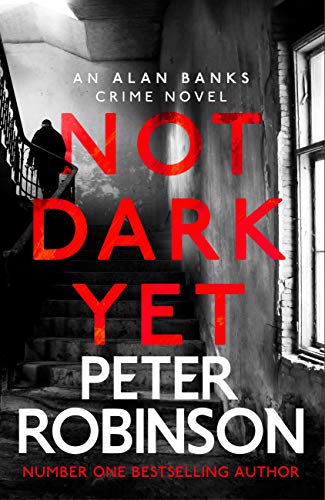
Yesterday Peter Robinson’s latest Inspector Banks book, Not Dark Yet was published and once I’d read the opening pages I decided to abandon any plans I had for what to read next and started to read it properly. So this is my choice this week for Book Beginnings on Friday and the Friday 56.
Every Friday Book Beginnings on Friday is hosted by Gillion at Rose City Reader where you can share the first sentence (or so) of the book you are reading, along with your initial thoughts about the sentence, impressions of the book, or anything else the opener inspires.
The book begins in Moldova:
Zelda hadn’t visited Chișinău since she had been abducted outside the orphanage at the age of seventeen. And now she was back. She wasn’t sure how she was going to find the man she wanted – she had no contacts in the city – but she did have one or two vague ideas where to begin.
Turn to page 56, or 56% on your eReader. If you have to improvise, that is okay.
Find any sentence (or a few, just don’t spoil it) that grabs you.
Post it.
Add the URL to your post in the link on Freda’s most recent Friday 56 post.
Page 56:
Banks found himself with a lot to think about as he made his way back to Vauxhall Underground station. He had originally intended to do some shopping while he was in London, check out the big Waterstones in Piccadilly, visit FOPP in Cambridge Circus, but decided he couldn’t face it. Like everyone else, he did most of his shopping online these days. London was too hot and too crowded today; he just wanted to go home.
My thoughts exactly each time I’ve been to London – I can’t stand crowds.
This is the 27th Inspector Banks books and I’ve read I’ve several of them, totally out of order, which doesn’t seem to matter – they work well as stand alone books. I’ve also watched the TV series, which I enjoy even though they are different from the books and my vision of Banks is nothing like Stephen Tompkinson who plays him. In fact, the characters are clearly meant to be different versions of the same person; they look different, have different personalities and meet different fates in different worlds.
I read about the 1936 Club on Karen’s blog, BookerTalk. It’s being hosted by Karen at kaggsy’sbookishramblings and Simon at stuckinabook and is scheduled for 12-18 April. It’s been a while since I joined in one of their Club Reading Weeks, but when I looked at the books I’ve read and the books that I have waiting to be read I found that quite a lot of them were first published in 1936.
There is just one of these that I haven’t read – Murder in Piccadillyby Charles Kingston. But I would like to re-read Agatha Christie’s Murder in Mesopotamiathat I first read in May 2012, because I never wrote a review post about it. And there are some short stories, first published in 1936 that I haven’t read yet, such as Problem at Sea, which is included in the short story collection, Poirot’s Early Cases.
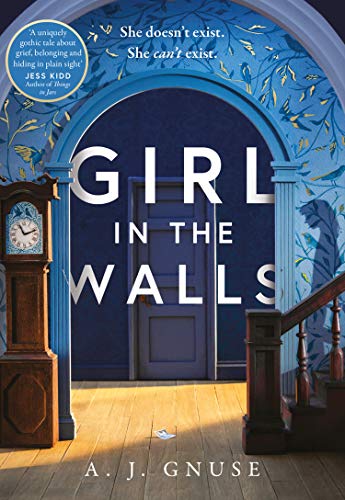
Fourth Estate | 18 March 2021 |323 pages | Kindle review copy via NetGalley/ 4*
Description:
She doesn’t exist. She can’t exist.
‘A uniquely gothic tale about grief, belonging and hiding in plain sight’ Jess Kidd, author of Things in Jars
Those who live in the walls must adjust, must twist themselves around in their home, stretching themselves until they’re as thin as air. Not everyone can do what they can. But soon enough, they can’t help themselves. Signs of their presence remain in a house. Eventually, every hidden thing is found.’
Elise knows every inch of the house. She knows which boards will creak. She knows where the gaps are in the walls. She knows which parts can take her in, hide her away. It’s home, after all. The home her parents made for her. And home is where you stay, no matter what.
Eddie calls the same house his home. Eddie is almost a teenager now. He must no longer believe in the girl he sometimes sees from the corner of his eye. He needs her to disappear. But when his older brother senses her, too, they are faced with a question: how do they get rid of someone they aren’t sure even exists?
And, if they cast her out, what other threats might they invite in?
My thoughts:
Set in south Louisiana, Girl in the Walls wasn’t quite what I expected from the book description, but I did enjoy its sense of strangeness and ‘the other’. It’s set in an old house that’s full of strange creaks and scary noises as though someone or some thing is creeping around.It’s a house like no other that I know or have read about. It’s a balloon frame house – that is a house with a timber frame within its outer walls, so there are spaces between the inner and outer walls, beneath the floor and in the attic. Spaces where a young person can crawl and exist. So, Elise is not a ghost but a real eleven year old girl, who lives in these spaces, only coming out when the Masons, the family who live in the house, are asleep or out of the house. And she manages to keep her presence in the house a secret, at least for a while.
Elise is an orphan and has returned to her family home, having escaped from the foster care system. At first, Eddie, the younger son, is the only one of the Masons who senses her presence, feeling that he is being watched and almost catching glimpses of Elise out of the corner of his eye. Eventually his older brother, Marshall too feels that there is some one else in the house, raiding the pantry, taking things and moving things and they decide they have to do something about it. First of all they can’t believe she is actually real and fear what they will find. Elise fears that they will find her.
Their fear is intense as the story takes a terrifying turn, and to make matters worse it is the hurricane season. From a slow start it builds up to a intense nightmare scenario. I think that to say much more would spoil the plot. The characterisation is good, the house is integral to the plot and the setting is brilliantly described. But you do have to suspend your disbelief to enjoy this book – I did!
This is a story about loss, and grief, about safety and security, intermingled with the strange beauty of the landscape and the fears and hopes we all experience. I loved the references to Norse mythology and legends that Elise reads about – Odin, the One-Eyed and how he became the wisest of the gods and about his sons, Thor and Loki.
A J Gnuse explains at the end of the book that he was inspired to write this story after talking to a friend about the strange noises his friend had heard in his apartment and remembered that he had spent much of his childhood in an old creaky house wondering whether someone was sneaking around at night, feeling scared and vulnerable. The house in the book is based on his parents’ house in South Louisiana, where he grew up, where the sea levels are rising as the coast is eroding and the coast is hit by hurricanes,
I wasn’t surprised that he lists Charles Dickens as one of the authors who have influenced his work – there is one particular character in his book who I haven’t mentioned, the monstrous villain who is larger than life and very scary, who wouldn’t have been out of place in a Dickens’ novel. He also lists other authors including, Daphne du Maurier and the Bronte sisters whose descriptive writing captured the eerie beauty of an old house.
Girl in the Walls is described as a ‘gothic’ tale. Gnuse explains that he has been influenced by the literary tradition of the Southern Gothic novel – which is largely unknown to me – referring to writers like Flannery O’Connor – describing its ‘uniquely Gothic sense of the strangeness of decay, of the past latched onto people like vines grown around their legs.‘ I think I need to find out more about this genre of fiction.
My thanks to the publishers and to NetGalley for my advance review copy.
Top Ten Tuesday is a weekly meme created by The Broke and the Bookish and now hosted by Jana at That Artsy Reader Girl. For the rules see her blog.
The theme this week is: Books On My Spring 2021 TBR. Some of these books are physical books, others are e-books. They are just the tip of my TBR mountain and when the time comes to start a new book it might be one of these – or anyone of my other TBRs, but I hope I do get round to reading at least some of these books this spring.
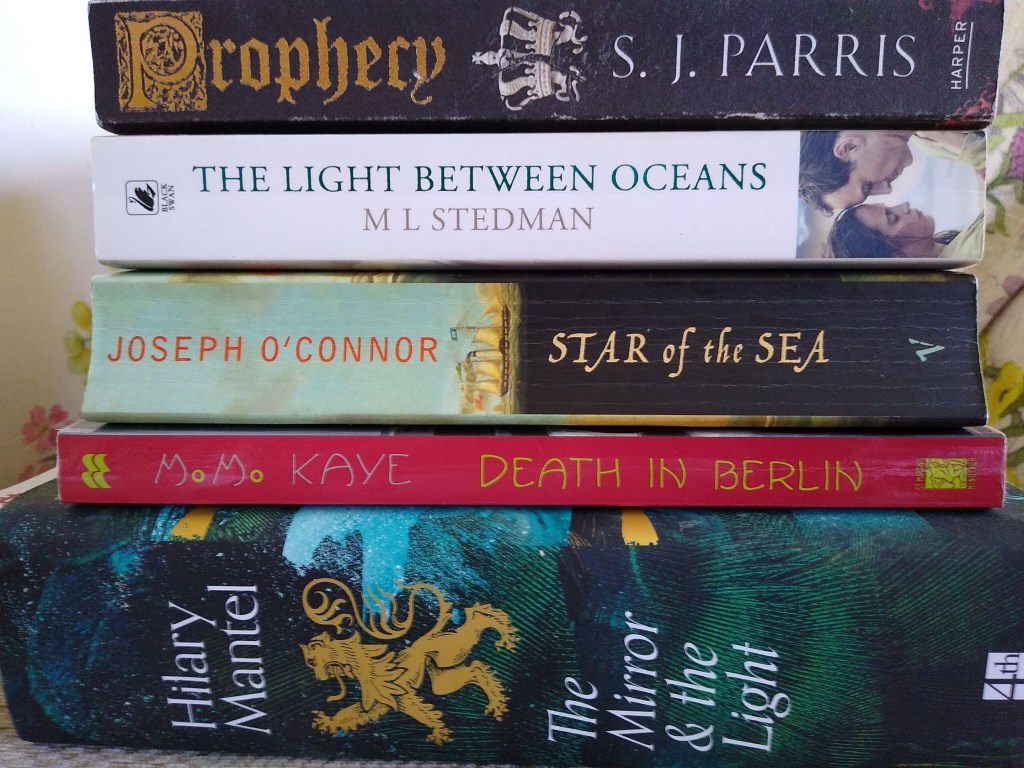
First the physical books:
The Prophecy by S J Parris (library book) – historical fiction, 1583 – the second in her Giordano Bruno series set in the reign of Elizabeth I. Bruno was a monk, poet, scientist, and magician on the run from the Roman Inquisition on charges of heresy for his belief that the Earth orbits the sun and that the universe is infinite. Elizabeth’s throne is in peril, threatened by Mary Stuart’s supporters scheme to usurp the rightful monarch.
The Light Between Oceans by M L Stedman, set on a lighthouse keeper’s island, where the Indian Ocean washes into the Great Southern Ocean. A boat washes up on the shore of the island. It holds a dead man – and a crying baby. The only two islanders, Tom and his wife Izzy, are about to make a devastating decision.
Star of the Sea by Joseph O’Connor – historical fiction set in 1847 when the Star of the Sea sets sail from Ireland bound for New York. On board are hundreds of fleeing refugees, among them are a maid with a devastating secret, the bankrupt Lord Merridith and his family, and a murderer hungry for vengeance. It has the look of a Victorian novel but was first published in 2004.
Death in Berlin by M M Kaye – crime fiction set in war-scarred Berlin in the early 1950s. Miranda is on the night train when she discovers a dead body. Years ago I read The Far Pavilions and it is only in recent years that I discovered she wrote the Death in … series. This is the 2nd book in the series first published in 1955.
The Mirror and the Light by Hilary Mantel – the final book in her Wolf Hall trilogy. I bought this when it was published last year and started it just before the first lockdown. But for a variety of reasons I put it to one side for ‘awhile‘, where it has stayed! So I’m determined to read it this year. I loved the first two books – this one traces the final years of Thomas Cromwell, the boy from nowhere who climbed to the heights of power under Henry VIII, before he fell.
Next the e-books:
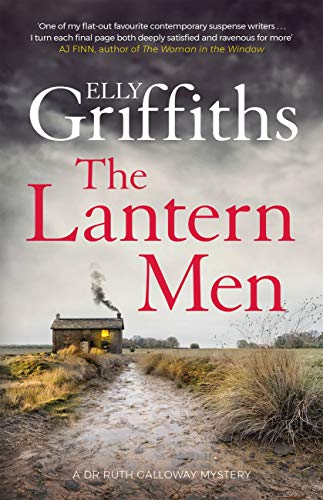
The Lantern Men by Elly Griffiths – the 12th Dr Ruth Galloway Mystery, Everything has changed for Dr Ruth Galloway. She has a new job, home and partner, and is no longer North Norfolk police’s resident forensic archaeologist. That is, until convicted murderer Ivor March offers to make DCI Nelson a deal. Nelson was always sure that March killed more women than he was charged with. Now March confirms this, and offers to show Nelson where the other bodies are buried – but only if Ruth will do the digging.
The Queen’s Gambit by Walter Tevis – set in 1950s/60s America this is a novel about chess. Orphan, Beth Harmon, addicted to tranquillisers, becomes a top chess player, competing for the US Open championship at the age of 16. There is a Netflix mini series of the book – we’ve watched the first episode, which made me want to read the book.
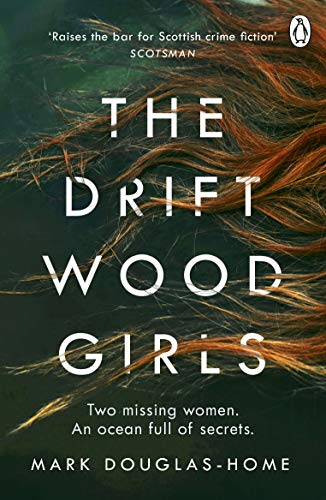
The Driftwood Girls by Mark Douglas-Home, the 4th Sea Detective book, with investigator Cal McGill who uses his knowledge of tides, winds and currents to solve mysteries. In this book when Flora Tolmie disappears her twin sister Kate asks Cal for help to discover what has happened to her and also to look into the disappearance of their mother,Christina, who had vanished without trace from northern France, 23 years earlier.
Three Hours by Rosamund Lipton – set in rural Somerset in the middle of a blizzard, where a school is under siege. Pupils and teachers have barricaded themselves inside the school and the headmaster lies wounded in the library, Outside, a police psychiatrist must identify the gunmen, while parents gather desperate for news.







 BooksPlease