Every Friday Book Beginnings on Friday is hosted by Gillion at Rose City Readerwhere you can share the first sentence (or so) of the book you are reading. You can also share from a book you want to highlight just because it caught your fancy.
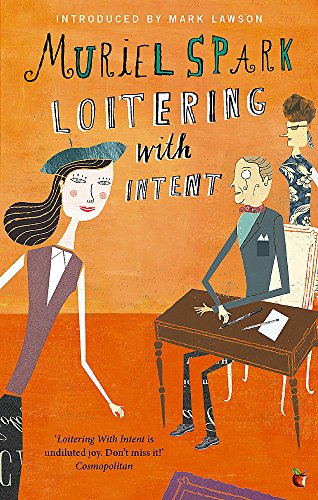
Loitering with Intent by Muriel Spark is a book I’ve had since 2017, when I bought it from Barter Books in Alnwick, one of my favourite secondhand bookshops. One of my favourite books is The Prime of Miss Jean Brodie, so I was hoping to love this book too. I did enjoy it, but not as much as Prime of Miss Jean Brodie.
The book begins:
One day in the middle of the twentieth century I sat in an old graveyard which had not been demolished, in the Kensington area of London, when a young policeman stepped off the path and came over to me.
Also every Friday there is The Friday 56, hosted by Freda at Freda’s Voice, but she is taking a break and Anne at My Head is Full of Books has taken on hosting duties in her absence. You grab a book and turn to page 56 (or 56% of an eBook), find one or more interesting sentences (no spoilers), and post them.
Page 55-56:
Several people turned round to look at Edwina as she spoke with her high cry. People often turned round to stare at her painted wizened face, her green teeth, the raised, red-blood fingernail accompanied by her shrieking voice, the whole wrapped up to the neck in luxurious fur. Edwina was over ninety and might die at any time, as she did about six years later. My dear, dear Solly lived into the seventies of this century, when I was far away.
Description from Amazon:
A funny and clever novel about art and reality and the way they imitate each other, from the author of The Prime of Miss Jean Brodie. With an introduction by Mark Lawson.
Would-be novelist Fleur Talbot works for the snooty Sir Quentin Oliver at the Autobiographical Association, whose members are at work on their memoirs. When her employer gets his hands on Fleur’s novel-in-progress, mayhem ensues when its scenes begin coming true.
A wickedly clever satire uses comic inversions to offer telling insights into the nature of man and society. Nominated as one of America’s best-loved novels by PBS’s The Great American Read.
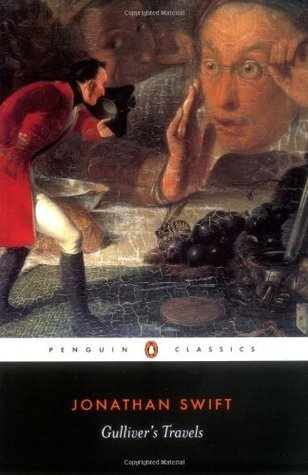
Gulliver’s Travels describes the four voyages of Lemuel Gulliver, a ship’s surgeon. In Lilliput he discovers a world in miniature; towering over the people and their city, he is able to view their society from the viewpoint of a god. However, in Brobdingnag, a land of giants, tiny Gulliver himself comes under observation, exhibited as a curiosity at markets and fairs. In Laputa, a flying island, he encounters a society of speculators and projectors who have lost all grip on everyday reality; while they plan and calculate, their country lies in ruins. Gulliver’s final voyage takes him to the land of the Houyhnhnms, gentle horses whom he quickly comes to admire – in contrast to the Yahoos, filthy bestial creatures who bear a disturbing resemblance to humans.
I think Gulliver’s Travels is such a strange book, definitely not a children’s book as I had thought. There are very many editions of this book. The edition I read is the e-book edition based on the text of Swift’s 1726 original, with the 1899 illustrations of Arthur Rackham. It’s a satire on human nature and the imaginary travellers’ tale literary subgenre about Lemuel Gulliver, a ship’s surgeon who travels to four strange and distant lands.
This is one of those books that I’ve known of since childhood and have known bits of the story, but have never read. I did see a TV cartoon version several years ago and I’ve been meaning to read it for years. It’s a book, which operates on several levels, as the Introduction in one of my copies (an Odhams Press Limited publication) states:
An embittered, middle-aged man sat down to write a book that would scourge the vices and follies of mankind. That book, with its sting mellowed during the passage of two hundred years, has become – of all things – a children’s classic. ‘Gulliver’s Travels’ was the splenetic outburst of a passionate mind, whose genius gave immortality to so transient a thing as satire; but that immortality had a permanent basis – a child-like delight in marvels, a freshness of invention, a limpid style and a selective perception that created images of giants, dwarfs and fabled races with a vivid pulsating life of their own.
I don’t think I’d have liked it very much if I’d read it as a child as there are many passages that would have bored me stiff and which even now I found tedious and heavy going in parts. It satirises the political situation during Swift’s lifetime, and is full of political and social allusions, a lot of which, interesting as it is, passed over my head.
But it is a fantastical fantasy set in such different places, the ones I found most interesting are Lilliput inhabited by tiny people Brobdignag, the land of giants, and the country of the Houyhnhms, where a race of talking horses, rule the Yahoos, strange, filthy humanoid animals that Gulliver viewed with contempt and disgust. Gulliver became a part of one of the horse’s households and grew to admire and wanted to emulate the Houyhnhms’ way of life, which left him horrified with humanity. Less interesting is his visit to Laputa, a flying island and it’s rebellious cities.
It was not really what I expected, and whilst I think a lot of it is absurd and amusing, it’s certainly not a book I can say that I enjoyed, I think it was worth reading and I’m glad I finally got round to reading it.
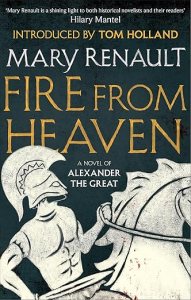
In the first novel of her stunning trilogy, Mary Renault vividly imagines the life of Alexander the Great, the charismatic leader whose drive and ambition created a legend
Alexander’s beauty, strength and defiance were apparent from birth, but his boyhood honed those gifts into the makings of a king. His mother and father, Olympias and King Philip of Macedon, fought each other for their son’s loyalty, teaching Alexander politics and vengeance from the cradle. Hephaistion’s love taught him trust, while Aristotle’s tutoring provoked his mind and Homer’s Iliad fuelled his aspirations. At age twelve, he killed his first man in battle; at sixteen, he became regent; at eighteen, commander of Macedon’s cavalry; and by the time his father was murdered, Alexander’s skills had grown to match his fiery ambition.
I read Mary Renault’s Theseus books, The Bull Must Die and The King from the Sea years ago and loved them, so I’m looking forward to reading Fire from Heaven and hoping I’ll love it too.
Did you take part in the Classics Spin? What will you be reading?
Tomorrow sees the start of 10th Anniversary Club Reading Week hosted by Simon and Karen and the start of the next bi-annual event from 20th to 26th October 2025. They are asking readers across the internet to join together to build up a picture of the year 1925 in books – you can read, share, review and comment on any book from the year in question; you can get involved as much or as little as you like. You could read one book or several; it’s low pressure and you have a wide choice of reading matter! There will be a dedicated page for the club where Karen will share links to other people’s posts and reviews.
These are books published in 1925 that I’ve read previously:
The Great Gatsby by F Scott Fitzgerald – a portrait of the Jazz Age in all of its decadence and excess. As I first read this before I had my blog I may re-read it this week.
Mrs Dalloway by Virginia Wood – this is the story of one day in the life of Clarissa Dalloway. She is preoccupied with the last-minute details of party she is to give that evening. Elsewhere in London, Septimus Smith is suffering from shell-shock and on the brink of madness. Mrs Dalloway first appeared in Virginia Woolf’s short story, Mrs Dalloway in Bond Street published in The Dial magazine in 1923. This is another book I first read before I began my blog.
I don’t think I have any other books published in 1925! I’m looking forward to seeing what others read,
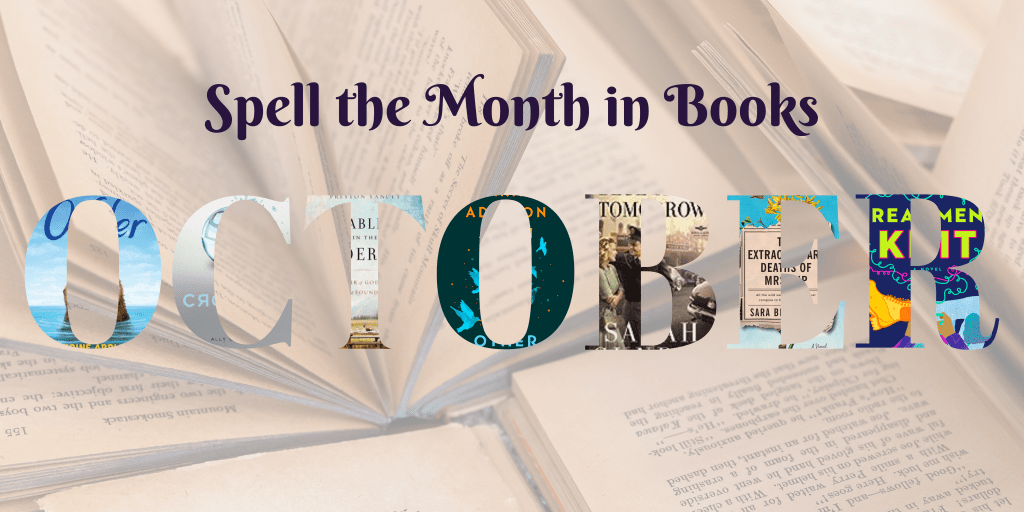
Spell the Month in Books is a linkup hosted by Jana on Reviews From the Stacks on the first Saturday of each month. The goal is to spell the current month with the first letter of book titles, excluding articles such as ‘the’ and ‘a’ as needed. That’s all there is to it! Some months there are optional theme challenges, such as “books with an orange cover” or books of a particular genre, but for the most part, any book you want to use is fair game!
This month’s theme is Trick or Treat: books that you feel strongly about, whether positively or negatively.
I don’t like tricks so my books are all books I’ve enjoyed – real treats!
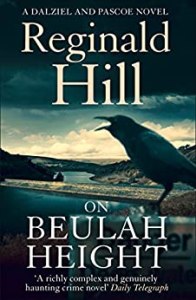
Reginald Hill’s 17th Dalziel and Pascoe novel, set in a Yorkshire village, Dendale. Three little girls had gone missing from the village one summer. Their bodies were never found, and the best suspect, a strange lad named Benny Lightfoot, was held for a time, then released. Fifteen years later another little girl, Lorraine, aged seven went out for a walk one morning with her dog before her parents got up and didn’t return home, reviving memories of the missing children from fifteen years earlier. It was a case that has haunted Dalziel.
This book is tightly plotted with many twists that made me change my mind so many times I gave up trying to work out who the murderer was and just read for the pleasure of reading. Hill’s descriptive writing is rich and full of imagery. The main characters are fully rounded people and the supporting cast are believable personalities, often described with wry humour.
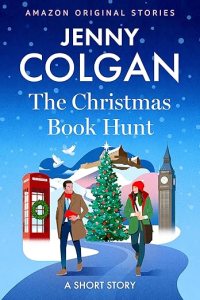
Mirren is looking for a copy of A Child’s Garden of Verses by Robert Louis Stevenson, a particular one that had belonged to her Great Aunt Violet. It was a special edition, with hand-drawn plates by Aubrey Beardsley and now Great Aunt Violet, who is in hospital seriously ill would love to see the book for Christmas. I loved that book as a child, so this is what made the story irresistible for me. She went to the book town Hay-on-Wye, bookshops in Edinburgh and a secondhand bookshop in Northumberland that sounds very like Barter Books in Alnwick, my favourite bookshop. She bumps into mysterious, charming Theo, who, unbeknownst to her, is searching for the same book for reasons of his own…
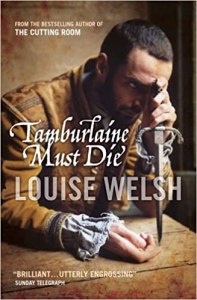
It was a real treat to read Tamburlaine Must Die, a short book of only 140 pages, that I read in a day. Weaving together fact and fiction and set in 1593 this is a tense, dramatic story of the last days of Christopher Marlowe, playwright, poet and spy. Accused of heresy and atheism, his death is a mystery, although conjecture and rumours abound. It has an immediacy, that drew me into the late Elizabethan world.
I loved the spooky, tense atmosphere and as soon as I started reading it knew I was going to enjoy this book. The settings are vividly described, the characters come across as real people, and the plot is amazing, multi- layered, with plenty of suspects for the murder and numerous twists and turns to throw me off the scent. For quite a while you don’t even know the name of the victim, who was found in the woods, called ‘Sally in the Wood’. It’s a police procedural centred on Ellie, a pupil at the private school, where her mother Rachel works as the school counsellor and her father, Ben, a detective sergeant who is on the investigation team
I loved this book. Barbara Kingsolver writes in such a way that I can easily visualise the scenes, beginning with the opening paragraph in which she describes a tractor tire blowing up, flinging a man up in the air and throwing him over the top of a Standard Oil sign. Taylor (originally called Marietta/Missy) grew up in rural Kentucky. She left home when she had saved enough to buy a car, an old VW. She changed her name to Taylor after the first place where she ran out of petrol, which just happened to be Taylorville. She drove on until the car broke down in the middle of nowhere, on land owned by the Cherokee tribe. And it was there at a garage that an Indian woman abandoned a baby girl in Taylor’s car – she called the baby, Turtle.
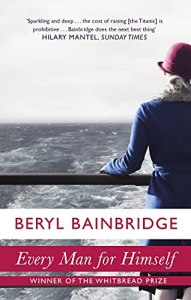
This the story of Morgan’s voyage on the Titanic, divided into four days as he tells it. It’s mainly about the young rich people as they drink and party their way across the Atlantic. Morgan is part of the crowd but he is not rich, and although he has connections, he’s a young American who has to earn his living. Day four is the day the Titanic sank. I could easily imagine what it was like to be a passenger, people rushing about the boat, trying to get on the lifeboats and being separated from friends and family. And the final scenes bring home the reality that it really was a case of every man for himself with the callous attitude towards the steerage passengers, the lack of lifeboats and the disregard of the ice warnings. And so the boat described as unsinkable, sank.
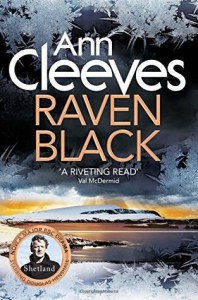
R is for Raven Black by Ann Cleeves, the first in her Shetland series, crime novels set in the Shetland Islands, to the north of mainland Scotland. This is a murder mystery investigated by Inspector Jimmy Perez.
It begins on New Year’s Eve as Magnus Tait is seeing the new year in on his own, until two teenage girls knock on his door to wish him a Happy New Year. A few days later one of the girls is found dead in the snow not far from Magnus’s house, strangled with her own scarf.
The book has a strong sense of location and a terrific atmosphere – the landscape, the sea, the weather, the circling ravens and the spectacle of Up Helly Aa (the Fire Festival), all anchor the story and bring the book to life.
Upcoming Themes
November 1: Nostalgia
December 6: Giftable – Books you would give or would like to receive as a gift
January 3, 2026: New Books – Ones you have received recently or are looking forward to reading or seeing published this year
Simon & Schuster UK| 11 September 2025| 400 pages| e-book| Review copy| 5*
Blurb:
Rome 1939 Arriving in Rome to work for the wealthy Montefalco family, Maddalena is homesick and alone. She finds solace – and love – in the beauty of the city, but as the war in Nazi-occupied Italy rages, she must make a devastating choice.
London, 1997 After her mother Maddalena’s death, Beatrice Fremont discovers a fragment of a painting and a letter that sends her on a hunt to Rome. Helping her is art dealer Jude Adler, who’s convinced they are looking for a lost Caravaggio. For Jude, this could be the find of a lifetime; but for Beatrice their search uncovers a shocking secret and the answer to a mystery kept hidden for years.
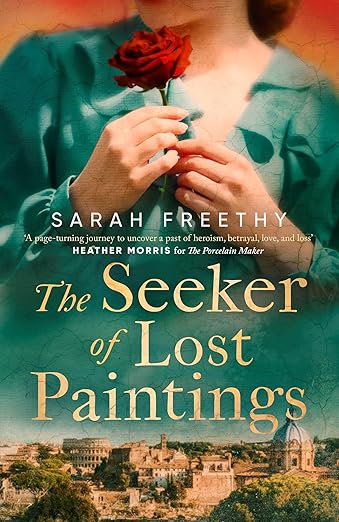
I’ve not read Sarah Freethy’s first novel, so I wasn’t sure what to expect from her latest book, The Seeker of Lost Paintings. I am delighted to say I loved it. It’s historical fiction set in two timelines, one in the 1940s in Italy and the other in 1997 in London and Italy. It appealed to me because of the mystery surrounding a lost Carravagio and I really enjoyed that aspect. I’ve read quite a lot of historical fiction set during the Second World War, but I don’t think I’ve read any set in Italy during the Nazi occupation before and it was this part of the story that I enjoyed the most.
The book begins with a Prologue set in Naples in 1610 with an unnamed artist as he starts a painting. Who he is and what he is painting only becomes clear later in the book. The narrative then flies forward to July 1997 and a hot day in London when Beatrice Fremont, yearning to be in Italy where both of her parents were born, is waiting for Jude Adler to arrive to value her late father’s art and photography collections. Her mother, Maddalena is seriously ill and they need to sell his collections to secure the family home.
When Jude spots a small painting, hanging on Maddalena’s bedroom wall, he is convinced he’d seen the image somewhere before. It reminds him of Caravaggio’s painting of St John the Baptist in Youth with a Ram. Caravaggio’s followers had made many copies of that painting and Jude is convinced that if it is one of those it could be worth tens of thousands. But Maddalena wants Beatrice to reunite the painting with its rightful owner. And so after Maddalena’s death, the search to find out more about the painting begins, taking Beatrice and Jude to Italy.
Back in 1939, Maddalena was working as a cook at the home of Conte Luca Montefalco, at the Villa Velare in Rome. Luca’s older brother Roberto had renounced his title and taken up Holy Orders, and is working at the Vatican where he is responsible for an art collection that must be preserved and removed from the Vatican in preparation for the impending war. It was a remarkably tense and difficult time in Italy, under Mussolini and the Fascists, and the local people suffered immensely under the Nazi occupation.
Sarah Freethy’s beautiful descriptive writing and characterisation transported me back to that period, almost as though I was there witnessing what life was like for the ordinary Italians during the war years – the dangers and privations they faced. It really is a remarkable book, drawing together the two strands of the story, both in the past and the present and ending in a satisfying conclusion.
Many thanks to the publishers, via Netgalley for my review copy and I’d love to read more of Sarah Freethy’s books.






 BooksPlease