The Way Home by Mark Boyle

I am way behind with writing about the books I’ve been reading. It seems to be getting worse this year. It all began last year during the first lockdown when my ability to concentrate just disappeared and it’s not fully come back yet. Now I have five books that I’ve read but not reviewed.

This is review of just one of them. When I sat down to write this post I’d intended to write short reviews of at least two or three of the books, but once I began I found that was impossible – I had too much to say about them. From being a post with short notes on what I’ve read recently this post as morphed into one of the longest posts about just one book that I’ve written – and I still don’t think I’ve captured the essence of it.
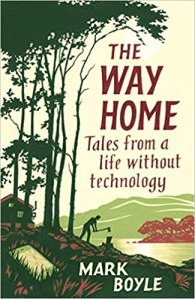
The Way Home:Tales from a Life Without Technology by Mark Boyle, a former business graduate, who lived entirely without money for three years. He has written columns for the Guardian and has irregularly contributed to international press, radio and television. He lives on a smallholding in Co. Galway, Ireland. This book follows the events of his first year of living without technology, interspersed with an account of a visit to Great Blaskett off the coast of County Kerry, to the south of Boyle’s new home. The Islanders were eventually evacuated to the mainland in the early 1950s.

The first thought I had about this book is that the concept of living without technology is alien to me. There is no way I could live like that and I wondered how he came to that decision and how he managed it with no running water, no car, no electricity or any of the things it powers: the internet, phone, washing machine, radio or light bulb. He built his home with his bare hands, learning to make fire, collecting water from the stream, foraging and fishing.

He had to clarify just what constitutes technology and what doesn’t. It wasn’t that easy to decide when you consider that even the pencil can be described as technology. He questioned where to draw the line such as the Stone Age, the Iron Age, or the eighteenth century? The more he thought about it the less important it seemed. He wanted to explore what it means to be human,

… to discover what it might feel like to become part of one’s landscape using only tools and technologies (if I must call them that) which, like the Old Order Amish people of North America, do not make me beholden to institutions and forces that have no regard for the principles and values on which I wish to live my life. (page 14)

The book follows the seasons of the year and rather than being the story of his life without technology is a collection of

observations, practicalities, conversations over farmyard gates, adventures and reflections, which I hope will provide an insight into the life of someone attempting to pare the extravagance of modernity back to the raw ingredients of life. (page 15)

It’s not a ‘how to’ book, nor is it a guide to living without technology. It’s an account of what it was like for him. He writes about the loneliness he experienced, the lack of contact with his parents and friends, and the damage to his relationships, particularly to his girlfriend, Kirsty, who initially shared his technology-free life. Without the internet and a phone it is difficult to keep in touch with people. There are letters and these became important to him, otherwise the way to communicate face to face was by walking. Formerly a vegan he found it difficult to adapt to killing in order to eat, for example killing a deer, skinning and butchering it. His thoughts on life and death had to undergo a dramatic change.

Life without technology is inevitably slower and more arduous. Living where there is no tap for instant water, and no switches to turn on a light is not simple either. One of the things he found difficult to adapt to was the way of writing. Previously he had used computers to write everything. Hand writing, however, involves a whole new way of thinking. He could no longer use the typed word, or online research, and without the use of spell-check, copy and paste or delete it is much harder to restructure a page and you have to start again. Eventually his thinking slowed down, so that he thought twice in order to write once. As I’m older than Boyle, I remember the process in reverse and my delight at being able to organise my writing using copy and paste with much more ease and speed than before, when I did literally ‘cut’ and ‘paste’, or rather staple, when writing.

There is so much more in this book that I haven’t covered in this post. I think it’s a remarkable and fascinating book, and it gave me much to think about. It’s ironic really, considering its subject, that I bought the e-book version, read it on my Kindle and wrote and posted this review on my laptop. It is also ironic that in order to publish the book, having written every word of it by hand, Mark Boyle had to get it typed up – which he did himself, reluctantly and with big reservations. It was not easy for him. He describes the effects of doing it as follows:

I felt less purposeful, like I no longer knew what my life was about, or what I stood for. By evening I felt entirely disconnected from the landscape around me, like I was no longer a part of it, but in some strange virtual universe instead. The natural light hurt my eyes as I re-emerged outside.

In some ways it was good and important for me to temporarily re-enter that world of things, so as to dispel any romantic memories I had about life being much better and easier with machines. The experience of it was such that, having made the compromise, I’m not sure I would make it again. (page 324)

  • Publisher ‏ : ‎ Oneworld Publications (4 April 2019)
  • Language ‏ : ‎ English
  • Paperback ‏ : ‎ 334 pages
  • ISBN-10 ‏ : ‎ 1786077272
  • ISBN-13 ‏ : ‎ 978-1786077271
  • Source: I bought the e-book
  • My rating: 4*

Book Beginnings & The Friday 56: Now is the Time by Melvin Bragg

Every Friday Book Beginnings on Friday is hosted by Gillion at Rose City Reader where you can share the first sentence (or so) of the book you are reading. You can also share from a book you want to highlight just because it caught your fancy.

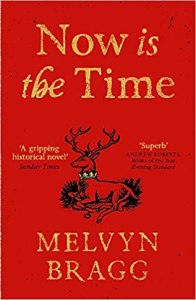
This week I’m featuring Now is the Time by Melvyn Bragg. I loved his Soldiers Return quartet amongst some of his other books, so I’m hoping this historical fiction set in 1381 at the time of  the Peasants’ Revolt will be as good. Richard II was on the throne of England when a vast force of people led by Wat Tyler and John Ball demanded freedom, and equality.

The Book Begins:

The accused priest stood before the court. He was dressed in the cheapest cloth. From his scuffed and shabby habit, from his spare frame and plainness of manner in the ornately, hierarchically dressed company of the ecclesiastical court, he seemed to be just another casualty of the harsh laws of the Church. But there was about him a self-composure, which threw out the challenge of his independence too arrogantly for the taste of the court.

Also every Friday there is The Friday 56, hosted by Freda at Freda’s Voice. *Grab a book, any book. *Turn to Page 56 or 56% on your  ereader . If you have to improvise, that is okay. *Find a snippet, short and sweet, but no spoilers!

These are the rules:

  1. Grab a book, any book.
  2. Turn to page 56, or 56% on your eReader. If you have to improvise, that is okay.
  3. Find any sentence (or a few, just don’t spoil it) that grabs you.
  4. Post it.
  5. Add the URL to your post in the link on Freda’s most recent Friday 56 post.

Page 56:

Armies in Normandy, Ireland and the north and the English garrisons abroad had not been paid for months. The uprising in Flanders had ruined the rich English wool trade. Aristocrats were accused of corruption and vanity campaigns; Plantagenet heirlooms and jewels had been pawned to city merchants. It was said that it was now the city; not the government, that controlled policy.

Summary (from Amazon):

At the end of May 1381, the fourteen-year-old King of England had reason to be fearful: the plague had returned, the royal coffers were empty and a draconian poll tax was being widely evaded. Yet Richard, bolstered by his powerful, admired mother, felt secure in his God-given right to reign.

Within two weeks, the unthinkable happened: a vast force of common people invaded London, led by a former soldier, Walter Tyler, and the radical preacher John Ball, demanding freedom, equality and the complete uprooting of the Church and state. They believed they were rescuing the King from his corrupt ministers, and that England had to be saved. And for three intense, violent days, it looked as if they would sweep all before them.

Now is the Time depicts the events of the Peasants’ Revolt on both a grand and intimate scale, vividly portraying its central figures and telling an archetypal tale of an epic struggle between the powerful and the apparently powerless.

~~~

I vaguely remember learning about Wat Tyler and the Peasant’s Revolt at school. This book should fill in the gaps in my memory!

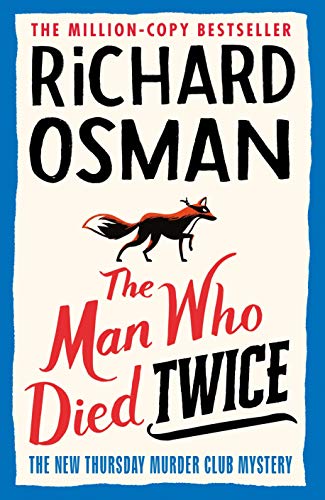
The Man Who Died Twice by Richard Osman

Penguin| 16 September 2021| 422 pages| Review copy| 1*

I don’t want to say much about this book. If you’re expecting crime fiction that exercises your ‘little grey cells’ this is not the book for you. Granted it is complicated and there’s lots going on, plenty of murders, drug dealers, spies and mobsters etc, etc. But essentially it is light easy reading,with the sort of humour that makes you groan in despair, and a great deal of waffle and tedious wittering on.about various mundane matters. As you can see I’m not the target market for this book and with nearly 8,000 ratings on Amazon, 96% of which are 5 and 4 stars, I am definitely in the minority. I was hoping I’d enjoy it more than his first book, The Thursday Murder Club, but sadly I think it’s worse.

Here’s the synopsis:

It’s the following Thursday.

Elizabeth has received a letter from an old colleague, a man with whom she has a long history. He’s made a big mistake, and he needs her help. His story involves stolen diamonds, a violent mobster, and a very real threat to his life.

As bodies start piling up, Elizabeth enlists Joyce, Ibrahim and Ron in the hunt for a ruthless murderer. And if they find the diamonds too? Well, wouldn’t that be a bonus?

But this time they are up against an enemy who wouldn’t bat an eyelid at knocking off four septuagenarians. Can The Thursday Murder Club find the killer (and the diamonds) before the killer finds them? 

My thoughts:

It follows on from Richard Osman’s first book about four residents of Coopers Chase retirement village, Elizabeth, Joyce, Ron, and Ibrahim, four septuagenarians, who call themselves The Thursday Murder Club. Elizabeth is a former MI5 agent and this book reveals a lot about her life as a spy. Needless to say she is clever, with the answers to all the problems that are thrown at her when her ex-husband appears on the scene, having stolen 20 million pounds of jewellery from the Mafia.

As in The Thursday Murder Club, the text is written in the past tense interspersed with extracts from Joyce’s diary written in the present tense. Joyce is an irritating character, and her diary is where most of the waffling and wittering on is found. She also explains what has been happening as though having read it already the reader is too dim to understand it. Then we are treated to DCI Chris Hudson’s cringey romance with Patrice, PC Donna de Freitas.

Overall the characters are rather stereotypical, and the plot is over complicated and unconvincing. Richard Osman’s type of humour does not match mine, so I doubt very much that I’ll be reading any more of his books – I see he has another one in the pipeline!

The Classics Club Spin Result

The spin number in The Classics Club Spin is number …

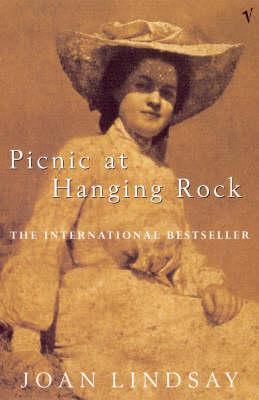
which for me is Picnic at Hanging Rock by Joan Lindsay. The rules of the Spin are that this is the book for me to read by 12 December, 2021.

I am delighted as this just the book I wanted to read next! It was one of my 20 books of Summer, but I didn’t get round to reading it then.

It was a cloudless summer day in the year nineteen hundred.

Everyone at Appleyard College for Young Ladies agreed it was just right for a picnic at Hanging Rock. After lunch, a group of three of the girls climbed into the blaze of the afternoon sun, pressing on through the scrub into the shadows of Hanging Rock. Further, higher, till at last they disappeared.

They never returned.

Whether Picnic at Hanging Rock is fact or fiction the reader must decide for themselves. (Goodreads)

Did you take part in the Classics Spin? What will you be reading?

Classics Club Spin

It’s time for another Classics Club Spin.

I have just 2 books left on my Classics Club list, so I’ve started to compile a new list. and have added 18 of these to make up my Spin List. Tomorrow the Classics Club will post a number from 1 through 20. The challenge is to read whatever book falls under that number on your Spin List by 12 December, 2021.

Here’s my list:

The first two are the ones left to read on my old list

  1. The Count of Monte Cristo by Alexandre Dumas
  2. Love in the Time of Cholera by Gabriel Garcia Marquez
  3. Another Part of the Wood by Beryl Bainbridge
  4. Out of Africa by Karen Blixen
  5. Death in the Tunnel by Miles Burton
  6. In Cold Blood by Truman Capote
  7. The Awakening by Kate Chopin
  8. Lord Jim by Joseph Conrad
  9. Nicholas Nickleby by Charles Dickens
  10. Daisy Miller by Henry James
  11. Brave New World by Aldous Huxley
  12. Picnic at Hanging Rock by Joan Lindsay
  13. How Green was My Valley by Richard Llewellyn
  14. Lady Chatterley’s Lover by D H Lawrence
  15. 1984 by George Orwell
  16. Night at the Crossroads by Georges Simenon
  17. Pietr the Latvian by Georges Simenon
  18. The Small House at Allington by Anthony Trollope
  19. Strangers on a Train by Patricia Wentworth
  20. Between the Acts by Virginia Woolf

I suppose I really should just read the first two books but I really fancy reading one of the books from my new list. And a little bit of what you fancy does you good according to the English music hall song. What do think?

Book Beginnings & The Friday 56: Fludd by Hilary Mantel

Every Friday Book Beginnings on Friday is hosted by Gillion at Rose City Reader where you can share the first sentence (or so) of the book you are reading. You can also share from a book you want to highlight just because it caught your fancy.

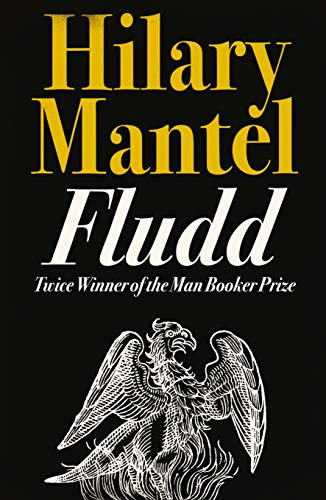
This week I’m featuring Fludd by Hilary Mantel, described as’ a dark fable of lost faith and awakening love amidst the moors.’ It’s very different from the other books by her that I’ve read. For one thing it’s short!

The Book Begins:

On Wednesday the bishop came in person. He was a modern prelate, brisk and plump in his rimless glasses, and he liked nothing better than to tear around the diocese in his big black car.

Also every Friday there is The Friday 56, hosted by Freda at Freda’s Voice. *Grab a book, any book. *Turn to Page 56 or 56% on your  ereader . If you have to improvise, that is okay. *Find a snippet, short and sweet, but no spoilers!

These are the rules:

  1. Grab a book, any book.
  2. Turn to page 56, or 56% on your eReader. If you have to improvise, that is okay.
  3. Find any sentence (or a few, just don’t spoil it) that grabs you.
  4. Post it.
  5. Add the URL to your post in the link on Freda’s most recent Friday 56 post.

Page 56:

That afternoon, Father Fludd undertook a parish tour. Father Angwin accompanied the curate to the front door. ‘They may ask you into their houses’, he said. ‘For God’s sake don’t eat anything. Be back before dark.’ He hovered, anxious. ‘Perhaps you shouldn’t go alone?’

‘Don’t fuss, man’, Fludd said.

Summary (from Amazon)::

Fetherhoughton is a drab, dreary town somewhere in a magical, half-real 1950s north England, a preserve of ignorance and superstition protected against the advance of reason by its impenetrable moor-fogs. Father Angwin, the town’s cynical priest, has lost his faith, and wants nothing more than to be left alone. Sister Philomena strains against the monotony of convent life and the pettiness of her fellow nuns. The rest of the town goes about their lives in a haze, a never-ending procession of grim, grey days stretching ahead of them.

Yet all of that is about to change. A strange visitor appears one stormy night, bringing with him the hint, the taste of something entirely new, something unknown. But who is Fludd? An angel come to shake the Fetherhoughtonians from their stupor, to reawaken Father Angwin’s faith, to show Philomena the nature of love? Or is he the devil himself, a shadowy wanderer of the darkest places in the human heart?

Full of dry wit, compassionate characterisations and cutting insight, Fludd is a brilliant gem of a book, and one of Hilary Mantel’s most original works.

~~~

What do you think – does this book appeal to you too?