Wondrous Words Wednesday

Wondrous Words Wednesday is a weekly meme where we share new (to us) words that we’ve encountered in our reading. It is hosted by Kathy, over at BermudaOnion’s Weblog.

My words this week come from After the Armistice Ball by Catriona McPherson, set in 1922.

  • jounced – ‘Alec increased the speed again as we passed the sign for Reivers Rest and we jounced over the close-cropped turf faster and faster until the car rounded the last of the gorse into the open and skidded to a slithering halt.

I could tell from the context what ‘jounced’ means, but it’s a word I’ve not come across before. Looking it up I found it does mean just what it sounds like – ‘to jounce is to move or cause to move with bumps and jolts’ (from The Free Dictionary).

I like the Wikipedia definition of jounce – ‘in physics, jounce or snap is the fourth derivative of the position vector with respect to time, with the first, second, and third derivatives being velocity, acceleration, and jerk, respectively; in other words, the jounce is the rate of change of the jerk with respect to time.’ As I said, just what I thought it was!

  • Thawpit – ‘I should begin calmly but ready to dissolve into tears if the occasion arose and a corner of my handkerchief was soaked in Thawpit to help with the dissolving.’

I had no idea what Thawpit was – and amazingly discovered that it was a a stain remover, a solvent that containing carbon tetrachloride. It’s no longer available, presumably because of the danger of sniffing it etc. No wonder Dandy Gilver (the amateur sleuth in the book) ‘succumbed to a fit of weeping’ when she ‘dabbed her eyes’ with the Thawpit soaked hankie.

  • chafing-dish – ‘I trigger no obvious trip-wire en route from my bedroom to the ground floor, but every morning Pallister appears with a chafing-dish just as I’m sitting.’ He then cooked Dandy’s eggs.
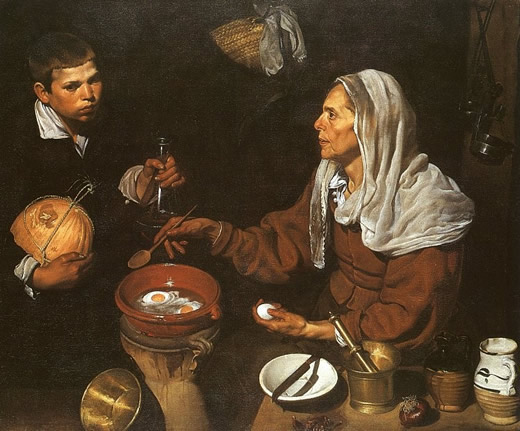
An old woman poaching eggs in a glazed earthenware chafing dish over charcoal

A chafing-dish is a new term to me. Wikipedia explains that it is ‘a kind of portable grate raised on a tripod, originally heated with charcoal in a brazier, and used for foods that require gentle cooking, away from the fierce heat of direct flames.’


Saturday Snapshot

Our back garden isn’t the usual type of garden as it’s mainly grass, a stream and woodland. At the end of January we had a tidying-up session in the woodland and a small fire burning small branches that the wind had blown down.

Further down the wood the snowdrops are still in flower.

See more Saturday Snapshots on Alyce’s blog, At Home With Books.

Teaser Tuesday – Testament of Youth

I’m currently reading Testament of Youth by Vera Brittain. She was born in 1896 and this book is an Autobiographical Study of the Years 1900 – 1925. 

I’ve read up to the beginning of 1915, just after the outbreak of the First World War. It’s fascinating and there are so many passages I could highlight, but for now I’m quoting these that I read this morning. Vera Brittain wrote this book in 1933 and she pointed out the change from 1915 to 1933. Just think  of the vast difference between life now and then, nearly 100 years ago.

Sophisticated present-day girls, free immediately after leaving school to come and go as they wish, or living, as independent professional women, in their own rooms or flats, have no conception of the difficulties under which courtships were contracted by provincial young ladies in 1915. There was no privacy for a boy and girl whose mutual feelings had reached their most delicate and bewildering stage; the whole series of complicated relationships leading from acquaintance to engagement had to be conducted in public or not at all. (page 120)

Everything in a young woman’s life was supervised and discussed in the family circle, letters were observed and commented upon. Vera had never been anywhere by herself until she left home to go to Oxford University, on train journeys her ticket was bought for her and she had to send a telegram home immediately she arrived.

In 1915 (aged 19) she was deeply in love with a young man, Roland Leighton, her brother’s friend, but had never been alone with him or without constant observation and the possibility of interruption. She wrote:

Consequently, by the middle of that January, our desire to see one another alone had passed beyond the bounds of toleration. (page 121)

For more Teaser Tuesdays go to Should Be Reading.

Saturday Snapshots

A few years ago we had a holiday in the Cotswolds and visited Burford in Oxfordshire. We had  welcome cup of tea and cakes in The Copper Kettle on the High Street.

This is the view looking down the High Street.

The building dates back to around 1500.

See more Saturday Snapshots on Alyce’s blog, At Home With Books.

Book Beginnings on Friday: The Inspector’s Daughter

How to participate: Share the first line (or two) of the book you are currently reading. Book Beginnings is hosted by Katy at A Few More Pages every Friday.

I found The Inspector’s Daughter by Alanna Knight in my local library recently. I’d never come across this author before but see from the book cover that she has written more than 40 novels, 4 non-fiction books, numerous short stories and 2 plays!

With some many books to her name I thought I’d once again jumped into a series of books, but I was lucky because The Inspector’s Daughter is the first in the Rose McQuinn Mysteries. In this book set in 1895 Rose has returned home to Edinburgh from the American Wild West and it’s not long before she steps into her father’s shoes by agreeing to investigate the strange behaviour of her friend’s husband.

The book begins:

Soon I would be safe.

The journey from nightmare was almost ended. Every turn of the train’s wheels, every drifting smoke wreath closed the door more firmly on the past.

Beyond the hills, the blue glimpse of the sea, Edinburgh was fast approaching, epilogue to ten years in America, so-called land of opportunity but for me a land of tragedy and loss.

So, this opening shows that Rose has had a bad time – ‘a nightmare’, and  a ‘tragedy’ in America, but raises questions, such as – what happened? What was the loss? And why did she go to America and what is she coming home to? I haven’t read much further so I don’t know the answers yet – but this opening does make me want to read on to find out.

I’ve borrowed this book from the library but I see on Amazon that a Kindle edition is available. Alanna Knight has a website, where I see she not only writes but also paints!

Weekend Cooking – Curried Carrot & Apple Soup

It’s been a while since I wrote a Weekend Cooking post – Weekend Cooking is hosted at Beth Fish Reads and is open to anyone who has any kind of food-related post to share: Book (novel, nonfiction) reviews, cookbook reviews, movie reviews, recipes, random thoughts, gadgets, fabulous quotations, photographs. For more information, see the welcome post.

I had quite a lot of apples recently and after making various puddings I looked in my cookery books and found a recipe for curried carrot and apple soup in the Kitchen Doctor Low-Cholesterol Cooking for Health.

I adapted the recipe to make enough for two rather than four. Here is the recipe as detailed in the book, click on the image to enlarge:

It’s really easy to make – first heat the oil and gently fry the curry powder for 2-3 minutes. Then add the carrots, onion and apple, stir and cover the pan, cooking over a low heat for about 15 minutes until they soften. I added the stock and brought it to the boil.

Then I blitzed it with a hand-held blender, seasoned it with salt and coarse ground black pepper. If you like add a swirl of yoghurt (I didn’t this time) and serve.

The curry and the apple tone down the sweetness of the carrots – delicious.

The book contains over 50 low-cholesterol and low-fat recipes, with sections on soups and starters, meat, poultry and fish main courses, plus pasta, pulses and vegetable dishes and desserts, cakes and bakes.