Classics Club: the May Question


This month the Classics Club question is about which classics we might be avoiding:

Which classic work has caused you to become a master in avoidance? It’s not necessarily because you’re intimidated but maybe there are works out there that just cause you to have the Dracula reaction: cape-covered arm up in front of face with a step back reaction?

To answer this question I’m only considering the books on my Classics Club list. They are all books I own and at one time thought that I’d like to read them but I suppose I am avoiding some of them as they never figure when I’m wondering which book to read next. Why am I avoiding them? I’m not really sure. They are usually long books such as:

Don Quixote by Miguel de Cervantes Saavedra – I’ve started to read this a few times and have given up because the printed copy I have is old in a very small font and I think I’d do better with a different (more modern?) translation. But there are so many to choose from – anyone got any recommendations?

Books by Elizabeth GaskellMary Barton, North and South and Wives and Daughters. I really do want to read these, but each time I think about them my mind glazes over and I pick something else. Again they are long books.

Then there is Three Men in a Boat by Jerome K Jerome – this is shorter, but it’s another book I’ve started a couple of times and put down. People say it’s very funny, but I haven’t found it even amusing so far – I should read on, I suppose.

Sometimes it’s just down to the fact that it’s just not the right time for me to read a book.

Classics Club Spin: Result

The Classics ClubYesterday the Classics Club announced the result of the latest spin – list 20 books from your Classics Club list and the number picked in the spin is the book you read by 7 July 2014. The number came out as number 1.

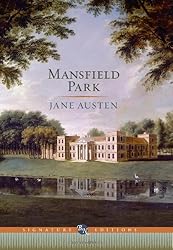
And for me that is Mansfield Park by Jane Austen.

I’d included this book in my list as a re-read. I thought I’d read this book before many years ago, but I couldn’t remember much (if anything about it) and I haven’t watched any of the TV adaptations. I thought I had a copy, but when I looked for it I couldn’t find one, so I downloaded a copy on Kindle and now I look at it I’m sure I haven’t read it before!! So I’m really looking forward to reading it.

If you’re taking part in the spin this time, which book did you get?

The Classics Club Spin for May/June

The Classics Club It’s time for another Classics Club spin!

Here are the rules:

* List any twenty books you have left to read from your Classics Club list.
* Number them from 1 to 20.
* Next Monday (May 12th) the Classics Club will announce a number.
* This is the book you need to read during May and June!

Here’s my list:

  1. Mansfield Park by Jane Austen
  2. Lorna Doone: A Romance of Exmoor by R D Blackmore
  3. Out of Africa by Karen Blixen
  4. Martin Chuzzlewit by Charles Dickens
  5. Oliver Twist by Charles Dickens
  6. The Mill on the Floss by George Eliot
  7. Parade’s End by Ford Maddox Ford
  8. Where Angels Fear to Tread by E M Forster
  9. Three Men in a Boat by Jerome K Jerome
  10. The Man Who Would Be King by Rudyard Kipling
  11. The Call of the Wild by Jack London
  12. One Hundred Years of Solitude by Gabriel Garcia Marquez
  13. Of Human Bondage by W. Somerset Maugham
  14. Travels with a Donkey in the Cevennes by Robert Louis Stevenson
  15. Uncle Tom’s Cabin by Harriet Beecher Stowe
  16. Gulliver’s Travels by Jonathan Swift
  17. Barchester Towers (Barsetshire Chronicles, #2) by Anthony Trollope
  18. The Color Purple by Alice Walker
  19. The Age of Innocence by Edith Wharton
  20. The Voyage Out by Virginia Woolf

Some of these books have been on my shelves for several years now, so it’s definitely time to read at least one of them soon. Two of them are re-reads (1 and 15) but as I read them so long ago I really want to read them again. At the moment I’m undecided about which one to read first (although I’m half hoping it will be Out of Africa) so a spin result is a good way of choosing!

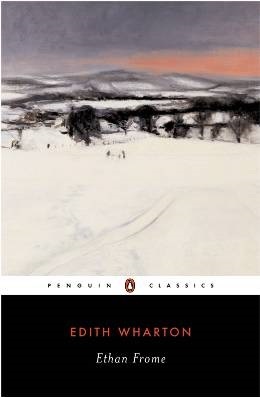
Ethan Frome by Edith Wharton

Ethan FromeWhat a fantastic book. Ethan Frome is a beautifully told tale – a tragedy, signalled right from the beginning of the book, when the unnamed narrator first saw Ethan Frome and was told he had been disfigured and crippled in a ‘smash up’, twenty four years earlier. Life had not been good to him:
Sickness and trouble: that’s what Ethan’s had his plate full up with ever since the very first helping.

I was a bit wary as I began reading Ethan Frome because I’d not long finished reading Doris Lessing’s The Grass is Singing and didn’t want to sink into another bleak and dismal book. I needn’t have worried, even though Ethan Frome is a tragedy there is light to contrast the darkness, and there is love and hope set against repression and misery. It’s another book (like The Grass is Singing) where I hoped the ending would be a happy one, although I knew it couldn’t be. 

It’s a short book (just over 120 pages) and deceptively simple to read, but there is so much packed into it. I enjoyed it very much.  As well as striking and memorable characters the setting is  beautifully described – a ‘mute and melancholy landscape, an incarceration of frozen woe‘, in the isolated village of Starkfield (a fictional New England village). Trapped in an unhappy marriage, Ethan’s life had changed when his father died and he had had to give up his studies to work on the farm. His wife Zeena had always been ill and needing help in the house, which was why her cousin Mattie came to live with them. At first it worked out quite well, but Ethan can’t shrug off a sense of dread, even though he could

… imagine that peace reigned in his house.

There was really even now, no tangible evidence to the contrary; but since the previous night a vague dread had hung on the sky-line. It was formed of Zeena’s obstinate silence, of Mattie’s sudden look of warning, of the memory of just such fleeting imperceptible signs as those which told him, on certain stainless mornings, that before night there would be rain.

His dread was so strong that, man-like, he sought to postpone certainty.

Edith Wharton (1862 – 1937) was an American author. Ethan Frome was first published in 1911 and is in contrast to some of her other books about the New York society of the 1870s to 1920s. It’s a rural tragedy of inevitable suffering and sadness that reminded me of Thomas Hardy’s books.

This book was the Classics Club Spin book for February/March and qualifies in the What’s in a Name 2014 in the Forename/Name category. It’s also a book I’ve owned before 1 January 2014 so is another book for the Mount TBR challenge.

The Thirty-Nine Steps by John Buchan

Way back in 2008 I watched The 39 Steps on TV with Rupert Penry-Jones as Richard Hannay, so inevitably as I read The Thirty-Nine Steps I could see Penry-Jones as Hannay. The dramatisation, however, although there are similarities, is different from John Buchan’s book. There are a number of historical inaccuracies and some artistic licence was used – none of which I was aware of as I watched the film and I thoroughly enjoyed it. It made me want to read the book and it’s taken me until now to get round to it – I’d forgotten most of the details of the film, except for visions of Penry-Jones running away from his pursuers in the Scottish moors, scrambling through the heather.

John Buchan 1936

John Buchan began writing The Thirty-Nine Steps in 1914; it was first published in 1916. He was born in Perth in 1875 and after leaving Oxford University he had a varied career, as well as writing books and articles he was a barrister, a member of Parliament, a soldier and a publisher. He was created Baron Tweedsmuir of Elsefield in 1935 and became the 15th Governor-General of Canada, a position he held until his death in 1940.

Once I began reading The Thirty-Nine Steps I didn’t want to put it down. It’s a fast moving action-story, beginning with an international conspiracy, involving anarchists, financiers and German spies. Richard Hannay, having found Scudder, murdered in his London flat, fears for his life and goes on the run, chased by villains in a series of exciting episodes, culminating in the discovery of the location of the ‘thirty-nine steps’. Hannay is a remarkable character, resourceful, and a master of disguise. As well as fleeing for his life he is searching for Scudder’s notebook, which contains clues to the international conspiracy – Scudder was a spy.

The master villain is also a master of disguise, having the ability to ‘hood his eyes like a hawk‘ :

There was something weird and devilish in those eyes, cold, malignant, unearthly, and most hellishly clever. They fascinated me like the bright eyes of a snake. (page 119)

He can impersonate the British First Sea Lord at a top secret meeting with people who knew the real First Sea Lord very well and is also convincing as the very British gentleman, the plump, bridge-player Percival Appleton.

The Thirty-Nine Steps is to my mind a gem. There are other Hannay books – the Complete series is available on Kindle, The Thirty-Nine Steps, Greenmantle, Mr. Standfast, The Three Hostages, and The Island of Sheep.

And so one book leads on to yet more books!

The Classics Club Spin Result

The Classics ClubLast week I decided to take part in the Classics Club Spin. The rules were €“ list twenty books from your Classics Club list, number them 1 to 20, and the number announced on Monday represents the book you have to read during February and March. The number that has been selected is 20, which means the book I’ll be reading is:

Ethan Frome by Edith Wharton. This is a short novel. I gave up on reading Edith Wharton’s House of Mirth a few years ago, mainly because I thought it was too long winded, so I’m hoping that this much shorter novel will be more to my liking. However, it’s a tragedy and as I’ve just finished reading Doris Lessing’s The Grass is Singing, which is also a tragedy I think I’ll wait a couple of weeks before I start Ethan Frome – too much tragedy is – well, too much all at once.