Ever since we moved to live just south of the border with Scotland I’ve been interested in learning more about its history. My knowledge was limited to the basics and mainly related to the monarchy – Robert the Bruce, Mary Queen of Scots, James VI of Scotland and I of England, the Jacobite Rebellions, and Bonnie Prince Charlie and so on.
Many books have been written on Scottish history and when I saw this little book some years ago I thought it could be a good place to start to find out more:
A Short History of Scotland by Richard Killeen is by its very nature a summary account and a basic introduction. There are 31 short chapters covering the period from Prehistoric Scotland up to the Twentieth Century – all in 69 pages, including coloured illustrations of people and places.
I found the early chapters the most interesting (maybe because it was mainly new information for me) covering the early periods – Iron Age Celts, Roman Scotland and later invaders – Anglo-Saxons, raiders from Dalriada in Ireland (Irish Celts), Picts and Vikings.
Much of the book is the history of the monarchy. Kenneth MacAlpin was the first King of Scotland (9th century) but not of all modern Scotland – he never established himself in the Borders, which was held by the Anglo-Saxon Northumbrians. Northumbria had formerly extended from the Humber right up to the Forth, and it was not until Malcolm II (1005-34) won the battle of Carham in 1018 that the land north of the Tweed became part of his kingdom.
The book traces the history of Scotland through the various battles for power and control – the Norman settlement of the lowlands founding abbeys and cathedrals, the contest for the crown between John Balliol and Robert Bruce (both members of the Norman aristocracy) and the intervention of Edward I of England in choosing John Balliol as king in 1292 and claiming formal overlordship for himself and his successors.
Scottish kings had paid feudal homage to English kings before the 1290s. As far back as 1174, William the Lion had acknowledged himself the formal vassal of Henry II. Such acts did not imply that Scotland was a dependency of England. In the first place, England and Scotland hardly existed in the modern sense. The age of centralised states with uniform laws, secure boundaries with centralised administration – all things we take completely for granted – lay well in the future. (page 28)
Edward’s actions triggered Scottish resistance, with William Wallace winning victory over the English at Stirling Bridge in 1297. Wallace was then defeated within a year at the Battle of Falkirk. Robert the Bruce gained the crown, and in 1314 defeated Edward II at the Battle of Bannockburn: ‘the battle which confirmed Scotland as an independent kingdom.’ (page 31)
Moving forward in time, Killeen describes the history of Scotland until the Reformation as ‘a guignol of intrigue, faction and murder mixed with solid achievement.’ The rest of the book includes chapters on the Stewarts, Mary Queen of Scots, the Union of Crowns (1603), the Civil War, Glencoe, the Act of Union (1707), Scottish Enlightenment, the Clearances and the Industrial Revolution.
Reading this little book has spurred me on to read more detailed histories and I’ve started with Neil Oliver’s A History of Scotland. More about that another time.
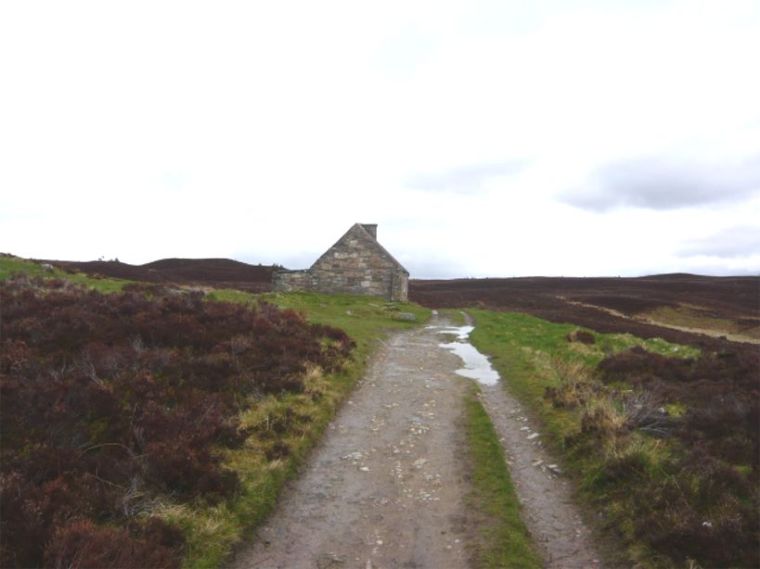
 It’s a bothy – see this article explaining what a bothy is. The photo below shows the entrance:
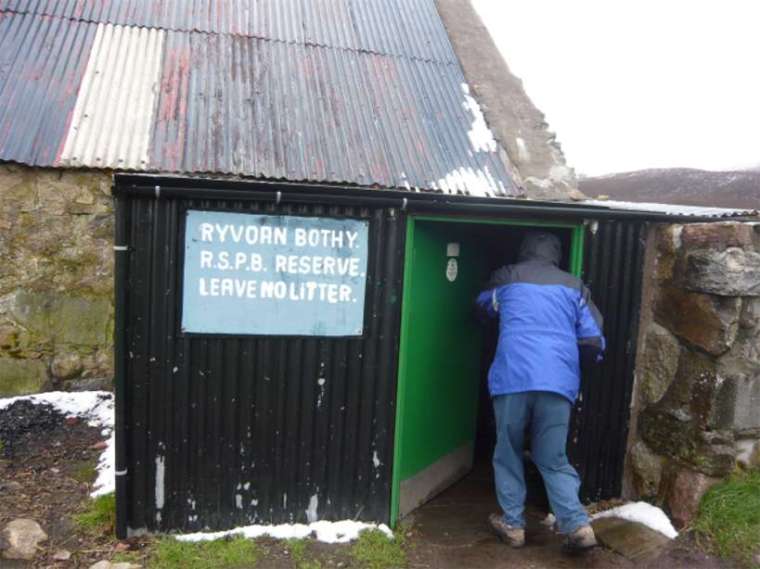 and this is what is inside: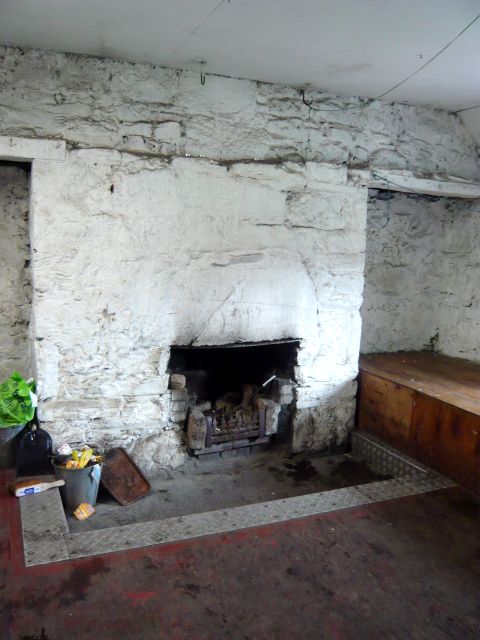
 It’s a very welcome shelter – especially on a wet, windy day!
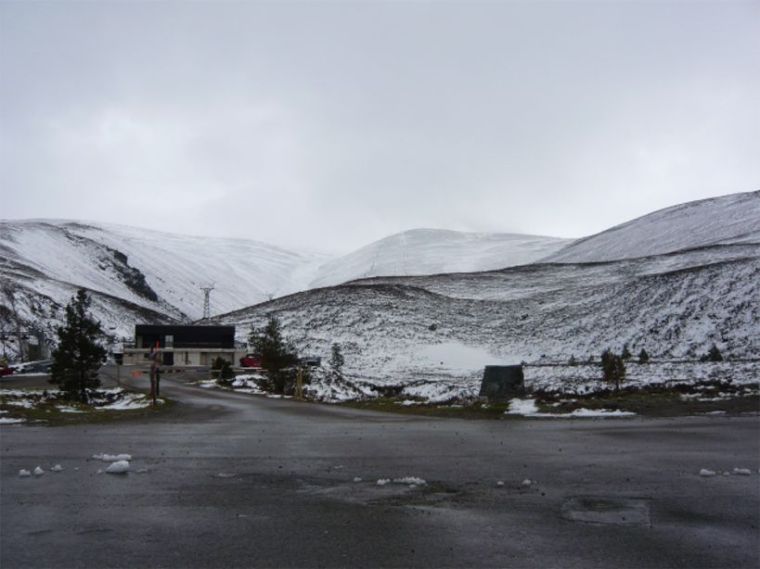 the Cairngorms – and there was snow in May.
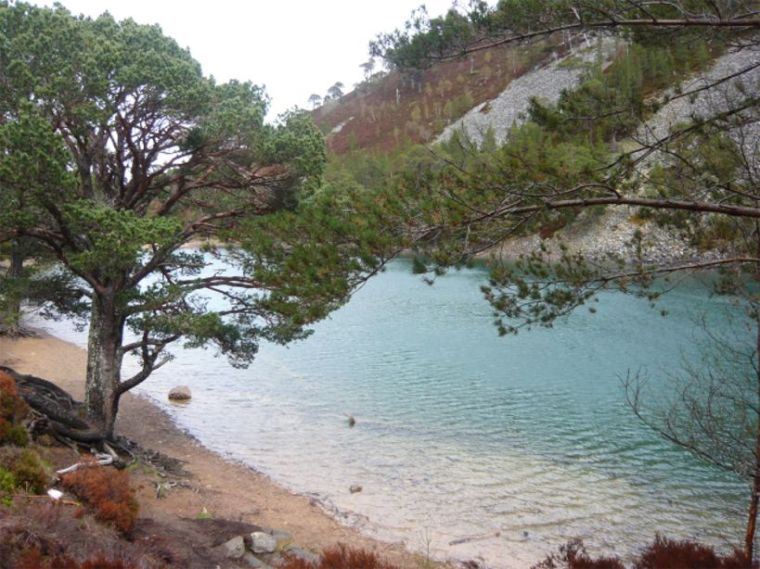
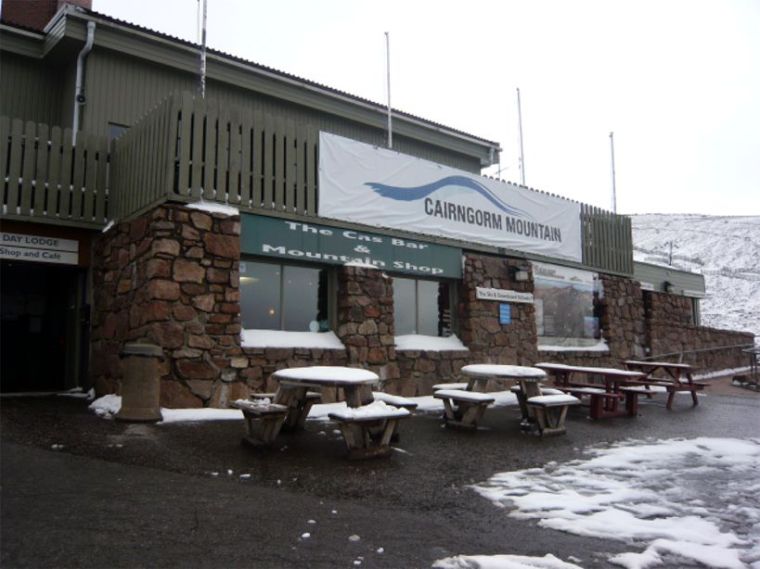 Lower down the snow fell too but didn’t stick. The photo below is of a beautiful little loch in the Glenmore Forest Park, An Lochan Uaine the ‘green lochan’ (although in my photo it looks blue – it was really green!). ‘Lochan’ is Gaelic for ‘ a small loch, or lake’.
 The green shows up more in this photo: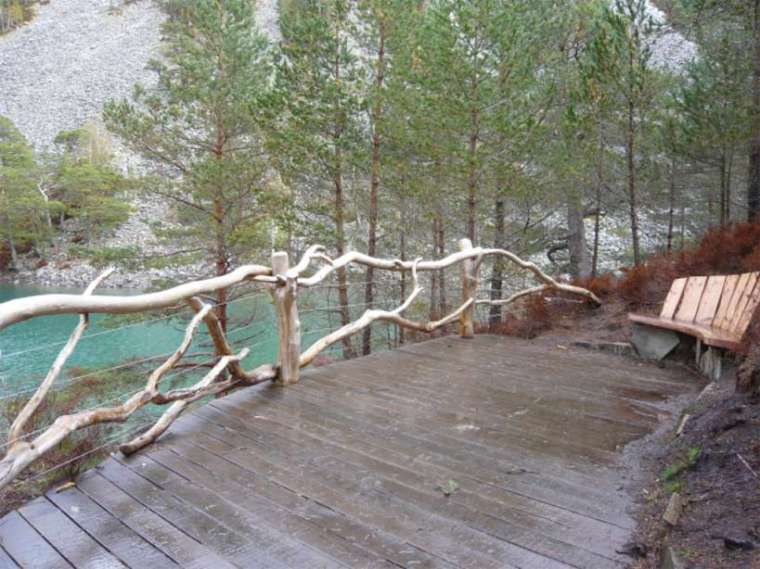




 BooksPlease