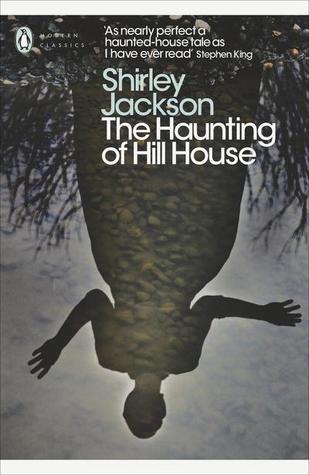
The Haunting of Hill House by Shirley Jackson

I read The Haunting of Hill House by Shirley Jackson at the end of September and it is one of the books that’s in my ‘to be reviewed pile’, which is getting far too big, as I keep reading book after book without writing about them!

About the book:

It is the story of four seekers who arrive at a notoriously unfriendly pile called Hill House: Dr. Montague, an occult scholar looking for solid evidence of a “haunting”; Theodora, the lighthearted assistant; Eleanor, a friendless, fragile young woman well acquainted with poltergeists; and Luke, the future heir of Hill House. At first, their stay seems destined to be merely a spooky encounter with inexplicable phenomena. But Hill House is gathering its powers—and soon it will choose one of them to make its own. (Goodreads)

This is a horror story, but thank goodness there is no gore. Instead it is macabre and has a chilling atmosphere. It’s more of a psychological study than a horror story and as such I don’t think it’s as good or as terrifying as her later book, We Have Always Lived in the Castle.

Dr. Montague, a doctor of philosophy with a keen interest in the supernatural and psychic manifestations had been looking for a ‘haunted’ house to investigate all his life. So, when he heard the stories about the strange goings on at Hill House he decided he would spend three months living there and see what happened, and he set about finding other people to stay there with him.

Eleanor is the main character in the book, next to the House itself, and what happens is told from Eleanor’s point of view. As a child Eleanor had once seemed to activate a poltergeist, although she doesn’t remember that. As an adult she had spent eleven years looking after her invalid mother and it had left her a lonely, embittered spinster of thirty two. After her mother died she sees Dr. Montague’s invitation to spend the summer at Hill House as something she had been waiting for all her life, an opportunity to change her life. Theodora is not at all like Eleanor – her ‘world was one of delight and soft colors’ and after arguing with her friend with whom she shared an apartment, she accepted Dr. Montague’s invitation too. The third person to accept was Luke, the nephew of the owner of Hill House, who would one day inherit the House. He was a liar and also a thief.

These four people arrived at Hill House where they were met by the Dudleys – Mr Dudley, the surly caretaker and his dour wife, the housekeeper. Neither of them live in the house but having told the guests which rooms they were to sleep in, and the arrangements for meals, they leave them alone at night. They leave before it gets dark.

Eleanor realises she should have turned back at the gate and a voice inside her tells her to ‘get away from here, get away.’ There are stories about the tragedies connected with the house, scandal, madness and a suicide – when a girl hanged herself from the turret in the tower. Dr Montague believes

the evil is in the house itself and that it has enchained and destroyed its people and their lives, it is a place of contained ill will.

Strange things happen, doors open themselves, the walls and floors are at odd angles, the rooms all connect so Eleanor and the others lose their sense of direction and get lost, the rooms they want to find eluding them. There are places where there are ‘cold spots’, and strange noises scare them at night. The tone shifts from the bright sunlight outside to the chill and foreboding of the house. Nothing is what it first appears to be and as I read on I felt I was sinking into the story in an unpleasant way – Eleanor becomes increasingly unstable and I began to realise that she is an unreliable narrator. The story took several ambiguous turns, so that I was not quite sure what was really happening. Was the house really haunted or was it all an effect of what was going on in their minds, or was it all just in Eleanor’s fevered imagination?

The book is well written, full of confusion and misdirection. There are moments of pure fear, a sense of excitement, friendship and even humour with the arrival of Dr Montague’s wife and her pompous friend Arthur Parker, and their ridiculous efforts with a ‘planchette’, a device similar to a Ouija Board. I thought was an odd interlude in the story, and not really necessary. The best parts are, I think, the descriptions of Hill House – the dark horror at the centre of the story.

No human eye can isolate the unhappy coincidence of line and place which suggests evil in the face of a house, and yet somehow a manic juxtaposition, a badly turned angle, some chance meeting of roof and sky turned Hill House into a place of despair, more frightening because the face of Hill House seemed awake, with a watchfulness from the blank windows and a touch of glee in the eyebrow of a cornice. …

It was a house without kindness, never meant to be lived in, not a fir place for people or for love or for hope. Exorcism cannot alter the countenance of a house; Hill House would stay as it was until it was destroyed. (pages 34 – 35)
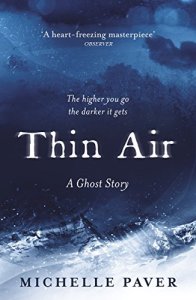
Thin Air by Michelle Paver

I read Thin Air: A Ghost Story by Michelle Paver in the summer, but it’s a good choice to read for Halloween. I didn’t find it as scary as Dark Matter, but even so it is very atmospheric and chilling – in more ways than one. The setting is Kangchenjunga in the Himalayas as a group of five men set out to climb the mountain in 1935.

Kanchenjunga, the third highest mountain in the world, had claimed many lives and no one had reached the summit. Held to be a sacred mountain, it is one of the most dangerous mountains in the world – believed to be the haunt of demons and evil spirits. An unsuccessful attempt had been made in 1907, led by Edmund Lyell, when only two men had returned. The group in 1935, led by Major Cotterell, attempted to follow the 1907 route up the south-west face.

Their story is narrated by medic, Dr. Stephen Pearce, accompanying his older brother, Kits. The brothers have always been rivals and this continues as they make their way up the mountain. Things start to go wrong almost straight away and Stephen is full of foreboding. He fears someone is following them and when he finds a rucksack left behind by the earlier climbers he fears he is loosing his mind. Under the most extreme weather conditions, the constant fear of an avalanche and the increasing effects of mountain sickness Stephen’s paranoia rises. More horrors keep piling on.

It’s not a long book, 240 pages, and almost half of it describes the mountain itself and the route the climbers took to get to the start of the climb and setting up their base camp. So it is only in the later part where the terror hinted at before sets in. The isolation, a sense of ‘otherness’, the extreme cold and the immense scale of the mountain with its towering pinnacles, deep crevasses, and above all the silence dominates. Were Stephen’s experiences the result of being at a high altitude, were they hallucinations – or was what he saw really there? I was never sure and that was part of the horror.

Thin Air is based on real events, although the 1907 and 1935 expeditions described in it are fictional. But the setting is real, the characterisation is excellent as is the feel of the 1930s, with its class snobbery, and racism and above all the creeping sense of dread that pervades the whole book.

R.I.P. XV

R.eaders I.mbibing P.eril (R.I.P.) is all about reading Mystery, Suspense, Thriller, Dark Fantasy, Gothic, Horror or Supernatural books. This year there are no rules – just read the books during September and October. You can join in with others if you have Instagram or on Twitter, where you can follow the event @perilreaders and if you post, use the tag #ripxv.

Here is a list of some of the choices I have on my TBR. I shan’t read all of these but I like to think I’ll read at least one or two of them – but if other books appeal to me I could very well read them instead.

  • The Ghost of the Mary Celeste by Valerie Gordon
  • The Wasp Factory by Iain Banks
  • Poirot Investigates by Agatha Christie
  • The Rottweiler by Ruth Rendell
  • The Chimney Sweeper’s Boy by Barbara Vine
  • With Our Blessing by Jo Spain
  • The Woman in Black by Susan Hill
  • The Haunting of Hill House by Shirley Jackson
  • Black Water Lilies by Michel Bussi
  • The Girl with the Dragon Tattoo by Stieg Larsson

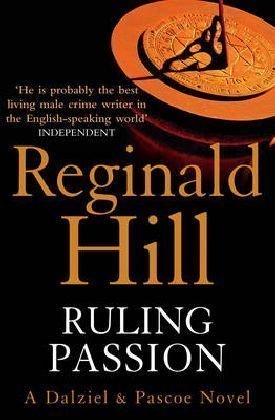
Ruling Passion by Reginald Hill

Ruling passion

HarperCollins|1993|388 pages|Paperback\ my own copy| 3.5* (rounded up to 4*)

Ruling Passion is Reginald Hill’s third Dalziel and Pascoe novel, first published in 1973, in which Pascoe finds his social life and work uncomfortably brought together by a terrible triple murder. Meanwhile, Dalziel is pressuring him about a string of unsolved burglaries, and as events unfold the two cases keep getting jumbled in his mind.

Peter Pascoe is the main character with Dalziel, his boss playing a minor role. Moving on from the second book where Pascoe had renewed his relationship with Ellie Soper, they are now a couple and friends from their university days, Colin and Rose Hopkins have invited them to stay for a weekend in the country at their cottage in the village of Thornton Lacey. They hadn’t seen them for more than five years and the other guests were also old friends, Timothy Mansfield and Charles Rushworth. (References here to Jane Austen’s Mansfield Park)

However, Peter and Ellie didn’t arrive until the Saturday morning when they found a terrible scene – Timothy and Charles lying on the dining room floor in a pool of blood, dead from wounds caused by a shotgun fired at close range, and Rose was in the back garden lying dead at the base of a sundial in the centre of the lawn, her face pressed into the grass. Colin was nowhere to be seen – and the police, headed by Superintendent Backhouse, immediately assume he is the murderer. Peter for once is faced with being a witness rather than a detective and he doesn’t find it easy. He and Ellie are both convinced that Colin didn’t commit the murders – it’s a matter of finding him and proving Backhouse wrong.

As in the previous book, An Advancement of Learning, the plot is by no means straight forward and I found it rather confusing for a while, trying to remember who was who and where they fitted into the mystery. It’s not helped by the fact that the action moves between Thornton Lacey, Yorkshire and Scotland. It wasn’t only Peter who muddled the murder mystery with his unsolved burglaries – I did too. But it all became much clearer towards the end of the book as the connections between the storylines were made.

It’s the main characters though that interested me most and the development of their characters – Peter and Ellie in particular. Their relationship has moved on and during the course of the book they realise how deep their feelings for each other are – leading them into considering getting married. Peter recognises that he can be a very solitary man:

Solitariness was not far from loneliness and this he feared. He believed he could recognize similar characteristics in Ellie, but how good a basis for marriage this common area would be he could not speculate. Equally far from contemplation, however, was a life without Ellie. Which is as good a definition of love as I’m likely to get in a police station, he told himself. Motives for marriage are at least as varied and unexpected as motives for murder. That sounded like the kind of cold comfort Dalziel would doubtless offer! (page 325)

Whereas Peter and Ellie have now become more developed characters Dalziel still remains more of a caricature, rude, coarse and insensitive. But as Ellie gets to know him more so he becomes more human – and more likeable, with more understanding than she had previously thought. By the end of the book Peter, having passed his exams, is promoted to Inspector.

Reginald Hill wrote 24 Dalziel and Pascoe novels. I’ve now read the first and the last and some in between. Currently I’m reading my way through the rest of them – so book 4 is next on my list – An April Shroud.

Readers Imbibing Peril XIV Begins …

There’s a chill in the air, the leaves are beginning to fall and autumn is definitely on its way. So, it’s no surprise to see that tomorrow the 14th Annual  Readers Imbibing Peril begins, running from 1 September to 31 October.

The aim is to read books in these categories: 

Mystery, Suspense, Thriller, Dark Fantasy, Gothic, Horror, and Supernatural.

rip14

As usual, there are different levels to choose from and I will be aiming for Peril the First, which is:

Read four books, any length, that you feel fit (our very broad definitions) of R.I.P. literature. It could be Stephen King or Sir Arthur Conan Doyle, Shirley Jackson or Tananarive Due…or anyone in between.

I have plenty of Mystery, Suspense, Thriller and Gothic books on my shelves and Kindle to choose from, including these:

  • The Lying Room by Nicci French
  • Stone Cold Heart by Caz Frear
  • A Beautiful Corpse by Christi Daugherty
  • Murder by Matchlight by E C Lorac
  • The Wasp Factory by Iain Banks
  • A Song of Stone by Iain Banks
  • Poirot Investigates by Agatha Christie
  • The Rottweiler by Ruth Rendell
  • The Chimney Sweeper’s Boy by Barbara Vine
  • With Our Blessing by Jo Spain

What usually happens when I make a list like this is that I end up reading other books instead. But I like to think I’ll read some of these.

R.I.P. Challenge XII – Completed

The R.I.P. Challenge (1 September to 31 October), hosted by Estella’s Revenge ended a few days ago.

I started at the level of Peril the Third, aiming low – to read just one book and then moved on to Peril the First, aiming to read four books. I’m very pleased to say that I read six books:

  1. A Climate of Fear by Fred Vargas
  2. The Taxidermist’s Daughter by Kate Mosse
  3. Extraordinary People by Peter May
  4. A Darker Domain by Val McDermid
  5. The Vanishing Box by Elly Griffiths
  6. Fair of Face by Christina James – review to follow soon