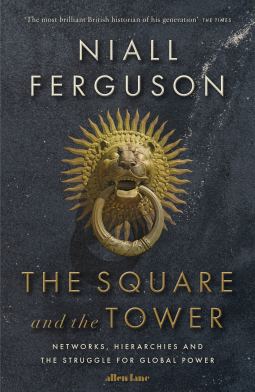
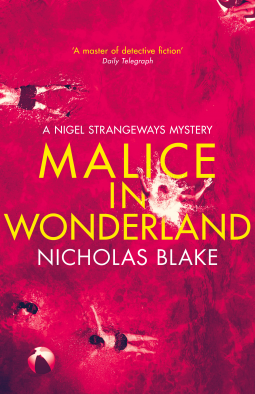
The Square and the Tower by Niall Ferguson

Published: Penguin Books (UK), 5 October 2017, 535 pages

Source: review copy from the publishers via NetGalley

My Rating: 2*

Blurb:

What if everything we thought we knew about history was wrong? From Niall Ferguson, the global bestselling author of Empire, The Ascent of Money and Civilization, this is a whole new way of imagining the world.

Most history is hierarchical: it’s about popes, presidents, and prime ministers. But what if that’s simply because they create the historical archives? What if we are missing equally powerful but less visible networks – leaving them to the conspiracy theorists, with their dreams of all-powerful Illuminati?

The twenty-first century has been hailed as the Networked Age. But in The Square and the Tower Niall Ferguson argues that social networks are nothing new. From the printers and preachers who made the Reformation to the freemasons who led the American Revolution, it was the networkers who disrupted the old order of popes and kings. Far from being novel, our era is the Second Networked Age, with the computer in the role of the printing press. Once we understand this, both the past, and the future, start to look very different indeed.

My thoughts:

Subtitled ‘Networks, Hierarchies and the Struggle for Global Power‘, this is described as ‘a whole new way of imagining the world’ as it’s possible that we’re missing information about networks because it’s not recorded in historical archives. But what I found in this book is rather different, being a run through history in what seemed to me a disjointed way, albeit very detailed, with network diagrams and many footnotes. I found parts of it quite tedious, especially the early section detailing the research on the history of networking. If I hadn’t requested the book from NetGalley I would have not bothered reading any more. Fortunately I found some sections were more interesting (such as on such varied topics as social media, the Illuminati, the Reformation, European Royal families, the Cambridge spies, Al Qaeda, ISIS and Trump to name but a few) and I did finish the book.

Ferguson states that his book seeks to learn about the future mainly by studying the past, in particular by looking at the importance of networks in the past that had been at times very powerful. But by the end of the book I didn’t feel too enlightened in that respect as often the distinction between hierarchies and networks is blurred – there are networks that are hierarchical and hierarchies that are parts of wider networks. As Ferguson acknowledges, the dichotomy between hierarchy and network is an over-simplification.

I requested this book when I saw it on NetGalley because history is a subject that I find fascinating, and the blurb interested me. However, although there are sections that I did find interesting, mainly those written as conventional narrative history, overall I was disappointed. I think it is disjointed with sections that don’t seem to me to have much connection with the main theme, overstretching the analogy. To summarise – I don’t think such theoretical historical analysis is for me.

My thanks to the publishers and NetGalley for a review copy.

After the Fire by Henning Mankell

Publication: Random House UK, Vintage Publishing, Harvill Secker, 5 October 2017

Source: review copy via NetGalley

My rating: 5*

Description:

Fredrik Welin is a seventy-year-old retired doctor. Years ago he retreated to the Swedish archipelago, where he lives alone on an island. He swims in the sea every day, cutting a hole in the ice if necessary. He lives a quiet life. Until he wakes up one night to find his house on fire.

Fredrik escapes just in time, wearing two left-footed wellies, as neighbouring islanders arrive to help douse the flames. All that remains in the morning is a stinking ruin and evidence of arson. The house that has been in his family for generations and all his worldly belongings are gone. He cannot think who would do such a thing, or why. Without a suspect, the police begin to think he started the fire himself.

Tackling love, loss and loneliness, After the Fire is Henning Mankell’s compelling last novel.

My thoughts:

After the Fire by Henning Mankell, translated by Marlaine Delargy, is not standard crime fiction and although there are crimes committed they are not the main focus of the book.  Living alone on an isolated island in the Swedish archipelago, Fredrik, a retired doctor, is devastated by the fire which destroyed the house he had inherited from his grandparents. He has nothing left apart from a boathouse, where he had set up an improvised surgery, a caravan (belonging to his daughter, Louise), and a boat. Suspected by the police of starting the fire, he tries to discover the culprit.

But the main emphasis of the book is on his reflections on life, death, ageing, and loneliness.  I found it absolutely fascinating as Fredrik looks back over his life.  His relationship with his daughter, Louise, who he hadn’t known about until she was an adult, is difficult – he knows almost nothing about her. However this changes when she comes to the island to decide what to do next and he gets more involved in her life.

Told in the first person by Fredrik it goes into detail about his fears of dying and the difficulties of understanding other people and both beginning and maintaining relationships. He has no real friends and only knows a handful of people living on the islands.  There is Jansson, a hypochondriac, the former postman, a snooper who read all the postcards he delivered, Oslovski, who he describes as a strange woman his contact with her is only to the extent of checking her blood pressure from time to time and parking his car outside her house on the mainland. Then there is Lisa, a journalist who writes for the local paper, a new acquaintance who interviews him about the fire and Nordin who owns the chandlery.

It’s beautifully written and I was entranced. I found it all very real, the people, the places and the mystery. It is both a character study  and a meditation on the complexities of life and death. Once I began reading I just didn’t want it to end.
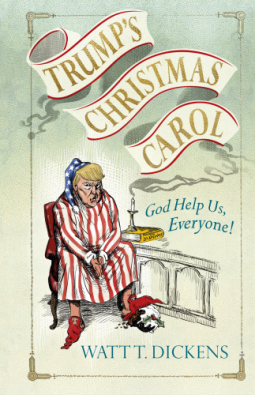
The Betrayals by Fiona Neill

Publication date: August 217, Penguin – Michael Joseph

Source: Review copy via NetGalley

My rating: 4*

Blurb (Amazon)

None of them would forget that week on the wild Norfolk coast.

Best friends Rosie and Lisa’s families had always been inseparable.

But that summer, Lisa had an affair with Rosie’s husband Nick.

And now, after years of silence, she sends Rosie a letter begging for help. A letter which exposes dark secrets.

Daughter Daisy’s fragile hold on reality begins to unravel.

Teenage son Max blames himself for everything that happened that long hot summer.

And Nick must confront his own version of events.

There are four sides to this story. Who will you believe?

My thoughts:

An excellent book about families, relationships, and the consequences of an affair! It looks at what happens when an affair becomes known, a marriage is over and the families’ friendship is destroyed.

It grabbed my attention right from the start with Daisy’s opening words:

Three is a good and safe number. I close my eyes and whisper the words three times so no one can hear. The sound like a sweet sigh. If Mum notices she might worry and the days of worry are over. I say this three times too, just to make triple sure, remembering how the words have to be spoken on the out breath.

Whatever Daisy says her days of worry are not over and her OCD goes into overdrive when she opens Lisa’s letter to Rosie. The novel is narrated in the present tense, often a bit of a stumbling block for me, but not so in this book, told from four different viewpoints – those of Daisy, her mother Rosie, father Nick and brother Max. Each one casts a different light on events and shows how easy it can be to interpret what happens in differing and often mistaken ways.

As I read the book I often couldn’t decide whose version to believe, especially when they were so contradictory. It explores the reliability of memory, the nature of mental illness and the devastation of friendships and family relationships through deceit and betrayal. What stood out for me was the portrayal of what it’s like to struggle with OCD and cancer. The book as a whole is an in-depth study of character and the terrible effects of suppressed memories and secrets. I loved it.

My thanks to the publishers and NetGalley for a review copy.

Malice in Wonderland by Nicholas Blake

A Golden Age Mystery

Published: 2017, Ipso Books. First published in 1940, Collins UK (The Crime Club)

Source: Review copy via NetGalley

My rating: 4*

I really enjoyed Malice in Wonderland by Nicholas Blake*. It’s a Golden Age mystery first published in the UK in 1940; in the US as The Summer Camp Mystery, later in 1971 as Malice with Murder; and in 1987, as Murder with Malice.

There are several allusions to Lewis Carroll’s Alice’s Adventures in Wonderland. The train to Wonderland plunges into a tunnel, just as Alice enters Wonderland through a rabbit hole. But in this case Wonderland is a holiday camp, set on a cliff top overlooking the sea. And all is not well in Wonderland as there is a prankster in the camp , the self-styled ‘Mad Hatter’, who is playing nasty and cruel practical jokes on the holiday makers. Swimmers are ducked in the sea and held down, tennis balls are coated in treacle, left with a note that refers to a part of dormouse’s story in Alice in Wonderland. Then the jokes get more dangerous. The camp’s owners are concerned not just for the guests but also for their business as they fear a rival firm with a grudge against the company is trying to ruin them.

There are hundreds of visitors at Wonderland, but the action revolves around a few characters including Paul Perry, a young man who calls himself a scientist, but who is there taking notes for the Mass Observation project, Mr and Mrs Thistlethwaite and their teenage daughter, Sally, Albert Morley, a timid little man, brothers Mortimer and Teddy Wise, the camp’s managers, their secretary Esmeralda Jones and Nigel Strangeways, a private detective.

Like other Golden Age mysteries, Malice in Wonderland presents a puzzle, plenty of suspects, clues planted along the way and a detective who solves the puzzle. It also presents a picture of life just before the Second World War, the social attitudes and in particular the beginnings of the holiday camps. By the 1930s there were several camps, including Warners and Butlins, at seaside locations. Wonderland has dining-halls presenting food cooked by London chefs, a ballroom, bars, an indoor swimming-bath, a concert hall, a gymnasium and numerous playrooms, plus a programme of entertainment with professional hosts and hostesses. It’s described as ‘the biggest, brightest and most ambitious of all the holiday camps that had sprung up over England during the last year or two.’

I loved the setting, the interesting characters, and the fiendishly difficult mystery to solve (I only solved it just before the denouement). And it’s well written with humour and style.

*Nicholas Blake was the pseudonym of Poet Laureate Cecil Day-Lewis (1904 – 1972), one of the leading British poets of the 1930s. He published his first Nigel Strangeways detective novel, A Question of Proof in 1935. Malice in Wonderland is the 6th in the series.

My thanks to the publisher for a digital ARC via NetGalley.

Amazon UK

Don’t Let Go by Harlan Coben

Publication Date: 26 September 2017, Random House UK, Cornerstone

Source: Review copy via NetGalley

My rating: 4*

Blurb:

The brilliant new novel from the international bestselling author of Home and Fool Me Once. Mistaken identities, dark family secrets and mysterious conspiracies lie at the heart of this gripping new thriller.

Fifteen years ago in small-town New Jersey, a teenage boy and girl were found dead.

Most people concluded it was a tragic suicide pact. The dead boy’s brother, Nap Dumas, did not. Now Nap is a cop – but he’s a cop who plays by his own rules, and who has never made peace with his past.

And when the past comes back to haunt him, Nap discovers secrets can kill…

My view:

I enjoyed Don’t Let Go very much. It’s a fast-paced mystery that moves between the past and the present with ease, good characterisation and a plot that kept me guessing to the end.

Two stories relating to Coben’s hometown of New Jersey inspired him to write this story. One was about a mafia leader and a make-shift crematorium and the other about a Nike missile control centre behind barbed-wire fencing near the mafia leader’s house and the elementary school. The stories turned out to be true, but Don’t Let Go is Coben’s own version.

Nap has never got over his twin brother, Leo’s death and fifteen years later he is still constantly in his thoughts. Leo and his girlfriend, Diana had been found by a railway line and it looked as though they had committed suicide, but Nap can’t accept that. And he is still obsessed by his girlfriend, Maura, who had disappeared the same night that Leo died. So when another cop, Rex Canton is found dead with Maura’s fingerprints at the scene of the crime, Nap is determined to get to the truth of what exactly had happened and to find Maura.

This is a book that I just had to read quickly, trying to follow the twists and turns as Nap and Ellie, also a friend from their schooldays, uncovered the secrets and lies that had been told over the years.

I enjoyed Don’t Let Go, but it did remind me of the only other book by Coben that I’ve read – The Woods, also about the murder of two teenagers twenty years earlier. Two other teenagers had disappeared and were presumed dead. Paul Copeland, now a County Prosecutor, is asked to identify a dead body, who turns out to be one of the missing teenagers. His sister was the other missing person and she is still missing. Same story in principle but different details and I’m wondering if this is typical of Coben’s books? Are they formulaic?

My thanks to NetGalley and Random House UK, Cornerstone, the publishers for a review copy.

The Word is Murder by Anthony Horowitz

Publication date: 24 August 2017, Century

Source: Review copy via NetGalley

My rating: 5*

Blurb:

A wealthy woman strangled six hours after she’s arranged her own funeral.
A very private detective uncovering secrets but hiding his own.
A reluctant author drawn into a story he can’t control.
What do they have in common?

Unexpected death, an unsolved mystery and a trail of bloody clues lie at the heart of Anthony Horowitz’s page-turning new thriller.

SPREAD THE WORD. THE WORD IS MURDER.

My thoughts:

The Word is Murder is a very clever and different type of murder mystery. I don’t think I’ve read anything like it before, one in which the author himself plays a major role.

Diana Cowper was killed later the same day after making the arrangements for her funeral. She was strangled in her own home. The police at first thought she’d been killed during a burglary, but there were no fingerprints or indeed any other clues to help find her killer.

The novel goes into a different realm with the introduction of ex-policeman, Daniel Hawthorne, who had been an adviser for Horowitz’s Foyle’s War series. The police call on Hawthorne as a consultant on out-of-the ordinary cases and he is working on the Diana Cowper murder. He proposes that Horowitz writes a book about him and his investigations into the case. However, they disagree about what Horowitz should write, which highlights the difference between writing crime fiction and true life crime books – and Horowitz gets dragged into the investigations.

At first I was slightly confused – were the details about Horowitz fact or fiction (a lot of it is true), was Hawthorne a real person or a fictional character, what was fact and what was fiction? It really is one of the most complicated and bemusing books I’ve read, full of realistic characters acting in a mystery full of red herrings and multiple twists and turns. I was soon totally immersed in this fascinating novel. I loved Magpie Murders, and I think Horowitz The Word is Murder is equally as amazing and maybe even better! I was totally unable to solve the mystery, the clues were all there, but I was so involved in sorting out what was real and what wasn’t and enjoying the puzzle that I completely missed them.

I am so delighted that I received a copy of this book from the publisher, via NetGalley, for review.