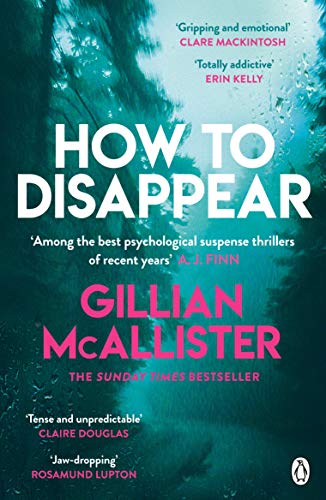
How to Disappear by Gillian McAllister

I’ve read three books by Gillian McAllister and enjoyed each one so I was delighted when I saw that she has a new book, How To Disappear published today. But, I have mixed feelings about this book, because although it is so tense in parts and is compulsive reading – I really wanted to know what happens next – I did have difficulty in suspending my disbelief for a large part of it. I liked the originality of the story – a murder mystery that is not a police procedural or an amateur detective story, but the story of a family devastated by their experience of being in witness protection. Although I’ve seen TV dramas about witness protection I’ve never read a novel before about it.

Blurb:

What do you do when you can’t run, and you can’t hide?

Lauren’s daughter Zara witnessed a terrible crime. But speaking up comes with a price, and when Zara’s identity is revealed online, it puts a target on her back. The only choice is to disappear. To keep Zara safe Lauren will give up everything and everyone she loves, even her husband. There will be no goodbyes. Their pasts will be rewritten. New names, new home, new lives. The rules are strict for a reason. They are being hunted. One mistake – a text, an Instagram like – could bring their old lives crashing into the new. They can never assume someone isn’t watching, waiting.

As Lauren will learn, disappearing is easy. Staying hidden is harder…

I thought it began well, although, it’s written in the present tense, often a stumbling block for me, setting the scene and establishing the characters. Zara is fourteen when she witnesses the murder of a homeless man by two teenagers. A year later she gives evidence as Girl A, to protect her identity, at the trial of two teenage footballers. But it all goes wrong, the boys are freed and after the trial a search is on to discover her identity and make her pay for what she did. As the situation escalates she is forced to go into witness protection.

This is a dark, intense story about what happened next, and going into more detail about what led up to the murder. It’s told from the four main characters’ viewpoints – Zara, Lauren her mother, Aidan her stepfather and his daughter Ruby. It moves along at quite a good pace, although sometimes I thought it was a bit repetitive about long hot baths or lack of a long hot bath, comfort eating cakes, and compulsive shopping.

The main themes of the book are about witness protection, parenting and family relationships. Gillian McAllister explains in her Author’s Note that there are many blanks she was unable to fill in, ‘due to the UK’s protection service not wishing to reveal their secrets’ to her. She hopes it is ‘believable despite basically having … made it up.’ I found it believable up to a point, but it was the characters’ behaviour that I found so far-fetched. However, it certainly made me wonder how I would cope in witness protection, faced with being unable to contact the family I’d left behind in anyway for fear of the consequences. But, most of all, I didn’t enjoy reading it, and for me that is important when I’m reading a novel. It left me drained – and the ending felt so contrived that it really spoiled the whole book for me.

This was not an easy book for me to review, especially as I was expecting to enjoy it as much as her earlier books!

  • Format: Kindle Edition
  • File Size: 1560 KB
  • Print Length: 480 pages
  • Publisher: Penguin (9 July 2020)
  • Source: Review copy
  • My rating: 2

My thanks to the publishers, Penguin for my review copy via NetGalley.

Fresh Water for Flowers by Valerie Perrin

I finished reading  Fresh Water for Flowers by Valérie Perrin a while ago, so this is just a brief post which really doesn’t do justice to this beautifully written book, translated from the French by Hildegarde Serle. It will be published by Europa Editions on 7 July 2020. My copy is an uncorrected proof from NetGalley.

This is a story of love and loss – and hope. Violette, the caretaker at a cemetery in a small town in Bourgogne, is a character I really warmed to; she is optimistic, brave, creative and caring. This is very much a character driven story, and full of original and quirky characters, such as the three gravediggers – Nono, Gaston and Elvis. But it is also a story with a mystery at the heart of it – as Julien Seul, the policeman is delving into his mother’s past, intrigued by her wish to have her ashes scattered far from her home and on the grave of a stranger.

It is also an emotional and moving story about Violette, her estranged husband, Phillippe, his miserable parents and their young daughter, Leonine. What happened to Leonine is especially tragic. But this a story full of warmth and happiness and life in the cemetery is full of surprises and joy. It is not what I expected to be and I am so pleased I’ve read it.

I haven’t said very much about the plot – so here is the publishers’ description:

A POIGNANT RUNAWAY BESTSELLER full of French charm and memorable characters, Fresh Water for Flowers is Valérie Perrin’s English debut.

Violette Toussaint is the caretaker at a cemetery in a small town in Bourgogne. Casual mourners, regular visitors, and sundry colleagues—gravediggers, groundskeepers, and a priest—visit her to warm themselves in her lodge, where laughter, companionship, and occasional tears mix with the coffee she offers them. Her life is lived to the rhythms of their funny, moving confidences.

Violette’s routine is disrupted one day by the arrival of Julien Sole—local police chief—who insists on scattering the ashes of his recently deceased mother on the gravesite of a complete stranger. It soon becomes clear that Julien’s inexplicable gesture is intertwined with Violette’s own difficult past.

With Fresh Water for Flowers, Valérie Perrin has given readers an intimately told story that tugs on the heartstrings about a woman who believes obstinately in happiness, despite it all. A number one bestseller in France, Fresh Water for Flowers is a heartwarming and tender story that will stay will readers for years after the final page is turned.

My thanks to the publishers and NetGalley for an uncorrected proof copy.


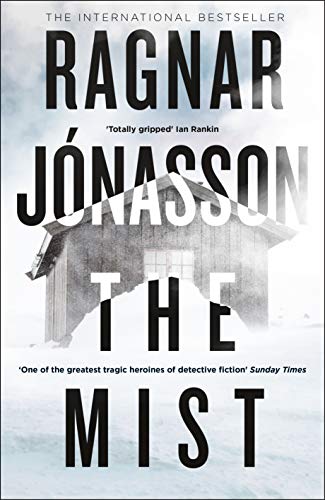
The Mist by Ragnar Jonasson

Nordic noir, as bleak, cold, snowy and empty as Iceland.

Penguin UK – Michael Joseph/ 30 April 2020/ 320 pages/ review copy/ 4*

About the book

1987. An isolated farm house in the east of Iceland.

The snowstorm should have shut everybody out. But it didn’t.

The couple should never have let him in. But they did.

An unexpected guest, a liar, a killer. Not all will survive the night. And Detective Hulda will be haunted forever.

My thoughts

The Mist is the third novel in Ragnar Jonasson’s Hidden Iceland series, translated from the Icelandic by Victoria Cribb. The trilogy began with The Darkness in which Detective Inspector Hulda Hermannsdottir was on the verge of retirement. The second book, The Island goes backwards in time with an investigation in 1997. The Mist featuring Hulda goes back yet again to 1987 as Hulda is worrying about her daughter, Dimma and her relationship with her husband, Jon. Alongside the story of what is happening in her personal life, she is also investigating the disappearance of a young woman and a suspected murder case, a particularly horrific one in an isolated farmhouse in the east.

I thought the first part of this book, about Erla and her husband, Einar, who live in the furthest reaches of eastern Iceland was completely gripping, especially with the arrival of a stranger lost in a snowstorm. Erla invites him in and the nightmare begins. This is one of those books where to know too much about the plot would really spoil it. All I’m going to say is that it starts slowly, and the tension and suspense gradually rise throughout, with an increasing sense of dread.

I loved the setting, Jonasson’s writing bringing the scenery and the weather to life – you can feel the isolation and experience what it is like to be lost in a howling snowstorm. The emotional tension is brilliantly done too, the sense of despair, confusion and dread is almost unbearable. My only criticism, a small one, is that when I reached a certain point in the novel, quite a bit before the end, it seemed obvious to me what the outcome would be. It didn’t spoil my enjoyment, but I would have preferred not to have known and is the reason I’ve given this 4 stars instead of 5.

My thanks to the publishers for my copy via Netgalley.

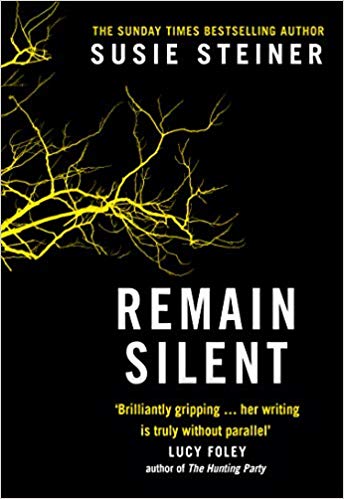
Remain Silent by Susie Steiner

‘The dead cannot speak. But they still have a story to tell.’

I’ve enjoyed two of Susie Steiner’s earlier books so I was keen to read her latest book, Remain Silent and once more I was totally immersed in the story. It’s the 3rd Manon Bradshaw book and I loved it.

Remain silent

The Borough Press | 28 May 2020 | 368 pages | review copy | 4*

‘By turns warm and witty, gripping and terrifying, heartbreaking and uplifting, Susie Steiner’s fourth book is both a literary tour de force and one of the finest crime novels of recent years.’ (extract from the publishers’ blurb)

My thoughts:

This is not just a police procedural and a gripping mystery it is a tragedy, a scathing look at modern life, centred on the exploitation of immigrant labour, racism and abuse that some of the foreign workers have to endure.

Manon Bradshaw is a Detective Inspector, a working mother with a young toddler, Teddy, her adopted teenage son, Fly and her partner, Mark Talbot who has recently been diagnosed with cancer. She is working in the Major Crime Unit on cold cases on a part-time basis and is not getting on well with her new boss, Detective Superintendent Gloria McBain. Despite that when she finds the body of Lukas Balsys hanging from a tree with a note attached saying ‘The dead cannot speak’,  McBain puts her in charge of the investigation into his death – did he commit suicide or was he murdered?

The story, as in the earlier books, has a complicated plot. This one revolves around the plight of a group of Lithuanian immigrants living and working in terrible conditions under a cruel gang master, Edikas. There is a large cast of characters –  as well as the Lithuanians and the police there is a local racist group leading a campaign of hatred with protest marches and the threat of violence.  All come over as incredibly real people, with the star characters being Manon, Lukas, his friend Matis and Elise who falls in love with Lukas, despite her racist father’s hatred of the immigrants.

This has all the ingredients of a successful crime novel for me. Although it starts off slowly building up a picture of the characters and their situation, it is gripping and intense, dealing with problems of prejudice and downright hatred and xenophobia – a most thought-provoking and shocking novel.

The Author

Susie Steiner is a novelist and freelance journalist. She began her writing career as a news reporter first on local papers, then on the Evening Standard, the Daily Telegraph and The Times. In 2001 she joined The Guardian, where she worked as a commissioning editor for 11 years. In May 2019 she was diagnosed with a brain tumour (Grade 4 Glioblastoma) and spent most of 2019 undergoing treatment: six hours of brain surgery, chemo radiation, and six cycles of chemotherapy. My best wishes for her recovery. For more information see her website, susiesteiner.co.uk

The Lost Lights of St Kilda by Elisabeth Gifford

the lost lights of st kilda

Atlantic Books Corvus| 05 Mar 2020| 288p| Review copy| 3*

Synopsis

1927: When Fred Lawson takes a summer job on St Kilda, little does he realise that he has joined the last community to ever live on that beautiful, isolated island. Only three years later, St Kilda will be evacuated, the islanders near dead from starvation. But for Fred, memories of that summer – and the island woman, Chrissie, with whom he falls in love – will never leave him.

1940: Fred has been captured behind enemy lines in France and finds himself in a prisoner-of-war camp. Beaten and exhausted, his thoughts return to the island of his youth and the woman he loved and lost. When Fred makes his daring escape, prompting a desperate journey across occupied territory, he is sustained by one thought only: finding his way back to Chrissie.

The Lost Lights of St Kilda is a sweeping love story that crosses oceans and decades. It is a moving and deeply vivid portrait of two lovers, a desolate island and the extraordinary power of hope in the face of darkness.

For those unaware, St Kilda is a Scottish island in the Atlantic Ocean which had been continuously inhabited from the Bronze Age up until 1930 when the island was evacuated due to an irretrievable population crash and the logistical difficulty of getting necessary supplies to an island essentially cut off during the Winter.

My thoughts:

The Lost Lights of St Kilda is historical fiction set mainly in two time periods, 1927 and the 1940s, following the story of Chrissy, a native of the island and Fred and Archie, visiting students from Cambridge University. At first I wasn’t really involved in the plot which is basically a romance, the story of a love triangle complete with all the misunderstandings and anguish that involved. I found it rather predictable, But the highlights of the book for me are the descriptions of St Kilda, its history, the importance to the islanders of the bird life, and their isolation and the poverty they endured. The account of the island’s evacuation is particularly moving.

After a slow start, the book picks up pace and I became more involved in the story. It’s a book of two halves really – the story of the last years of life on St Kilda and a war story. It’s very well researched and Elisabeth Gifford explains in her acknowledgements that the characters are loosely based on the people who lived on St Kilda whilst remaining fictional, although some of the characters featuring in the chapters about Fred’s wartime experience are based on real people. She lists the books she used for her research – books about the island, about Atlantic seabirds and journals and biographies of soldiers who were captured during the Second World War  and their escapes, all of which brought her novel to life for me.

My thanks to the publishers for my review copy via NetGalley.

The Last Protector by Andrew Taylor

London, 1668 – A dangerous secret lies beneath Whitehall Palace…

The Last Protector HarperCollins|2 April 2020|419 pages|ebook |Review copy via NetGalley|4* The Last Protector is the fourth book in Andrew Taylor’s series featuring James Marwood, a government agent and Cat (Catherine) Lovett, set in Restoration England. The year is 1668 and the exiled Richard Cromwell, son of Oliver, heavily in debt, has returned in disguise to England. Charles’ extravagant life style and licentious behaviour has now lost him the support of the people and many are hankering after the old days under Oliver Cromwell and then his son, Richard as Lord Protectors. He needs Parliament to vote him the funds to pay off his debts, maintain his court and fund the expansion of the navy and is relying on the Duke of Buckingham for support. However Marwood’s masters suspect that Buckingham is secretly conspiring against the King and assign him to spy on him.  Cat, a regicide’s daughter, is married to Simon Hakesby, an elderly and ailing surveyor and architect. She knew Richard’s daughter Elizabeth as a child and finds herself drawn into the Cromwells’ plan to recover a package Richard’s mother had hidden in the Cockpit in the gardens of the Palace of Whitehall just before her death; a package Richard hopes would be sufficient to clear his debts. He turns to the Duke of Buckingham for support in gaining access to the Cockpit. Buckingham is keen to use Richard in his plans to gain power. Cat, who now is unhappy in her marriage, resentful of Simon’s demands on her, is reluctant to get involved but unfortunately for her Simon is eager to help, and they soon find themselves in great danger. She is reluctant to ask for Marwood’s help fearing they could be charged with treason. Like the earlier books in the series this is a gripping story, full of historical detail, complications, intrigue and danger. The characterisation is brilliant with memorable characters such as Ferrus, a mazer-scourer’s labourer, who lives a terrible life, forced to sleep in a kennel with Windy, a vicious dog that guards the kitchen yard at the Cockpit. Treated brutally by his master, Ezra Reeves, his job is to clean the sewers. He is starved so he can squeeze himself down unto the foul stinking mess of the sewers, bending his long thin arms and legs. The stench of London comes across very vividly in this novel. Then there is Chloris, the kind-hearted prostitute, who helps Marwood.  This is a book full of action too, with a swiftly moving plot and a climatic ending. It is full of suspense and surprises. Andrew Taylor is a supreme storyteller, combining fact and fiction – his novels are full of historical details that slot seamlessly into his stories. I’ve read all  the earlier books and loved them too – The Ashes of London (set in 1666, six years after Charles II was reinstated as King) and The Fire Court (set in 1667, eight months after the Great Fire of London), and The King’s Evil (set seven months later). It is not necessary to read the earlier books as I think they all work well as standalones, but I think it really helps if you do. Many thanks to the publishers, HarperCollins for my review copy.