Books Read in May 2016

May was another good reading month for me. I read seven novels and one book of memoirs.

The Voyage Out by Virginia Woolf – a book I’ve owned for years. Virginia Woolf’s first novel about a young woman’s search for life, love and the world, an intriguing book.  Woolf explores the nature of Rachel’s mind, her obsessions and beliefs and through it her own thoughts about depression, suicide, death and the meaning of life. A sad book.
Crystal Nights by Dorte Hummelshoj Jakobsen, crime fiction that moves between events in Germany in 1938 to Kalum, a fictional village in Denmark, in the 1960s. a story of how evil touched so many lives with such terrible consequences and how by patience and perseverance the truth was revealed. I was carried away by the story.
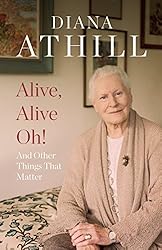
Alive, Alive Oh! And Other Things That Matter by Diana Athill – memories, thoughts and reflections on her life as she approaches her 100th year (she was born in 1917). Her love of life shines through this remarkable book. I loved it.
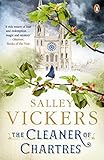
The Cleaner of Chartres by Salley Vickers (LB) – a beautiful book that I enjoyed immensely, beautifully written, with the character of Agnès Morel at its centre. There is a mystery about her origins and also about her life before she arrived in Chartres.
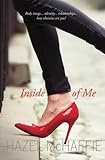
Inside of Me by Hazel McHaffie – an excellent book. Hazel McHaffie’s novels cover medical ethics issues and the issues in Inside of Me concern body image, in particular, but not exclusively, about anorexia; identity, and relationships. There is also a mystery concerning missing teenage girls.
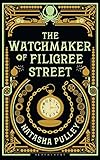
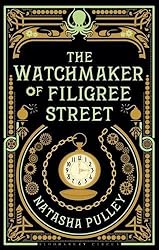
The Watchmaker of Filigree Street by Natasha Pulley – a mixture of historical fact and fantasy set in Victorian times, both in London and Japan. Bombs, clockwork inventions, the London Underground, Gilbert and Sullivan and much more more make up this fantastical tale. I loved it both for its historical settings and for its ingenuity.
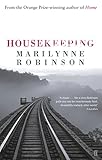
Housekeeping by Marilynne Robinson – the story of Ruth and Lucille, orphans growing up in the small desolate town of Fingerbone in the vast northwest of America. I found this a melancholy tale about a dysfunctional family, a story of loneliness, loss, suicide, death, and transience. I liked it but it’s probably the least enjoyable book I read in May.
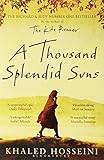
A Thousand Splendid Suns by Khalid Hosseini – I loved this amazing book, not an easy read emotionally, but one that will live in my memory as one of the most devastating and heartbreaking stories I’ve read. Born a generation apart and with very different ideas about love and family, Mariam and Laila are two women brought jarringly together by war, by loss and by fate. As they endure the ever escalating dangers around them – in their home as well as in the streets of Kabul – they come to form a bond that makes them both sisters and mother-daughter to each other, and that will ultimately alter the course not just of their own lives but of the next generation. (Goodreads summary)

My favourite books of the month are:

The Watchmaker of Filigree Street by Natasha Pulley
and A Thousand Splendid Suns by Khalid Hosseini
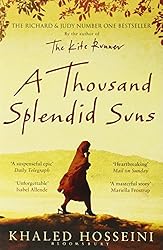
Impossible to choose between them!
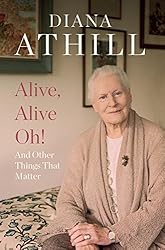
Alive, Alive Oh! And Other Things That Matter by Diana Athill

Alive, Alive Oh! And Other Things That Matter by Diana Athill (published in 2015) contains memories, thoughts and reflections on her life as she approaches her 100th year (she was born in 1917). I quoted the opening paragraph of this book and a teaser paragraph in an earlier post, First Chapter, First Paragraph.

It’s only a short book (168 pages), but it covers a wide range of Diana Athill’s memories, many images of beautiful places, and the friends and lovers she has known. The chapters follow on chronologically but are unconnected except for the fact that they demonstrate her love of life.

She writes about her Great Grandfather’s garden at Ditchingham Hall in Norfolk, which she used to love visiting in the 1920s and 1930s, when her grandparents lived there. Her writing is so clear and precise, describing in detail its exact layout and expressing her delight in her memories of it.

In other chapters she describes post-war life and her visits to Florence, and in particular the Club Mediterranee in Corfu in the 1950s; her experiences in Trinidad and Tobago, where she was struck by the disparity between the local people and the tourists/incomers; and the miscarriage when she was in her early 40s, when she nearly died. It was heart breaking to read this remarkably candid account both about what happened and how she felt, her detachment, her resentment that she had lost the baby, even her relief, and finally her gratitude that she was still alive, and her love of life:

‘I AM ALIVE.’ 

It was enough.

It was everything. It was filling me to the brim with pure and absolute joy, a feeling more intense than any I had known before. (page 87)

It is this love of life that is evident in her writing that makes it such a remarkable book. She writes about her decision to move into a home, persuaded by a friend who lived there and about how much she enjoys living there. And her main luxury now is her wheelchair, which she finds has unexpected benefits, such as when she was at an art exhibition – the crowds fell away from her in her wheelchair and she was able to lounge in perfect comfort in front of Matisse’s red Dance.

Of course, she writes about death and dying, as ‘death is no longer something in the distance, but might well be encountered any time now.’ She doesn’t find this alarming, and remembers when she was close to death after her miscarriage that her feelings were of acceptance: ‘Oh well, if I die, I die‘. Death is not something she fears, although she has some degree of anxiety at the process of dying and recognises that whereas it’s ‘unwise to expect an easy death, it is not unreasonable to hope for one.

This book has given me much to think about, including this paragraph:

Looking at things is never time wasted. If your children want to stand and stare, let them. When I was marvelling at the beauty of a painting or enjoying a great view it did not occur to me that the experience, however intense, would be of value many years later. But there it has remained, tucked away in hidden bits of my mind, and now it comes out, shouldering aside even the most passionate love affairs and the most satisfying achievements, to make a very old woman’s idle days pleasant instead of boring. (pages 5 – 6)

I loved it.

First Chapter, First Paragraph

First chapterEvery Tuesday Diane at Bibliophile by the Sea hosts First Chapter First Paragraph Tuesday Intros, where you can share the first paragraph, or a few, of a book you are reading or thinking about reading soon.

One of the books I’ll be reading soon is Alive, Alive Oh! And Other Things That Matter by Diana Athill OBE. From what I’ve read so far it promises to be very interesting. Born in 1917 Diana Athill helped Andre Deutsch establish his publishing company and worked as a literary editor for many years. She is also a novelist and has published several memoirs.

Alive, Alive Oh! And Other Things That Matter begins:

‘Sometimes I sits and thinks and sometimes I just sits’: I have forgotten who it is who is supposed to have said that, but it is a good description of a state quite often observed in a retirement home, and considered pitiable. Disconcertingly, I recently realized that I myself (not very often, just now and then) might say those very words if somebody asked me what I was doing. It is not a welcome thought, but less dreadful than it might be because I now know from experience that the state is not necessarily pitiable at all. It is even pleasant – or it can be. That probably depends on the nature of the person sitting. To me it has been, because the thinking turns out to be about events in the past which were enjoyable, and when the mind relaxes itself it is those same events which float in and out of it.

Blurb:

What matters in the end? In the final years of life, which memories stand out? Writing from her retirement home in Highgate, London, as she approaches her 100th year, Diana Athill reflects on what it is like to be in her nineties, and on the moments in her life which have risen to the surface and sustain her in her later years.

She recalls in sparkling detail the exact layout of the garden of her childhood, a vast and beautiful park attached to a large house, and writes with humour, clarity and honesty about her experiences of the First and Second World Wars, and her trips to Europe as a young woman. In the remarkable title chapter, Athill describes her pregnancy at the age of forty-three, losing the baby and almost losing her life, and her gratitude on discovering that she had survived.

With vivid memories of the past mingled with candid, wise and often very funny reflections on the experience of being very old, Alive, Alive Oh! reminds us of the joy and richness to be found at every stage of life.

Teaser Tuesday newTeaser Tuesday is a weekly bookish meme, hosted by MizB of Books and a Beat. ! Just do the following:

‘¢ Grab your current read
‘¢ Open to a random page
‘¢ Share two (2) ‘teaser’sentences from somewhere on that page

My teaser is from page 29:

It annoys me when someone describes this country in the late 1940s and 1950s as being dreary, an opinion usually based on the continuation of rationing for some years after the war’s end. People who see it like that can’t have lived through the war. Those of us still alive who did so see it differently.

It’s a short book – just 168 pages – but she seems to have packed so much into it.

My Week in Books: 13 April 2016

This Week in Books is a weekly round-up hosted by Lypsyy Lost & Found, about what I’ve been reading Now, Then & Next.

IMG_1384-0

A similar meme,  WWW Wednesday is run by Taking on a World of Words.

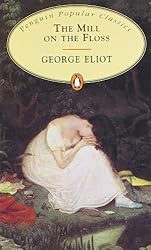
Now: Currently I’m reading three books, because I like to vary my reading. So, I have a classic, a crime fiction and a non-fiction book on the go:

Blurb:

George Eliot drew on her own anguished childhood when she depicted the stormy relationship between Maggie and Tom Tulliver. Maggie’s often tormented battle to do her duty and belong on the one hand, and to be  herself, wild and natural, on the other, propels her from one crisis to another. As the Tulliver fortunes decline and fall, the rift between Maggie and her family becomes almost irreconcilable. But Maggie’s biggest mistake of all is to fall in love with Stephen Guest who is engaged to another woman.

Both a sharp and observant picture of English rural life and a profoundly convincing analysis of a woman’s psychology, The Mill on the Floss is a novel that tackles the complexities of morality versus desire.

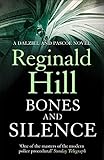
  • Bones and Silence by Reginald Hill – a Dalziel and Pascoe crime fiction novel. It’s book 11 in the series, which I’m reading totally out of order (there are over 20 in the series) and it is really good.

Blurb:

When Detective Superintendent Andy Dalziel witnesses a bizarre murder across the street from his own back garden, he is quite sure who the culprit is. After all, he’s got to believe what he sees with his own eyes. But what exactly does he see? And is he mistaken? Peter Pascoe thinks so.

Dalziel senses the doubters around him, which only strengthens his resolve. To make matters worse, he’s being pestered by an anonymous letter-writer, threatening suicide. Worse still, Pascoe seems intent on reminding him of the fact.

Meanwhile, the effervescent Eileen Chung is directing the Mystery Plays. And who does she have in mind for God? Daziel, of course. He shouldn’t have too much difficulty acting the part’¦

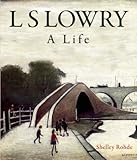
  • L S Lowry: A Life by Shelley Rohde. Lowry is one of my favourite artists, well known for his urban paintings of industrial towns but his work covers a wide range of themes and subjects, from landscapes and seascapes to portraits. This biography is based on collections of private papers held in The Lowry, Salford Quays.
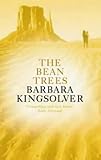
  • Then: I’ve recently finished The Bean Trees by Barbara Kingsolver, her first novel. I’ve read some of her other books –  loved The Poisonwood Bible which I’ve read a few times, and Homeland, a book of short stories, but wasn’t so taken with The Lacuna. I thoroughly enjoyed The Bean Trees – my review will follow shortly:

Blurb:

Plucky Taylor Greer grows up poor in rural Kentucky with two goals: to avoid pregnancy and to get away. She succeeds on both counts when she buys an old car and heads west. But midway across the country motherhood catches up with her when she becomes the guardian of an abandoned baby girl she calls Turtle. In Tuscon they encounter an extraordinary array of people, and with their help, Taylor builds herself and her sweet, stunned child a life.

Next: I really don’t know.

What about you? What are you reading this week?

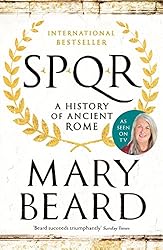
SPQR: A History of Ancient Rome by Mary Beard

Mary Beard is a Professor of Classics at Newnham College, Cambridge and is the Classics editor of the TLS. She is a fellow of the British Academy and a member of the American Academy of Arts and Sciences. And she writes a blog – A Don’s Life, which appears in The Times. I’ve enjoyed watching her TV programmes and so it doesn’t surprise me at all  that SPQR is just as entertaining and informative as the programmes – and very readable, even for someone, like me, who only has a smattering of knowledge about Roman history.
I took my time reading SPQR; some of it covered familiar ground and some was new to me. It’s a fascinating account of how Rome grew and sustained its position for so long, covering the period from the fourth century BCE when Rome was expanding from a small village, up to the moment in 212 CE when the emperor Caracalla made every free inhabitant of the Roman Empire a full Roman citizen.

The title, SPQR, is taken from the Roman catchphrase, Senatus Populusque Romanus meaning the Senate and People of Rome and it is on these two elements – the Senate and the People that Mary Beard concentrates, focussing on the city of Rome, on Roman Italy and also looking at Rome from the outside, from the point of view of those living in the wider territories of the Roman empire.

The book is not strictly chronological and begins with an event I know a bit about through reading Robert Harris’ Lustrum. It’s the Catiline conspiracy in 63 BC, which concerned a plot, or so it was rumoured to overthrow the Roman Empire and Cicero’s part in uncovering the plot and saving the state. Mary Beard begins with this event, because:

it is only in the first century BCE that we can start to explore Rome, close up and in vivid detail through contemporary eyes. An extraordinary wealth of words survives from this period: from private letters to public speeches, from philosophy to poetry – epic and erotic, scholarly and straight from the street.’ (location 143)

She highlights the effect Cicero had, not just on the politics of his own time but also on the language of modern politics. And it is from Cicero’s speeches, essays, letters, jokes and poetry and other Roman writers that we see the Roman world not just in 63 BCE but throughout the city’s history.

For the earlier period however, there are no contemporary accounts and so the early years of the city and of the earliest Romans has to be reconstructed  from individual pieces of evidence from fragments of pottery or letters inscribed on stone.

There are also, of course the myths and stories as well and Beard refers to these, such as the story of Romulus and Remus, who are said to have founded the city, told by Livy and several other Roman writers. Tradition has it that Romulus and his tiny community fought against their neighbours, the Sabines, and erected a temple on the site of the battle, which later became the Forum, but there is no archaeological evidence to identify the remains of this temple. Archaeology, in fact, only sketches what Rome in the earliest period was like and it is very different from the myths. Later Roman writers and modern historians alike have debated intensely the stories of Romulus and Remus, raising the questions of what it was to be Roman. And Beard states:

There is often a fuzzy boundary between myth and history … and … Rome is one of those cultures where the boundary is particularly blurred. … For a start there was almost certainly no such thing as a founding moment of the city of Rome. … Although Romans usually assumed that he [Romulus] had lent his name to his newly established city, we are now fairly confident that the opposite was the case: ‘Romulus’ was an imaginative construction out of ‘Roma’. ‘Romulus was the archetypal ‘Mr Rome.’ (locations 844 – 850)

From that point Beard goes on to discuss the basics of Roman culture, including the nature of Roman marriage, Roman slaves, the Republican system, the principle of freedom, or ‘libertas’, the changing definition of what it meant to be ‘Roman’, Roman domination of the Mediterranean, dictatorship, civil war, taxation, the modern Western system of timekeeping, the emperors and their imperial successes and military victories and the army – and so much more!

SPQR is an immense  achievement, covering 1,000 years of the history of Ancient Rome, and not only the history but also explaining Roman values, what they thought about themselves, and the way of life of both the People and the Senate.

  • Format: Kindle Edition
  • File Size: 22379 KB
  • Print Length: 608 pages
  • Publisher: Profile Books; Main edition (20 Oct. 2015)
  • Source: I bought it

Reading Challenges: Mount TBR 2016 – an e-book I’ve owned since November 2015

My Week in Books: 10 February 2016

This Week in Books is a weekly round-up hosted by Lypsyy Lost & Found, about what I’ve been reading Now, Then & Next.

IMG_1384-0

A similar meme,  WWW Wednesday is run by Taking on a World of Words.

Currently I’m reading two books:

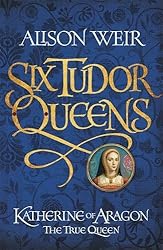
Six Tudor Queens: Katherine of Aragon, the True Queen by Alison Weir, a proof copy – expected publication 5 May 2016. This is the first novel of the Six Tudor Queens series.

Blurb:

A Spanish princess. Raised to be modest, obedient and devout. Destined to be an English Queen. Six weeks from home across treacherous seas, everything is different: the language, the food, the weather. And for her there is no comfort in any of it. At sixteen years-old, Catalina is alone among strangers. She misses her mother. She mourns her lost brother. She cannot trust even those assigned to her protection.

Acclaimed, bestselling historian Alison Weir has based her enthralling account of Henry VIII’s first wife on extensive research and new theories. She reveals a strong, spirited woman determined to fight for her rights and the rightful place of her daughter. A woman who believed that to be the wife of a King was her destiny.

History tells us how she died. This captivating novel shows us how she lived.

I’m also reading SPQR: a History of Ancient Rome by Mary Beard, the Kindle edition.

Blurb:

Ancient Rome matters. Its history of empire, conquest, cruelty and excess is something against which we still judge ourselves. Its myths and stories – from Romulus and Remus to the Rape of Lucretia – still strike a chord with us. And its debates about citizenship, security and the rights of the individual still influence our own debates on civil liberty today. 

SPQR is a new look at Roman history from one of the world’s foremost classicists. It explores not only how Rome grew from an insignificant village in central Italy to a power that controlled territory from Spain to Syria, but also how the Romans thought about themselves and their achievements, and why they are still important to us.

Covering 1,000 years of history, and casting fresh light on the basics of Roman culture from slavery to running water, as well as exploring democracy, migration, religious controversy, social mobility and exploitation in the larger context of the empire, this is a definitive history of ancient Rome.

SPQR is the Romans’ own abbreviation for their state: Senatus Populusque Romanus, ‘the Senate and People of Rome’.

I’ve recently finished Too Soon a Death by Janet O’Kane, crime fiction set in the Scottish Borders.

You can read my thoughts on this book in my previous post.

And next I’ll be reading Slade House by David Mitchell, or at least I think I’ll be reading this next. When the time comes I could fancy something completely different.

Blurb:

Born out of the short story David Mitchell published on Twitter in 2014 and inhabiting the same universe as his latest bestselling novel The Bone Clocks, this is the perfect book to curl up with on a dark and stormy night.

Turn down Slade Alley – narrow, dank and easy to miss, even when you’re looking for it. Find the small black iron door set into the right-hand wall. No handle, no keyhole, but at your touch it swings open. Enter the sunlit garden of an old house that doesn’t quite make sense; too grand for the shabby neighbourhood, too large for the space it occupies.

A stranger greets you by name and invites you inside. At first, you won’t want to leave. Later, you’ll find that you can’t.

This unnerving, taut and intricately woven tale by one of our most original and bewitching writers begins in 1979 and reaches its turbulent conclusion around Hallowe’en, 2015. Because every nine years, on the last Saturday of October, a ‘guest’ is summoned to Slade House. But why has that person been chosen, by whom and for what purpose? The answers lie waiting in the long attic, at the top of the stairs…

What have you been reading this week and what have got in mind to read next?