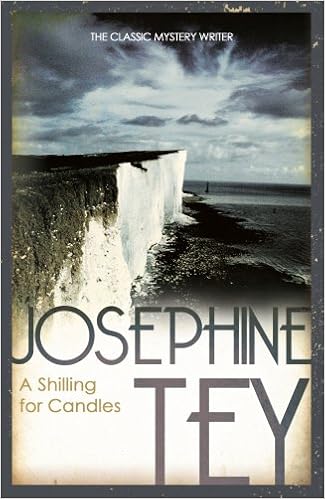
A Shilling for Candles by Josephine Tey

A Shilling for Candles, is the fourth book by Josephine Tey that I’ve read. It was first published in 1936 and is the second book in her Inspector Grant series. I enjoyed it but I have to admit that I don’t think it’s as good as the other books by her that I’ve read, namely:

  • The Daughter of Time, first published in 1951, a fascinating novel in which Inspector Alan Grant is in hospital and to keep his mind occupied he decides to discover whether Richard III really did murder his nephews – the Princes in the Tower;
  • Miss Pym Disposes, first published in 1946, a psychological study of characters and motives, in which Miss Pym investigates the death of a student at a physical training college; and
  • The Franchise Affair, first published in 1948, set in a post Second World War England reflecting the social attitudes of its time and based on a real case from the 18th century of a girl who went missing and later claimed she had been kidnapped.
Inspector Alan Grant investigates the apparent suicide of a young and beautiful film star, Christine Clay, who was found dead beneath the cliffs of the south coast. But he soon discovers that was in fact murder as a coat button was found twisted in her hair and he suspects a young man, Robin Tisdall who had been staying with Christine in a remote cottage near the beach, especially when it is revealed that she has named him as a beneficiary in her will. Tisdall has lost his coat and so the search is on to find it to prove either his innocence or guilt.

But it is not so straight forward and Grant has other suspects – Christine’s aristocratic and wealthy husband, an American songwriter, and her estranged brother to whom she had left the gift of ‘ a shilling for candles’. Then there are her friends, including the actress Marta Hart, a leading lady, Judy Sellers, who played dumb blondes and Lydia Keats, an astrologer who casts horoscopes for the movie stars.

Other characters include my favourite in the book, Erica Burgoyne, the Chief Constable’s 17 year old daughter, a quirky character who proves to be most resourceful.

I enjoyed it but thought that overall it was a bit messy, a bit all over the place, as Grant dashed about the south coast and London. It’s definitely a book of its time with several casual anti-Semitic references and Tey has used a lot of slang and idioms that aren’t so recognisable today. There are red herrings and plenty of twists and turns, all of which meant that although at first I identified the culprit, by the end I had no idea who it was. What I thought was more interesting is the way she wrote about the destructive nature of celebrity and the lengths to which the stars went to keep some privacy in their lives – not so different from today.

This book fits into several of the challenges I’m doing this year – the 20 Books of Summer, Mount TBR Reading Challenge, the Vintage Mystery Scavenger Hunt (in the category of a cover showing a body of water) and the Read Scotland Challenge, because Josephine Tey, whose real name was Elizabeth Mackintosh (1896 – 1952). She was a Scottish author who wrote mainly mystery novels.

Josephine Tey’s books:

Alan Grant
The Man in the Queue (1929) aka Killer in the Crowd
A Shilling for Candles (1936) (the basis of Hitchcock’s 1937 movie Young and Innocent)
The Franchise Affair (1948) 
To Love and Be Wise (1950)
The Daughter of Time (1951)
The Singing Sands (1952)

Novels
Kif: an Unvarnished History (1929) (writing as Gordon Daviot)
The Expensive Halo (1931)
Miss Pym Disposes (1946)
Brat Farrar (1949) aka Come and Kill Me
The Privateer (1952)
Non-Fiction

Claverhouse (1937) (writing as Gordon Daviot) A biography of John Graham of Claverhouse, 1st Viscount Dundee (1648 ‘“ 1689), known as ‘Bonnie Dundee’after leading the Jacobites to victory at the Battle of Killiecrankie in 1689, in which he lost his life.

  • Paperback: 256 pages
  • Publisher: Arrow; First Thus edition (3 Feb. 2011)
  • Language: English
  • ISBN-10: 0099556685
  • ISBN-13: 978-0099556688
  • Source: I bought my copy

My Friday Post: The Glass Room by Simon Mawer

Book Beginnings ButtonEvery Friday Book Beginnings on Friday is hosted by Gillion at Rose City Reader where you can share the first sentence (or so) of the book you are reading, along with your initial thoughts about the sentence, impressions of the book, or anything else the opener inspires.

This week’s book is The Glass Room by Simon Mawer, which I’ve just begun to read. It begins:

Oh yes, we’re here.

She knew after all these years. Something about the slope of the road, the way the trajectory of the car began to curve upwards, a perception of shape and motion that, despite being unused for thirty years, was still engraved on her mind, to be reawakened by the subtle coincidence of movement and inclination.

Friday 56

Also every Friday there is The Friday 56, hosted by Freda at Freda’s Voice.

These are the rules:

  1. Grab a book, any book.
  2. Turn to page 56, or 56% on your eReader.
  3. Find any sentence (or a few, just don’t spoil it) that grabs you.
  4. Post it.
  5. Add the URL to your post in the link on Freda’s most recent Friday 56 post.

Page 56:

Her eyes were blue, so pale that they gave the curious illusion of transparency, as though you were looking through them and seeing the sky.

He fumbled for his lighter and watched as she bent towards the flame. She wore a grey cloche hat and her hair was dark and cut short, not cropped as severely as Liesel’s and her friends’, but short enough to be a statement that she was a modern woman. A Slav he fancied.

It looks from the opening sentences and the extract from page 56 that this is going to be a detailed, descriptive book. I like that.

Synopsis from Goodreads:

High on a Czechoslovak hill, the Landauer House has been built for newlyweds Viktor and Liesel Landauer, a Jew married to a gentile. But, when the storm clouds of WW2 gather, the family must flee, accompanied by Viktor’s lover and her child. But the house’s story is far from over, as it passes from hand to hand, from Czech to Russian.

This is a work of fiction, but the house in Prague is real. Mawer follows it through all of the upheavals of 20th century Czech history.

Asta’s Book by Barbara Vine

What an amazing book is Asta’s Book by Barbara Vine*. It was published as Anna’s Book in the USA. I loved A Dark Adapted Eye, A Fatal Inversion and The House of Stairs, but Asta’s Book tops all those.  I think it’s brilliant!
It’s a book that demanded all my attention and I just didn’t want to put it down. There’s a murder, a missing child, a question of identity and overarching it all are the stories of two families – the Westerbys and the Ropers and all the people connected to them. So many characters, so many red herrings, so many incidents that at first did not appear to be of any or of much importance that turned out to have great relevance.

It had me going backwards and forward and placing so many markers in the book to try and keep track of it all. How did Barbara Vine handle so much material in such a clever way? It is so intricately plotted and the portrayal of so many characters is so skilfully handled.

It begins in 1905 when Asta Westerby and her husband Rasmus have come to East London from Denmark with their two little boys and their servant Hansine. With Rasmus constantly away on business, Asta keeps loneliness and isolation at bay by writing a diary in her native tongue of Danish. The story is not told chronologically, but switches backwards and forwards between Asta’s diaries, beginning in 1905 when she was pregnant and hoping the new baby would be a daughter, and the present day after Asta’s death. The diaries had been translated and published by her daughter Swanny (Swanhilde), and along with details of the family’s life reveal clues to an unsolved murder and to the mystery of a missing child. After Swanny died Asta’s granddaughter Ann became involved in searching for the truth about these facts. Additional material is also related through a trial transcript and various accounts of events by different people.

The book kept me guessing all the way throughout the various mysteries it threw up. I was very tempted to peek at the end of the book for the answers, but managed not to and I’m glad I didn’t as it would have ruined the suspense. I was so impressed at how it all hung together, with no extraneous material – all those minor incidents and characters are completely necessary.

As in other books by Barbara Vine it is not only the characters and the mystery that are enthralling, it is also the atmosphere and the settings. Houses in her books take on characters of their own and in this one there are several, maybe the most dominant is Devon Villa where Lizzie Roper was murdered, her mother also died of a heart attack and Lizzie’s daughter, Edith was last seen as she climbed the stairs up to her mother’s bedroom. And then there is the doll’s house that Rasmus made for his daughter, Marie, replicating Padanaram, the Westerbys’ second house in Shepherd’s Hill, Highgate.

*Barbara Vine is the pseudonym of Ruth Rendell, who was a Fellow of the Royal Society of Literature and the author of many thrillers and psychological murder mysteries . She died in 2015 at the age of 85. Her mother was born in Sweden and brought up in Denmark; her father, Arthur Grasemann, was English. As a result of spending Christmas and other holidays in Scandinavia, Rendell learned Swedish and Danish.

Asta’s Book is my third book for the 20 books of Summer Challenge and the 25th for the Mount TBR Reading Challenge. Definitely a book I’d love to re-read.

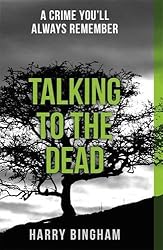
Talking to the Dead by Harry Bingham

I think DC Fiona Griffiths must be one of the most original fictional detectives I’ve come across. She is the creation of Harry Bingham in Talking to the Dead. She is Welsh, single and at the start of the book is aged 26, being interviewed for a job with the South Wales Police in Cardiff. She had a degree from Cambridge where she studied philosophy (a prize winning student). However, there is a problem as she has a two year gap in her CV around the time of her A Levels and she doesn’t want to talk about it. But as Human Resources have passed her OK, she gets a job.
But is she really OK? I soon began to have doubts about that. Four years later she is a detective constable, mainly working on routine details. However, Fiona does not play by the rules and when she is asked to help on the investigation of the brutal murders of Janet Mancini, a part-time prostitute, and April, Janet’s 6 year old daughter she doesn’t hesitate to use her initiative. Her colleagues and her boss think she is odd, although very smart and a quick worker. She is dedicated to her job and whereas DCI Jackson likes the ‘good DC Griffiths’, he’s not so keen on the other one:

The one I ask to do something and that something never seems to get done. Or done after fifteen reminders. Or done in a way that breaks the rules, causes complaints or pisses off your fellow officers. The Griffiths who decides that if something is boring her, she’s going to make a mess of it until she’s moved to something else. (page 52)

Even worse she gets obsessed, throws herself into finding out the truth with no regard for her own safety and without calling for backup, or referring to senior officers. And she’s clearly still suffering from whatever it was that caused the gap in her CV. But on the other hand she is a brilliant researcher and has great instincts and intuition. She focuses on the credit card found at the scene of the murders, fascinated by the fact that it had belonged to a millionaire who had been presumed dead after a plane crash over the sea (his body had never been recovered), convinced it is a vital clue.

There are two strands to the mystery, as alongside the Mancini murders Fiona is investigating ex policeman Brian Penry, a bursar at a Roman Catholic boys’ school, who had stolen money from the school. And there is also a mystery surrounding Fiona and her family, which is only partly revealed at the end of the book.

I really should not have liked this book as much as I did as it’s written in the present tense, solely from Fiona’s viewpoint. But I loved it and in this book was completely at ease with the present tense. It’s also quite strange in parts as we see further into Fiona’s mind; she has difficulty connecting with her feelings and with other people and some of her thoughts and actions are strange and disturbing. Whilst it is not an overtly violent book it is a dark book in places and there is an amount of gruesomeness involved (but I didn’t have to avert my eyes, as it were, or skim read any of the book). I had an idea about Fiona’s trauma, as I’d come across a similar case in another crime fiction novel, but I don’t want to spoil the book for others by saying what it is.

I will most certainly look out for the next book in the series – there are now 5 Fiona Griffiths books and I think these are books that should definitely be read in sequence. The locations are well grounded, there is a definite ‘Welsh’ feel and atmosphere and the characters are well defined. See Harry Bingham’s website for more information about him and his books – he’s written others as well as the Fiona Griffiths books.

  • Paperback: 384 pages
  • Publisher: Orion (28 Mar. 2013)
  • Language: English
  • ISBN-10: 1409137228
  • ISBN-13: 978-1409137221
  • Source: I bought the book

Talking to the Dead is my second book for the 20 Books of Summer Challenge and the 24th for the Mount TBR Reading Challenge, completing the second level.

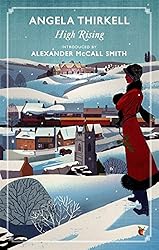
High Rising by Angela Thirkell

This is the first book I’ve read for the 20 Books of Summer Challenge 2016 – and it’s a good one. High Rising by Angela Thirkell has been on my TBR list for 2 years so it also counts for the Mount TBR Reading Challenge. It’s an entertaining and witty social comedy, set in the fictional county of Barsetshire, borrowed from Trollope, in the 1930s, and originally published in 1933.

Laura Morland is a widow with four sons, who supports herself by writing novels, which she knows are not ‘in any sense of the word, literature‘ but which have appeal. She lives at High Rising and her friend, also an author, George Knox and his daughter Sybil live at nearby Low Rising. Her youngest son, Tony, an exasperating character, who talks non-stop about his passion for trains, is still at boarding school, where Laura’s friend, Amy Birkett is the headmaster’s wife. The other main characters are Adrian Coates, Laura’s publisher, Anne Todd, Laura’s part-time secretary, Dr Ford, and Miss Grey, George’s new secretary. Their comfortable lives are disrupted by Miss Grey, who having no relatives she can go to, is on the lookout for a husband.

It began slowly for me and I wondered if I was going to like this book, thinking maybe it would only be a 2, or possibly a 3 star book on the Goodreads rating scale. But it grew on me as I became drawn into the 1930s world of rural England, with its servants and social structure, where everybody knew their place. As Alexander McCall Smith in his introduction writes this is not in ‘Wodehouse territory – Thirkell’s characters do have jobs and they do not spend their time in an endless whirl of silliness.’ By the middle of the book I began to think it was a 4 star book and by the end, even that it was maybe worth a 4.5 star.

As McCall Smith writes:

Affection for social comedy is not something we should have to apologise for, even if that sort of thing is eschewed in the contemporary novel. Such matters may seem unimportant, but they say a lot about human nature. Above all, though, we do not read Angela Thirkell for profundity of emotional experience; we read her for the pleasure of escape – and there is a perfectly defensible niche for escapist fiction in a balance literary diet.

The emphasis is mine – and I like the description:  ‘a balanced literary diet‘, another way of saying that my reading tastes are eclectic.

There are many passages I could quote, but I’ve chosen just a few to give a flavour of the book:

George: If there is one  pleasure on earth which surpasses all others, it is leaving a play before the end. I might perhaps except the joy of taking tickets for a play, dining well, sitting on after dinner, and finally not going at all. That, of course, is very heaven. (page 196)

The sun shone, the cuckoo bellowed from a copse hard by, other birds less easy to recognise made suitable bird noises. In the little wood primroses grew in vulgar profusion, a drift of blue mist showed that bluebells were on the way, glades were still white with wind-flowers. All the trees that come out early were brilliant green, while those that come out later were, not unnaturally still brown, thus forming an agreeable contrast. A stream bordered with kingcups made a gentle bubbling noise like sausages in a frying pan. Nature, in fact, was at it; and when she chooses Nature can do it. (page 211)

(I particularly like the sentence I’ve marked in bold.)

… Adrian proudly explained that if there were more women like Sybil, who knew they couldn’t write, the world would be a better place. (page 220)

This is the first of Angela Thirkell’s books that I’ve read and shall certainly search out more of hers to read. She wrote nearly thirty Barsetshire novels as well as other works of fiction and non-fiction. For more information about her see the Angela Thirkell Society (UK) and the Angela Thirkell Society of North America.

  • Paperback: 288 pages
  • Publisher: Virago; Reissue edition (22 Nov. 2012)
  • Language: English
  • ISBN-10: 1844088839
  • ISBN-13: 978-1844088836
  • Source: I bought the book

Classics Club Spin: the Result

and it is … number 15, which for me is

The Man Who Would Be King by Rudyard Kipling, a novella. That’s fine – I should be able to slot that into my Summer reading without any difficulties before 1 August.

I’ve read some of Kipling’s books before, including The Just So Stories, Kim (I thought I’d read this but I haven’t), Rikki-Tikki-Tavi and his poem If. Then there is, of course, The Jungle Book (seen the film and may have read the book).

My copy is an e-book, which I’ve had for several years, so it will also count towards my Mount TBR Reading Challenge too.