Six Degrees of Separation: from Sanditon to The Lambs of London

I love doing Six Degrees of Separation, a monthly link-up hosted by Kate at Books Are My Favourite and Best. Each month a book is chosen as a starting point and linked to six other books to form a chain. A book doesn’t need to be connected to all the other books on the list, only to the one next to it in the chain.
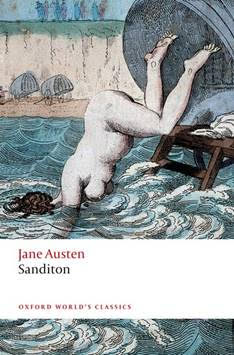
Sanditon

This month the chain begins with December 7, 2019), we’ll begin with Jane Austen’s unfinished manuscript, Sanditon. I read this a few years ago and enjoyed it very much.  It’s the last fiction that Jane Austen wrote, beginning it in January 1817, the year she died. She was ill and the subject of health is one of its themes, but not in a serious or gloomy way. It has a lively, bright and humorous tone, with three of the characters being hypochondriacs, wonderfully satirised by Jane Austen.

My first thought was to link to The Mystery of Edwin Drood, Charles Dickens’ unfinished novel. But I’ve already used it in an earlier Six Degrees post and I don’t like to use the same book twice in these posts, so my first link is to Castle Dor, which Sir Arthur Quiller-Couch had started to write  but had set aside unfinished before his death. His daughter asked Daphne du Maurier to finish it. It retells of the legend of the tragic lovers, Tristan and Isolde, transplanted in time and place to the early 1840s in Cornwall. 

The Last Enchantment by Mary Stewart also retells a legend, that of King Arthur and Merlin. It’s the third book of the Arthurian Saga, a book of myth and legend and about the conflict between good and evil.

My third link is King Arthur in King Arthur’s Bones by the Medieval Murderers, a group of five authors, all members of the Crime Writers’ Association. The book consists of five stories with a prologue and an epilogue tracing the mystery of Arthur’s remains. The legend is that King Arthur is not dead, but sleeping with his knights ready to return to defend his country in a time of great danger. One of the stories is set in the 17th century involving William Shakespeare’s brother Edmund who discovered a long thigh bone and a murder in the Tower of London in one of the compartments of the Lion Tower where the king kept lions and tigers. 

Another of Shakespeare’s brothers, Richard, appears in Fools and Mortals by Bernard Cornwell. It’s 1595 and the players are rehearsing a new play, A Midsummer Night’s Dream. Richard is longing to play a male role, but so far has only been given female roles. There is little brotherly love between the brothers and Richard is tempted to leave the Lord Chamberlain’s Men when Langley, the producer at the Swan in Southwark offers him a job, providing he will steal two of William’s new plays.

This brings me to Peter Ackroyd’s Biography of Shakespeare.  It is full of detail about the theatrical world, how the actors worked, about their patrons and managers, how Shakespeare interacted with other writers, and how his work was received by the public and the monarchy.

And so to my final link, another book by Peter Ackroyd, The Lambs of London, historical fiction based loosely on the lives of Mary and Charles Lamb. It also is a link to Shakespeare as Mary buys  a book from William Ireland, an antiquarian, a book that it is said once belonged to Shakespeare.

My chain is linked by unfinished books, books about legends, Tristan and Isolde and King Arthur, about Shakespeare and his brothers and books by Peter Ackroyd. It includes both crime and historical fiction and a biography.

Next month ( 4 January 2020), we’ll begin with Daisy Jones and The Six by Taylor Jenkins Reid, a book I’ve never heard of before. 
My Friday Post: Murder in the Afternoon by Frances Brody

Book Beginnings Button

Every Friday Book Beginnings on Friday is hosted by Gillion at Rose City Reader where you can share the first sentence (or so) of the book you are reading, along with your initial thoughts about the sentence, impressions of the book, or anything else the opener inspires.

Murder in the afternoon

Murder in the Afternoon by Frances Brody is the 3rd Kate Shackleton Mystery. It begins with a Prologue dated Saturday 12 May 1923 Great Applewick:

Harriet held the cloth-covered basin in her thin hands, feeling the warmth.

followed by Chapter One dated Monday at Pipistrelle Lodge, Headingly:

The railway carriage lurched, flinging me forward. Bolts of lightning  struck as the carriage toppled. Gasping, I grabbed for something to hold onto. The screech of brakes jerked me awake. I opened my eyes to find myself in bed, the journey from Kings’ Cross to Leeds completed hours ago, and safely.

Also every Friday there is The Friday 56, hosted by Freda at Freda’s Voice.

30879-friday2b56These are the rules:

  1. Grab a book, any book.
  2. Turn to page 56, or 56% on your eReader. If you have to improvise, that is okay.
  3. Find any sentence (or a few, just don’t spoil it) that grabs you.
  4. Post it.
  5. Add the URL to your post in the link on Freda’s most recent Friday 56 post.

Page 56:

‘Won’t you at least cordon off the mason’s hut, in case this does turn out to be a murder enquiry?’

Blurb:

Dead one minute …

Young Harriet and her brother Austin have always been scared of the quarry where their stonemason father works. So when they find him dead on the cold ground, they scarper quick smart and look for some help.

Alive the next …

When help arrives, the quarry is deserted and there is no sign of the body. Were the children mistaken? Is their father not dead? Did he simply get up and run away?

A sinister disappearing act …

It seem like another unusual case requiring the expertise of Kate Shackleton. But for Kate this is one case where surprising family ties makes it her most dangerous yet – and delicate – yet …

~~~

I’ enjoyed the first two Kate Shackleton Mysteries, set in Yorkshire in the early 1920s and two of the later books as well. There are 11 in the series, plus Kate Shackleton’s First Case and the 12th book coming in October 2020.

Have you read any of these books? Do let me know.

WWW Wednesday: 27 November 2019

IMG_1384-0

WWW Wednesday is run by Taking on a World of Words.

The Three Ws are:

What are you currently reading?
What did you recently finish reading?
What do you think you’ll read next?

a beautiful corpse

Currently I’m reading A Beautiful Corpse, crime fiction by Christi Daugherty, set in Savannah, Georgia. A beautiful law student has been killed and three men close to the victim are questioned. All of them claim to love her. All of them say they are innocent of her murder.  As journalist Harper McClain unravels a tangled story of obsession and jealousy, the killer turns his focus onto her. I’ve read over half the book and it is growing on me – I’m enjoying it more and more as I read on.
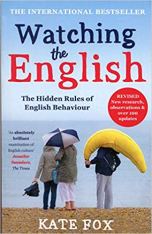
Watching the EnglishI’m also reading Watching the English by Kate Fox, a nonfiction book about the ‘Hidden Rules of English Behaviour’. I’ve only just started reading and so far it is really interesting as the author sets out her parameters and defines what she considers to be  ‘Englishness’ and why it is different from ‘Britishness’, which I think is a very tricky question and one that I have been puzzling over for years.

She refers in some instances to Jeremy Paxman (and I see from the index there are several references to him in this book) and she lists his book The English: A Portrait of a People, which I read about 5 years ago. I decided from reading his book that I didn’t really feel any clearer about what is is to be ‘English’ and it seemed there really is no such thing as ‘the English’ – we’re a mixture of all sorts, or as Paxman puts it, The English are a mongrel race‘. (page 59)

Furious hours

I’ve recently finished Furious Hours: Murder, Fraud, and the Last Trial of Harper Lee by Casey Cep, a nonfiction book about Willie Maxwell, an Alabama serial killer and the true-crime book that Harper Lee worked on obsessively in the years after To Kill a Mockingbird. I found this a fascinating book and posted my review yesterday

As for my next book I don’t know right now. I’m torn between wanting to read several, including A Pinch of Snuff by Reginald Hill, the 5th Dalziel and Pascoe novel, A Lovely Way to Burn by Louise Welsh, the 1st in her Plague Trilogy, Go Set A Watchman by Harper Lee and In Cold Blood by Truman Capote (the last two as I’ve just finished reading Furious Hours).

Have you read any of these books?  Do any of them tempt you? 

My Friday Post: Northern Lights by Philip Pullman

Book Beginnings Button

Every Friday Book Beginnings on Friday is hosted by Gillion at Rose City Reader where you can share the first sentence (or so) of the book you are reading, along with your initial thoughts about the sentence, impressions of the book, or anything else the opener inspires.

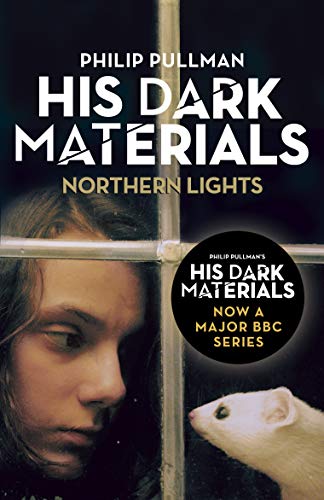
I’ve been watching the BBC One adaptation of His Dark Materials by Philip Pullman, which has made me pick up the first book in the trilogy, Northern Lights. I first read it several years ago but seeing the first two episodes has made me want to re-read it.

Pullman Northern Lights

Lyra and her dæmon moved through the darkening Hall, taking care to keep to one side, out of sight of the kitchen.

Also every Friday there is The Friday 56, hosted by Freda at Freda’s Voice.

30879-friday2b56These are the rules:

  1. Grab a book, any book.
  2. Turn to page 56, or 56% on your eReader. If you have to improvise, that is okay.
  3. Find any sentence (or a few, just don’t spoil it) that grabs you.
  4. Post it.
  5. Add the URL to your post in the link on Freda’s most recent Friday 56 post.

Pages 55-56:

“What is them Gobblers?” said Simon Parslow, one of Lyra’s companions.

The first gyptian boy said, “You know. They been stealing kids all over the country. They’re pirates -”

“They en’t pirates,” corrected another gyptian. “They’re canniboles. That’s why they call ’em Gobblers.”

“They eat kids?” said Lyra’s other crony Hugh Lovat, a Kitchen boy from St Michael’s.

“No one knows,” said the first  gyptian. “They take them away and they en’t never seen again.”

Blurb:

‘Without this child, we shall all die.’

Lyra Belacqua lives half-wild and carefree among the scholars of Jordan College, with her dæmon, Pantalaimon, always by her side.

But the arrival of her fearsome uncle, Lord Asriel, draws her to the heart of a terrible struggle – a struggle born of stolen children, witch clans and armoured bears.

As she hurtles towards danger in the cold far North, Lyra never suspects the shocking truth: she alone is destined to win, or to lose, the biggest battle imaginable.

~~~

It’s compelling reading, both in terms of storyline (with many parallel worlds) and in terms of ideas.

Are you watching His Dark Materials too? Have you read the books? Do let me I know.

My Friday Post: The Greatcoat by Helen Dunmore

Book Beginnings Button

Every Friday Book Beginnings on Friday is hosted by Gillion at Rose City Reader where you can share the first sentence (or so) of the book you are reading, along with your initial thoughts about the sentence, impressions of the book, or anything else the opener inspires.

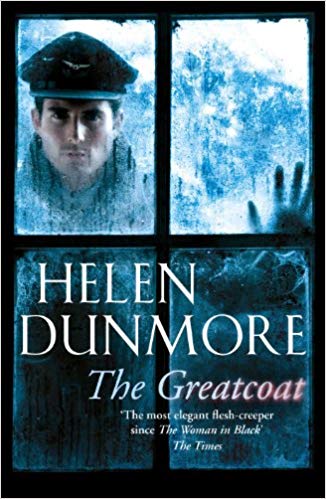
Greatcoat

The library van visit was on Tuesday this week and The Greatcoat by Helen Dunmore caught my eye because ever since I read her last book, Birdcage Walk I have been wanting to read more of her books. 

The description on the back cover:

It is the winter of 1952, and Isabel Carey  is struggling to adjust to the realities of married life in Yorkshire.

Isolated and lonely, she is also intensely cold. And her husband – a doctor – is rarely at home. And then one night, she discovers an old RAF greatcoat in the back of a cupboard. She puts it on for warmth – and is startled by a knock at her window.

Outside is a young man. A pilot. And he wants to come in …

Chapter One

1952

Isabel sat back on her heels and watched flames spring up in the grate. They were pale and there was no heat in them. She was cold, she was tired, her back ached and her eyes stung – from the smoke of course. But at least the fire was lit.

Also every Friday there is The Friday 56, hosted by Freda at Freda’s Voice.

30879-friday2b56These are the rules:

  1. Grab a book, any book.
  2. Turn to page 56, or 56% on your eReader. If you have to improvise, that is okay.
  3. Find any sentence (or a few, just don’t spoil it) that grabs you.
  4. Post it.
  5. Add the URL to your post in the link on Freda’s most recent Friday 56 post.


Pages 55-56:

There was a man outside the window. She saw the pallor of his face first, as it seemed to bob against the glass, too high up to belong to a man who had his feet on the ground.

I want to know more – do you too?

Six Degrees of Separation: from Alice’s Adventures in Wonderland to Strong Poison

I love doing Six Degrees of Separation, a monthly link-up hosted by Kate at Books Are My Favourite and Best. Each month a book is chosen as a starting point and linked to six other books to form a chain. A book doesn’t need to be connected to all the other books on the list, only to the one next to it in the chain.

Alice Carroll

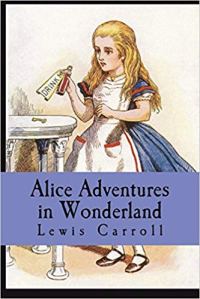
This month the chain begins with Alice’s Adventures in Wonderland by Lewis Carroll– a book I read as a child and loved. 

I was tempted to make my first link to Through the Looking Glass, Carroll’s follow-up book, or another of the books I loved as a child, but instead I chose:

Malice in wonderland

Malice in Wonderland by Nicholas Blake. In this Golden Age mystery Wonderland is a holiday camp, set on a cliff top overlooking the sea and there are several allusions to Lewis Carroll’s Alice’s Adventures in Wonderland. The train to Wonderland plunges into a tunnel, just as Alice falls down a rabbit hole and finds herself in Wonderland. And there is a prankster in the camp, the self-styled ‘Mad Hatter’, who is playing nasty and cruel practical jokes on the holiday makers. One of the visitors is Paul Perry, a young man who calls himself a scientist, who is there taking notes for the Mass Observation project.

Our Longest days

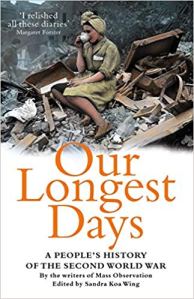
Mass Observation is my second link.  In August 1939, with war approaching, the Organisation asked its panel to keep diaries to record their daily lives and selections from fifteen of these diaries are included in Our Longest Days: A People’s History of the Second World War edited by Sandra Koa Wing.  

Testament of youth

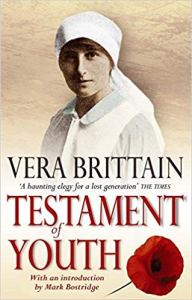
Diaries provide the next link – Testament of Youth by Vera Brittain is based on her diaries, telling of her life up to 1925, concentrating on the World War One years. Vera was a VAD (Voluntary Aid Detachment) during the war, nursing casualties both in Britain and France.

AC Autobiography

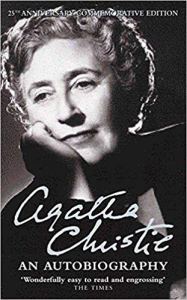
Agatha Christie was also a VAD member during World War One. In 1917 she worked in a hospital dispensary in Torquay and studied to take her Apothecaries Hall examination so she could dispense for a medical officer or a chemist. In her Autobiography she wrote that it was whilst she was working in the dispensary that she first thought of writing a detective story. Surrounded by poisons she decided it should be about a murder by poisoning.

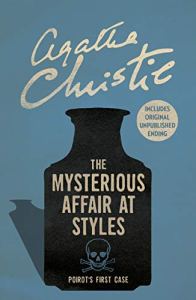
Mysterious Affair at Styles

So my fifth link is to the first detective story she wrote The Mysterious Affair at Styles. It is set during the First World War I at Styles Court, a country house in Essex, owned by the very wealthy Mrs Inglethorp, who dies from strychnine poisoning. Captain Hastings enlists the help of Poirot, who is living in the village of Styles St Mary with other Belgian refugees, to investigate the matter.

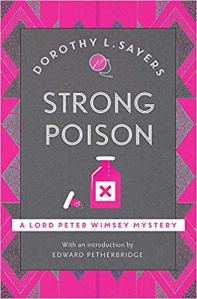
Strong Poison

And my final link is Strong Poison by Dorothy L Sayers. Lord Peter Wimsey, the aristocratic amateur detective, and Harriet Vane, a crime fiction writer, first met in this murder mystery. Harriet is on trial for the murder of her former lover, Philip Boyes, who died from arsenic poisoning. Wimsey, attending the trial, is convinced she is innocent and sets out to prove it … and falls in love with her. 

My chain is linked by books about Wonderland, the Mass Observation project, diaries VADs and poison. It passes from fantasy land through the World War One years, and back into the world of fiction. It includes crime fiction and non-fiction.

Next month (December 7, 2019), we’ll begin with Jane Austen’s unfinished manuscript, Sanditon.