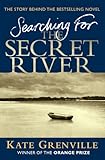
Searching for The Secret River by Kate Grenville

Searching for the Secret River is Kate Grenville’s account of how she came to write The Secret River. Her interest began with her great-great-great grandfather, Solomon Wiseman,who was the original ferryman at Wiseman’s Ferry. Her mother had told her stories about him, but she wanted to know more about what he was like and what he might have done when he first encountered Aboriginal people.

It is a fascinating book detailing how she went about her research into family history and how she imagined his life from facts gleaned from the records and the places he had lived.

She writes about reading. As a short-sighted child reading was her whole life:

I read in the bath, I read on the toilet, I read under the desk at school, I read up in my tree house, feeling the branches of the jacaranda swell and subside under me.

I can identify so well with this. I was a short-sighted child and read everywhere too, walking round the house, in bed under the covers with a torch when I should have been asleep, all the places Kate Grenville read, although not in a tree house – I would have loved a tree house!

She writes about writing. As a writer she couldn’t help examining how other writers went about their writing – seeing how books had been made. One book that helped her with writing The Secret River is Anil’s Ghost by Michael Ondaatje, a novel based on historical events in which some of the characters are apparently versions of real people. She had come to the point in her book where she had written lots of notes, forty-seven folders of notes!! So she made lists to try to organise her writing and then began just writing scenes and descriptions of various aspects – about London and Sydney, the convict system, and what she called ‘elements of memoir.’ But she thought that lots of her writing was dry and dead.

Reading Anil’s Ghost, however she realised that she had to take herself out of the book and find a character to carry out the search for the story of Wiseman and his dealings with the Aboriginal people. To do this she had to see the scenes before she could write them:

The hard part of the writing wasn’t finding the words – they seemed to come reasonably easily. If they started to come reluctantly, I stopped writing and began with something else. The hard part was finding the picture. Once I could see and hear the moment, I could write it.

In her first draft some parts were in the first person, some in the third person, but always from Wiseman’s point of view. The first-person point of view seemed right but then she decided that that didn’t match Wiseman’s character and there were things she wanted the book to say that Wiseman couldn’t say – about the Aboriginal culture for one thing. So, it had to be in the third person, but the ‘third person subjective’ – ‘from Wiseman’s point of view but only partly in his voice.’

There is so much in this book – the research, the notes, the descriptive passage, the numerous drafts, finding the right voices, the characters, identifying the central drama of the novel, the right eighteenth century names, developing Wiseman into a character, renaming him William Thornhill and building a picture of the Thornhill family. Then the dialogue had to be right, to be convincing. She listened to a recording of Robert Browning, went through transcripts of Old Bailey trials, looked at how Dickens, Defoe and other writers put words into their characters’ mouths.She remembered her mother’s and grandfather’s sayings, phrases and idioms. In the end she decided that she wouldn’t try

to reconstruct the authentic sound of nineteenth century vernacular. My job was to produce something that sounded authentic. … I read all the dialogue aloud. If anything hit a false note, it was obvious straight away. This was a bad one for example: ‘That bit of land, he said. Remember, I told you. We’ll lose it if we don’t move soon.’

This sounded terribly drawing-room. I muddied it up: ‘that bit of land, he said. Remember he telled you. We’ll miss out if we don’t grab it.’

She deleted large sections of dialogue.

The whole book is compelling reading, not just because it’s about how she wrote the book and the enormous amount of work she put into research, but also because in itself it paints a picture of life in London in the late eighteenth century and Australia in the early years of settlement in the early nineteenth century. I was captivated from start to finish.

A Time of Gifts by Patrick Leigh Fermor

I read A Time of Gifts by Patrick Leigh Fermor a few weeks ago and have been mulling it over ever since. It began so well and I thought it was one of those books I was going to love. And then there are later passages which are so tedious and hard work to read, so full of dry facts and arcane words that I began to wonder why I was reading any further. But I did and then the writing swept me away and I became engrossed in the book again.

My reaction, I think, is to the two sides of this book, in which Patrick Leigh Fermor describes his travels on foot in 1933 from the Hook of Holland through Germany, to Austria, Slovakia and Hungary, on his way to Constantinople. (He continued his journey in Between the Woods and the Water, which describes his experiences up to the Iron Gates border between Rumania and Bulgaria.) The two sides are because he wrote this book in later life so his direct experiences and reactions are intermingled with the results of his later research and with the benefit of hindsight. I prefer the immediacy of his earlier writings taken from the diaries he kept along the way, bringing the countryside to life and recounting his encounters with the local people.

There are passages like the one below where he linked his journey to painting:

When no buildings were in sight, I was back in the Dark Ages. But the moment a farmhouse, or a village impinged, I was in the world of Peter Brueghel. The white flakes falling beside the Waal – or the Rhine or the Neckar or the Danube – and the zigzag gables and the muffled roofs, were all his. The icicles, too, and the trampled snow, the logs piled on the sledges and the peasants stooped double under loads of faggots. … When the wintry light crept dimly from slits close to the horizon or an orange sun was setting through the branches of a frozen osier-bed, the identity was complete.

In the end I scan read page after page of detailed descriptions of churches, of sociological, political or historical people and places.  I was too impatient to read all those details and I was reading the book too quickly. It’s a book to take your time with, to read a section, put the book down and come back to it later – and I didn’t do that, I swallowed it down with the result that parts were indigestible.

In a way his journey was a gilded experience as he had introductions to people in different places – people who gave him a bed for the night, or longer stays. There were also people who didn’t know him who welcomed him into their homes as a guest – as the title says it was a time of gifts. It was the period when Hitler came to power in Germany:

Appalling things had happened since Hitler had come into power ten months earlier: but the range of horror was not yet fully unfolded. In the country the prevailing mood was a bewildered acquiescence. Occasionally it rose to fanaticism.

But whereas not everyone liked the English there were some who did:

I answered many earnest questions about England: how lucky and enviable I was, they said, to belong to that fortunate kingdom where all was so just and sensible. The allied occupation of the Rhineland had come to an end less than ten years before, and the British, she said, had left an excellent impression.

Overall, I did enjoy this book. There are many passages so vividly described that I can remember them now weeks later – the vision of this young man, nearly nineteen years old striding through the German countryside reciting Shakespeare, in a loud voice and accompanied with gestures, sword thrusts, a staggering gait and with his arms upflung, looking as though he was drunk, or a lunatic. Then there was the time in Vienna when the money he was expecting hadn’t arrived and Konrad, a Don Quixote type character, took him round to a block of flats and encouraged him to knock on doors asking if the occupants wanted to pay him for a sketch of themselves.

In fact even with the dull passages, I liked this book well enough to buy the second book by Fermor Leigh, Between the Woods and the Water and I see that a third book is to be published later this year – The Broken Road, completing the account of his journey to Constantinople.

Following his walk across Europe, Patrick Leigh Fermor (1915-2011) lived and travelled in the Balkans and Greek Archipelago. He joined the Irish Guards and during the occupation of Crete led the party that captured the German commander. He was awarded the DSO and OBE.

Saturday Snapshot

This is the Flodden Visitor Centre. It’s in a former telephone box in the village of Branxton in Northumberland. Flodden Visitor Centre P1080503It claims to be the smallest visitor centre in the world:

Flodden Visitor Centre P1080499

It’s part of the commemoration of the Battle of Flodden which took place 500 years ago in September between the English and Scottish armies in the fields near Branxton.

Flodden Visitor Centre P1080501Inside there is a map showing the routes of the two armies and indicating several sites related to the battle. There are leaflets and even a button to press the hear about the battle.

If you are in London on 14 May you can get tickets for a lunchtime lecture on the Battle of Flodden 1513 by historian Clive Hallam Baker at the Tower of London. He is the author of The Battle of Flodden: Why and How.

Other books about Flodden, with links to my reviews:

Fiction:

Non fiction:

  •  Flodden: the Scottish Invasion of Henry VIII’s England by Nigel Barr
  • New Light on Floddon (sic) by Gerard F T Leather – I have not written about this short book published in 1938, which Leather, a member of the Berwickshire Naturalists’ Club had written after studying the battle for a talk. As he explained there were actually four distinct fights going on a more or less the same time and the old name of the battle was that of Branxton Moor, a more correct title, in his opinion, as the battle scene was a mile and a half from Flodden.

For more Saturday Snapshots see Alyce’s blog At Home With Books.

Turn of the Century Salon: March

Turn of the Century Salon

The Turn of the Century Salon, is a monthly literary event where you can share recent posts related to literature or authors from the 1880s-1930s. One of Katherine’s suggestions for this month’s post is to find a work of art or music within the same time-period that reflect the book and share it.

After reading Siegfried Sassoon’s Memoirs of a Fox-Hunting Man I decided to read more of his works, including his poetry and bought The War Poems of Siegfried SassonWorld War One British Poets: Brooke, Owen, Sassoon, Rosenberg and Others, edited by Candace Ward. I’ve also borrowed Sassoon’s Memoirs of an Infantry Officer and Siegfried Sassoon: a Biography by Max Egremont and am slowly reading through these.

I’m familiar with some of the World War One war poets, such as Rupert Brooke (The Soldier – ‘If I should die, think only this of me: That there’s some corner of a foreign field That is forever England), Wilfred Owen (Dulce et Decorum Est), and Thomas Hardy (Channel Firing) and so on, but I hadn’t read any of Sassoon’s poems.

They are satires condemning the war. Sassoon described his poems such as The One-Legged Man as “satirical drawings”, which he intended to “disturb complacency”. Here is his poem In the Pink

So Davies wrote: ‘ This leaves me in the pink. ‘
Then scrawled his name: ‘ Your loving sweetheart Willie ‘
With crosses for a hug. He’d had a drink
Of rum and tea; and, though the barn was chilly,
For once his blood ram warm; he had pay to spend,
Winter was passing; soon the year would mend.

He couldn’t sleep that night. Stiff in the dark
He groaned and thought of Sundays at the farm,
When he’d go out as cheerful as a lark
In his best suit to wander arm-in-arm
With brown-eyed Gwen, and whisper in her ear
The simple, silly things she liked to hear.

And then he thought: to-morrow night we trudge
Up to the trenches, and my boots are rotten.
Five miles of stodgy clay and freezing sludge,
And everything but wretchedness forgotten.
To-night he’s in the pink; but soon he’ll die.
And still the war goes on; he don’t know why.

Looking for more information about this poem I found this description in Siegfried Sassoon: a Study of the War Poetry by Patrick Campbell (page 94):

‘The first of my outspoken’ war poems.  I wrote it one cold morning at Morlancourt, sitting by the fire in the Quartermaster’s billet, while our Machine-Gun Officer shivered in his blankets on the floor.  He was suffering from alcoholic poisoning, and cold feet, and shortly afterwards departed for England, never to return.  Needless to say, the verses do not refer to him, but to some typical Welshman who probably got killed on the Somme in July, after months and months of a dog’s life and no leave.  The Westminster refused the poem, as they thought it might prejudice recruiting!!’

Reading Sassoon’s war poems brings home the horrors of war, the deaths, the devastating injuries and the appalling indifference of the war leaders and the lack of understanding of the people back home.

Similarly some works of art were considered controversial and not suitable for public viewing. Such a painting is Paths of Glory by Christopher Nevinson showing the corpses of two dead British soldiers lying face down in the mud among barbed wire behind the Western Front. Their helmets and rifles lie in the mud next to them.

Paths of Glory by Christopher Nevinson 1917 Oil on Canvas Collection: © Imperial War Museum

This painting is held in the Imperial War Museum website. Its description is:

“The title is a quote from ‘Elegy Written In A Country Church-Yard’ by Thomas Gray. ‘The boast of heraldry, the pomp of pow’r, And all that beauty, all that wealth e’er gave, Awaits alike th’inevitable hour. The paths of glory lead but to the grave.‘ Whereas the poet reflects on bodies dead and buried in a church-yard, the so-called ‘Paths of Glory‘ have led these soldiers to death in a wasteland.

Paths of Glory‘ was famously censored by the official censor of paintings and drawings in France, Lieutenant – Colonel A N Lee. His concern presumably being the representation of the rotting and bloated British corpses at this stage in the war. The decision was confirmed three months before the opening of his exhibition at the Leicester Galleries in 1918 but Nevinson still included the painting with a brown paper strip across the canvas, blatantly inscribed with the word ‘censored’. As a result, Nevinson was reprimanded for exhibiting a censored image and for the unauthorised use of the word €˜censored’ in a public space. Predictably, the stunt created the publicity Nevinson desired. The painting was purchased by the Museum during the course of the exhibition.”

This was the ‘war to end war’! The pity is that it didn’t.

Memoirs of a Fox-Hunting Man by Siegfried Sassoon

Turn of the Century Salon

Memoirs of a Fox-Hunting Man by Siegfied Sassoon is a perfect choice for the Turn of the Century Salon. It’s the first part of his fictionalised autobiography. The other two books in his trilogy are Memoirs of an Infantry Officer and Sherston’s Progress.

The Book

Fox-Hunting 001

Siegfried Sassoon was born in 1886 and in Memoirs of a Fox-Hunting Man he relives his childhood, youth and experiences as an officer during the First World War. He wrote it in 1928, ten years after the War had ended, calling himself George Sherston. Life for young George/Siegfried was almost idyllic, living in the country as part of the privileged upper class, although his lifestyle exceeded his income. His aunt’s groom, Dixon, taught him to ride and introduced him to the fox-hunting world. At first Siegfried’s sympathies were with the fox and, at one of his first hunts, on spotting a fox he was alarmed so much that when his companion shrieked ‘Huick-holler’ (meaning the fox has been seen) he uttered the words ‘Don’t do that; they’ll catch him.’

Sassoon paints a beautiful picture of the English countryside and country life at the turn of the century. In the passage quoted below he wakes early on the morning of the local village flower show, looking forward to playing in the Flower Show Cricket Match:

When I unlocked the door into the garden the early morning air met me with its cold purity; on the stone step were the bowls of roses and delphiniums and sweet peas which Aunt Evelyn had carried out there before she went to bed [in preparation for the Flower Show]; the scarlet disc of the sun had climbed an inch above the hills. Thrushes and blackbirds hopped and pecked busily on the dew-soaked lawn, and a pigeon was cooing monotonously from the belt of woodland which sloped from the garden toward the Weald. Down there in the belt of river-mist a goods train whistled as it puffed steadily away from the station with a distinctly heard clanking of buffers. How little I knew of the enormous world beyond that valley and those low green hills. (page 53)

The first part of the book is carefree, as Siegfried passes through his school years and time at Cambridge University, which he left before completing his degree. Not a lot happens. His life, despite his lack of funds was a seemingly endless round of riding and hunting. He describes his friends and fox-hunting companions with affection and realism – the old country gentlemen, the benevolent gentry, the newly rich and the dare-devil younger riders, who were ‘reckless, insolent, unprincipled and aggressively competitive; but they were never dull, frequently amusing, and, when they chose, had charming manners.’ (page 235)

Siegfried, himself comes across as a likeable young man, shy, reserved, and modest, happy-go-lucky but aware of his own shortcomings.

All this changed with the onset of the First World War. He enlisted and was eventually posted to France, where because of his connections and abilities, he was appointed as a Transportation Officer stationed behind the trenches and the Front Line. But war brought him face to face with the grim realities of life and death. At first he was philosophical about the War – it seemed ‘inevitable and justifiable. Courage remained a virtue.’ But writing in 1928 he considered:

And that exploitation of courage, if I may be allowed to say a thing so obvious, was the essential tragedy of the War, which as everyone now agrees, was a crime against humanity. (page 256)

He sees men under his command die and suffer appallingly, his friends die, and Dixon his former groom who had enlisted died of pneumonia. Whilst home on leave as he talked to an old friend of Dixon’s he realised the past had gone …

  • Paperback: 320 pages
  • Publisher: Faber and Faber; 2nd edition (31 Jan 1974)
  • Language: English
  • ISBN-10: 057106454X
  • ISBN-13: 978-0571064540
  • Source: library book

The Author

Siegfried Sassoon 1915 (from Wikipedia)

Sassoon is one of the of the War Poets. Unlike others, such as Rupert Brooke, he survived the War. He came to the conclusion that the war was being needlessly prolonged. In 1917 he wrote a protest to his commanding officer. Its impact was reduced because rather than facing a court martial he was tried by a medical board and was judged to be suffering from severe shell shock. His account of the ruling is in the second part of his trilogy Memoirs of an Infantry Officer (1931). He was sent to Craiglockhart military hospital where he met Wilfred Owen, also one of the War Poets. It was in the hospital that Sassoon published some of his war poems. I’ll write more about those in another post and also more about his life when I’ve read Siegfried Sassoon: a biography by Max Egremont (which I’ve reserved at the library). In his later years he wrote The Old CenturyThe Weald of Youth andSiegfried’s Journey, three volumes of non-fictionalised autobiography.

January's Books

If you look at how many books I read in January it doesn’t look as though I did much reading with just 4 books completed. I usually average about 8 books a month! But that statistic is misleading because I’ve read just as much if not more than usual because of the length of the books.

Jaunary 2013

I began reading Wild Swans:Three Daughters of China by Jung Chang last year but by January I’d only read less than a quarter of it, so I began January by reading the rest of the book, which took me up to the middle of the month. Wild Swans is an amazing book (720 pages). I wrote about it in this post.It’s a harrowing book to read, but it’s also an eye-opener (for me at any rate) about what happened in China under Mao. It’s a personal story, reflecting the twentieth century history of China. A remarkable book, full of courage and spirit.

I read just one crime fiction – The Case of the Curious Bride by Erle Stanley Gardner (from TBR books). I was disappointed really with this Perry Mason book and didn’t think it was as good as other books by him that I’ve read.

Next was Deaf Sentence by David Lodge, which I liked but didn’t love. Unlike the reviewer in the Literary Review (quoted on the back cover) I didn’t find it had ‘many laugh-out-loud moments‘, just a few amusing bits that made me smile. But is it a moving and at times melancholy book.

In a much lighter vein, although sad in parts is Paw Tracks at Owl Cottage by Denis O’Connor, which I read on my Kindle. It chronicles O’Connor’s experiences with four more cats, all Maine Coons, at his Northumberland cottage.

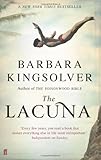
So, not a large number of books but a lot of reading, because I’ve also been reading Barbara Kingsolver’s The Lacuna, another long book which I’ve finished this morning. I suppose that goes under February’s books!