Victoria: A Life by A. N. Wilson

I finished reading Victoria: A Life at the end of January with a sense of sadness that it was over – I’d been reading it for three months and I have learned so much and enjoyed it immensely. Victoria was 81 when she died and had been Queen for nearly 64 years, from 1837 to 1901. She’d had 9 children and was grandmother of 42.

A. N. Wilson’s biography of Victoria is masterful, detailed and like all good biographies is well researched and illustrated, with copious notes, an extensive bibliography and an index. He had access to the Royal Archives and permission from Her Majesty Queen Elizabeth II to quote from materials in royal copyright. He portrays her both as a woman, a wife and mother as well as a queen set against the backdrop of the political scene in Britain and Europe.

Whilst I was reading I wrote three posts about different aspects of the book that interested me at the time – one on my thoughts soon after I started reading the biography, one on Christmas at Windsor in 1860 and one on Victoria and John Brown.

And now I’ve finished it I’m not sure what to write about it. It has fascinated me and surprised me. It surprised me because it is so extensive, with so much about her involvement in the politics of the time. It has made me want to know more about so many of the people – such as Lord Melbourne, Gladstone, who she disliked so much that when he stayed at Balmoral she wouldn’t speak to him, Disraeli who she liked very much and of course her beloved Albert.

I think A.N.Wilson himself sums it up best in this quotation:

‘Writing about Queen Victoria has been one of the most joyous experiences of my life. I have read thousands (literally) of letters never before published, and grown used to her as to a friend. Maddening? Egomaniac? Hysterical? A bad mother? Some have said so. What emerged for me was a brave, original woman who was at the very epicentre of Britain’s changing place in the world: a solitary woman in an all-male world who understood politics and foreign policy much better than some of her ministers; a person possessed by demons, but demons which she was brave enough to conquer. Above all, I became aware, when considering her eccentric friendships and deep passions, of what a lovable person she was.’ A. N. Wilson

and in the last paragraph of the book he wrote of Victoria’s greatness and the awe awe she inspired:

The awe is for Queen Victoria the woman. Step over the carpet to that plump little figure that sits at her table, state papers or a Hindustani grammar open in front of her, the Munshi or Princess Beatrice at her side. You are approaching someone of great kindliness, someone of a far sharper intelligence than you would have guessed, and someone who – contrary to the most tedious of all the clichés about her – was easily amused. but you are also, if you have your wits about you, more than a little afraid. You are in the presence of greatness. (page 575)

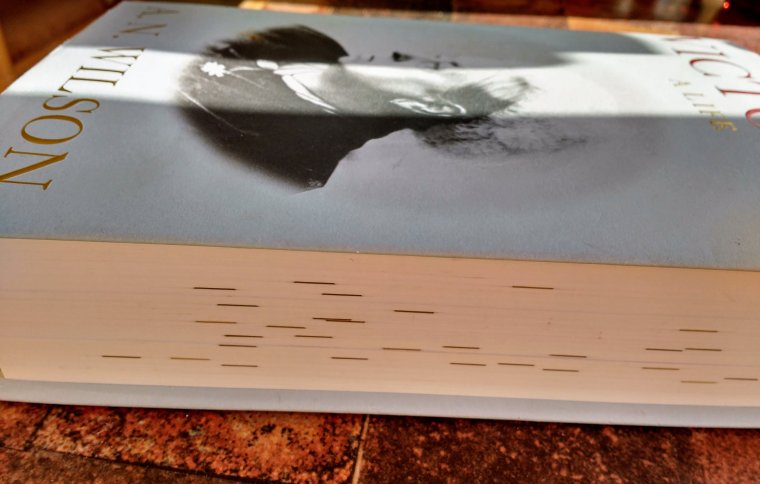
This was going to be my last post about the book, but I have placed so many markers in places of interest to me as I read that I think I may do at least one more just of passages that I’d like to remember.

IMG_20180215_101313191_HDR.jpg

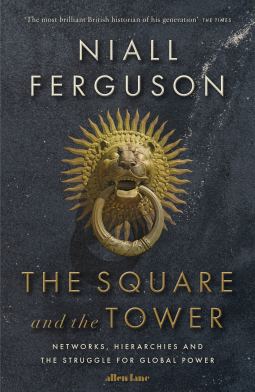
The Square and the Tower by Niall Ferguson

Published: Penguin Books (UK), 5 October 2017, 535 pages

Source: review copy from the publishers via NetGalley

My Rating: 2*

Blurb:

What if everything we thought we knew about history was wrong? From Niall Ferguson, the global bestselling author of Empire, The Ascent of Money and Civilization, this is a whole new way of imagining the world.

Most history is hierarchical: it’s about popes, presidents, and prime ministers. But what if that’s simply because they create the historical archives? What if we are missing equally powerful but less visible networks – leaving them to the conspiracy theorists, with their dreams of all-powerful Illuminati?

The twenty-first century has been hailed as the Networked Age. But in The Square and the Tower Niall Ferguson argues that social networks are nothing new. From the printers and preachers who made the Reformation to the freemasons who led the American Revolution, it was the networkers who disrupted the old order of popes and kings. Far from being novel, our era is the Second Networked Age, with the computer in the role of the printing press. Once we understand this, both the past, and the future, start to look very different indeed.

My thoughts:

Subtitled ‘Networks, Hierarchies and the Struggle for Global Power‘, this is described as ‘a whole new way of imagining the world’ as it’s possible that we’re missing information about networks because it’s not recorded in historical archives. But what I found in this book is rather different, being a run through history in what seemed to me a disjointed way, albeit very detailed, with network diagrams and many footnotes. I found parts of it quite tedious, especially the early section detailing the research on the history of networking. If I hadn’t requested the book from NetGalley I would have not bothered reading any more. Fortunately I found some sections were more interesting (such as on such varied topics as social media, the Illuminati, the Reformation, European Royal families, the Cambridge spies, Al Qaeda, ISIS and Trump to name but a few) and I did finish the book.

Ferguson states that his book seeks to learn about the future mainly by studying the past, in particular by looking at the importance of networks in the past that had been at times very powerful. But by the end of the book I didn’t feel too enlightened in that respect as often the distinction between hierarchies and networks is blurred – there are networks that are hierarchical and hierarchies that are parts of wider networks. As Ferguson acknowledges, the dichotomy between hierarchy and network is an over-simplification.

I requested this book when I saw it on NetGalley because history is a subject that I find fascinating, and the blurb interested me. However, although there are sections that I did find interesting, mainly those written as conventional narrative history, overall I was disappointed. I think it is disjointed with sections that don’t seem to me to have much connection with the main theme, overstretching the analogy. To summarise – I don’t think such theoretical historical analysis is for me.

My thanks to the publishers and NetGalley for a review copy.

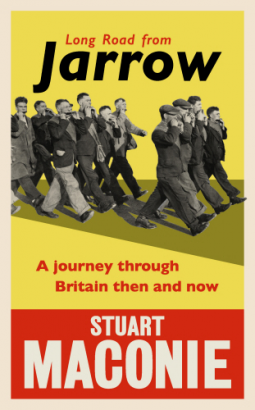
Long Road from Jarrow: A journey through Britain then and now by Stuart Maconie

I knew of the Jarrow March/Crusade in 1936, but not much about it beyond the fact that men from Jarrow in Tyneside marched from their home town to London to present a petition against the mass unemployment and extreme poverty in the north-east of England. Stuart Maconie has filled in the gaps in his excellent book Long Road from Jarrow: A journey through Britain then and now. In October last year he retraced the route they took, 300 miles, comparing what conditions and attitudes were like in 1936 with those of 2016. The men were accompanied for part of their march by Ellen Wilkinson, who was the MP for Middlesbrough East and it was Ellen who presented their petition to the House of Commons. But despite their protest and all Ellen Wilkinson’s efforts on their behalf it didn’t result in any improvements for employment in Jarrow.

Maconie a writer, broadcaster and journalist, writes fluently and with conviction. The Long Road from Jarrow is a mix of travel writing, social and cultural history and political commentary, with the main emphasis on the current social, cultural and political scene. It’s a thought-provoking book that both entertained and enlightened me. Maconie writes about the past, the history of the places he walked through and the tales and reminiscences of the people he met. He also writes with enthusiasm on such topics as football and music and food. It’s a lively, chatty account that includes the thorny topic of Brexit, the current and past state of the north/south divide and considers what it is to be ‘British’.

I was fascinated and thoroughly enjoyed this walk through England, past and present. My copy is an ARC from the publishers via Netgalley.

  • Format: Kindle Edition
  • File Size: 1617 KB
  • Print Length: 365 pages
  • Page Numbers Source ISBN: 1785036319
  • Publisher: Ebury Digital (20 July 2017)

Jane Austen at Home by Lucy Worsley

Jane Austen at Home

Synopsis (Amazon)

On the 200th anniversary of Jane Austen’s death, historian Lucy Worsley leads us into the rooms from which our best-loved novelist quietly changed the world.

This new telling of the story of Jane’s life shows us how and why she lived as she did, examining the places and spaces that mattered to her. It wasn’t all country houses and ballrooms, but a life that was often a painful struggle. Jane famously lived a ‘life without incident’, but with new research and insights Lucy Worsley reveals a passionate woman who fought for her freedom. A woman who far from being a lonely spinster in fact had at least five marriage prospects, but who in the end refused to settle for anything less than Mr Darcy.

My view:

I think it was a foregone conclusion that I would really enjoy Lucy Worsley’s Jane Austen at Home. I have loved Jane Austen’s books for many years, going back to when I was about 12 and read Pride and Prejudice for the first time. I’ve previously read Carol Shields’s biography Jane Austen and Claire Tomalin’s Jane Austen: a Life so there was really very little I learned reading Jane Austen at Home that surprised me or that I hadn’t known before.

I suppose what was new to me was the emphasis on what home life was like during the period of Jane’s life and seeing photos of the houses and places that she had lived or stayed in as a visitor. And I think I gained a better understanding of the social history of Georgian England and of Jane’s wider family connections and what her family and friends thought of her both as a person and as an author.

Lucy Worsley is an historian and has presented several television history programmes. I am not a great fan of her style – the play acting and dressing up – but she writes in a lively, chatty style and reading her book I could easily hear her voice. Jane Austen at Home is both very readable and very detailed, which is not an easy thing to achieve. There is an extensive section at the end of the book, listing sources, a bibliography, notes on the text and an index. There are two sections of colour plates.

Needless to say it has spurred me on to re-read Jane Austen’s books, and I shall probably begin with re-reading Emma, a book I’ve only read once.

I received an e-galley from the publishers via NetGalley for review and part way through reading it I bought a hardback copy to get the finished product.

  • Hardcover: 400 pages
  • Publisher: Hodder & Stoughton (18 May 2017)
  • Language: English
  • ISBN-10: 1473632188
  • ISBN-13: 978-1473632189
  • My rating: 4*

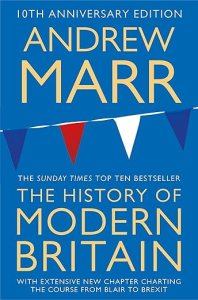
The History of Modern Britain by Andrew Marr

I’ve taken quite a long time (nearly two months) to read Andrew Marr’s The History of Modern Britain, which covers the post World War II period up to 2006, with an added introduction in the paperback edition written in 2008. This is a brief review of a very long and detailed book – too long and detailed for me to sum up meaningfully in a few paragraphs.

So, here is the blurb from the back cover:

This is an account of great political visions – and how they were defeated – and of the resilience, humour and stroppiness of the British public. From the Second World War onwards, Britain has been a country on edge: first of invasion, then of bankruptcy, then on the vulnerable front line of the Cold War, and later in the forefront of the great opening up of capital and migration now reshaping the world. This history follows all the political and economic stories, but deals too with comedy, cars, the war against homosexuals, Sixties anarchists, oil-men and punks, Margaret Thatcher’s wonderful good luck, the true heroes of British theatre, and the victory of shopping over politics.

I wanted to read this book after watching Andrew Marr’s BBC 2 series, History of Modern Britain, which was first shown in 5 episodes in 2007 –  but it was the EU Referendum that nudged me into reading it this year. Like many others, I’ve now become addicted to news and comment programmes, but my knowledge of modern history, even though, or maybe because, I’ve lived through a lot of it, is sketchy, so it was fascinating, if somewhat scary, to read about events I remembered or had half-forgotten.

It’s an obvious statement, but still true, that Britain has changed since 1945 to be almost unrecognisable today and inevitably it is still changing. This book shows how we were then and how we got to where we are today. It’s mainly a political and economic history, with short sections on social and cultural events thrown into the mix.

Despite its length and complexities it is a readable book, which doesn’t surprise me as Andrew Marr is a journalist, TV presenter and political commentator. He was born in Glasgow in 1959. He studied English at the University of Cambridge and has since enjoyed a long career in political journalism, working for the Scotsman, the Independent, the Daily Express and the Observer. From 2000 to 2005 he was the BBC’s Political Editor. He has written and presented TV documentaries on history, science and politics, and presents the weekly Andrew Marr Show on Sunday mornings on BBC1 and Start the Week on Radio 4.

  • Paperback: 672 pages
  • Publisher: Pan; Reprints edition (6 Mar. 2009)
  • Language: English
  • ISBN-10: 0330511475
  • ISBN-13: 978-0330511476
  • Source: my own copy

Reading challenges: Mount TBR Reading Challenge and Read Scotland.

SPQR: A History of Ancient Rome by Mary Beard

Mary Beard is a Professor of Classics at Newnham College, Cambridge and is the Classics editor of the TLS. She is a fellow of the British Academy and a member of the American Academy of Arts and Sciences. And she writes a blog – A Don’s Life, which appears in The Times. I’ve enjoyed watching her TV programmes and so it doesn’t surprise me at all  that SPQR is just as entertaining and informative as the programmes – and very readable, even for someone, like me, who only has a smattering of knowledge about Roman history.

I took my time reading SPQR; some of it covered familiar ground and some was new to me. It’s a fascinating account of how Rome grew and sustained its position for so long, covering the period from the fourth century BCE when Rome was expanding from a small village, up to the moment in 212 CE when the emperor Caracalla made every free inhabitant of the Roman Empire a full Roman citizen.

The title, SPQR, is taken from the Roman catchphrase, Senatus Populusque Romanus meaning the Senate and People of Rome and it is on these two elements – the Senate and the People that Mary Beard concentrates, focussing on the city of Rome, on Roman Italy and also looking at Rome from the outside, from the point of view of those living in the wider territories of the Roman empire.

The book is not strictly chronological and begins with an event I know a bit about through reading Robert Harris’ Lustrum. It’s the Catiline conspiracy in 63 BC, which concerned a plot, or so it was rumoured to overthrow the Roman Empire and Cicero’s part in uncovering the plot and saving the state. Mary Beard begins with this event, because:

it is only in the first century BCE that we can start to explore Rome, close up and in vivid detail through contemporary eyes. An extraordinary wealth of words survives from this period: from private letters to public speeches, from philosophy to poetry – epic and erotic, scholarly and straight from the street.’ (location 143)

She highlights the effect Cicero had, not just on the politics of his own time but also on the language of modern politics. And it is from Cicero’s speeches, essays, letters, jokes and poetry and other Roman writers that we see the Roman world not just in 63 BCE but throughout the city’s history.

For the earlier period however, there are no contemporary accounts and so the early years of the city and of the earliest Romans has to be reconstructed  from individual pieces of evidence from fragments of pottery or letters inscribed on stone.

There are also, of course the myths and stories as well and Beard refers to these, such as the story of Romulus and Remus, who are said to have founded the city, told by Livy and several other Roman writers. Tradition has it that Romulus and his tiny community fought against their neighbours, the Sabines, and erected a temple on the site of the battle, which later became the Forum, but there is no archaeological evidence to identify the remains of this temple. Archaeology, in fact, only sketches what Rome in the earliest period was like and it is very different from the myths. Later Roman writers and modern historians alike have debated intensely the stories of Romulus and Remus, raising the questions of what it was to be Roman. And Beard states:

There is often a fuzzy boundary between myth and history … and … Rome is one of those cultures where the boundary is particularly blurred. … For a start there was almost certainly no such thing as a founding moment of the city of Rome. … Although Romans usually assumed that he [Romulus] had lent his name to his newly established city, we are now fairly confident that the opposite was the case: ‘Romulus’ was an imaginative construction out of ‘Roma’. ‘Romulus was the archetypal ‘Mr Rome.’ (locations 844 – 850)

From that point Beard goes on to discuss the basics of Roman culture, including the nature of Roman marriage, Roman slaves, the Republican system, the principle of freedom, or ‘libertas’, the changing definition of what it meant to be ‘Roman’, Roman domination of the Mediterranean, dictatorship, civil war, taxation, the modern Western system of timekeeping, the emperors and their imperial successes and military victories and the army – and so much more!

SPQR is an immense  achievement, covering 1,000 years of the history of Ancient Rome, and not only the history but also explaining Roman values, what they thought about themselves, and the way of life of both the People and the Senate.

  • Format: Kindle Edition
  • File Size: 22379 KB
  • Print Length: 608 pages
  • Publisher: Profile Books; Main edition (20 Oct. 2015)
  • Source: I bought it

Reading Challenges: Mount TBR 2016 – an e-book I’ve owned since November 2015