Top Ten Tuesday: Best Books I Read in 2024

This week’s topic is:  Best Books I Read In 2024.

Top 5 fiction:
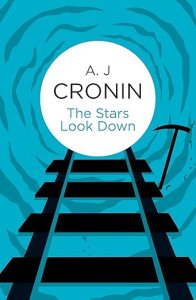
The Stars Look Down by A.J. Cronin, a family saga chronicling the lives of a number of interconnected families over a period of thirty years. 

The story starts in 1903 in a North Country mining town, Sleescale, a fictional town, as its inhabitants experienced social and political upheaval. It ends in 1933. It highlights the terrible conditions in the coal mines, the lack of workers’ rights and the need for change in the relationship between the coal miners and the mine owners.

It’s a long book, but I read it quickly, completely absorbed in all the sub plots and keen to know how it would all be resolved. There is plenty of drama, with scenes including a flood in the pit, killing one hundred and five miners, including David’s father and brother. Cronin’s descriptive writing is so strong, conveying the terrible conditions in the pit, as the miners find themselves trapped and slowly realise there is no way out. Those scenes in particular made a big impression on me and will stay with me for quite some time.

I Let You Go by Clare Mackintosh, a powerful novel that kept me glued to its pages;

It is set partly in Bristol, England where Jacob is killed, and then moves into a small coastal village in Wales where Jenna is trying to make a new life for herself. It’s heart-wrenching reading as Jenna tries to put the past behind her and at times I thought this was a romantic novel. But it’s not, as it becomes clear that there are secrets in her past that haunt her. It’s almost a book of two parts and the second half is dark and violent, full of suspense and menace, and really shocking twists and turns. The characters are fully rounded, extremely well-drawn and realistic. The settings are vividly described, especially of the beautiful Welsh coast line. I could picture it so well and it made me long to be there.
The Tree of Hands by Ruth Rendell, one of her best standalone books.

Why I enjoyed it so much is that it thoroughly gripped me and made me want to read on and on. It’s a psychological thriller, full of suspense, with several twists and turns that made me unsure how it would end. I was delighted by the final twist!

Benet’s son, James aged four dies from croup whilst in hospital soon after Mopsa, her mother with a history of mental illness, comes to visit. Meanwhile Carol, a young widow with three kids, two of them in care, is living nearby with Barry, her younger boyfriend. He adores her but she doesn’t want to marry him, content for him to do all the housework and look after Jason her two year old son when he is not being looked after by babysitters. The trouble starts when Mopsa kidnaps Jason and brings him back to Benet as a replacement for James.

The Silence Between Breaths by Cath Staincliffe, about a group of people on the 10.35 train from Manchester Piccadilly to London Euston. It’s a story of a routine journey that takes a terrifying turn. You know early on both from the description on Amazon and from the back cover that one of the passengers, Saheel, has a ‘deadly secret’ ie a bomb, in his rucksack. So, the tension is there from the beginning of the book and I was wondering when he was going to the let off the bomb and what would happen to the passengers.

The characterisation is superb, so that I cared about each person, the setting is so well described in such detail that it all happened before my eyes and the drama and tension grew as the events played out. One of the standout books that I’ve read this year.
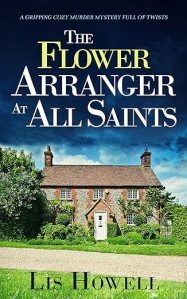
The Flower Arranger at All Saints by Lis Howell

There is a lot to like in this book. The setting is Tarnfield, a fictional Cumbrian village. The setting is described so well that I could ‘see’ it all. It’s picturesque, quiet and secluded, a place where everyone knows everybody’s business. The church plays a huge part in village life, but traditions are being upended by the new vicar and his fondness for playing the guitar during sermons.

And the characters are so ‘real’. I believed in them and even though there are many of them they’re all easily distinguishable and I loved the biblical references and flower clues – they’re intriguing. The plot too kept me keen to carry on reading, wanting to know the identity of the murderer.

Top 5 nonfiction:
Shakespeare: The Man who Pays the Rent by Judi Dench, Brendan O’Hea, an enthralling book.

Reading it is like being in the room with Dame Judi Dench and Brendan O’Hea as they talked about Judi’s career, her love for Shakespeare, and the numerous roles she has played over the years. Shakespeare to Judi Dench is a passionate affair, she talks about it with love.

This book is a wonderful run through the plays told from Judi’s perspective and, of course, her life, giving her insight not only into the characters but also into the world of the theatre. She talks about the rehearsals, the costumes, the sets, other actors, about critics, Shakespeare’s language – similes and metaphors, the use of rhyme, prose and verse, soliloquies, asides and how to adjust your breathing – and so on. Whatever she is talking about is all so clear and relevant, full of wit and humour and understanding.
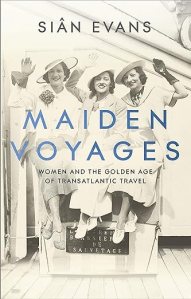
Maiden Voyages by Sian Evans, a fascinating portrait of the women, and their lives on board magnificent ocean liners as they sailed between the old and the new worlds.

It covers a wide range of topics that fascinate me – not just travel, but also social history, both World Wars, the sinking of the Titanic, emigration, the impact that the ocean liners had on the economy. and on women’s working lives and independence, adventure and so much more besides.

The ocean liner was a microcosm of contemporary society, divided by class: from the luxury of the upper deck, playground for the rich and famous, to the cramped conditions of steerage or third class travel. These iconic liners were filled with women of all ages, classes and backgrounds: celebrities and refugees, migrants and millionairesses, aristocrats and crew members.

Great Meadow by Dirk Bogarde, first published in 1992,  is volume five of Bogarde’s best-selling memoirs.

A recollection of his childhood, from 1927 to 1934 when he was a 19 year old, living in a remote cottage in the Sussex Downs with his sister Elizabeth and their strict but loving nanny, Lally. For the children it was an idyllic time of joy and adventure: of gleaning at the end of summer, of oil lamps and wells, of harvests and harvest mice in the Great Meadow.
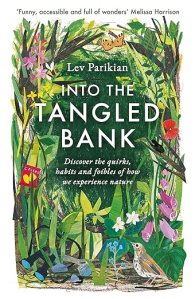
Into the Tangled Bank: Discover the Quirks, Habits and Foibles of How We Experience Nature by Lev Parikian

This is non fiction about nature. It’s easy reading, Parikian writes with humour, in a chatty style, but also richly descriptive. I loved it, it is compulsive reading. He is a storyteller, so there are lots of anecdotes and stories, plus his thoughts on nature and how we view it. Amongst many other topics he ponders about the ethics of zoos – something that puzzles me too – and wonders if the definition of a nature lover is becoming that of one who loves nature programmes. There’s a lot packed into this book.

Getting Better by Michael Rosen

Michael Rosen has grieved the loss of a child, lived with debilitating chronic illness, and faced death itself when seriously unwell in hospital with Covid. In spite of this he has survived, and has even learned to find joy in life in the aftermath of tragedy. In Getting Better, he shares his story and the lessons he has learned along the way. Exploring the roles that trauma and grief have played in his own life, Michael investigates the road to recovery, asking how we can find it within ourselves to live well again after – or even during – the darkest times of our lives. Moving and insightful, this is a wonderful book.
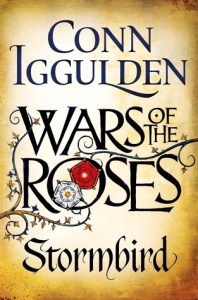
Wars of the Roses:Book One -Stormbird: Book Beginnings & The Friday 56

Every Friday Book Beginnings on Friday is hosted by Gillion at Rose City Reader where you can share the first sentence (or so) of the book you are reading. You can also share from a book you want to highlight just because it caught your fancy.

Wars of the Roses: Stormbird by Conn Iggulden is the first episode of The Wars of the Roses series and is one of the books I was given at Christmas.

The book begins with a Prologue set in 1337 as Edward III lay dying.

Prologue:

Anno Domini 1377

Bowls of dark royal blood lay beneath the bed, forgotten by the physician. Alice Perrers rested on a chair, panting from the effort of wrestling the king of England into his armour. The air in the room was sour with sweat and death and Edward lay like his own effigy, pale and white-bearded.

Part One – Chapter One:

Anno Domini 1443

Sixty six years after the death of Edward III

England was cold that month.

Also every Friday there is The Friday 56, hosted by Freda at Freda’s Voice, but she is taking a break and Anne at My Head is Full of Books has taken on hosting duties in her absence. You grab a book and turn to page 56 (or 56% of an eBook), find one or more interesting sentences (no spoilers), and post them.

Page 56

‘They’ve asked for the marriage to take place in the cathedral at Tours, that’s what. Land that will have the French army camped outside, ready to take possession of the price of the truce,that’s what! I’m not letting Henry walk in there, William, not while there’s life in me.’

Description from Goodreads:

King Henry V – the great Lion of England – is long dead.

In 1437, after years of regency, the pious and gentle Henry VI, the Lamb, comes of age and accedes to the English throne. His poor health and frailty of mind render him a weakling king -Henry depends on his closest men, Spymaster Derry Brewer and William de la Pole, Duke of Suffolk, to run his kingdom

Yet there are those, such as the Plantagenet Richard, Duke of York, who believe England must be led by a strong king if she is to survive. With England’s territories in France under threat, and rumours of revolt at home, fears grow that Henry and his advisers will see the country slide into ruin. With a secret deal struck for Henry to marry a young French noblewoman, Margaret of Anjou, those fears become all too real.

As storm clouds gather over England, King Henry and his supporters find themselves besieged abroad and at home. Who, or what can save the kingdom before it is too late?

I’ve read some of Iggulden’s historical fiction novels and loved them, so I’m looking forward to reading this in the new year.

Other books in the Wars of the Roses series are:

  • Stormbird (2013)
  • Trinity (2014) (titled Margaret of Anjou in North America)
  • Bloodline (2015)
  • Ravenspur (2016)

What do you think, does this book appeal to you? What are you currently reading?

Six Degrees of Separation from Sandwich by Catherine Newman to A Shilling for Candles by Josephine Tey

It’s time again for Six Degrees of Separation, a monthly link-up hosted by Kate at Books Are My Favourite and Best. Each month a book is chosen as a starting point and linked to six other books to form a chain. A book doesn’t need to be connected to all the other books on the list, only to the one next to it in the chain.

This month starts with Sandwich by Catherine Newman, a book set in Cape Cod, described as a moving, hilarious story of a family summer vacation full of secrets, lunch, and learning to let go.

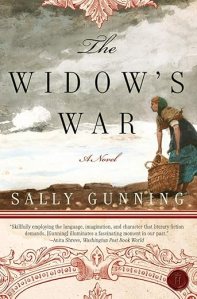
My first link is The Widow’s War by Sally Gunning. This is historical fiction set in 1761 about a whaler’s wife, Lyddie, in the Cape Cod village of Satucket in Massachusetts, living with the daily uncertainty that her husband Edward will simply not return. And when her worst fear is realised, she finds herself doubly cursed. She is overwhelmed by grief, and her property and rights are now legally in the hands of her nearest male relative: her daughter’s overbearing husband, whom Lyddie cannot abide. She decides to challenge both law and custom for control of her destiny, but she soon discovers the price of her bold “war” for personal freedom to be heartbreakingly dear.

My second link is a book about another widow, The Widow’s Tale by Mick Jackson. It’s narrated by the widow and is rather rambling as befits a woman in her sixties on the verge of a nervous breakdown. Her husband has died, she’s taken it badly, and goes to live in a rented cottage on the bleak Norfolk coast, shunning other people. She drinks to forget herself, sits in pubs alone, doing the crossword and reading a book to pass the time. She drives out to places she once knew, goes for solitary walks,  gets stuck in the saltmarshes, and is definitely quirky and obsessional.

Elly Griffith’s character, archaeologist Ruth Galloway also lives in a cottage on the Norfolk coast. So, My third link is The Janus Stone. Ruth is called in to investigate when builders, demolishing a large old house in Norwich, uncover the skeleton of a child – minus the skull – beneath a doorway. Is it some ritual sacrifice or just plain straightforward murder? The house was once a children’s home. When DCI Harry Nelson meets the Catholic priest who used to run it he tells him that two children did go missing forty years before – a boy and a girl. They were never found. When carbon dating proves that the child’s bones predate the children’s home, Ruth is drawn more deeply into the case. But as spring turns to summer it becomes clear that someone is trying very hard to put her off the scent by frightening her half to death…

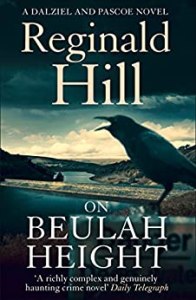
More missing children are the subject of My fourth link. It’s On Beulah Height by Reginald Hill. When a child goes missing during one long, hot dry summer it reminds Dalziel of the three little girls who had gone missing 15 years earlier from the village of Dendale in Yorkshire just before it was flooded to provide a new reservoir. No bodies were ever found. Once again during another hot summer the waters of the reservoir recede and the old village re-emerges from the depths.

This book is tightly plotted with many twists that made me change my mind so many times I gave up trying to work out who the murderer was and just read for the pleasure of reading. Hill’s descriptive writing is rich and full of imagery.

There is a bird on the cover of On Beulah Height, so My fifth link is to another book with a bird on the coverThe Crow Trap by Ann Cleeves, the first Vera book. Rachael, Anne and Grace are all staying at Baikie’s an isolated cottage on the North Pennines whilst they carry out an environmental survey. When Rachael arrives at the cottage she is confronted by the body of her friend Bella Furness, who it appears has committed suicide. Then Grace is found dead and the mystery really begins and it is down to DI Vera Stanhope, to get to the bottom of the mystery. Vera is a great character and even though I do like Brenda Blethyn’s portrayal of her in the TV series, I prefer her as she is in the books –  a woman in her fifties, who looks like a bag lady. 

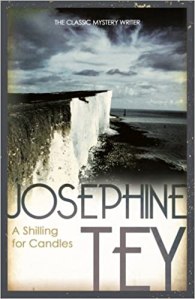
My final link is A Shilling for Candles by Josephine Tey in which Inspector Alan Grant also investigates an apparent suicide. A young and beautiful film star, Christine Clay was found dead beneath the cliffs of the south coast. But he soon discovers that it was in fact murder as a coat button was found twisted in her hair and he suspects a young man, Robin Tisdall who had been staying with Christine in a remote cottage near the beach, especially when it is revealed that she has named him as a beneficiary in her will. Tisdall has lost his coat and so the search is on to find it to prove either his innocence or guilt.

The books in my chain are mainly a mix of crime and historical fiction.

What is in your chain, I wonder?

Next month (January 4, 2025), we’ll start with the 2024 Booker winner, Orbital by Samantha Harvey.

Top 5:Books:Book Covers

Top 5 Tuesday was created by Shanah at Bionic Book Worm, and it is now being hosted by Meeghan at Meeghan Reads. For details of all of the latest prompts for October to December, see Meeghan’s post here.

Today the topic is Book Covers: What are some of your favourite covers that you have seen this year? Maybe these were reprints, redesigns or alternate covers that came out this year, or maybe they are brand new books!!

These are books I’ve read this year – one new and the rest books that were on my TBR shelves. I love them for their combination of colours, and the scenery.

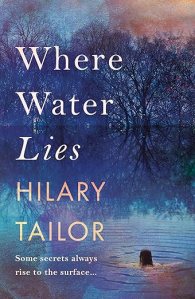
Where Water Lies by Hilary Tailor – her second novel published in June this year.

Every morning is the same for Eliza: she swims in Hampstead Ponds, diving into her memories, reliving the heady days of her teenage friendship with Eric and Maggie. The obsession, the adoration, and the sense of belonging she always craved was perfect, until everything was destroyed in a single afternoon. With guilt never far from the surface, she still asks herself: what really happened that day?

Then one morning, on a street corner, the past collides with the present. Eliza is now a respected member of the community and the carefully constructed life she has built comes crashing down. Should she track down the one person who may be able to forgive her? Or should she keep the past where it belongs?

Soon Eliza begins to wonder: will learning the truth set her free – or will it only drag her down deeper?

The Children’s Book by A S Byatt

From the renowned author of Possession, The Children’s Book is the story of the close of what has been called the Edwardian summer: the deceptively languid, blissful period that ended with the cataclysmic destruction of World War I. In this compelling novel, A.S. Byatt summons up a whole era, revealing that beneath its golden surface lay tensions that would explode into war, revolution and unbelievable change — for the generation that came of age before 1914 and, most of all, for their children.

Famous author Olive Wellwood writes a special private book, bound in different colours, for each of her children. In their rambling house near Romney Marsh they play in a story-book world – but their lives, and those of their rich cousins and their friends, the son and daughter of a curator at the new Victoria and Albert Museum, are already inscribed with mystery. Each family carries its own secrets.

They grow up in the golden summers of Edwardian times, but as the sons rebel against their parents and the girls dream of independent futures, they are unaware that in the darkness ahead they will be betrayed unintentionally by the adults who love them.

Into the Tangled BanK: Discover the Quirks, Habits and Foibles of How We Experience Nature by Lev Parikian

This is non fiction about nature. It’s easy reading, Parikian writes with humour, in a chatty style, but also richly descriptive. I loved it, it is compulsive reading. He is a storyteller, so there are lots of anecdotes and stories, plus his thoughts on nature and how we view it. Amongst many other topics he ponders about the ethics of zoos – something that puzzles me too – and wonders if the definition of a nature lover is becoming that of one who loves nature programmes. There’s a lot packed into this book.

Great Meadow by Dirk Bogarde, first published in 1992, Great Meadow is volume five of Bogarde’s best-selling memoirs.

A recollection of his childhood, from 1927 to 1934 when he was a 19 year old, living in a remote cottage in the Sussex Downs with his sister Elizabeth and their strict but loving nanny, Lally. For the children it was an idyllic time of joy and adventure: of gleaning at the end of summer, of oil lamps and wells, of harvests and harvest mice in the Great Meadow.

With great sensitivity and poignancy, this memoir captures the sounds and scents, the love and gentleness that surrounded the young boy as the outside world prepared to go to war.

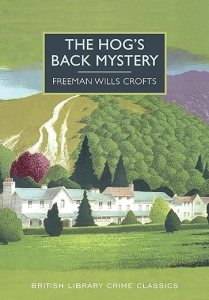
The Hog’s Bank Mystery by Freeman Wills Croft

This is a British Library Crime Classic, first published in 1933, during the Golden Age of detective fiction between the two world wars. Dr James Earle and his wife live near the Hog’s Back, a ridge in the North Downs in the beautiful Surrey countryside. When Dr Earle disappears from his cottage, Inspector French of Scotland Yard is called in to investigate. At first he suspects a simple domestic intrigue – and then begins to uncover a web of romantic entanglements beneath the couple’s peaceful rural life.

Six Degrees of Separation from  Intermezzo by Sally Rooney to White Nights

It’s time again for Six Degrees of Separation, a monthly link-up hosted by Kate at Books Are My Favourite and Best. Each month a book is chosen as a starting point and linked to six other books to form a chain. A book doesn’t need to be connected to all the other books on the list, only to the one next to it in the chain.

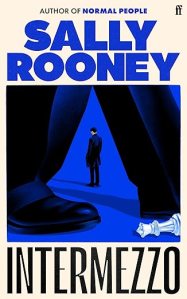
This month starts with Intermezzo by Sally Rooney. I haven’t read this book, so this is the description on Amazon UK:

Aside from the fact that they are brothers, Peter and Ivan Koubek seem to have little in common.

Peter is a Dublin lawyer in his thirties – successful, competent and apparently unassailable. But in the wake of their father’s death, he’s medicating himself to sleep and struggling to manage his relationships with two very different women – his enduring first love Sylvia, and Naomi, a college student for whom life is one long joke.

Ivan is a twenty-two-year-old competitive chess player. He has always seen himself as socially awkward, a loner, the antithesis of his glib elder brother. Now, in the early weeks of his bereavement, Ivan meets Margaret, an older woman emerging from her own turbulent past, and their lives become rapidly and intensely intertwined.

For two grieving brothers and the people they love, this is a new interlude – a period of desire, despair and possibility – a chance to find out how much one life might hold inside itself without breaking.

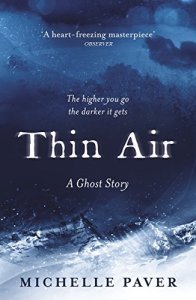
My first link is Thin Air, a novel by Michelle Paver also about two brothers. Kanchenjunga, the third highest mountain in the world, had claimed many lives and no one had reached the summit. Held to be a sacred mountain, it is one of the most dangerous mountains in the world – believed to be the haunt of demons and evil spirits. An unsuccessful attempt had been made in 1907, led by Edmund Lyell, when only two men had returned. The group in 1935, led by Major Cotterell, attempted to follow the 1907 route up the south-west face. Their story is narrated by medic, Dr. Stephen Pearce, accompanying his older brother, Kits. The brothers have always been rivals and this continues as they make their way up the mountain. Things start to go wrong almost straight away and Stephen is full of foreboding.

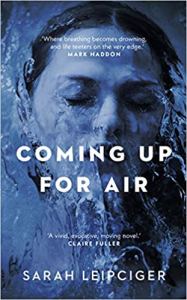
My second link is a book that also has ‘air’ in the title – Coming Up For Air, Sarah Leipciger’s second novel. It is a beautiful novel, a story of three people living in different countries and in different times. How their stories connect is gradually revealed as the novel progresses. As the author explains at the end of the novel it is a mix of fact and fiction and has its basis in truth. There is grief and loss and despair in each story, but above all, it is about love, and the desire to live. I think Sarah Leipciger is a great storyteller. It is an inspiring book, beautifully written, which emphasises the importance of the air we breathe and the desire to live. I read this book in June 2021.

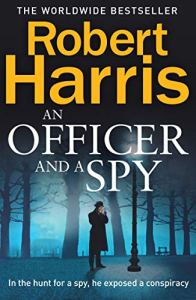
My third link is An Officer and a Spy, historical fiction by Robert Harris, another book I read in June 2021. It is a gripping book about the Dreyfus affair in 1890s France. Alfred Dreyfus, a young Jewish officer, was convicted of treason by passing secrets to the Germans in 1895 and sent to solitary confinement on Devil’s Island. It’s narrated by Colonel George Picquart, who became convinced that Dreyfus was innocent. Harris goes into meticulous detail in staying accurate to the actual events, but even so this is a gripping book and I was completely absorbed by it from start to finish.

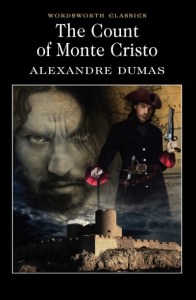
My fourth link is The Count of Monte Cristo, historical fiction by Alexandre Dumas, in which the main character is also wrongly imprisoned on an island. It begins in 1815 when Edmond Dantès, a sailor, having returned to Marseilles is wrongly accused of being a Bonapartist and imprisoned in the Chateau d’If on the Isle of Monte Cristo, for fourteen years. It’s a great story, action-packed, and full of high drama and emotion. Montecristo is a real island in the Tyrrhenian Sea, part of the Tuscan Archipelago, and administered by the municipality of Portoferraio in the province of Livorno.

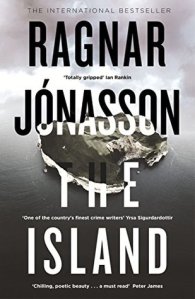
So My fifth link is also set on a real island, that of the isolated island of Elliðaey off the coast of Iceland in Ragnar Jónasson’s novel The Island, a murder mystery with elements of horror. Four friends visit the island ten years after the murder of a fifth friend, Katla, but only three of them return. One of them, Klara, fell to her death from a cliff – but did she jump or was she pushed? Detective Inspector Hulda Hermannsdóttir is sent to investigate. A suspect had been charged, but had committed suicide before the verdict was announced and the case had been closed. But are the two murders connected, even though they are ten years apart? This book is the second in Jónasson’s Hidden Iceland series.

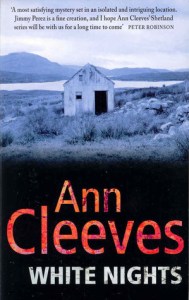
My final link is also the second book in a series, that is White Nights by Ann Cleeve, the second in her Shetland Quartet, featuring Detective Jimmy Perez. It’s set mainly in the village of Biddista, when Kenny Thomson finds a man’s body hanging in the hut where the boat owners of the village keep their lines and pots. At first it looks as though the man, his face covered by a clown’s mask, has committed suicide, but he’d been dead before he was strung up. As well as the mystery of who killed the man in the clown mask and why, there is also the disappearance 15 years earlier of Kenny’s older brother Lawrence. It was thought that he left the island after Bella had broken his heart. Kenny hadn’t heard from him since and at first thought the dead man could be him.

The books in my chain are mainly a mix of crime and historical fiction. And the chain has become a circle with the last book connecting to the starting book and the first book, all containing two brothers.

What is in your chain, I wonder?

Next month (December 7, 2024), we’ll start with a beach read – Sandwich by Catherine Newman.

Top 5 anticipated reads for Q4 2024

Top 5 Tuesday was created by Shanah at Bionic Book Worm, and it is now being hosted by Meeghan at Meeghan Reads. It’s time to talk about all the shiny new books coming out in October, November and December 2024. What are the books you can’t wait to hold in your hands the most? For details of all of the latest prompts for October to December, see Meeghan’s post here

Here are five books I’m looking forward to reading and they are all coming out this month! They are all by authors whose books I’ve loved.

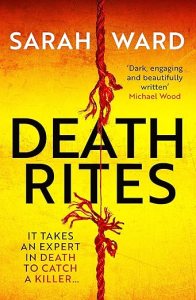
Death Rites by Sarah Ward – 3 October. This is the first in a new series, a dark and atmospheric crime thriller (Carla James Crime Thrillers Book 1).

Archaeology professor Carla James is reeling following the death of her husband. Desperate for a change of scene, she takes a job at an elite New England college. On her first day, Carla is asked to represent the department at a murder site. She initially believes there is nothing notable about the scattered debris that surrounds the body, but there is more to the case than meets the eye. This victim is just the latest in a series of unsolved deaths. Nothing obvious links them but Carla is convinced – there is a methodical killer operating in the shadows.

Can she uncover the truth before she becomes the next victim?

Midnight and Blue by Ian Rankin – 10 October. It’s the 25th Inspector Rebus book. I’ve read all the others, so I have to read this one!

John Rebus spent his life as a detective putting Edinburgh’s most deadly criminals behind bars. Now, he’s joined them…

As new allies and old enemies circle, and the days and nights bleed into each other, even the legendary detective struggles to keep his head. That is, until a murder at midnight in a locked cell presents a new mystery. They say old habits die hard… However, this is a case where the prisoners and the guards are all suspects, and everyone has something to hide. With no badge, no authority and no safety net, Rebus walks a tightrope – with his life on the line.

But how do you find a killer in a place full of them?

The Map of Bones by Kate Mosse – 10 October The fourth book in the Joubert Family Chronicles series. I love the cover!

Olifantshoek, Southern Africa, 1688. When the violent Cape wind blows from the south-east, they say the voices of the unquiet dead can be heard whispering through the deserted valley. Suzanne Joubert, a Huguenot refugee from war-torn France, arrives in search of her cousin — the notorious she-captain and pirate commander Louise Reydon-Joubert — who landed at the Cape of Good Hope more than sixty years before, then disappeared without a trace . . .

Franschhoek, Southern Africa, 1862. Nearly one hundred and eighty years after Suzanne’s perilous journey, another intrepid and courageous woman of the Joubert family — Isabelle Lepard — has journeyed to the small frontier town once known as Oliftantshoek in search of her long-lost relations. Intent on putting the women of her family back into the history books, she quickly discovers that the crimes and tragedies still shadow the present. And now, Isabelle faces a race against time if she is to discover the truth, and escape with her life . . .

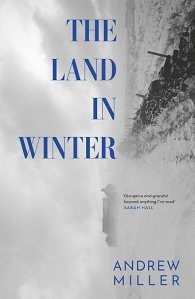
The Land in Winter by Andrew Miller – 24 October

December 1962, the West Country.

In the darkness of an old asylum, a young man unscrews the lid from a bottle of sleeping pills.

In the nearby village, two couples begin their day. Local doctor, Eric Parry, mulling secrets, sets out on his rounds, while his pregnant wife sleeps on in the warmth of their cottage. Across the field, in a farmhouse impossible to heat, funny, troubled Rita Simmons is also asleep, her head full of images of a past life her husband prefers to ignore. He’s been up for hours, tending to the needs of the small dairy farm he bought, a place where he hoped to create a new version of himself, a project that’s already faltering.

There is affection – if not always love – in both homes: these are marriages that still hold some promise. But when the ordinary cold of an English December gives way to violent blizzards – a true winter, the harshest in living memory – the two couples find their lives beginning to unravel.

Where do you hide when you can’t leave home? And where, in a frozen world, could you run to?

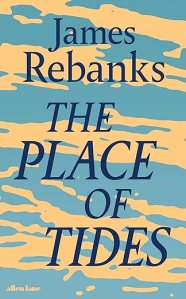
The Place of Tides by James Rebanks – 27 October because I loved his English Pastoral.

One afternoon many years ago, James Rebanks met an old woman on a remote Norwegian island. She lived and worked alone on a tiny rocky outcrop, caring for wild Eider ducks and gathering their down. Hers was a centuries-old trade that had once made men and women rich, but had long been in decline. Still, somehow, she seemed to be hanging on.

Back at home, Rebanks couldn’t stop thinking about the woman on the rocks. She was fierce and otherworldly – and yet strangely familiar. Years passed. Then, one day, he wrote her a letter, asking if he could return. Bring work clothes, she replied, and good boots, and come quickly: her health was failing. And so he travelled to the edge of the Arctic to witness her last season on the island.

This is the story of that season. It is the story of a unique and ancient landscape, and of the woman who brought it back to life. It traces the pattern of her work from the rough, isolated toil of bitter winter, to the elation of the endless summer light, when the birds leave behind their precious down for gathering, like feathered gold.

Slowly, Rebanks begins to understand that this woman and her world are not what he had previously thought. What began as a journey of escape becomes an extraordinary lesson in self-knowledge and forgiveness.