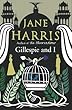
Gillespie and I by Jane Harris: a Book Review

Gillespie and I by Jane Harris is a cleverly told story, narrated by Harriet Baxter, alternating between events in 1888-90 (in Glasgow) and those in 1933 (in London). In 1888 Harriet moved to Glasgow where she got to know the painter, Ned Gillespie and his family. At first I liked Harriet but as I read on I became increasingly doubtful about her character, even though she comes across as an honest, reliable person. But, as she relates what her life is like in 1933 my impression of her began to change.
All is well at first but than a tragedy occurs which forms the major part of the book. It’s signalled in advance, when Harriet refers to the ‘horrible events’ that lay in the future. To say any more would be too much of a spoiler.

The setting of the book in Glasgow of the late 19th century is well described, helped by plans in the front of the book. The characters are also convincing, even some of the minor ones and her portrayal of Ned’s disturbed daughter, Sybil is quite chilling. This is a very detailed book, both about the place, artists and, through the account of a trial, the Scottish legal system of that period. It’s a book that lingered in my mind after I finished reading and if it wasn’t so long I’d like to re-read it in the light of what I now know.

  • Hardcover: 528 pages
  • Publisher: Faber and Faber (5 May 2011)
  • Language English
  • ISBN-10: 0571275168
  • ISBN-13: 978-0571275168
  • Source:an uncorrected proof from the publishers (via LibraryThing Early Reviewers)
  • My rating 3.5/5

I haven’t read Jane Harris first book, The Observations, although I’ve owned it for a while. It’s probably time I read that one too.

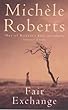
Fair Exchange by Michèle Roberts: a Book Review

Fair Exchange by Michèle Roberts is from my to-be-read pile. I’ve had it for years and had started to read it once (it still had a book mark in it, but I had to begin again as I’d completely forgotten it) and stopped. I can’t remember why, because this time round I found it very readable. It’s historical fiction set in England and France in the late 1700s/early 1800s during the French Revolutionary period.

The Author’s Note at the beginning of the book explains that although she began with the idea of writing a novel about William Wordsworth’s love affair at the beginning of the French Revolution, with Annette Vallon, but as she wrote it, it turned into a novel about William Saygood a fictional friend of Wordsworth’s. Mary Wollstonecraft appears in the novel but Roberts has ‘plundered various aspects of her life’  for the character, Jemima Boote.  I like the fact that upfront you know that some of the events, places and people are fictional and that she hopes readers will forgive her ‘for the liberties’ she has taken. Well, I do.

It begins in France in 1792, thus:

In her youth Louise Daudry, née Geuze, had committed a wicked and unusual crime. At that time, autumn 1792, she wanted money very badly, so she put aside her knowledge that what she was doing was wrong and would hurt others. She told herself that virtue was a luxury the poor could not afford. She let herself be persuaded that no one would ever find out. (page 3)

Then it goes back in time and place to England years earlier when Jemima Boote met Mary Wollstonecraft. As you would expect there is a fair bit in this book about women’s rights and their place in society, and about the question of nurture versus nature in bringing up children. Jemima is a strong character, a free spirit but her life doesn’t turn out how she expected, affected not only by the Revolution but also by events in her personal life.

Intertwined with Jemima’s life are those of Louise, who works for the Vallons,  Annette Vallon, who falls in love with an English poet, and William Saygood, and Polly his sister (based on William and Dorothy Wordsworth?). When Annette discovers she is pregnant, Louise takes her to live in her mother’s house in the countryside and it is there that Annette and Jemima (also pregnant) meet, thus setting in motion the events that change both their lives.

I liked the ambiguity in this book, the uncertainty of what exactly was the crime that Louise had committed. It’s well written and kept me guessing almost to the end of the book. It’s one I’d like to re-read (if only I had the time!) to see if I could pick up the hints about what happened.

  • Paperback: 256 pages
  • Publisher: Virago Press Ltd; New edition edition (3 Feb 2000)
  • Language English
  • ISBN-10: 1860497640
  • ISBN-13: 978-1860497643
  • Source: my own copy (a Christmas/Birthday present)
  • Rating: 3/5

Two New Acquisitions

I was really pleased to find these two books on recent visits to local bookshops.

First is Lilian Nattel’s The River Midnight. I’ve been reading Lilian’s blogs A Writer Reads and A Novelist’s Mind for a while and was interested in reading her books. Lilian also has a website with details of more of her books. Amazon UK has some copies of her first novel, The River Midnight for sale, the new ones at prices from £13.98 up to £40, with secondhand copies too, more reasonably priced (which you can see via my link to the book) and I was thinking about sending off for one. But I was thrilled to find a good paperback copy in The Border Reader Bookshop one of the local secondhand bookshops I visit, so I snapped it up. I love the cover.

It’s set in the tiny, fictional village of Blaska in Russian-occupied Poland at the end of the 19th century and the beginning of the 20th. Pogroms are a recent memory for the Jewish community, yet life in Blaska is rich and the bonds of friendship unbreakable. It’s a place where anything – even magic can happen (taken from the back cover).

The second book I was excited to find was from Barter Books, another favourite secondhand bookshop. I’d recently watched the film, Schindler’s List for a second time and was very moved by it – it had me in tears. So I wanted to find the book on which Steven Spielberg had based his film.  It was there at the top of a very high bookcase in the main body of Barter Books and D got up the step-ladders to retrieve it for me.

Thomas Keneally’s 1982  Booker Prize winning book was first published as Schindler’s Ark. It recreates the story of Oskar Schindler, a member of the Nazi party, who risked his life to protect Jews in Nazi-occupied Poland. He rescued more than a thousand Jews from the death camps.

Both books are based on real historical events, both set in Poland and about Polish Jews. Both have used contemporary sources and are based on historical research. Lilian has included  a selection of the sources she used and Thomas Keneally used a mass of Schindler material including testimonies of survivors, photographs of the period, documents, some of them produced by Oskar himself, copies of SS telegrams, and the famous list of Swangsarbeitslager Brinnlitz, Oskar’s second camp.  I think these two books go together and I’m planning to read them consecutively as soon as I can.

Murder on the Eiffel Tower by Claude Izner

I thought Murder on the Eiffel Tower was a frustrating book to read. On the one hand it combines crime fiction and historical fiction, which is a favourite genre so I expected to be good. It begins really well as Eugénie Patinot takes her nephews and niece to the newly-opened Eiffel Tower in 1889. They sign the visitors’ book, the Golden Book and then Eugénie collapses and dies, apparently from a bee-sting.  Then there is Victor Legris, a bookseller (even better – historical crime fiction and a bookshop!) who is determined to find out what had really happened. More deaths occur, also caused by bee-stings. Could Paris really be invaded by killer  bees?

So far, so good, but the historical descriptions kept interfering with the mystery. Although it was interesting it slowed the book down too much and was distracting, to my mind. And the mystery wasn’t that good either, with too much guesswork by Victor, who kept changing his mind about who he suspected (and so did I).  I also thought the characters were rather flimsy and I didn’t really engage with any of them. Maybe it’s the translation but I wasn’t enthralled with the style of writing, either, which in parts was a bit tedious. I loved the cover, though.

I bought this book secondhand from Barter Books, without knowing anything about it or the author, attracted by the idea of a murder on the Tower and the cover. From the book I discovered that Claude Izner is the pen-name of two sisters, Liliane Korb and Laurence Lefèvre. They are both booksellers on the banks of the Seine, so that was why I found the book-selling scenes the best part of the book. They are also experts on 19th century Paris – hence the plethora of historical detail, I suppose.

  • Paperback: 304 pages
  • Publisher: Gallic Books (1 May 2007)
  • Language English
  • ISBN-10: 190604001X
  • ISBN-13: 978-1906040017
  • Source: I bought the book

Tom Fleck: a Novel of Cleveland and Flodden by Harry Nicholson

I don’t often get offered books for review that really appeal to me, but recently I have had two – one was Dorte Jakobsen’s The Cosy Knave, which I wrote about earlier and the second is Tom Fleck by Harry Nicholson.

When Harry emailed me to ask if I would review his book I knew I couldn’t refuse – a book set in the 16th century and about the Battle of Flodden Field. Now, I love history and historical fiction. Flodden Hill, where the battle took place in 1513 is just down the road from me and it’s a place that fascinates me.  I replied saying that I’d like to read it but it could be some time before I did as I have so many other books queued up to read. But as I opened it and started reading it I just had to carry on!

Harry Nicholson is a really good storyteller and as I read I was transported back to the 16th century. His book is well-researched, but the detail never reads like a text book or intrudes. He consulted many sources, including primary and secondary sources such as wills, inventories and parish registers, printed journals and historical and archaeological society papers as well as studying military costumes and weapons at the national museum of arms and armour at Leeds.

From the Back Cover

The year: 1513. The place: North-East England. Tom Fleck, a downtrodden farm worker but gifted archer, yearns to escape his masters. He unearths two objects that could be keys to freedom: a torque of ancient gold and a Tudor seal ring. He cannot know how these finds will determine his future. Rachel Coronel craves an end to her Jewish wanderings. When the torque comes to rest around the neck of this mysterious woman, an odyssey begins which draws Tom Fleck into borderlands of belief and race. The seal ring propels Tom on a journey of self-knowledge that can only climax in another borderland – among the flowers and banners of Flodden Field.


The story is about Tom, a young farm worker on the Warren Manor Estate in Cleveland. He longs to escape and farm his own land. So when Mark, the Lord of the Manor’s son orders him to go north with the militia from the manor to fight against the Scots on the border, he takes matters into his own hands and leaves home to join forces with drovers from Durham.  The drovers and Tom get caught up in the preparations for war and as Tom is a gifted archer he is pressed into joining the English forces in fighting against the Scots under James IV at Flodden Field.

It is also a love story, as Tom and Rachel fall in love, but then there is his sweetheart, Mary who he left behind at home. Who will he choose, if indeed, he should survive the battle? Generally I’m not keen on reading battle scenes but Harry dealt with this very well and actually I think it’s one of the best accounts of the Battle of Flodden that I’ve read.

All in all, this is a fascinating glimpse into the lives of ordinary people and the aristocracy in the 16th century, caught up in war.  It highlights differences in their lives and in their deaths – the rich received honours and church burials, whereas the rest were simply bundled together in pits in the field:

‘That’s the way of it, Tom – that’s the way of it; no stone lions at our feet, nor a brass plate to cover us. There’ll be nowt apart from green rushes to mark our spot.’ (page 230)

More information on Tom Fleck is on Harry’s website where you can read Chapter 1.  And for more details of the battle, including the routes the armies took and a tour of the battlefield see The Remembering Flodden Project.

  • Paperback: 266 pages
  • Publisher: YouWriteOn.com (11 Jan 2011)
  • Language English
  • ISBN-10: 1908147768
  • ISBN-13: 978-1908147769
  • Source: review copy from the author

My Sunday Selection

Today I’m looking at my recent selection of library books.

When I went to my local library this week the librarian had just finished processing a pile of new additions and passed them over to me to look at. I love new library books, so clean and fresh. I chose two out of the pile and then browsed the rest of the books. These are the ones that I brought home:

The two new books are:

Great House by Nicole Krauss. I have her earlier book, The History of Love in my to-be-read piles and I’ve read one or two reviews of this book on book blogs recently and thought it sounded interesting. It’s a story centred around ‘a desk of many drawers that exerts a power over those who possess it or give it away‘ (taken from the book cover).

Being Polite to Hitler by Robb Foreman Dew. I’ve never heard of this book, or the author but the title caught my attention and I wondered what it could be about. It’s set in Ohio in mostly the 1950s and follows the experiences of a widowed schoolteacher and those around her. Described on the book cover as a ‘moving, frank and surprising portrait of post- World War Two America.’

I had gone to the library, specifically to look for books by Nigel Tranter, a Scottish author whose books I’d read many years ago. Reading Katrina’s post on Pining for the West about Right Royal Friend by Nigel Tranter reminded me how much I’d enjoyed them and I wondered if I’d still like them. Tranter wrote very many books, mostly historical fiction based on real people and events. There were several of his books on the shelves and I chose Envoy Extraordinary, set in the 13th century following the lives of Patrick III, Earl of Dunbar and Alexander III. Patrick played a major part in Scotland’s affairs, although he was more interested in the welfare of his people and ‘encouraging the wool production of his sheep-strewn Lammermuir Hills‘. I chose this book because the Lammermuir Hills are not too far from where we live.

The other two books I chose are:

Rivers of London by Ben Aaronovitch, a book that had Annie of Senior Common Room ‘hooked’. She wrote:

Aaronovitch brings just the right amount of cynicism about both the police service and the current social climate to his writing and as a result the book is not only very funny but also, despite the magic, recognisably about the world in which we live.  It is also, if you happen to know the parts of London about which he is writing, very well researched.

It’s a mixture of crime and fantasy – Detective Constable Peter Grant is also a trainee wizard, dealing with ‘nests of vampires, warring gods and goddesses of the River Thames and digging up graves in Covent Garden.

A Kind Man by Susan Hill, another one of her novellas, described as ‘a parable of greed and goodness and an extraordinary miracle.’ It’s set in an unspecified time period, but before the National Health Service was set up. I know from the book cover that it is the story of the marriage of Tommy Carr and his wife Eve. Tragedy strikes when their little daughter dies.