Crucible by S G MacLean

Once again I was transported back to 17th century Scotland with Crucible by S G Maclean, the third of her Alexander Seaton books. I read the first, The Redemption of Alexander Seaton in February 2013 and now a year later I’ve been just as engrossed in Crucible. I think her style of writing suits me perfectly, the characters are just right, credible well-rounded people, the plot moves along swiftly with no unnecessary digressions and it’s just full of atmosphere. I loved it.

It’s set in 1631 in Aberdeen, where Alexander is now a Master at Marischal College. On Midsummer’s eve he stumbles across the body of his friend, Robert Sim, the college librarian, a few feet from the library steps, with his throat cut, blood congealing around the wound. Dr Dun, the college principal asks Alexander to investigate the matter, to look into Robert’s private life, hoping he’ll find nothing to reflect badly on the college.

I found it absolutely compelling reading. Robert had been cataloguing a new acquisition to the library before he was killed and Alexander is convinced that Robert was troubled by what he found there, amongst the books of history, alchemy  and hermetics – the quest for ‘a secret, unifying knowledge, known to the ancients’ since lost to us. There are many twists and turns and another man is killed before he finally arrives at the truth.

This is the third book in the series, but although I haven’t read the second book, I don’t think that matters as I think Crucible stands well on its own. The fourth book in the series is The Devil’s Recruit – the hardback and Kindle versions are available now, whilst the paperback will be available on 14 May. Now I’ve lifted my book buying ban I think I may just have to get the Kindle version soon.

Crucible qualifies for four of the challenges I’m doing this year – the Mount TBR challenge, the Historical Fiction Challenge, My Kind of Mystery Challenge and the Read Scotland Challenge.

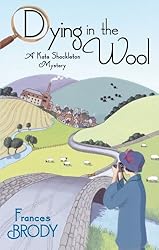
Dying in the Wool by Frances Brody

After I finished reading The Grass is Singing (see my previous post) I felt I needed to read something lighter and easier, so I turned to Dying in the Wool by Frances Brody and it turned out to be just the right book – not too taxing on either the brain or the emotions and a rather interesting mystery too.

It’s the first of Frances Brody’s Kate Shackleton Mysteries set in Yorkshire in 1922, with flashbacks to 1916. Bridgestead is a peaceful mill village, until the day in 1916 when mill owner Joshua Braithwaite went missing after apparently trying to commit suicide. Seven years later his daughter, Tabitha, who is getting married, still can’t believe her father is dead and she asks her friend Kate Shackleton to find out what really happened to him.

This is another post World War 1 crime novel, along the lines of Jacqueline Winspear’s Maisie Dobbs and Carola Dunn’s Daisy Dalrymple books, with an independent female amateur detective. Kate is a widow, her husband was missing in action during the war, presumed dead, her father is a police superintendent and she is a keen amateur photographer. On her father’s recommendation she hires Jim Sykes, an ex-policeman to help her. Once they start asking questions things start to happen with disastrous effects.

I liked the characters, Kate and Jim in particular, and the setting is lovely. The novel is well grounded historically in the aftermath of the First World War. I also liked the way the chapter headings were textile related with an explanation of the terms used and relevant to the events described in the chapters – very skilfully done, I thought. And just like woven cloth this mystery has many separate strands that Kate and Jim have to bring together to reveal what had happened in 1916.

This book fits well into several challenges – see the categories listed above.

Other books in the Kate Shackleton series are:

2. A Medal For Murder (2010)
3. Murder in the Afternoon (2011)
4. A Woman Unknown (2012)
5. Murder on a Summer’s Day (2013)
6. Death of an Avid Reader (2014)

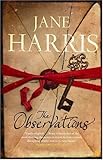
First Chapter: The Observations

First chapterEvery Tuesday Diane at Bibliophile by the Sea hosts First Chapter First Paragraph Tuesday Intros, where you can share the first paragraph or (a few) of a book you are reading or thinking about reading soon.

My choice this week is a book I’ll be reading soon. It’s The Observations by Jane Harris and Chapter 1 ‘I Find a New Place‘ begins:

I had reason to leave Glasgow, this would have been about three or four years ago, and I had been on the Great Road about five hours when I seen a track to the left and a sign that said ‘Castle Haivers’. Now there’s a coincidence I thought to myself, because here I was on my way across Scratchland to have a look at Edinburgh castle and perhaps get a job there and who knows marry a young nobleman or prince. I was only 15 with a head full of sugar and I had a notion to work in a grand establishment.

Jane Harris was born in Belfast and grew up in Scotland before moving to England in her 20s.  The Observations, her first book is set in Scotland in 1863. It was shortlisted for the Orange Prize for Fiction in 2007 and the Prix du Premier Roman Etranger in 2009. Her second novel Gillespie and I, which I read just over two years ago, was shortlisted for the National Book Awards in 2011 and the Scottish Book Awards in 2012.

I enjoyed Gillespie and I, a book that lingered in my mind long after I’d finished reading it, so I’m hoping I’ll have a similar reaction to this book.

Cloud Atlas: The Book and The Movie

Cloud Atlas by David Mitchell:

A reluctant voyager crossing the Pacific in 1850; a disinherited composer blagging a precarious livelihood in between-the-wars Belgium; a high-minded journalist in Governor Reagan’s California; a vanity publisher fleeing his gangland creditors; a genetically modified ‘dinery server’ on death-row; and Zachry, a young Pacific Islander witnessing the nightfall of science and civilisation €” the narrators of Cloud Atlas hear each other’s echoes down the corridor of history, and their destinies are changed in ways great and small. (Copied from David Mitchell’s website.)

Over the Christmas period we watched the movie, Cloud Atlas and I was surprised at how good I thought it was. In the past I have not appreciated movies based on books, but as I hadn’t read the book (despite beginning it several times) I wasn’t influenced by it and could watch the movie with a completely open mind. It is fantastic – a kaleidoscope of visual delights, the scenery, the settings and the costumes are blazes of colour and drama. It made me want to read the book because some of the dialogue was difficult to follow – words spoken quickly and not clearly and in a sort of abbreviated English (we put the subtitles on!) and there are many changes of scene and storylines as the movie switches backwards and forwards between the six stories, sometimes only showing short scenes.

So after watching the movie I read the book.  Cloud Atlas covers a time period from the 19th century to a post apocalyptic future. It is an amazing creation (‘amazing‘ is a very overused word, but in this instance very apt), at times confusing and at times brilliant. I think seeing the movie first was for me the best way to enjoy it. Where the dialogue and plot were confusing in the movie they were clearer in the book – where each separate story is dealt with in much more detail and I could read the dialogue in the post-apocalyptic episodes slowly and take it in more easily.

But the movie really brought the whole thing alive for me and captured my imagination. I think the book is over-long, at times I began to count the pages of each section wanting it to finish – it’s not a book to read quickly; it requires patience, but on the whole I enjoyed it. I liked the change in style, suited to each time period, moving between straight narrative and letters and journal entries, encompassing historical fiction, thriller and sci-fi.

The main difference between the book and the movie is the structure – the book sets out each story in some detail, whereas the movie streamlines each one and moves quickly between them at times overlapping the dialogue. The beginning and the ending are different, with scenes in the movie that are not in the book. The actors play several roles, which actually helps identify their characters and some of the characters in the book don’t appear in the movie. So, really the book and the movie are two different creations – that complement each other.

Cloud Atlas is about good and evil, about truth and greed – for power and money – and love; it’s about freedom and slavery, about the value of the individual; and about morality and evolution, civilisation and savagery. It’s a powerful book and if it wasn’t so long I’d read it again!
On the Black Hill by Bruce Chatwin

On The Black Hill (Vintage classics) by€¦

Synopsis (from the Vintage Books website):

On the Black Hill is an elegantly written tale of identical twin brothers who grow up on a farm in rural Wales and never leave home. They till the rough soil and sleep in the same bed, touched only occasionally by the advances of the 20th century. In depicting the lives of Benjamin and Lewis and their interactions with their small local community Chatwin comments movingly on the larger questions of human experience. 

The book was awarded the 1982 James Tait Black Memorial Prize and Whitbread First Novel of the Year Award.

I quoted the opening paragraphs in a Book Beginnings post back in 2011, when I first bought this book, but I think it’s worth repeating them here as they are typical of the style of the book:

For forty-two years, Lewis and Benjamin Jones slept side by side, in their parents’ bed, at their farm which was known as -˜The Vision’.

The bedstead, an oak four-poster, came from their mother’s home at Bryn-Draenog when she married in 1899. Its faded cretonne hangings, printed with a design of larkspur and roses shut out the mosquitoes of summer, and the draughts in winter. Calloused heels had worn holes in the linen sheets, and parts of the patchwork quilt had frayed. Under the goose-feather mattress, there was a second mattress, of horsehair, and this had sunk into two troughs, leaving a ridge between the sleepers. (page (9)

I love this book with its rich descriptions of both the landscape and the characters on the border between England and Wales. It follows the lives of identical twins, Lewis and Benjamin Jones on a farm, barely touched by the 20th century, a period of over 80 years. They are inseparable, Benjamin in particular suffering whenever they are apart. Their lives are hard, lonely, brutal at times, but full of love for their mother and the land they farm.

Most of all I love they way Chatwin brings the characters to life, not just Lewis and Benjamin, but all the other personalities, some eccentric, some comic and some tragic. His attention to detail is remarkable – at no time does it seem excessive, or intrusive but all the little minutiae of daily life are essential to the book. At the same time Chatwin highlights questions of love, religion, death and above all relationships. It is most definitely not a book to race through to find out what happens, although I did want to know, but one to savour – and one to re-read.

2014 Historical Fiction Reading Challenge

Historical Tapestry will be hosting the challenge again next year. The challenge runs from Historical Fiction 20141 January to 31 December 2014 and you can choose from the following levels:

20th century reader €“ 2 books
Victorian reader €“ 5 books
Renaissance Reader €“ 10 books
Medieval €“ 15 books
Ancient History €“ 25 books
Prehistoric €“ 50+ books

I’ve been thinking about the definition of ‘historical fiction’. It’s not as straight forward as it seems – a historical novel is obviously one set in the past. But have far back in the past? Does it have to have been written by someone who did not live through the events described?

I’ve been a bit unsure sometimes whether a book is actually historical fiction, for example yesterday, 5 years ago, 10, 20 years ago are all in the past, but are books set so recently ‘historical fiction’? I don’t think so. So to make it clear for myself I have decided that next year I will be using the Historical Novel Society’s definition:

To be deemed historical (in our sense), a novel must have been written at least fifty years after the events described, or have been written by someone who was not alive at the time of those events (who therefore approaches them only by research).

We also consider the following styles of novel to be historical fiction for our purposes: alternate histories (e.g. Robert Harris’ Fatherland), pseudo-histories (eg. Umberto Eco’sIsland of the Day Before), time-slip novels (e.g. Barbara Erskine’s Lady of Hay), historical fantasies (eg. Bernard Cornwell’s King Arthur trilogy) and multiple-time novels (e.g. Michael Cunningham’s The Hours).

I will be aiming for Ancient History (25 books) again but will see how close I can get to the Prehistoric level!