To the Bright Edge of the World by Eowyn Ivey

Blurb:

Lieutenant Colonel Allen Forrester receives the commission of a lifetime when he is charged to navigate Alaska’s hitherto impassable Wolverine River, with only a small group of men. The Wolverine is the key to opening up Alaska and its rich natural resources to the outside world, but previous attempts have ended in tragedy.

Forrester leaves behind his young wife, Sophie, newly pregnant with the child he had never expected to have. Adventurous in spirit, Sophie does not relish the prospect of a year in a military barracks while her husband carves a path through the wilderness. What she does not anticipate is that their year apart will demand every ounce of courage and fortitude of her that it does of her husband.

My thoughts:

I didn’t really know what to expect when I began reading To the Bright Edge of the World as I hadn’t read anything by Eowyn Ivey before (I see she has also written The Snow Child a Sunday Times bestseller and finalist for the Pulitzer Prize). I knew it was fiction but even so at first I wondered if it could be history, because it seemed so real with extracts from the reports, letters and journals of Lieutenant Colonel Allen Forrester, about his journey in 1885 from Perkins Island up the Wolverine River in Alaska. But the Author’s note reveals that the book was inspired by a historical military expedition and that all of the characters and many places in the story are fictionalised including the Wolverine River.

This is a lovely book, narrated through the journals not only of Allen Forrester, but also the diaries of his wife, Sophie. It begins with correspondence between Allen’s great nephew Walt (Walter) Forrester and Joshua Stone, the Exhibits Curator of the Alpine Historical Museum in Alaska about donating the writings and other material and artifacts to the museum. From then on these three strands of the book are interwoven and I was completely absorbed by each one – Allen’s expedition, Sophie’s life, pregnant and left on her own at Vancouver Barracks in Washington Territory and the letters between Walt and Joshua discussing the Forrester family history, the artifacts, and how life in Alaska changed after the expedition had opened up the area.

The facts of their lives make fascinating reading, demonstrating the difficulties and dangers of such a hazardous enterprise through unmapped and hostile territory as Allen travelled along the Wolverine River. Sophie’s story is equally fraught with difficulties left to cope with boredom and loneliness, the dangers of pregnancy and the antagonism of other women when she upset their social conventions. She takes up photography and I loved all the details of the early techniques of taking and developing photographs in the 1880s. As I read of her attempts to capture photos of birds, and especially a humming bird, I thought of the contrast between then and now – how we take digital photos with instant results and of wildlife programmes where the intimate life of birds is captured on film.

I also loved the mystic elements, the supernatural events that both Allen and Sophie experience, such as the raven and the mysterious old Indian man, the connection to folklore and the beautiful descriptions of the landscape. There are almost spiritual events that Ivey records without explanation that left me puzzling over what actually had happened and what they all meant.

And it is a book full of love, the love of Allen and Sophie and the love of the country, the landscape and its people. Although I said there are three strands to the book, as I read I moved between each one effortlessly, enjoying each one equally and from thinking it read like history, I soon realised it was a fictional story of great beauty, complete and whole, backed up by fact and elevated by Eowyn Ivey’s writing. I loved it.

  • Format: Kindle Edition
  • File Size: 6490 KB
  • Print Length: 433 pages
  • Page Numbers Source ISBN: 0316242853
  • Publisher: Tinder Press (2 Aug. 2016)

I received a copy of this book via NetGalley for review.
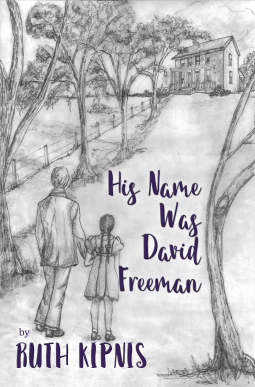
His Name was David Freeman by Ruth Kipnis

When I saw His Name was David Freeman by Ruth Kipnis in NetGalley’s Read Now section I thought it looked interesting and different from most of the other books I read. And it has an unusual cover.

Blurb:

With the sudden death of his father, seventeen-year-old David is forced to leave the security of the estate his father managed in Prussia in search of an uncle living near Kiev in the Ukraine. Carrying with him the dream of owning a grand farm of his own someday. Fate plays into his hands as he’s given the opportunity to immigrate to America taking with him his new bride. In telling his story to his granddaughter he relives the joys, the sorrows and the hardships of raising a family in a world strange to him.

Bewildered as the first generation rejects the old world customs and assimilates into the cultural, the story traces David’s family through the second and third generations from the 1880’s of the Russian Czars to 1960’s in America.

Biography

Raised in Northern California, Ruth developed a love for horses at an early age. She and her husband raised their family in Woodside, California where they participated in the local horse activities from horse shows to fox hunting.

Through a twist of fate they turned a hobby into a thriving business when they added a Thoroughbred Training Center to their already growing Thoroughbred broodmare operation.

After retiring Ruth and her husband spent two years aboard their boat, the Paradigm, sailing the waters of Mexico. Settling in Puerto Vallarta they returned to the States seven years later for medical reasons. They purchased a farm in South Carolina filling it with ex-race horses.

Writing came late in her varied career. Ruth believes all of us have some secret desire, be it to ride a bike, play a guitar, paint a picture, or in her case write a novel. Age should not dissuade anyone from the joy of following one’s bliss.

Seeing her stories in print, knowing people are enjoying what she has written she says is reward enough. All proceeds from the book are donated to charity.

My thoughts:

Overall it is an enjoyable book – it’s a love story and a family drama.

In the author’s note Ruth Kipnis clarifies that this is a novel based on the author’s research into her family history. Her story mirrors the stories of so many impoverished and poorly educated farmers who had left the Ukraine in the late 1880s during the brutal reign of Czar Alexander III. ‘Whilst some failed, most by sheer will and hard work created a better, richer life than they had ever known.’

I loved the first part in which David tells his granddaughter Maya the story of his life. He was born in Prussia (later Poland) where his father worked on the estate of Count Frederic Von Zoransky. After his father’s death he went to live with his uncle in Grodov, a Shtetl (a small village) near Kiev in the Ukraine before emigrating to America in the late 1880s.

The details of his early life, the horrors of the voyage to America and the difficulties the immigrants encountered are vividly described, bringing the story to life. The family’s struggles against anti-semitism, prejudice and hardship are fascinating. When he and Miriam, his wife, arrived at Ellis Island he gave his name as ‘David Freeman’ because he couldn’t chance using his real name in case he was identified as an Army deserter. He’d made it to America as a free man.

I loved the descriptions of all the places in the book – I could see the hustle and bustle of Kiev, with its wide streets crowded with people and filled with fine horse drawn carriages. Similarly the farm in Connecticut that eventually David was able to buy with a loan from the Jewish Agricultural Society is described in fine detail.

Whilst I did like the second part of the book in which Maya brings the story of her family up to date through the Second World War and upto the 1960s, I didn’t find that it had the same level of drama and appeal as the first part. There are also a number of grammatical and typing errors throughout the book.

  • Format: Kindle Edition
  • File Size: 666 KB
  • Print Length: 263 pages
  • First published 15 September 2016
  • Publisher: First Edition Design Publishing
  • Source: my thanks to NetGalley for my copy

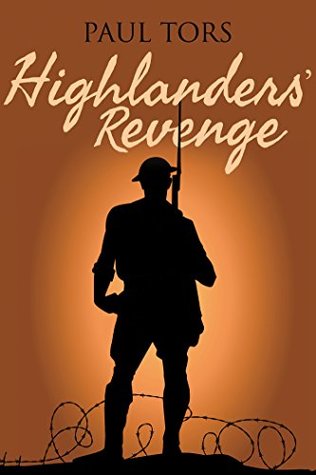
Highlanders’ Revenge by Paul Tors

Today is Remembrance Sunday, the closest Sunday to 11 November (Armistice Day), marking the anniversary of the end of the First World War in 1918. Remembrance Sunday is held to commemorate those who served the country in two world wars and in more recent conflicts. There will be the traditional two-minute silence at the Cenotaph on Whitehall at 11am today.

I think I should know more about the two world wars. There are many books and I’ve read some, mostly novels about the Second World War, but I haven’t read any military histories that go into the detail of the battles and the conditions the forces experienced. So when Victoria Richman emailed and asked me whether I would like to read Highlanders’ Revenge, a book that combines historical fiction and military history I accepted her offer. She is the co-author with her uncle, Paul Richman, writing under the pen name of ‘Paul Tors’.  Paul is a retired business man with a passion for military history and Victoria, also known as Tors, is a Creative Writing graduate who worked on a number of magazines before becoming a freelance writer.

Highlanders' Revenge

Blurb:

Highlanders’ Revenge combines a riotous story of battle and life during World War Two with an insight into the world of a little known, but fierce fighting unit; the 5th Camerons. This fast-paced historical novel will appeal to fans of military fiction who also appreciate historical accuracy.

Highlanders’ Revenge tells the story of Mash, the nickname Highland soldiers give to an Englishman in their ranks. Scarred both from the retreat before the Blitzkrieg advance across France and from the murder of his first love, Mash has to integrate himself into a new section that is wary of the sullen and secretive ‘˜Mash Man’.

Together they journey to Egypt where they encounter a way of life that tests them to their limits as they prepare for one of the greatest battles of the Second World War; El Alamein. Scorched by day, frozen by night and plagued by insects, they have to learn how to live and fight in the desert as they prepare for one of the greatest battles of the Second World War. They are then cast into the thick of the fighting at El Alamein and the Allies’ tumultuous battle to break through the Axis defenses.

My thoughts:

Highlanders’ Revenge is a meticulously researched and very detailed historical novel, about ‘Mash’, an Englishman in a Highland regiment, first as he fought with the 4th Camerons at St Valery in June 1940 during the Battle of France and then in the 5th Camerons at the second Battle of El Alamein between 23 October and 4 November 1942.

This novel vividly portrays the horror of war. I think it combines historical fiction and military history well and there is an extensive glossary at the end of the book that explains a lot of the terms that I hadn’t come across before. I learnt a great deal about World War Two, particularly about the second Battle of El Alamein. It brought home to me the devastating conditions that the troops encountered, not just the reality of war but the physical presence of the heat, the multitude of insects, the dust and the sand, and the almost constant dysentery.

There is an excellent Author’s Note explaining where the novel diverges from the historical record. The central characters are fictional, but the book is based on real events. There are also maps, a bibliography and as I mentioned an extensive glossary.

Highlanders’ Revenge is the first step in a journey that will take Mash through North Africa and the invasion of Sicily, onto the D-Day landings, the battles around Caen before the liberation of the Low Countries, the Battle of the Bulge and the crossing of the Rhine before ending the war in Bremen.

My thanks to the authors for a digital copy, via NetGalley.

  • Format: Kindle Edition – also available in paperback
  • File Size: 2747 KB
  • Print Length: 369 pages
  • Publisher: Troubador (14 July 2016)

Amazon UK link

Amazon US link

The Blood Card by Elly Griffiths

The Blood Card (DI Stephens & Max Mephisto, #3)The Blood Card by Elly Griffiths is the third in the DI Stephens and Max Mephisto series. Known as the ‘Magic Men’ they had been part of a top-secret espionage unit during the War.

This book captures the atmosphere of 1953 – a time of great change and optimism. Britain is looking forward with eager anticipation to the new Queen’s coronation. The newspapers and newsreels are full of it and more than half the homes in the country have bought a television in order to watch the coronation live- it was the first British coronation to be broadcast on television, a momentous occasion. But there are fears that an anarchist group is plotting to disrupt the coronation.

Max, a magician, and his daughter Ruby, also a magician, are preparing for a TV Coronation Variety show, whilst Edgar is leading the investigation into death of Madame Zabini, a gypsy fortune teller, on Brighton pier.  However, when their former war-time commander is murdered both Edgar and Max are instructed to investigate his death. A playing card, the ace of hearts had been found on his body, next to the knife still in his chest. Magicians call it the ‘blood card‘.

Whilst Max investigates the show business connection, Edgar flies to the States to interview a witness who has links to an anarchist group, leaving Sergeant Emma Holmes to look into Madame Zabini’s death. At first it looked as though she had committed suicide when her body had been found washed up near the Palace Pier but Emma suspects it was not an accident or suicide. As the investigations progress it appears there may be a connection between the two deaths and also links to the plot to disrupt the coronation.,

I loved the way this book is so firmly set in 1953, and conveys the public’s excitement about the new Queen and the coronation, especially as it was being broadcast live on television. I enjoyed the insight into the history of television as Max is sceptical about performing magic on TV thinking the ‘smug grey box’ will be the death of the days of music hall, that magic tricks needed to be performed on stage not in close up with a camera over his shoulder. But he is persuaded to take part in a new show after the coronation – Those were the Days ( that is The Good Old Days). And I also liked the character progression as Edgar and Max continue their friendship. Edgar is engaged to Ruby, although Max is not too happy about it. And Edgar appears to be unaware of Emma’s feelings for him. How this will end is yet to be resolved.

The Blood Card is a most entertaining book, with a convincing cast of characters. The mystery is expertly handled, with plenty of suspense and lots of twists and turns as the separate plot strands are intricately woven together. I loved it.

Thanks Quercus Books and Netgalley for an advance review copy of this book ahead of publication on 3rd November.

Amazon UK link

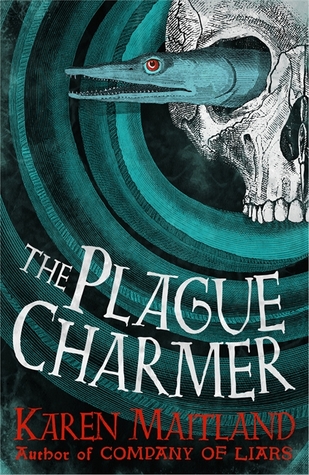
The Plague Charmer by Karen Maitland

The Plague Charmer

Karen Maitland is a great storyteller.

The Plague Charmer is a fascinating medieval tale full of atmosphere and superstition. It’s a long but an unputdownable book, bringing the medieval world to life in all its brutality and hardship. I thoroughly enjoyed it. I received an uncorrected proof copy of this, her latest novel, from Lovereading. The book is set in Porlock Weir in 1361 where a village is isolated by the plague when the Black Death spreads once more across England.  Following an eclipse of the sun, as a storm rages along the coast, a ship is blown ashore bringing a dark stranger, Janiveer, to the village. She warns the villagers that the plague, raging in other parts of the country will soon spread to their village and offers to save them – but for a terrible price.

It’s a complex story, told from different characters’ perspectives, following the lives of Will, a ‘fake’ dwarf, Sara, a packhorse man’s wife and her family, Matilda, a religious zealot, and Christina at nearby Porlock Manor amongst others. It’s a tale of folklore, black magic, superstition, violence, torture, murder, and an apocalyptic cult – and also of love. As the plague spreads and more horrendous deaths pile up bringing  fear and hysteria, families are broken up, and hostilities surface as the village is isolated, left to fend alone.

I thought Will a fascinating character. He was not born a dwarf, but was subjected to horrific treatment as a baby, strapped into an iron bridle, compressed and deformed as he grew to form a squat little dwarf. He is remarkably free of bitterness and capable of more humanity than most of the other characters. Sara, too shows strength of character as she perseveres in her search for her two missing sons.

I like the Historical Notes, providing more detailed information about the period, the people and the location, as well as the legends, and the answers to the medieval riddles that head Will’s chapters. I particularly like the information about the plague and the various religious cults of the period. The Glossary is also invaluable, helping to flesh out the detail.

The Plague Charmer is a superb combination of historical fact and fiction. I really enjoyed reading this detailed and chillingly dark atmospheric book. It’s a memorable story with a colourful cast of characters, full of suspense and drama.

My thanks to Headline for also providing a proof copy via NetGalley.

  • Hardcover: 576 pages (also as an e-book)
  • Publisher: Headline Review (20 Oct. 2016)
  • Language: English
  • ISBN-10: 1472235827
  • ISBN-13: 978-1472235824

Amazon UK link

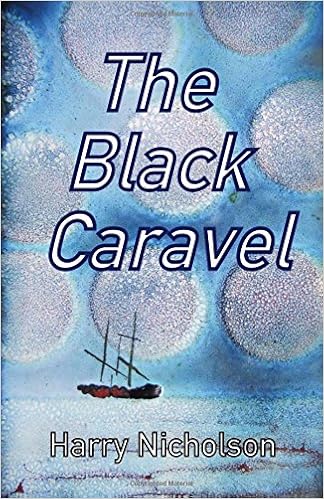
The Black Caravel by Harry Nicholson

The Black Caravel by Harry Nicholson is his second novel about Tom Fleck: a Novel of Cleveland and Flodden, which I reviewed in 2011.

Blurb:

This story follows the struggles of a farm labourer in North-East England. The series began with the novel, ‘˜Tom Fleck’, in which we followed Tom’s adventures, loves, and troubles in the year 1513, the year of the Battle of Flodden. The present book re-enters his life twenty-three years later in 1536, in the dark year of the dissolution of the monasteries and the subsequent rebellion known as ‘˜The Pilgrimage of Grace’. Tom is on a journey with his wife and blind daughter and must travel through the chaos.

My view:

Once again I was transported back to the 16th century with Tom Fleck and his family, this time it is 1536. He now has grown-up sons, Francis and Isaac, both at sea, part of the crew of the Plenty under Captain Ben Hood, a daughter of seventeen, Kate, who is blind and twins aged 15. Tom is now a farmer, living for the past twenty years at Crimond Hall on the Durham coast. As Henry VIII’s dissolution of the monasteries begins Tom and Rachel, his wife, together with their daughter Kate set out for London to visit a lawyer as Rachel has been bequeathed five hundred gold sovereigns in her father’s friend’s will.

As the blurb indicates their journey is not without danger, bringing them into contact with the rebels led by Robert Aske (a real historical character who led the Pilgrimage of Grace protest). Tom’s sons, Francis and Isaac are also in trouble as the Plenty runs aground on the Goodwin Sands in the Dover Straits, encounters a ‘plague ship’, a grounded Portuguese caravel with just one man and a dog left on on board, and engages battle with Barbary pirates from North Africa.

The Black Caravel is a fascinating story about ordinary people set against the background of national affairs and how it affects their lives, for example one character refers to ‘poor Anne Boleyn what’s got no head‘ and he thinks that Richard of York was the true King, not Henry VIII. I was immersed in the time and place – the landscape, the bird sounds, the plants and animals, the towns and the seascape are all beautifully described; for example this passage describing the scene as the fog over the Goodwins lifted:

The fog shifted. Then swirled. Driven before a freshening breeze the murk swept away to the northeast. The shore boat approached the grounded Plenty in bright noon sun. In the shallows around her, the sea was a burnished duck-egg green. Farther out, the surface glowed steel-bright and sparkled with a million ripples. The drying sandbanks threw back white light, fierce to the eyes.

An urgent shout came from the Plenty. The rowers bent harder. A hoard of dark shapes undulated across the sandbank. The seals bugled in alarm while they jostled to plunge into the sea. A flock of pied birds lifted in panic before the approach of men who ran full tilt armed with crossbows and spears. The oystercatchers flew overhead, bleating. Urgent hands reached over the side to heave the heavy captain onto the deck of the cog.(page 59)

There is so much packed in this short novel, reflecting the way of life and the attitudes of the times such as the religious fervour as England broke away from Rome, the ways of treating illness (Kate is blind as a result of a blow to her head) and the anti-semitism that prevailed. I thoroughly enjoyed reading it.

My thanks to Harry Nicholson for sending me a copy to read and review.

  • Paperback: 188 pages
  • Publisher: CreateSpace Independent Publishing Platform (30 Aug. 2016)
  • Language: English
  • ISBN-10: 1535378085
  • ISBN-13: 978-1535378086
  • Source: Review copy from the author