Highlanders’ Revenge by Paul Tors

Today is Remembrance Sunday, the closest Sunday to 11 November (Armistice Day), marking the anniversary of the end of the First World War in 1918. Remembrance Sunday is held to commemorate those who served the country in two world wars and in more recent conflicts. There will be the traditional two-minute silence at the Cenotaph on Whitehall at 11am today.

I think I should know more about the two world wars. There are many books and I’ve read some, mostly novels about the Second World War, but I haven’t read any military histories that go into the detail of the battles and the conditions the forces experienced. So when Victoria Richman emailed and asked me whether I would like to read Highlanders’ Revenge, a book that combines historical fiction and military history I accepted her offer. She is the co-author with her uncle, Paul Richman, writing under the pen name of ‘Paul Tors’.  Paul is a retired business man with a passion for military history and Victoria, also known as Tors, is a Creative Writing graduate who worked on a number of magazines before becoming a freelance writer.
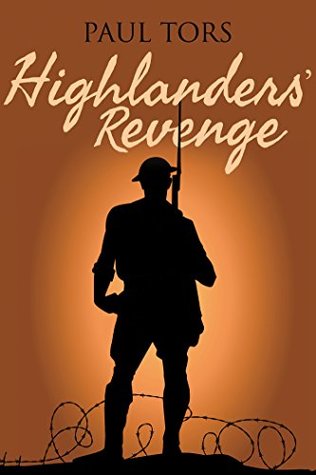
Highlanders' Revenge

Blurb:

Highlanders’ Revenge combines a riotous story of battle and life during World War Two with an insight into the world of a little known, but fierce fighting unit; the 5th Camerons. This fast-paced historical novel will appeal to fans of military fiction who also appreciate historical accuracy.

Highlanders’ Revenge tells the story of Mash, the nickname Highland soldiers give to an Englishman in their ranks. Scarred both from the retreat before the Blitzkrieg advance across France and from the murder of his first love, Mash has to integrate himself into a new section that is wary of the sullen and secretive ‘˜Mash Man’.

Together they journey to Egypt where they encounter a way of life that tests them to their limits as they prepare for one of the greatest battles of the Second World War; El Alamein. Scorched by day, frozen by night and plagued by insects, they have to learn how to live and fight in the desert as they prepare for one of the greatest battles of the Second World War. They are then cast into the thick of the fighting at El Alamein and the Allies’ tumultuous battle to break through the Axis defenses.

My thoughts:

Highlanders’ Revenge is a meticulously researched and very detailed historical novel, about ‘Mash’, an Englishman in a Highland regiment, first as he fought with the 4th Camerons at St Valery in June 1940 during the Battle of France and then in the 5th Camerons at the second Battle of El Alamein between 23 October and 4 November 1942.

This novel vividly portrays the horror of war. I think it combines historical fiction and military history well and there is an extensive glossary at the end of the book that explains a lot of the terms that I hadn’t come across before. I learnt a great deal about World War Two, particularly about the second Battle of El Alamein. It brought home to me the devastating conditions that the troops encountered, not just the reality of war but the physical presence of the heat, the multitude of insects, the dust and the sand, and the almost constant dysentery.

There is an excellent Author’s Note explaining where the novel diverges from the historical record. The central characters are fictional, but the book is based on real events. There are also maps, a bibliography and as I mentioned an extensive glossary.

Highlanders’ Revenge is the first step in a journey that will take Mash through North Africa and the invasion of Sicily, onto the D-Day landings, the battles around Caen before the liberation of the Low Countries, the Battle of the Bulge and the crossing of the Rhine before ending the war in Bremen.

My thanks to the authors for a digital copy, via NetGalley.

  • Format: Kindle Edition – also available in paperback
  • File Size: 2747 KB
  • Print Length: 369 pages
  • Publisher: Troubador (14 July 2016)
Amazon UK link

Amazon US link

The Blood Card by Elly Griffiths

The Blood Card (DI Stephens & Max Mephisto, #3)The Blood Card by Elly Griffiths is the third in the DI Stephens and Max Mephisto series. Known as the ‘Magic Men’ they had been part of a top-secret espionage unit during the War.

This book captures the atmosphere of 1953 – a time of great change and optimism. Britain is looking forward with eager anticipation to the new Queen’s coronation. The newspapers and newsreels are full of it and more than half the homes in the country have bought a television in order to watch the coronation live- it was the first British coronation to be broadcast on television, a momentous occasion. But there are fears that an anarchist group is plotting to disrupt the coronation.

Max, a magician, and his daughter Ruby, also a magician, are preparing for a TV Coronation Variety show, whilst Edgar is leading the investigation into death of Madame Zabini, a gypsy fortune teller, on Brighton pier.  However, when their former war-time commander is murdered both Edgar and Max are instructed to investigate his death. A playing card, the ace of hearts had been found on his body, next to the knife still in his chest. Magicians call it the ‘blood card‘.

Whilst Max investigates the show business connection, Edgar flies to the States to interview a witness who has links to an anarchist group, leaving Sergeant Emma Holmes to look into Madame Zabini’s death. At first it looked as though she had committed suicide when her body had been found washed up near the Palace Pier but Emma suspects it was not an accident or suicide. As the investigations progress it appears there may be a connection between the two deaths and also links to the plot to disrupt the coronation.,

I loved the way this book is so firmly set in 1953, and conveys the public’s excitement about the new Queen and the coronation, especially as it was being broadcast live on television. I enjoyed the insight into the history of television as Max is sceptical about performing magic on TV thinking the ‘smug grey box’ will be the death of the days of music hall, that magic tricks needed to be performed on stage not in close up with a camera over his shoulder. But he is persuaded to take part in a new show after the coronation – Those were the Days ( that is The Good Old Days). And I also liked the character progression as Edgar and Max continue their friendship. Edgar is engaged to Ruby, although Max is not too happy about it. And Edgar appears to be unaware of Emma’s feelings for him. How this will end is yet to be resolved.

The Blood Card is a most entertaining book, with a convincing cast of characters. The mystery is expertly handled, with plenty of suspense and lots of twists and turns as the separate plot strands are intricately woven together. I loved it.

Thanks Quercus Books and Netgalley for an advance review copy of this book ahead of publication on 3rd November.

Amazon UK link

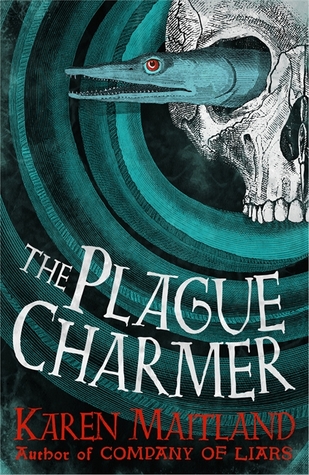
The Plague Charmer by Karen Maitland

The Plague Charmer

Karen Maitland is a great storyteller.

The Plague Charmer is a fascinating medieval tale full of atmosphere and superstition. It’s a long but an unputdownable book, bringing the medieval world to life in all its brutality and hardship. I thoroughly enjoyed it. I received an uncorrected proof copy of this, her latest novel, from Lovereading. The book is set in Porlock Weir in 1361 where a village is isolated by the plague when the Black Death spreads once more across England.  Following an eclipse of the sun, as a storm rages along the coast, a ship is blown ashore bringing a dark stranger, Janiveer, to the village. She warns the villagers that the plague, raging in other parts of the country will soon spread to their village and offers to save them – but for a terrible price.

It’s a complex story, told from different characters’ perspectives, following the lives of Will, a ‘fake’ dwarf, Sara, a packhorse man’s wife and her family, Matilda, a religious zealot, and Christina at nearby Porlock Manor amongst others. It’s a tale of folklore, black magic, superstition, violence, torture, murder, and an apocalyptic cult – and also of love. As the plague spreads and more horrendous deaths pile up bringing  fear and hysteria, families are broken up, and hostilities surface as the village is isolated, left to fend alone.

I thought Will a fascinating character. He was not born a dwarf, but was subjected to horrific treatment as a baby, strapped into an iron bridle, compressed and deformed as he grew to form a squat little dwarf. He is remarkably free of bitterness and capable of more humanity than most of the other characters. Sara, too shows strength of character as she perseveres in her search for her two missing sons.

I like the Historical Notes, providing more detailed information about the period, the people and the location, as well as the legends, and the answers to the medieval riddles that head Will’s chapters. I particularly like the information about the plague and the various religious cults of the period. The Glossary is also invaluable, helping to flesh out the detail.

The Plague Charmer is a superb combination of historical fact and fiction. I really enjoyed reading this detailed and chillingly dark atmospheric book. It’s a memorable story with a colourful cast of characters, full of suspense and drama.

My thanks to Headline for also providing a proof copy via NetGalley.

  • Hardcover: 576 pages (also as an e-book)
  • Publisher: Headline Review (20 Oct. 2016)
  • Language: English
  • ISBN-10: 1472235827
  • ISBN-13: 978-1472235824

Amazon UK link

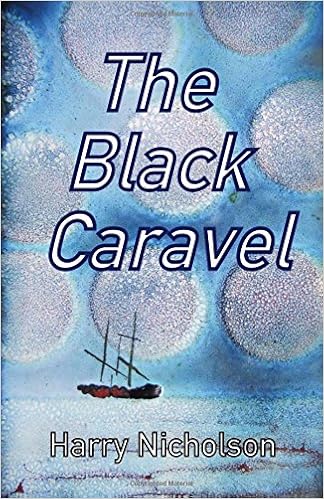
The Black Caravel by Harry Nicholson

The Black Caravel by Harry Nicholson is his second novel about Tom Fleck: a Novel of Cleveland and Flodden, which I reviewed in 2011.

Blurb:

This story follows the struggles of a farm labourer in North-East England. The series began with the novel, ‘˜Tom Fleck’, in which we followed Tom’s adventures, loves, and troubles in the year 1513, the year of the Battle of Flodden. The present book re-enters his life twenty-three years later in 1536, in the dark year of the dissolution of the monasteries and the subsequent rebellion known as ‘˜The Pilgrimage of Grace’. Tom is on a journey with his wife and blind daughter and must travel through the chaos.

My view:

Once again I was transported back to the 16th century with Tom Fleck and his family, this time it is 1536. He now has grown-up sons, Francis and Isaac, both at sea, part of the crew of the Plenty under Captain Ben Hood, a daughter of seventeen, Kate, who is blind and twins aged 15. Tom is now a farmer, living for the past twenty years at Crimond Hall on the Durham coast. As Henry VIII’s dissolution of the monasteries begins Tom and Rachel, his wife, together with their daughter Kate set out for London to visit a lawyer as Rachel has been bequeathed five hundred gold sovereigns in her father’s friend’s will.

As the blurb indicates their journey is not without danger, bringing them into contact with the rebels led by Robert Aske (a real historical character who led the Pilgrimage of Grace protest). Tom’s sons, Francis and Isaac are also in trouble as the Plenty runs aground on the Goodwin Sands in the Dover Straits, encounters a ‘plague ship’, a grounded Portuguese caravel with just one man and a dog left on on board, and engages battle with Barbary pirates from North Africa.

The Black Caravel is a fascinating story about ordinary people set against the background of national affairs and how it affects their lives, for example one character refers to ‘poor Anne Boleyn what’s got no head‘ and he thinks that Richard of York was the true King, not Henry VIII. I was immersed in the time and place – the landscape, the bird sounds, the plants and animals, the towns and the seascape are all beautifully described; for example this passage describing the scene as the fog over the Goodwins lifted:

The fog shifted. Then swirled. Driven before a freshening breeze the murk swept away to the northeast. The shore boat approached the grounded Plenty in bright noon sun. In the shallows around her, the sea was a burnished duck-egg green. Farther out, the surface glowed steel-bright and sparkled with a million ripples. The drying sandbanks threw back white light, fierce to the eyes.

An urgent shout came from the Plenty. The rowers bent harder. A hoard of dark shapes undulated across the sandbank. The seals bugled in alarm while they jostled to plunge into the sea. A flock of pied birds lifted in panic before the approach of men who ran full tilt armed with crossbows and spears. The oystercatchers flew overhead, bleating. Urgent hands reached over the side to heave the heavy captain onto the deck of the cog.(page 59)

There is so much packed in this short novel, reflecting the way of life and the attitudes of the times such as the religious fervour as England broke away from Rome, the ways of treating illness (Kate is blind as a result of a blow to her head) and the anti-semitism that prevailed. I thoroughly enjoyed reading it.

My thanks to Harry Nicholson for sending me a copy to read and review.

  • Paperback: 188 pages
  • Publisher: CreateSpace Independent Publishing Platform (30 Aug. 2016)
  • Language: English
  • ISBN-10: 1535378085
  • ISBN-13: 978-1535378086
  • Source: Review copy from the author

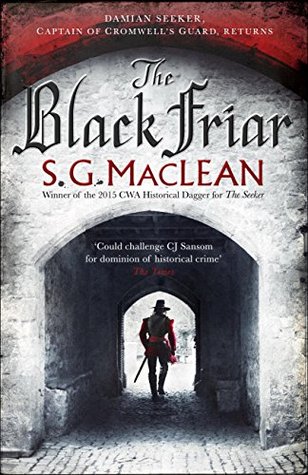
The Black Friar by S G MacLean

The Black Friar by S G MacLean is one of those books that has the power to transport me to another time and place. I was totally absorbed, convinced I was back in England in the 17th century.

The Black Friar (Damian Seeker, #2)

It is the second book in the Damian Seeker series, historical crime fiction set in 1655 during the Interregnum under Oliver Cromwell, the Lord Protector. Damian Seeker, Captain of Cromwell’s Guard, works for Thurloe, Cromwell’s Chief Secretary and spy master, in charge of the security of the regime. It’s a complex mystery, particularly as there are various factions and religious sects plotting rebellion against Cromwell.

A body, presumed by his black robe to be that of a Dominican friar, is found bricked up in a wall in Blackfriars, once a monastery and now a derelict building gradually falling into the River Fleet. But this was no friar, as Seeker recognised him as Carter Blyth one of Thurloe’s undercover agents, who had been working in the Netherlands, observing the Royalists colluding with foreign powers. As far as Seeker knew he had been killed in Delft three months earlier. Seeker’s task is to find why he had been killed and who killed him. He discovers that Blyth under Thurloe’s orders had in fact infiltrated a group of Fifth Monarchists who wanted to overthrow Cromwell and had been living with the Crowe family, members of the group, under the name of Gideon Fell.

It’s a complicated and intricate tale as Seeker, helped by Nathaniel Crowe, tries to discover what Blyth had been doing, and what trail he was following. There are missing children, whose whereabouts Blyth had been investigating, and plots to overthrow Cromwell as well as plots to reinstate Charles Stuart as King.

Although The Black Friar is the second book in the series, (the first is The Seeker, which I haven’t read) I think it works well as a stand-alone book. The characterisation is strong and I particularly like Damian Seeker, a man both respected and feared, and a man to trust.

I also like the way S G MacLean has based her book on solid historical research (she has an M.A. and Ph.D. in History from the University of Aberdeen) and weaves real historical figures into the story, such as the poet John Milton, now an old blind man, the Secretary of Foreign Tongues and the diarist Samuel Pepys, an Exchequer clerk, who though very personable was ‘prone to drink and some lewdness.’ It all brings to life the atmosphere and tenor of the 1650s. I loved it.

My thanks to Netgalley and Quercus books for my copy of this book. It is due to be published on 6 October.

Recent Additions at BooksPlease

books-sept-2016

From top to bottom: the first seven in the pile are from Barter Books in Alnwick, my favourite bookshop where you can either swap or buy books. I took seven books in and came home with another seven. I love browsing at Barter Books and always find books I want to read.

  • Absent in the Spring by Mary Westmacott – I had to search round the various places fiction is shelved in Barter Books before I found this book in the Romance section. It’s by Agatha Christie, writing as Mary Westmacott. The books she wrote under this pseudonym are a complete change from her crime fiction – she was such a versatile writer. Her daughter, Rosalind, called them ‘bitter-sweet stories about love’. It was first published in 1944.
  • Arms and the Women by Reginald Hill – I’ve been collecting his books in an attempt to read them in chronological order. This is the 18th Dalziel and Pascoe mystery in which Ellie, Pascoe’s wife is in danger at a decaying seacoast mansion.
  • An April Shroud by Reginald Hill – the 4th Dalziel and Pascoe mystery, set in a solitary mansion in the Lake District where Pascoe is spending his honeymoon.
  • The House by the Churchyard by Sheridan Le Fanu – the Horror section is right next to Crime Fiction and I don’t usually look there but as I walked past this book caught my eye as it was displayed in one of the holders on the side of the bookcase, maybe because I’m taking part in the R.I.P. event at the moment. Le Fanu was described by Henry James as in the ‘first rank of ghost writers‘. Set in the 1760s in Ireland, it begins with the accidental disinterment of an old skull and an eerie late-night funeral.
  • A Game of Sorrows by Shona MacLean – the second book in the Alexander Seaton series. I’ve read the first and the third so I was pleased to find this one. It’s set in 1628 in Ulster as Seaton investigates a family curse – a family divided by secrets and bitter resentments.
  • The Collector by John Fowles – another author whose books I’ve enjoyed in the past. This could also be a choice for the R.I.P. event. It’s described as a thriller with psychological and social overtones, the story of a kidnapping.
  • A Walk Along the Wall by Hunter Davies – I was really pleased to find this book Hadrian’s Wall is the most important Roman monument in Britain. Hunter Davies grew up at one end of the wall and was inevitably drawn to walk its length. It’s part history, part guidebook and part personal experience and gives readers a taste of what life was like in this remote part of Britain 2000 years ago.

The bottom two books in the pile aren’t from Barter Books:

  • The Black Caravel by Harry Nicholson is a book the author sent to me for review. It’s his second novel, a sequel to ‘Tom Fleck‘ which I reviewed in 2011. It begins and ends at Hartlepool in 1536, the year of The Pilgrimage of Grace, as Barbary corsairs are raiding northwards.

and finally a birthday present (in August):

  • Rowan’s Well by C J Harter – a psychological thriller (another one for  R.I.P. maybe). Rowan’s Well is a remote house on the north-east coast of England, home to the charismatic Brooke family, the scene of murder and betrayal.

I want to start reading them all – now!