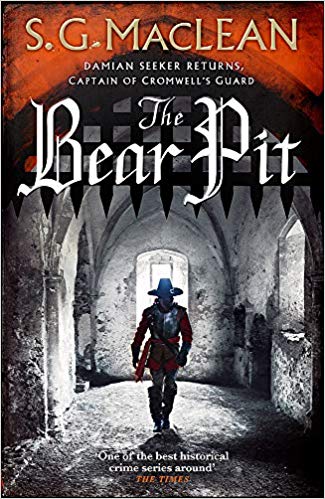
The Bear Pit by S G MacLean

Bear Pit

Quercus/ 11 July 2019/Paperback/ 416 pages/ Review copy/ 5*

S G MacLean is one of my favourite authors of historical fiction, so I was delighted to read her latest book, The Bear Pit.  It is the fourth book in her Damien Seeker series, set during the Interregnum under Oliver Cromwell, the Lord Protector. I’ve read the previous three books. Reading them takes me back to England in the 17th century, a time and a place full of danger and unrest, teeming with spies, exiles and assassins. Whilst I  was happy to read them as standalones, I think it would help to follow the progression of events if they are read in order.

This one begins in September 1656 as three men are waiting for Oliver Cromwell to emerge from Westminster Abbey on his way to the State Opening of Parliament in Parliament House. Their plan to assassinate Cromwell had been in preparation in Cologne and Bruges for a year and a half, but that day it was thwarted. However, they will not give up.

Damian Seeker, Captain of Cromwell’s Guard, works for John Thurloe, Cromwell’s Chief Secretary and spy master, in charge of the security of the regime, running a virtual secret service. Thurloe is floundering under all the reports from the Continent about plots against Cromwell’s life and to reinstate Charles Stuart as King. He tells Seeker until they have corroboration of the rumours they don’t have the time or capability to look into the matter. Not wanting to go against Thurloe’s orders, Seeker decides to take part in a raid on an illegal gaming house which ends with the discovery of the body of an elderly man chained to the wall by his neck and half eaten, obviously ravaged by a bear. But bear baiting had been banned and all the bears had been shot recently – or so it was claimed. Where had the bear come from and why was the man killed? And what connection, if any, does the murder have to the plots to kill Cromwell?

Like all good historical fiction The Bear Pit blends historical fact and fiction. There was indeed a plot to assassinate Cromwell in the autumn and winter of 1656 as described in the novel, whereas the mystery of the man killed by a bear and the subsequent search for the bear’s whereabouts are fictional. 

Some of the things I enjoy in this book are the return of characters from the earlier books -Sir Thomas Faithly, Lawrence Ingoldby, Manon, Marie Ellingworth, to mention just a few, and the glimpses we see of other historical figures – such as John Evelyn, a young Samuel Pepys, the poet Andrew Marvell as well as John Milton and one of my favourite historical figures when I was at school – Prince Rupert of the Rhine. I was fascinated by the details of The Cabinet of Curiosities, assembled by John Tradescant and his son, in Tradescant’s Garden in South Lambeth. In her Author’s Note S G MacLean states that these were indeed, very much in existence and were open for business as well as being a public attraction. The remains of the collection are held in Oxford’s Ashmolean Museum. 

S G MacLean is a wonderful storyteller and her books are full of authentic detail skilfully interwoven in the stories without holding up the action. The Bear Pit is a fast-paced book, full of action and danger and wonderful characters, especially in the figure of Damien Seeker. He is the hero of the book – strong, dedicated to his work, indefatigable in his search of the truth and loyal to his friends and colleagues. The atmospheric setting complements the plot – the streets of London in winter, the cold, fog and damp and in particular Bankside in Southwark and the eerie atmospheric wastes of Lambeth Marsh. I was completely absorbed in the book. I found it compelling reading both the murder mystery and the assassination plot gripped me and I raced through it, eager to find out what happened. I was absolutely incredulous at the ending though, but it does give me hope that there may be fifth Damian Seeker novel.

Many thanks to the publishers, Quercus, for my review copy via NetGalley.
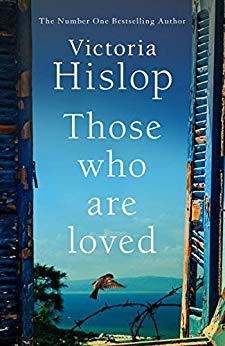
Those Who Are Loved by Victoria Hislop

Those who are loved

Headline Review|30 May 2019|496 pages|Review e-book copy|4.5*

Those Who Are Loved by Victoria Hislop is one of the most moving novels I’ve read for a long time. But it begins slowly and it was only at about the halfway stage that it really took off for me. And now I’ve come to write about it I’m finding it difficult to put into words just how exceptional I think it is. Whatever I write will not do it justice – it really is ‘an epic tale of an ordinary woman compelled to live an extraordinary life‘.

It is historical fiction ‘set against the backdrop of the German occupation of Greece, the subsequent civil war and a military dictatorship, all of which left deep scars.’

The main character is Themis Koralis/Stravidis (in Greek mythology Themis is the personification of fairness and natural law). In 2016 she is a great grandmother and realising that her grandchildren knew very little about Greek history she decided to tell them her life story, beginning from when she was a small child in the 1930s, through the German occupation of Greece during the Second World War, the civil war that followed, then the oppressive rule of the military junta and the abolition of the Greek monarchy, up to the present day.

As she grew up she and her brothers and sister had many disagreements, holding differing political opinions, which came to a head when the Germans invaded Athens in 1941.  Themis and her brother Panos joined the communist party in their fight against the Germans, whilst her other brother Thanasis and her sister Margarita opposed them, hating the communists’ views and believing that Germany was a friend of Greece, not a foe.

During the civil war Themis was imprisoned on the islands of exile, Makronisos and then Trikeri. Her experiences were horrific, but only strengthened her determination to survive. On Makronisos she met Aliki, also a member of the communist party, and when Aliki is condemned to death, Themis promises to find and raise Aliki’s son, Nikos as her own.

During the early part of the book I felt it was rather like reading a history book. But then, the book sprang to life, the pace increased, and I was totally gripped and moved as history and fiction came together dramatically in glorious technicolor, telling the story of the characters personal lives and their parts in the action.

I have only skimmed the surface of this book – there is so much more to the story than I can mention here. But after the slow start I loved it, even though it is not a book I can say I ‘enjoyed’. It is a powerful and shocking story of remarkable characters faced with brutal and traumatic events. It has a completely convincing and vivid sense of location. I knew next to nothing about this period in Greek history before and I was astounded by what I learnt. 

On a personal note, the earthquake in Athens on 7 September 1999 plays a part in the story. We were there then on holiday. We had been out at sea on that day and travelled back to our hotel through Athens, seeing some of the destruction and terror it caused. The earthquake had been felt at our hotel in Marathon – people had been thrown out of the swimming pool and later that evening we could still feel the aftershocks.

Many thanks to the publishers, Headline Review, for my review copy via NetGalley.

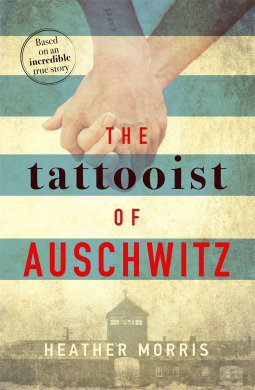
The Tattooist of Auschwitz by Heather Morris

‘a story of two ordinary people, living in an extraordinary time, deprived not only of their freedom but their dignity, their names and their identities.’

The Tattooist of Auschwitz

Zaffre|4 Oct. 2018|320 pages|Paperback|3*

Yesterday when I finished reading The Tattooist of Auschwitz, I didn’t want to write about it, but I kept thinking about it and in the end I decided I needed to record a few of my thoughts about it. It is not a book I can say that I ‘enjoyed’, because I didn’t – the subject matter is too painful, how can you enjoy a book that describes the horrors of one person’s experience of his time in the concentration camp of Auschwitz-Birkenau*!

It is ‘based on the true story of Lale Sokolov’.  He was born Ludwig Eisenberg on 28 October 1916 in Krompachy, Slovakia and transported to Auschwitz on 23 April 1942. He was given the job of tattooing the prisoners marked for survival. He met and fell in love with Gita, a fellow prisoner and he was determined that they would be survivors. The story Heather Morris tells is simply devastating and I could hardly bear to read the horrors of life in the concentration camps; it is appalling as it reveals the brutality, hatred and evil side of human nature. But is also about love, determination, compassion, and the strength of human nature. 

It is simply told in a straight forward, childlike style and in the present tense. It is certainly a most unsettling and depressing book, despite the fact that I knew that Lale and Gita would survive their horrific experience.

Heather Morris wrote the book after meeting Lale and hearing his story. In her Author’s Note she tells how she spent three years listening to him as

he told his story piecemeal, sometimes slowly, sometimes at bullet-pace and without clear connections between the many, many episodes. … Lale’s memories were on the whole, remarkably clear and precise.

The epilogue describes what happened to Lale and Gita after the end of the war. They married, moved to Bratislava, and, after travelling to Paris, eventually moved to Melbourne. There are photos at the end of the book of Lale and Gita in Australia with Gary their son and an Afterword by Gary about their family life and how their years in the camp affected them both.

But the line between fiction and fact can be blurred in a novel and there are claims that ‘the book contains numerous errors and information inconsistent with the facts, as well as exaggerations, misinterpretations and understatements‘. I have read the article pointing out the errors etc. It concludes that the book should be seen as an ‘impression devoid of documentary value on the topic of Auschwitz, only inspired by authentic events … Given the number of factual errors, therefore, this book cannot be recommended as a valuable title for persons who want to explore and understand the history of KL Auschwitz.’

It seems to me that it is a novel that clearly conveys what Lale experienced during the three years he spent in Auschwitz, as he remembered it many years later. Despite the errors that have been pointed out, I think it is a story of man’s inhumanity to man and a tribute to the strength of the human spirit for survival.

KL Auschwitz-Birkenau 

The first and oldest was the so-called “main camp,” later also known as “Auschwitz I” (the number of prisoners fluctuated around 15,000, sometimes rising above 20,000), which was established on the grounds and in the buildings of prewar Polish barracks;

The second part was the Birkenau camp (which held over 90,000 prisoners in 1944), also known as “Auschwitz II” This was the largest part of the Auschwitz complex. The Nazis began building it in 1941 on the site of the village of Brzezinka, three kilometers from Oswiecim. The Polish civilian population was evicted and their houses confiscated and demolished. The greater part of the apparatus of mass extermination was built in Birkenau and the majority of the victims were murdered here;’ (extract from the history page of the Auschwitz-Birkenau Memorial and Museum)

WWW Wednesday: 5 June 2019

IMG_1384-0

WWW Wednesday is run by Taking on a World of Words.

The Three Ws are:

What are you currently reading?
What did you recently finish reading?
What do you think you’ll read next?


Currently reading: I’m still making slow progress with reading  D H Lawrence: the Life of an Outsider by John Worthen,  but I’ve almost finished Sweet Thursday by John Steinbeck. So, I’ve started to read Those Who Are Loved by Victoria Hislop, one of the books on my 20 Books of Summer list.

Those Who Are Loved is historical fiction, set against the backdrop of the German occupation of Greece, the subsequent civil war and a military dictatorship, all of which left deep scars. I know very little about Greece during the Second World War so I’m finding it very interesting, but it is very slow going. It begins as Themis remembers her life and the conflicts within her family as well as their experience of the war.

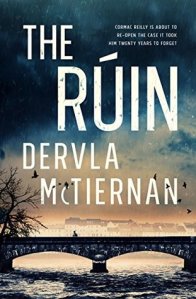
I’ve recently finished The Ruin by Dervla Mactiernan and will be writing more about it in a later post.

Ruin

Blurb:

It’s been twenty years since Cormac Reilly discovered the body of Hilaria Blake in her crumbling Georgian home. But he’s never forgotten the two children she left behind…

When Aisling Conroy’s boyfriend Jack is found in the freezing black waters of the river Corrib, the police tell her it was suicide. A surgical resident, she throws herself into study and work, trying to forget – until Jack’s sister Maude shows up. Maude suspects foul play, and she is determined to prove it.

DI Cormac Reilly is the detective assigned with the re-investigation of an ‘accidental’ overdose twenty years ago – of Jack and Maude’s drug- and alcohol-addled mother. Cormac is under increasing pressure to charge Maude for murder when his colleague Danny uncovers a piece of evidence that will change everything…

My next book could be:

I think, but I could always change my mind, it’ll be Anything You Do Say by Gillian Mcallister, another book that is on my 20 Books of Summer list.

Anything you do say

Blurb:

Joanna is an avoider. So far she has spent her adult life hiding bank statements and changing career aspirations weekly.

But then one night Joanna hears footsteps on the way home. Is she being followed? She is sure it’s him; the man from the bar who wouldn’t leave her alone. Hearing the steps speed up Joanna turns and pushes with all of her might, sending her pursuer tumbling down the steps and lying motionless on the floor.

Now Joanna has to do the thing she hates most – make a decision. Fight or flight? Truth or lie? Right or wrong?

Have you read any of these books?  Do any of them tempt you? 

Reading in May

I’ve been reading eight books in May, and have finished reading six of them, but only reviewed four of them:

  1. The Butterfly Room by Lucinda Riley 4* –  a family saga spanning generations  revealing the dark secret hidden behind the locked door of the Butterfly Room
  2. Mrs Whistler by Matthew Plampin 5* – not about his mother, but about him and his model and mistress, Maud Franklin
  3. Codename Villanelle by Luke Jennings 3* – the basis for the TV series Killing Eve 
  4. The Doll Factory by Elizabeth Macneal 5* –  the story of Iris who dreamed of being an artist and her involvement with the Pre-Raphaelites

The other two books I finished are:

Before the Fall by Noah Hawley, which I didn’t enjoy and I’m just writing a few notes here about it. It won the 2017 Edgar Award for Best Novel and was selected by The Sunday Times as one of the top page-turners of summer 2017, so I’m in the minority because I thought it was boring and tedious. The plot is simple – a plane crashes into the sea after taking off from Martha’s Vineyard, just two people survive and the mystery is why did the plane crash and who was responsible. The main part of the book is made up of the long backstories of the people on the plane. It’s not gripping or thrilling and definitely not a page-turner. 1*

However I thoroughly enjoyed The Ruin Dervla McTiernan’s debut novel and I’ll be writing more about it in the next few days. Now this is a page-turner, about a current murder linked to a cold case. It’s complex and compelling reading as DI Cormac Reilly unravels a web of secrets. 4*

I’m still reading two books:

D H Lawrence: the Life of an Outsider by John Worthen, from his childhood in Nottinghamshire to his death at the age of 44. I’m reading this slowly and it will be some time before I finish it. An ‘outsider’, he always felt he didn’t fit in or belong either with his family or his work colleagues or the literary elite of the times.

The other book I’ve been reading is Sweet Thursday by John Steinbeck, my Classics Club Spin book that I was hoping to finish by the end of May. I’ve only read half of it so far. It’s a follow up to Cannery Row, with some of the same characters and I’m enjoying its humour and view of life in Monterey in the 1950s.

And now it’s June! I’ll be concentrating on reading the books I’ve listed for the 20 Books of Summer challenge – and hoping I won’t be distracted by too many other books!

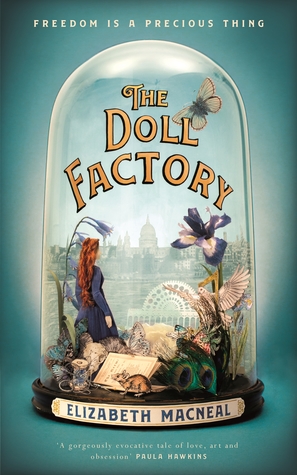
The Doll Factory by Elizabeth Macneal

An intoxicating story of art, obsession and possession

Doll Factory

Picador|2 May 2019|336 pages|Review e-book copy|5*

The Doll Factory by Elizabeth Macneal is one of the best books I read so far this year. It captivated me with its tale of Iris, the young woman who worked painting dolls in Mrs Salter’s Dolls Emporium, but who dreamed of being an artist. It tells of her involvement with the Pre-Raphaelite artists – in particular with Louis Frost (a fictional character) who attracted by her beauty and her red hair wants her to model for him. She agrees, despite the disapproval of her parents and twin sister Rose, on the condition that he teaches her to paint. Meanwhile Silas Reed, a taxidermist and a collector of curiosities, worships her from afar and fantasises that she returns his love.  

But it’s much more than my brief outline conveys. This is historical fiction that transports me back in time and place to the 1850s when the Great Exhibition is being constructed and then opened to the public, a time when the young artists who had recently formed the Pre-Raphaelite Brotherhood, first formed in the summer of 1848, are challenging the art world with their vivid paintings, at once both stylised and naturalistic. The descriptions take me straight into London of the early 1850s with all its sights and smells, its squalor and bustling crowds as people go about their daily lives.

There are some really memorable characters, such as ten year old Albie, who collects dead creatures for Silas. He lives with his sister, a prostitute, in a ramshackle house down a dead-end alley and with just one tooth he dreams of buying a set of false teeth. Rossetti, Millais and Holman Hunt also appear alongside the fictional characters and I loved all the details about their paintings, and their fascination with wombats. Rossetti owned two wombats – the inspiration for Louis’ wombat, Guinevere, who lives in his studio.

As I read on I began to feel a growing sense of menace and the tension between the characters rose almost to an unbearable peak as the book reached its conclusion. It’s full of atmosphere, dark and gothic towards the end as it reached its climax – and left me wanting more. It’s wonderful – historical fiction, art history, and a love story as well as a dark tale of obsession, pulsing with drama, intrigue and suspense.  I loved it!

About the Author

Elizabeth Macneal was born in Edinburgh and now lives in East London. She is a writer and potter and works from a small studio at the bottom of her garden. She read English Literature at Oxford University, before working in the City for several years. In 2017, she completed the Creative Writing MA at UEA in 2017 where she was awarded the Malcolm Bradbury scholarship.

The Doll Factory, Elizabeth’s debut novel, won the Caledonia Noel Award 2018. It will be published in twenty-eight languages and TV rights have sold to Buccaneer Media.

Many thanks to the publishers, Picador, for my review copy via NetGalley.