Traitor in the Ice by K J Maitland

Headline Review| 31 March 2022| 461 pages| e-book| Review copy| 2*

I don’t have very much to say about Traitor in the Ice, the second Daniel Pursglove book, by K J Maitland. It is set during the Great Frost of 1607-8 in England, when the Thames and many other rivers were frozen solid, but the countryside was the hardest hit. I preferred the first Daniel Pursglove book, The Drowned City.

It is a dark historical novel, describing life in England under the new king, James I of England and VI of Scotland. Daniel is continuing his search for the mysterious Spero Pettingar, suspected of plotting another conspiracy to kill James and reinstate a Catholic monarch and is sent by the Secretary of State, Robert Cecil, Lord Salisbury, to Battle Abbey, near Hastings, in Sussex, a Catholic household, suspected of sheltering Catholic priests.

Daniel is an interesting character, needing all his determination and courage to discover what has been going on at Battle Abbey. It’s made even more difficult as it seems that everyone has something to hide, not just their politics and religious dissent, but also murder. A little bit more of his background is revealed in this second book, but he still remains a mysterious figure. And Spero Pettingar is an even more mysterious character, who is he – is he hiding at Battle Abbey? And will Daniel uncover all the secrets concealed within the Abbey?

But I enjoyed K J Maitland’s Author’s Note and information she gives in ‘Behind the Scenes of this Novel’ more than the novel. The details of her historical research are fascinating, with information about the real people behind her characters, such as Lady Magdalen, Viscountess Montague who did live at Battle Abbey. And the Glossary at the end of the book is also most helpful explaining a lot of the terms in the book I hadn’t come across before.

However, the book failed to hold my interest throughout as the wealth of detail she has put into the novel slows the action down and took away much of the suspense and tension – I felt like I was drowning in description. And at times I wasn’t really sure what was happening, especially at the end of the book – the Epilogue is mystifying.

My thanks to Headline Review for a review copy via NetGalley

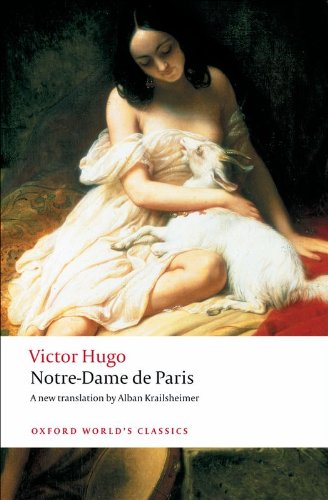
Notre-Dame de Paris by Victor Hugo

I have an old hardback copy of The Hunchback of Notre Dame (first published in 1831) in a very small font, too small for my eyes to cope with these days and a 49p e-book that I downloaded years ago when first got a Kindle. But I didn’t start reading it until a few months ago when FictionFan mentioned she was intending to read it and hold a Review-Along on her blog. I knew next to nothing about the book, not having seen any of the many films or TV versions, but I had read Victor Hugo’s Les Misérables back in 2008 and enjoyed it very much. So, I had high expectations that I would enjoy this one too.

But when I began reading my e-bookI was so disappointed – I thought it was so boring and it was hard to read, the sentences stilted and stumbling and obtuse with no flow. I was tempted to abandon it, after all it is a long book, and there are plenty of other books I want to read. However, I persevered, thinking surely it would get better. It didn’t, so then I wondered if it was me or the translation and began to look for another edition and I ended up with the Oxford World Classics edition, translated and with an introduction by Alban Krailsheimer, Notre-Dame de Paris, which is so much better, so much easier to read!

Rating: 3 out of 5.

The English title is so misleading – this book is not just about the hunchback Quasimodo, the bell-ringer of Notre-Dame, it is historical fiction on a grand scale, with a large cast of characters. It revolves around four main characters – the beautiful gypsy dancer, Esmeralda who fell hopelessly in love with the handsome womaniser, Captain Phoebus de Châteaupers, who has no intentions of marrying her. She in turn is loved by Frollo, the Archdeacon of Notre-Dame and by Quasimodo, the deformed and deaf bell-ringer of the cathedral of Notre-Dame.

But that is not all – it is also the story of the cathedral itself, Notre-Dame de Paris, and Hugo describes it at great length, focusing on the Gothic architectural elements of its structure, particularly its use of the pointed arch and including its flying buttresses, clerestory windows, and stained glass. He was a great advocate for the preservation of its Gothic architecture and was also extremely upset about the changes to the cathedral, the repairs and additions that had been done over the years. And it is not just the cathedral, Hugo also devotes many pages to describing Paris, seeing it from a bird’s eye view and also to the invention of the printing press and its effect on culture, described by Hugo as ‘the greatest event in history’. These digressions were not what I expected to read – I just wanted to get on with the story. I was impatient with the digressions, but looking back at Les Mis, that is exactly what he had done in that book too, so I shouldn’t have been surprised.

The story of the main characters’ relationships is told in a complicated way, going forward and backward in time, filling in the background of the characters, whilst revolving around the events of 1482, during the reign of Louis XI (who makes an appearance in the book). And it is melodramatic, playing on all our emotions. Quasimodo was so named because he was found, abandoned on Quasimodo Sunday (that is the second Sunday after Easter) when he was four years old. He was ‘adopted’ by the sinister Archdeacon, Claude Frollo, and grew up in the cathedral, isolated by his deafness caused by all the years he’d spent ringing the bells, and feared because of his hideous appearance.

This book has everything! It is by turns a farcical comedy, a tale of obsessions and unrequited passions, of love and lust, of a terrible miscarriage of justice, of outsiders, of violent mobs, of cruelty, arrogant men, silly women, of monsters, of alchemy, of intolerance, of prejudice, jealousy, fury, torture, corruption and above all of tragedy. And it has a cast of colourful and distinct characters, that I either despised, loved or hated, including Esmeralda’s little goat Djali, who could dance and do tricks and spells (I loved Djali). It is difficult for me to love the book and equally as hard to dislike it as a whole, set firmly in its medieval time frame, against the dramatic backdrop of the cathedral (even though I grew impatient with all the architectural details). But I was convinced by the end of the book that Hugo had successfully brought the place and the people of 1482 dramatically to life for me.

My apologies to FictionFan for being nearly a week late to her Review-Along and thanks for nudging me into reading Notre-Dame de Paris at long last. I am glad I read it even if I can’t give it more than 3 stars – I  liked it, a good, enjoyable book.

The Drowned City by K J Maitland

Headline Review| 1 April 2021| 495 pages| e-book| Review copy| 3*

1606. England stands divided in the wake of the failed Gunpowder Plot. As a devastating tidal wave sweeps the Bristol Channel, rumours of new treachery reach the King.

In Newgate prison, Daniel Pursglove receives an unexpected – and dangerous – offer. Charles FitzAlan, close confidant of King James, will grant his freedom – if Daniel can infiltrate the underground Catholic network in Bristol and unmask the one conspirator still at large.

Where better to hide a traitor than in the chaos of a drowned city? Daniel goes to Bristol to investigate, but soon finds himself at the heart of a dark Jesuit conspiracy – and in pursuit of a killer.

My thoughts:

I didn’t realise when I began reading The Drowned City that K J Maitland is Karen Maitland, an author whose books I’ve enjoyed in the past. It is the first book of a new series featuring Daniel Pursglove, set in Jacobean England under the reign of James I of England and VI of Scotland. It is an historical thriller set in 1606, a year after the Gunpowder Plot failed.

It begins dramatically as a huge wave surges up the Bristol Channel, flooding the surrounding countryside in south-west England and parts of South Wales causing devastation and loss of life. The drama continues with Daniel Pursglove’s arrival in Bristol sent on the orders of King James to find Spero Pettingar, one of the conspirators of the Gunpowder Plot. King James is fearful of his life as there are rumours of more Catholic uprisings and plots to assassinate him, especially if the flood is taken as a sign of God’s anger, revenge for the executions of the conspirators.

Daniel is an interesting character, but there is a mystery about him. He was in Newgate prison at the start of the book, but no details are given about what crime he had committed, and little is given about his family background. He is offered his freedom if he finds Spero, or torture and death if he doesn’t. King James is an expert on witchcraft and also fears the flood was caused by enchantments, by witches and sorcerers paid by Jesuits to wreck the King’s ports and open the country to an invading army.

Daniel’s real name is not Pursglove. He’s skilled at opening locks, described as a ‘crossbiter’ meaning a trickster, and hints are given about his origins – we know he had been educated as a nobleman and brought up to act the lord, but without money, title of position, raised in Lord Fairfax’s Catholic household. He is also a most determined and courageous investigator and he needs all his skills during his visit to Bristol, as his life is in danger more than once.

I like description in a novel but it is excessive in the this book, so much so, that it slowed down the narrative almost to a standstill in places and I had to really concentrate to keep track of who was who and even what was actually going on. The detailed description makes it a long book.

There is an extensive Glossary at the end of the book that explains many of the terms that puzzled me and was unable to find in a dictionary – I wish I’d discovered it when I began the book, rather than in the middle. Maitland’s historical research is impressive but at times I felt I was reading a history book rather than a novel. However, overall I enjoyed reading it and I’m looking forward to reading the second book in the series, The Traitor in the Ice.

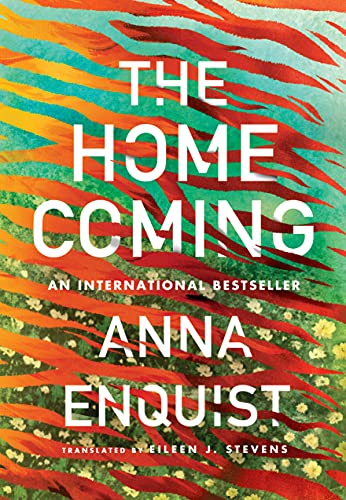
The Homecoming by Anna Enquist

Amazon Crossing| 1 April 2022| Print length 383 pages| 4*

I’ve read one book by Anna Enquist, a Leap, which is a collection of short stories, so when I saw The Homecoming was one of the Amazon First Reads for March this year I decided that was the one for me. It was first published in 2005 in Dutch and this English edition was translated by Eileen J Stevens in 2022.

There’s a lot written about Captain James Cook, the 18th century explorer, but I’d never come across anything about his wife, Elizabeth, before. The story is told from Elizabeth’s perspective and begins as she is at home in Mile End in London, preparing for James’s return home after his Second Voyage round the world in the ships Resolution and Adventure in 1775. This book is historical fiction, based on historical facts, although as the author writes in her Afterword: ‘the story is woven between the cracks of those verifiable cracks.’

So because there is little known about Elizabeth’s life, much of her story is the result of the author’s imagination and conjecture, but using the dates of births and deaths, of James’s departures and homecomings, and of letters and meeting. What is fact, is that she had six children – five sons and one daughter – and she outlived all of them. It is a heart-wrenching story as Elizabeth copes at home alone without her husband, a story of daily, domestic life at the end of the 18th century. She is a strong and resourceful woman who loves her husband, coping whilst desperately hoping he will not leave for a third voyage.

I was immediately drawn into the story and thoroughly enjoyed it, apart from the ending, which did spoil it somewhat. I can’t explain what happens at the end without giving away too much, except to say that it is Anna Enquist’s version of Cook’s death on Hawai’i as she imagines what was going on in his head as the days drew on towards the final tragedy – and it is strange, very strange.

Reading The Homecoming has made me want to know more about the Cook family and James’s life in particular. So, I was pleased to see there is a bibliography at the end of the book. And I also found there is another novel about Elizabeth: Mrs Cook: the Real and Imagined Life of the Captain’s Wife by Marele Day.

Other sources:

The Captain Cook Society

The Royal Naval Museum Information sheet on James Cook and a reading list

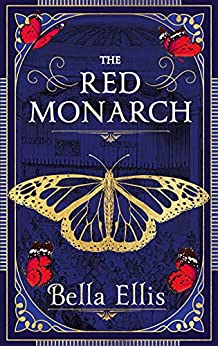
The Red Monarch by Bella Ellis

Hodder and Stoughton| 18 November 2021| 326 pages| e-book| Review copy| 3*

Blurb

The Brontë sisters’ first poetry collection has just been published, potentially marking an end to their careers as amateur detectors, when Anne receives a letter from her former pupil Lydia Robinson.

Lydia has eloped with a young actor, Harry Roxby, and following her disinheritance, the couple been living in poverty in London. Harry has become embroiled with a criminal gang and is in terrible danger after allegedly losing something very valuable that he was meant to deliver to their leader. The desperate and heavily pregnant Lydia has a week to return what her husband supposedly stole, or he will be killed. She knows there are few people who she can turn to in this time of need, but the sisters agree to help Lydia, beginning a race against time to save Harry’s life.

In doing so, our intrepid sisters come face to face with a terrifying adversary whom even the toughest of the slum-dwellers are afraid of . . . The Red Monarch.


The Red Monarch is the third Brontë Mystery book in which the main characters are the three Brontë sisters, Charlotte, Emily and Anne and their brother Branwell. I’ve read the first two and enjoyed them. But when I came across the first book I wasn’t at all sure I wanted to read it, as I’m never very keen on books that use real people as fictional characters. So, I was delighted to find that I thoroughly enjoyed the books even though, of course, the stories about the Brontës being ‘detectors’, or amateur sleuths, are pure imagination. The setting in the Yorkshire Moors is superb, the characters came across as ‘real’ and the books are well plotted.

And so, I was looking forward to reading The Red Monarch and it began well in Haworth in August 1852 as Charlotte is trying to write Villette. She is in despair after the deaths of her siblings – Emily and Branwell in 1848, and Anne in 1849. Instead of writing she reads a little notebook containing Emily’s poems and one particular poem brought back to her the dreadful events that had taken place and the terrors and cruelties they had seen, on their excursion to London. It had all taken place just after the Brontë sisters’ first poetry collection had been published – in 1846.

It was at this point, right at the beginning of the story about their time in London, that I thought I was reading a completely different type of mystery from the earlier books – not only is in not set in Yorkshire this book is a gothic melodrama. In a terrifying attack on Lydia and her husband Harry, a gang of thieves and murderers, led by Noose, had burst into Harry and Lydia’s bedroom. They had seized Harry and threatened to kill him unless Lydia brought them the jewel that Harry had been ordered to collect. Lydia, who was pregnant, had seven days to save their lives. But it is the Red Monarch, who was in control of the gang, and who held them all under his control – a most villainous and fearsome gangster. In desperation Lydia wrote to Anne for help.

The story is melodramatic, sensational and fast-paced. It is told through each of the sisters’ eyes, each one clearly distinctive, whilst Emily (once more) is the standout character. They are all independent women, strong-willed and determined and as Victorian women, vastly underestimated by the men. But, I had a hard time accepting the Brontë sisters in this story. Whereas in the two previous books I could believe that the Brontë family were just as Bella Ellis has described them, in this book I couldn’t.

The descriptions of mid 19th century London are vivid, clearly depicting the filthy living conditions of the poor, the sights and foul smells. The details of the Brontës’ search for Harry and the missing jewel test their strength, courage and skill in detection.

There are a few other real people who play a minor role, notably Charles Dickens, who is dismissive when Charlotte, somewhat in awe of him, asks for his advice as a writer, telling her to abandon any ideas of being a novelist and to marry, or teach. His companion, Mrs Catherine Crowe, another real author who wrote supernatural tales, was much more approachable and friendly, contacting her spirit friends to help with Charlotte’s search as well as giving her useful advice as a writer. Another character, with a larger role, is Louis Parensell, who develops a passion for Emily. He was not a real person, but Virginia Moore, a Brontë biographer, misread the handwritten title of Emily’s poem ‘Love’s Farewell’ as ‘Louis Parensell’, and developed the theory that Louis was Emily’s secret lover.

As the novel reached its dramatic climax, Emily in particular is in danger of losing her life as she dared to challenge the Red Monarch. I was most interested in the identity of The Red Monarch – was he in fact a real person, or totally fictitious? There various references to him throughout the novel, what was the origin of his name, and what was the meaning of his insignia? It seemed to be two capital Rs back to back topped with a crown and contained within a five-pointed star of pentagram. Anne had first discovered them and she felt sure they carried a secret meaning to those in know. When the identity of the Red Monarch is finally revealed I was surprised – but it is appropriate in that the real person has been described as a maniacal, controlling man.

I enjoyed this book, but I think the two previous books are much better and seem more authentic, aided by being set in the Brontës’ Yorkshire. They were out of place in London. It all seems to me to be over dramatic and unbelievable. The fictional element far outweighs the historical.

~~~

‘Bella Ellis’ is the Brontë-inspired pen name for the author Rowan Coleman, who has been a Brontë devotee for most of her life. As well as writing the Brontë Mysteries she is the .author of sixteen novels including the Richard and Judy pick The Memory Book and the Zoe Ball bookclub choice, The Summer of Impossible Things.

My thanks to Hodder Stoughton for a review copy via NetGalley

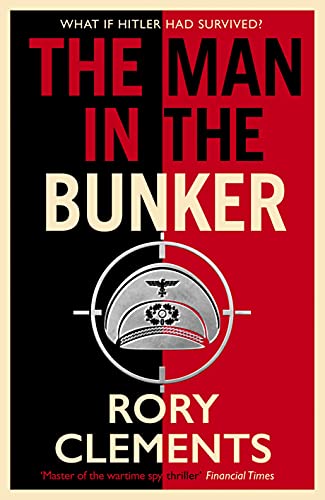
The Man in the Bunker by Rory Clements

Rating: 5 out of 5.

Bonnier Books UK Zaffre| 22 January 2022| 453 pages| e-book| review copy via NetGalley| 5 stars

I’ve read two of Rory Clements’ books in his Tom Wilde series, the first one, Corpus and the fourth Hitler’s Secret, both of which I loved. So I was looking forward to reading more of his books – The Man in the Bunker is the sixth book in the series, but fortunately they all read perfectly as standalone books.

This is a complicated novel and I am not going to attempt to describe all the details. In August 1945 an American and professor of history, Tom Wilde is preparing for the Michaelmas term at his Cambridge University college. He had spent most of the last three years in a senior advisory role with the Office of Strategic Services, America’s wartime intelligence outfit. He has quit the OSS and wants to put the war behind him, so when he sees a big American car parked outside his home where he lives with his wife and young son, he is not at all pleased. His three visitors bring news that there’s reason to believe that Hitler is alive and hiding out in Bavaria – and they want Wilde to find him.

The rumour that Hitler didn’t die in the Berlin bunker has always interested me, especially as his body was never found. I remember seeing a TV documentary about it, so I wondered what Clements would make of it and what his conclusion would be. Did Hitler live on after the war or not? His version of events is thrilling and dramatic as Wilde travels across the continent, mainly in Germany and Austria, seeing the devastation the War had brought both to places and to people. There were millions of people without homes – refugees, some living in displaced persons camps dotted around Europe. Some had been slave labourers interned in concentration camps, others were survivors of the death camps.

Wilde was accompanied by a young lieutenant, Mozes Heck, a Dutch Jew who had escaped to England and joined the British Army. Heck is desperate to find out what had happened to his family, loathes the Nazis and Hitler, and he is set on revenge. He is both headstrong and dangerous. They were both co-opted to the US Counter Intelligence Corps in Garmisch, an Alpine town in Bavaria. Wilde has a difficult job restraining Heck, but eventually they work well together in tense and extremely dangerous situations.

I thoroughly enjoyed it. The search for Hitler across Germany and Austria is fast paced, full of action, danger, and violence. Needless to say really, but I was gripped by this novel and I just had to find out what had happened, whether Hitler had died in the bunker – or did Wilde find him in hiding somewhere in the Alps? I’m not telling – you’ll have to read the book to find out.

Many thanks to Bonnier Books for a review copy via NetGalley.