Book Beginnings & The Friday 56: The Dogs of Riga by Henning Mankell

Every Friday Book Beginnings on Friday is hosted by Gillion at Rose City Reader where you can share the first sentence (or so) of the book you are reading. You can also share from a book you want to highlight just because it caught your fancy.

i’m still reading Hilary Mantel’s The Mirror and the Light and am stuck in the middle of the book where the narrative is so slow as Cromwell reminisces about his childhood and early adult years. I’m also reading The Count of Monte Cristo, such a long book, but it is moving along swiftly and although it’s a bit confusing with all the aliases that Dantès uses I think I’ve now got them straight in my head, and I’m really enjoying it.

But it’s time I started something new – so I picked a book at random off my bookshelves and began reading The Dogs of Riga by Henning Mankell, the second book in his Kurt Wallander series.

The Book Begins:

It started snowing shortly after 10am.

The man in the wheelhouse of the fishing boat cursed. He’d heard the forecast, but hoped they might make the Swedish coast before the storm hit.

Also every Friday there is The Friday 56, hosted by Freda at Freda’s Voice. *Grab a book, any book. *Turn to Page 56 or 56% on your  ereader . If you have to improvise, that is okay. *Find a snippet, short and sweet, but no spoilers!

These are the rules:

  1. Grab a book, any book.
  2. Turn to page 56, or 56% on your eReader. If you have to improvise, that is okay.
  3. Find any sentence (or a few, just don’t spoil it) that grabs you.
  4. Post it.
  5. Add the URL to your post in the link on Freda’s most recent Friday 56 post.

Page 56:

‘Bjork grabbed hold of the newspaper again and read aloud, “‘Soviet death patrols. The new Europe has exposed Sweden to crime with a political slant.’ What do they mean by that? Can anyone explain? Wallander?’

Summary:

Sweden, winter, 1991. Inspector Kurt Wallander and his team receive an anonymous tip-off. A few days later a life raft is washed up on a beach. In it are two men, dressed in expensive suits, shot dead.

The dead men were criminals, victims of what seems to have been a gangland hit. But what appears to be an open-and-shut case soon takes on a far more sinister aspect. Wallander travels across the Baltic Sea, to Riga in Latvia, where he is plunged into a frozen, alien world of police surveillance, scarcely veiled threats, and lies.

Doomed always to be one step behind the shadowy figures he pursues, only Wallander’s obstinate desire to see that justice is done brings the truth to light.

I read the first Wallander book, Faceless Killers several years ago and have been wanting to read more, so this book was a lucky random pick from my bookshelves this morning.

What have you been reading lately?
Book Beginnings & The Friday 56: The Count of Monte Cristo by Alexandre Dumas

Every Friday Book Beginnings on Friday is hosted by Gillion at Rose City Reader where you can share the first sentence (or so) of the book you are reading. You can also share from a book you want to highlight just because it caught your fancy.

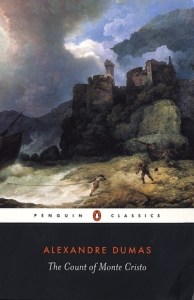
There are just two books left on my Classics Club book list and so, I’ve decided it’s time for me to read one of them, The Count of Monte Cristo by Alexandre Dumas. It is particularly daunting as it is so long, depending on which edition you read. The Penguin Classics edition is 1313 pages long.

The Book Begins:

On the 24th of February 1810, the look-out at Notre Dame de la Garde signalled the three-master, the Pharaon from Smyrna, Trieste, and Naples.

As usual, a pilot put off immediately, and rounding the Chateau d’If, got on board the vessel between Cape Morgion and Rion Island.

Also every Friday there is The Friday 56, hosted by Freda at Freda’s Voice. *Grab a book, any book. *Turn to Page 56 or 56% on your  ereader . If you have to improvise, that is okay. *Find a snippet, short and sweet, but no spoilers!

These are the rules:

  1. Grab a book, any book.
  2. Turn to page 56, or 56% on your eReader. If you have to improvise, that is okay.
  3. Find any sentence (or a few, just don’t spoil it) that grabs you.
  4. Post it.
  5. Add the URL to your post in the link on Freda’s most recent Friday 56 post.

Page 56:

‘I do not know what M. de Villefort promised you,’ said the gendarme, ‘but I know we are taking you to the Chateau d’If’.

By a rapid movement, which the gendarme’s practiced eye had perceived, Dantes sprang forward to precipitate himself into the sea; but four vigorous arms seized him as his feet quitted the bottom of the boat. He fell back cursing with rage.

Summary:

Thrown in prison for a crime he has not committed, Edmond Dantes is confined to the grim fortress of If. There he learns of a great hoard of treasure hidden on the Isle of Monte Cristo and he becomes determined not only to escape, but also to unearth the treasure and use it to plot the destruction of the three men responsible for his incarceration. Dumas’ epic tale of suffering and retribution, inspired by a real-life case of wrongful imprisonment, was a huge popular success when it was first serialized in the 1840s.

Book Beginnings & The Friday 56: Now is the Time by Melvin Bragg

Every Friday Book Beginnings on Friday is hosted by Gillion at Rose City Reader where you can share the first sentence (or so) of the book you are reading. You can also share from a book you want to highlight just because it caught your fancy.

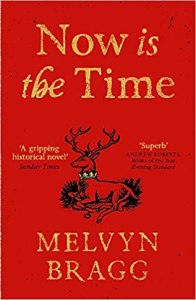
This week I’m featuring Now is the Time by Melvyn Bragg. I loved his Soldiers Return quartet amongst some of his other books, so I’m hoping this historical fiction set in 1381 at the time of  the Peasants’ Revolt will be as good. Richard II was on the throne of England when a vast force of people led by Wat Tyler and John Ball demanded freedom, and equality.

The Book Begins:

The accused priest stood before the court. He was dressed in the cheapest cloth. From his scuffed and shabby habit, from his spare frame and plainness of manner in the ornately, hierarchically dressed company of the ecclesiastical court, he seemed to be just another casualty of the harsh laws of the Church. But there was about him a self-composure, which threw out the challenge of his independence too arrogantly for the taste of the court.

Also every Friday there is The Friday 56, hosted by Freda at Freda’s Voice. *Grab a book, any book. *Turn to Page 56 or 56% on your  ereader . If you have to improvise, that is okay. *Find a snippet, short and sweet, but no spoilers!

These are the rules:

  1. Grab a book, any book.
  2. Turn to page 56, or 56% on your eReader. If you have to improvise, that is okay.
  3. Find any sentence (or a few, just don’t spoil it) that grabs you.
  4. Post it.
  5. Add the URL to your post in the link on Freda’s most recent Friday 56 post.

Page 56:

Armies in Normandy, Ireland and the north and the English garrisons abroad had not been paid for months. The uprising in Flanders had ruined the rich English wool trade. Aristocrats were accused of corruption and vanity campaigns; Plantagenet heirlooms and jewels had been pawned to city merchants. It was said that it was now the city; not the government, that controlled policy.

Summary (from Amazon):

At the end of May 1381, the fourteen-year-old King of England had reason to be fearful: the plague had returned, the royal coffers were empty and a draconian poll tax was being widely evaded. Yet Richard, bolstered by his powerful, admired mother, felt secure in his God-given right to reign.

Within two weeks, the unthinkable happened: a vast force of common people invaded London, led by a former soldier, Walter Tyler, and the radical preacher John Ball, demanding freedom, equality and the complete uprooting of the Church and state. They believed they were rescuing the King from his corrupt ministers, and that England had to be saved. And for three intense, violent days, it looked as if they would sweep all before them.

Now is the Time depicts the events of the Peasants’ Revolt on both a grand and intimate scale, vividly portraying its central figures and telling an archetypal tale of an epic struggle between the powerful and the apparently powerless.

~~~

I vaguely remember learning about Wat Tyler and the Peasant’s Revolt at school. This book should fill in the gaps in my memory!

Book Beginnings & The Friday 56: Fludd by Hilary Mantel

Every Friday Book Beginnings on Friday is hosted by Gillion at Rose City Reader where you can share the first sentence (or so) of the book you are reading. You can also share from a book you want to highlight just because it caught your fancy.

This week I’m featuring Fludd by Hilary Mantel, described as’ a dark fable of lost faith and awakening love amidst the moors.’ It’s very different from the other books by her that I’ve read. For one thing it’s short!

The Book Begins:

On Wednesday the bishop came in person. He was a modern prelate, brisk and plump in his rimless glasses, and he liked nothing better than to tear around the diocese in his big black car.

Also every Friday there is The Friday 56, hosted by Freda at Freda’s Voice. *Grab a book, any book. *Turn to Page 56 or 56% on your  ereader . If you have to improvise, that is okay. *Find a snippet, short and sweet, but no spoilers!

These are the rules:

  1. Grab a book, any book.
  2. Turn to page 56, or 56% on your eReader. If you have to improvise, that is okay.
  3. Find any sentence (or a few, just don’t spoil it) that grabs you.
  4. Post it.
  5. Add the URL to your post in the link on Freda’s most recent Friday 56 post.

Page 56:

That afternoon, Father Fludd undertook a parish tour. Father Angwin accompanied the curate to the front door. ‘They may ask you into their houses’, he said. ‘For God’s sake don’t eat anything. Be back before dark.’ He hovered, anxious. ‘Perhaps you shouldn’t go alone?’

‘Don’t fuss, man’, Fludd said.

Summary (from Amazon)::

Fetherhoughton is a drab, dreary town somewhere in a magical, half-real 1950s north England, a preserve of ignorance and superstition protected against the advance of reason by its impenetrable moor-fogs. Father Angwin, the town’s cynical priest, has lost his faith, and wants nothing more than to be left alone. Sister Philomena strains against the monotony of convent life and the pettiness of her fellow nuns. The rest of the town goes about their lives in a haze, a never-ending procession of grim, grey days stretching ahead of them.

Yet all of that is about to change. A strange visitor appears one stormy night, bringing with him the hint, the taste of something entirely new, something unknown. But who is Fludd? An angel come to shake the Fetherhoughtonians from their stupor, to reawaken Father Angwin’s faith, to show Philomena the nature of love? Or is he the devil himself, a shadowy wanderer of the darkest places in the human heart?

Full of dry wit, compassionate characterisations and cutting insight, Fludd is a brilliant gem of a book, and one of Hilary Mantel’s most original works.

~~~

What do you think – does this book appeal to you too?

Book Beginnings & The Friday 56: The Couple at No. 9 by Claire Douglas

Every Friday Book Beginnings on Friday is hosted by Gillion at Rose City Reader where you can share the first sentence (or so) of the book you are reading. You can also share from a book you want to highlight just because it caught your fancy.

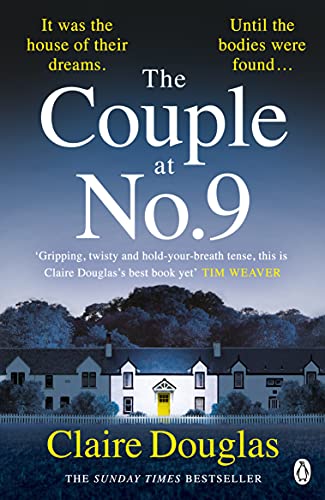
This week I’m featuring The Couple at No. 9 by Claire Douglas. I’ve read three of Claire Douglas’s books before and loved each one, so I have high hopes for this one. They are dramatic, tense, and full of atmosphere and suspense.

The Book Begins:

I’m in the front garden pulling at weeds that spill out from the borders of the driveway, like gigantic spiders, when I hear yells. Deep and gutteral.

Also every Friday there is The Friday 56, hosted by Freda at Freda’s Voice. *Grab a book, any book. *Turn to Page 56 or 56% on your  ereader . If you have to improvise, that is okay. *Find a snippet, short and sweet, but no spoilers!

These are the rules:

  1. Grab a book, any book.
  2. Turn to page 56, or 56% on your eReader. If you have to improvise, that is okay.
  3. Find any sentence (or a few, just don’t spoil it) that grabs you.
  4. Post it.
  5. Add the URL to your post in the link on Freda’s most recent Friday 56 post.

Page 56:

Lorna had envisaged the day she’d become a grandmother. She knew she wouldn’t be old, because she’d been such a young mother. But she’d expected to be older than forty-sodding-one. What will Alberto think?

Summary::

When Saffron Cutler and boyfriend Tom move into 9 Skelton Place, they didn’t expect to find this.

Two bodies, buried under the patio over thirty years ago.

When the police launch a murder investigation, they ask to speak to the cottage’s former owner – Saffy’s grandmother, Rose, whose Alzheimer’s clouds her memory.

But it is clear she remembers something . . .

What happened thirty years ago?
What part did her grandmother play?
And is Saffy now in danger? . . .

~~~

What do you think – does this book appeal to you too?

Book Beginnings & The Friday 56: Another Journey through Britain by Mark Probert

Every Friday Book Beginnings on Friday is hosted by Gillion at Rose City Reader where you can share the first sentence (or so) of the book you are reading. You can also share from a book you want to highlight just because it caught your fancy.

This week I’m featuring the latest book I’ve just started reading, Another Journey Through Britain by Mark Probert, which was free on Amazon UK, although it’s currently on offer for 99p.

In this book Mark Probert follows the route taken by John Hillaby in his 1960s book Journey through Britain, telling the story of his 1,100 mile walk from Land’s End in south-west England to the north-east coast of Scotland at John o’Groats. It had captured Probert’s imagination and when he entered semi-retirement in 2018 he decided to repeat Hillaby’s book, looking out for the things he wrote about in his original book and comparing how today’s Britain differed from that of fifty years earlier. He didn’t walk, though but he did it on a motor bike, a Royal Enfield Classic 500.

The Book Begins:

The visitor car park at Land’s End was almost empty and ghostly silent. It was just after 10 am on a chilly May morning.

Also every Friday there is The Friday 56, hosted by Freda at Freda’s Voice. *Grab a book, any book. *Turn to Page 56 or 56% on your  ereader . If you have to improvise, that is okay. *Find a snippet, short and sweet, but no spoilers!

These are the rules:

  1. Grab a book, any book.
  2. Turn to page 56, or 56% on your eReader. If you have to improvise, that is okay.
  3. Find any sentence (or a few, just don’t spoil it) that grabs you.
  4. Post it.
  5. Add the URL to your post in the link on Freda’s most recent Friday 56 post.

Pages 55-56:

Beside the National Parks there are thirty four Areas of Outstanding National Parks (AONB) in England and Wales, less than half of which were in existence in 1966. Being British, we have to make things complicated. In Scotland they have two National Parks, forty five National Nature Reserves, three UNESCO GeoParks and two UNESCO Biospheres. The original purpose of the Parks was to conserve and preserve, but also to open the areas up for people to enjoy. Nowadays, the National Parks cover approximately 10 percent of England, 20 percent of Wales and 7 percent of Scotland.