My Friday Post: The One I Was by Eliza Graham

Every Friday Book Beginnings on Friday is hosted by Gillion at Rose City Reader where you can share the first sentence (or so) of the book you are reading. You can also share from a book you want to highlight just because it caught your fancy.
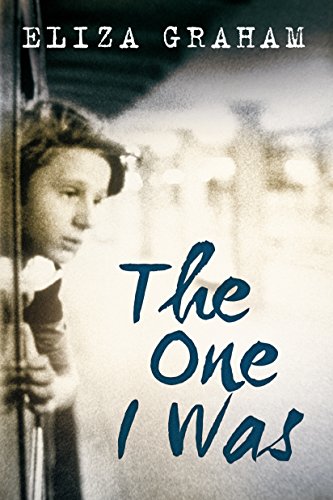
This morning I started to read The One I Was by Eliza Graham. I’ve read a couple of her books before and I’m hoping this one will be just as good.

It begins:

Every bone in my body screamed at me to run away from the elegant and classical white house at whose door I stood.

Also every Friday there is The Friday 56, hosted by Freda at Freda’s Voice. *Grab a book, any book. *Turn to Page 56 or 56% on your  ereader . If you have to improvise, that is okay. *Find a snippet, short and sweet, but no spoilers!
These are the rules:

  1. Grab a book, any book.
  2. Turn to page 56, or 56% on your eReader. If you have to improvise, that is okay.
  3. Find any sentence (or a few, just don’t spoil it) that grabs you.
  4. Post it.
  5. Add the URL to your post in the link on Freda’s most recent Friday 56 post.
  1. Grab a book, any book.
  2. Turn to page 56, or 56% on your eReader. If you have to improvise, that is okay.
  3. Find any sentence (or a few, just don’t spoil it) that grabs you.
  4. Post it.
  5. Add the URL to your post in the link on Freda’s most recent Friday 56 post.

Page 56:

‘Sometimes people think it is strange to try so hard,’ he said.

‘The world depends on some of us refusing to be the same as everyone else.’

~~~

My first thought was, of course, to wonder why this person wanted to run away from the house so desperately.
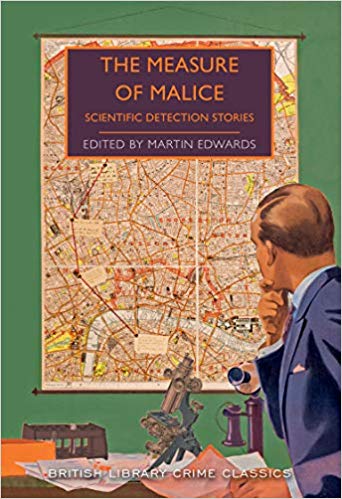
Measure of Malice: Scientific Detection Stories edited by Martin Edwards

The Measure of Malice edited by Martin Edwards is one of the more enjoyable short story collections that I’ve read. It contains 14 stories in which scientific/technological methods are used in the detection of crime. There is an excellent introduction by Martin Edwards with information about the authors, five of whom were doctors, two were engineers and one was an academic chemist.

As always with short story collections some stories are better than others. I’m highlighting a few of the better ones here:

The Boscombe Valley Mystery by A Conan Doyle was originally published in the Strand Magazine in October 1891, and is the first short story to feature Inspector Lestrade. It’s a solid story, solved by Sherlock Holmes by inspecting and analysing the footprints and signs at the scene of the crime.

The Horror of Studley Grange by L T Meade and Clifford Halifax (1894), from Stories for the Diary of a Doctor, originally published in the Strand Magazine. I enjoyed this one although it was pretty easy to predict. Ostensibly a ghost story, the solution involves the use of a laryngoscope.

After Death the Doctor by J J Connington, a Scottish professor of chemistry. This one was first published in 1934, involving a contemporary scientific gadget. The doctor in question is Doctor Shefford who together with Sergeant Longridge, investigate the murder of old Barnaby Leadburn, found dead with his throat cut.

The next two are the ones I enjoyed the most:

The Broken Toad by H C Bailey, first published in 1934, featuring the surgeon and Home Office Consultant, Reggie Fortune as he considers the death of a police constable from poisoning. I enjoyed all the detailed complications and Bailey’s literary mannered style of storytelling.

In the Teeth of the Evidence by Dorothy L Sayers, first published in 1939, about forensic dentistry, which starts as Lord Peter Wimsey is sitting in his dentist’s chair. The police had just visited the surgery, wanting to see his predecessor’s records to identify the victim of a burnt out garage. An upper right incisor crown and the filling in a molar provided the clues to his death. Gory if you actually visualise what is involved!

  • Publisher : Poisoned Pen Press (4 Feb. 2020)
  • Language: : English
  • Paperback : 336 pages
  • ISBN-10 : 1492699624
  • ISBN-13 : 978-1492699620
  • Source: The Poisoned Pen Press via NetGalley
  • My Rating: 3.5*

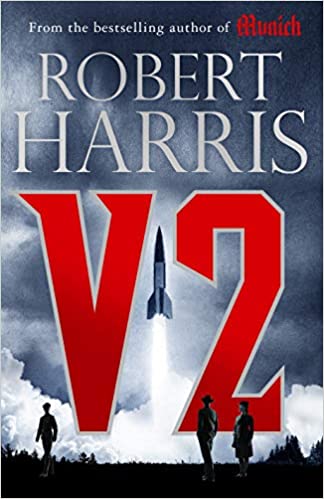
V2 by Robert Harris

Random House UK, Cornerstone| 17 September 2020| 314 pages| Kindle review copy| 5*

Description

Victory is close. Vengeance is closer.

On the brink of defeat, Hitler commissioned 10,000 V2s – ballistic rockets that carried a one-ton warhead at three times the speed of sound, which he believed would win the war.

Dr Rudi Graf who, along with his friend Werner von Braun, had once dreamt of sending a rocket to the moon, now finds himself in November 1944 in a bleak seaside town in Occupied Holland, launching V2s against London. No one understands the volatile, deadly machine better than Graf, but his disillusionment with the war leads to him being investigated for sabotage.

Kay Caton-Walsh, an officer in the WAAF, has experienced first-hand the horror of a V2 strike. When 160 Londoners, mostly women and children, are killed by a single missile, the government decides to send a team of WAAFs to newly-liberated Belgium in the hope of discovering the location of the launch sites. But not all the Germans have left and Kay finds herself in mortal danger.

As the war reaches its desperate end, their twin stories play out, interlocked and separate, until their destinies are finally forced together.

My thoughts:

V2 is historical fiction with a solid factual framework. I like to know when I’m reading historical fiction how much is history and how much is fact. So, I was pleased to find that at the end of the book Harris has included a list of the sources he consulted on the history of the V2 and how it worked, including the work of the photographic reconnaissance interpreters, before writing V2. In particular he acknowledges Eileen Younghusband’s two volumes of memoirs – Not an Ordinary Life and One Woman’s War. She had worked as a WAAF officer on the Mechelen operation, working on detecting the location of the V2 launch sites, and her memoirs had provided him with a vivid insight into her wartime life. Without them he would not have written V2.

It’s set over five days at the end of November 1944 as the Germans fired V2 missiles on London from the woods around Scheveningen on the Dutch coast. The British response was a counter-operation, including a team of WAAFs. The cast includes some historical figures such as Werner von Braun, the real-life head of the Nazi rocket programme, and SS-General Hans Kammler. It’s told in alternating chapters from two of the fictional characters’ perspectives – Dr Rudi Graf, a rocket engineer on the V2 team and Kay Caton-Walsh of the Women’s Auxiliary Air Force. Kay was part of the team based at Mechelen using radar to try to locate the V2 firing sites. Harris emphasises that his fictional character, Kay, bore no resemblance to Mrs Younghusband, apart from the fact that she worked on the Mechelen project.

I thoroughly enjoyed reading this novel, learning a lot about that period of the Second World War and about the V2. It is detailed and tense, and very readable, describing the intricate details of the launching of the V2s and Kay’s work, which became increasingly dangerous as their location became known to the Germans.

Many thanks to the publishers and NetGalley for my digital proof copy.

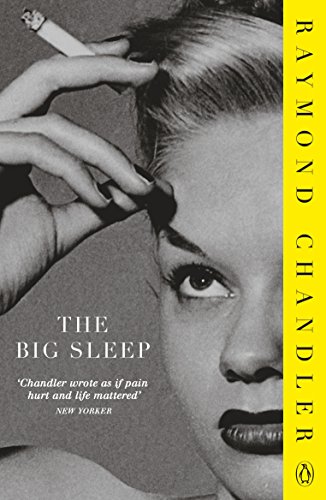
The Big Sleep by Raymond Chandler

In December I read 12 books, most of them short ones, and because I was reading them one after the other I hardly paused to write about them. Before they slip out of my memory I want to write about some of them at least. –

I particularly want to write about The Big Sleep by Raymond Chandler as it is one of those books that I’ve always heard about but have never read. It’s been on my Kindle for the last three years. It was first published in 1939 and is an excellent example of what is known as ‘hardboiled’ crime fiction, which generally featured a private eye with a whisky bottle in a filing cabinet, a femme fatale, and rich and usually corrupt clients. Female sexuality is a snare in a dangerous society where manipulative politicians and corrupt police thrive.

About the book:

Best-known as the creator of the original private eye, Philip Marlowe, Raymond Chandler was born in Chicago in 1888 and died in 1959. Many of his books have been adapted for the screen, and he is widely regarded as one of the very greatest writers of detective fiction. His books include The Big SleepThe Little SisterFarewell, My LovelyThe Long Good-byeThe Lady in the LakePlaybackKiller in the RainThe High Window and Trouble is My Business.

The Big Sleep has been adapted for film twice, in 1946 with Humphrey Bogart, Lauren Bacall, John Ridgely, Martha Vickers, and again in 1978, with Robert Mitchum, Sarah Miles, Richard Boone, Candy Clark.

My thoughts:

The novel is narrated by Philip Marlow, who describes himself as a ‘lone wolf, unmarried, getting middle-aged, and not rich.’ He’s been in jail more than once, likes liqour and women and the cops don’t like him much, although he does get on with a couple of them.

It’s not really the type of crime fiction that I like, but I did enjoy it. There are damsels in distress, gangsters, corrupt officials, and plenty of dark, violent and bloody situations. And of course there are murders – the ‘big sleep’ is death, after all. It’s fast-paced, violent, complicated and in times I found it a bit difficult to follow.

Reading the book took me back in time and place to Los Angeles in the late 1930s, a baking hot LA in which Private Investigator Marlow is hired by the paralysed millionaire General Stallwood, who is being blackmailed. His investigations are hampered by the General’s two daughters, one of whom proves to be a femme fatale, out to entrap Marlow and vindictive when her efforts fail. Chandler’s writing is sharp, snappy and richly descriptive with witty one-liners.

Throwback Thursday: The Testament of Gideon Mack by James Robertson

I’m linking up today with Davida @ The Chocolate Lady’s Book Review Blog for Throwback Thursday. It takes place on the Thursday before the first Saturday of every month (i.e., the Thursday before the monthly #6Degrees post). The idea is to highlight one of your previously published book reviews and then link back to Davida’s blog.

I’ve been looking at the books I reviewed in 2007 for my Throwback Thursday posts. Today I’ve chosen to highlight The Testament of Gideon Mack by James Robertson, which I wrote about on 13 December 2007.

From the opening paragraph:

I started it with great enthusiasm and found it a compelling book to read. It is a psychological mystery concerning the nature of belief, faith, and truth. It starts with an account of the disappearance and death of Gideon Mack and the discovery of a manuscript written by him shortly before he was last seen. It is clear right from the start that there is mystery and uncertainty surrounding his disappearance, death and the discovery of his body. The book centres on the manuscript with an epilogue containing ‘notes’ written by a journalist investigating the mystery, considering whether the manuscript was ‘anything other than the ramblings of a mind terminally damaged by a cheerless upbringing, an unfulfilled marriage, unrequited love, religious confusion and the stress and injury of a near-fatal accident?’

It’s a macabre story and it left me with several questions – mainly about what was real, what was imagined and what was illusion!

Click here to read the rest of my review

~~~

James Robertson (born 1958) is a Scottish writer who grew up in Bridge of Allan, Stirlingshire. He is the author of several short story and poetry collections, and has published four novels: The Fanatic, Joseph Knight, The Testament of Gideon Mack, and And the Land Lay Still. Joseph Knight was named both the Scottish Arts Council Book of the Year and the Saltire Society Book of the Year in 2003/04. The Testament of Gideon Mack was long-listed for the 2006 Man Booker Prize. And the Land Lay Still was awarded the Saltire Society Book of the Year Award in 2010. Robertson has also established an independent publishing imprint called Kettillonia, which produces occasional pamphlets and books of poetry and short prose, and he is a co-founder and the general editor of the Scots language imprint Itchy Coo, which produces books in Scots for children and young people. He lives in rural Angus. (Goodreads)

You can find more about the book at scotgeog.com, a website authored by James Robertson

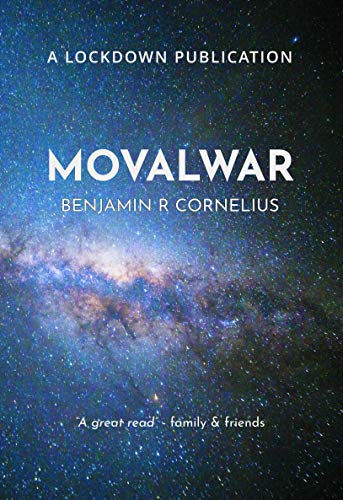
Movalwar by Benjamin Cornelius

Rating: 5 out of 5.

Benjamin Cornelius is 11 years old. He’s my friend’s great-nephew, and I was delighted to read his book Movalwar. He wrote it during the pandemic when he was in lockdown with his family. I was most impressed with it – his storytelling, his imagination and his command of language. It gripped me right from the first start and I just had to read on. It’s about two eleven year-old boys, Alfie and Ben and their exciting and dangerous journey to save the fate of two worlds.

With no school because of the pandemic, the boys’ adventure begins when Alfie has a dream demanding that he goes to Movalwar through a secret lake to return a mysterious possession that controls that evil kingdom. Then he finds a box in his grandparents’ attic, containing a multi-coloured gemstone that reveals a map showing mountains, islands, seas and jungles. And so their adventure begins as he and Bobby set out to find the entrance to the evil kingdom.

Meanwhile the pandemic has reached a peak, no cure has been found, the rate of infection is rising and a vaccine has yet to be created. London has been plunged into chaos. And in Movalwar Alfie’s and Bobby’s lives are in increasing danger. Will they succeed?

I liked the mix of fantasy and real life in this tense, fast-paced book that kept me absorbed in the story all the way through. Ben also designed the lovely cover for his book. I hope Ben will continue to write more stories – he says he is currently enjoying thinking of new ideas for another story.

  • Publisher : Eklegein (11 Sept. 2020)
  • Language: : English
  • Paperback : 116 pages
  • ISBN-10 : 1907971653
  • ISBN-13 : 978-1907971655
  • Source: I bought the book
  • My rating: 5 stars