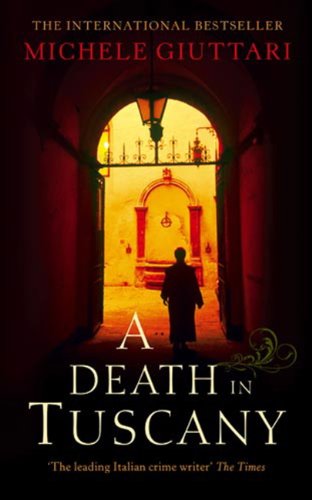
Book Beginnings & The Friday 56: A Death in Tuscany by Michele Giuttari, translated by Howard Curtis

Every Friday Book Beginnings on Friday is hosted by Gillion at Rose City Reader where you can share the first sentence (or so) of the book you are reading. You can also share from a book you want to highlight just because it caught your fancy.

One of the books I’m currently reading is A Death in Tuscany by Michele Giuttari. I’ve not read anything by him before and am really enjoying it.

My Book Beginning:

Florence, 2001

The girl, little more than a child, was found on the edge of a wood on the road above Scandicci, scantily dressed, without papers, and dying of an overdose, at dawn on Sunday 29 July, and was taken to the Ospedale Nupvo. But it wasn’t until almost a week later that Chief Superintendent Michele Ferrara, head of the Florence Squadra Mobile, really became involved with the case.

Also every Friday there is The Friday 56, hosted by Freda at Freda’s Voice, where you grab a book and turn to page 56 (or 56% of an eBook), find one or more interesting sentences (no spoilers), and post them.

Page 56:

Worse still: the whole weekend would be ruined. But Ferrara realised that Anna was making an exception for him, and he couldn’t refuse. Especially as it had something to do with the investigation into the dead girl, which he was taking increasingly to heart.

From the back cover:

In the picturesque Tuscan hill town of Scandicci, the body of a girl is discovered. Scantily dressed, she is lying by the edge of the woods. Chief Superintendent Michele Ferrara, head of Florence’s elite Squadra Mobile, takes on the case. Because toxins were discovered in the girl’s body, many assume that she dies of a drug overdose. But Ferrara quickly realises that the truth is darker than that: he believes the girl was murdered.

And when he delves deeper, there are many aspects to the case that convince Ferrara that the girl’s death is part of a sinister conspiracy – a conspiracy that has its roots in the very foundations of Tuscan society.

Written by former Florence police chief Michele Giuttari, it gives a unique insight into life and police work in Tuscany.

This is a detailed police procedural and, although it is fast-paced, it is not a book you can read quickly.

What do you think, does it appeal to you? What are you currently reading?

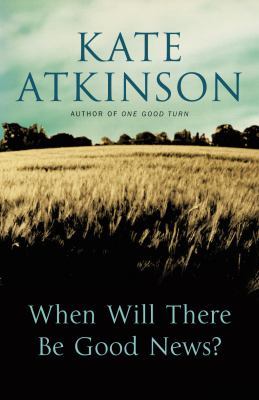
Throwback Thursday: When Will There Be Good News? by Kate Atkinson

Today I’m linking up with Davida @ The Chocolate Lady’s Book Review Blog for Throwback Thursday. It takes place on the Thursday before the first Saturday of every month (i.e., the Thursday before the monthly #6Degrees post). The idea is to highlight one of your previously published book reviews and then link back to Davida’s blog.

When Will There Be Good News by Kate Atkinson is probably my favourite of her books. I first reviewed it on February 18, 2009. I’d borrowed it from the library and at the time was thinking of re-reading it but I had to return the book before I had time to read it again. It’s the third novel in her Jackson Brodie series. I still haven’t read it again – I’d love to though.

My review begins:

Complex but so very satisfying!  This has had very mixed reviews on Amazon which just goes to show that you have to make up your own mind about a book. I read it very quickly because I loved it. I know I missed bits – just when did Jackson lose his jacket? I’ve tried to track it down but I can’t spot it, so I’m thinking of reading it again before I have to take it back to the library.

Click here to read my full review

The next ThrowbackThursday post is scheduled for March 1, 2023.

Books Read in January

I read 8 books in January, enjoying some much more than others. I am hoping to write about the three books I haven’t reviewed but in case I don’t get round to it I’ve written a few words about them here.

1. The Stroke of Winter by Wendy Webb 2.5*

2. The Girl Who Died by Ragnar Jonasson 3*

3. Ghost Walk by Alanna Knight 3*

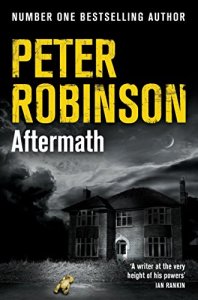
4. Aftermath by Peter Robinson 3*

5. Underworld by Reginald Hill 5* – the 10th Dalziel and Pascoe crime fiction novel, set in the Yorkshire mining town of Burrthorpe in 1986, two years after the Miners’ Strike. I thoroughly enjoyed this. For now I’ve copied the summary from Fantastic Fiction because this is a complex book that needs more description than just a few lines:

When young Tracey Pedley vanished in the woods around Burrthorpe, the close-knit community had their own ideas about what had happened, but Deputy Chief Constable Watmough has it down as the work of a child-killer who has since committed suicide — though others wondered about the last man to see her alive and his fatal plunge into the disused mine shaft. Returning to a town he left in anger, Colin Farr’s homecoming is ready for trouble, and when a university course brings him into contact with Ellie Pascoe, trouble starts… Meanwhile Andy Daziel mutters imprecations on the sidelines, until a murder in Burrthorpe mine forces him to take action that brings him up against a hostile and frightened community…

6. Lion by Conn Iggulden 4*

7. The Last Rose of Shanghai by Weina Dai Randel 3* – historical fiction set Japanese-occupied Shanghai, this is a World War Two romance, the story of Aiyi Shao, a young heiress and the owner of a glamorous Shanghai nightclub and Ernest Reismann, a penniless Jewish refugee who had fled from Germany. I loved the beginning of this book but the rest of the book was not so good – too much ‘telling’ and I’d have liked less focus on the romance, which to me was barely believable So, 5* for the first 40%, 2* for the rest, so 3* overall. But plenty of other readers love this book.

8. Shroud of Darkness by E C F Lorac 4* – a Golden Age crime fiction beginning with five passengers on a train from Cornwall to London. When it arrives at Paddington Station in thick fog, one of the passengers is brutally attacked and left for dead. Chief Inspector MacDonald first has to identify the victim, whose pockets had been rifled and then discover why he was attacked and who did it. Another book I really enjoyed, trying to work out what had happened and failed – I was completely baffled, as much in the dark as the fog-bound passengers.

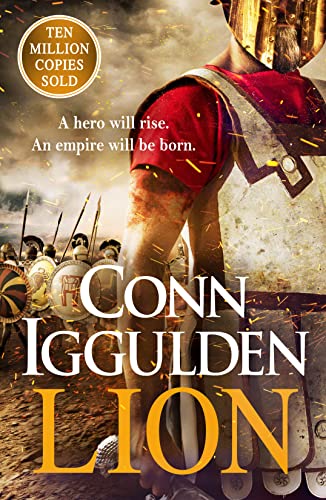
Lion by Conn Iggulden – the First in The Golden Age series

Penguin| 26 May 2022| 416 pages| Review Copy| 4*

Ancient Greece, 5th century BC

The age of myths and legends has given way to the world of men. In the front rank stands Pericles, Lion of Athens.
Behind Pericles lies the greatest city of the ancient world. Before him, on land and at sea, stands the merciless Persian army. Both sides are spoiling for war.

Though still a young man, Pericles knows one thing: to fight a war you must first win the peace

It’s time for a hero to rise.

For his enemies to tremble.

And for Athens, a city of wisdom and warriors, to shine with glory . . .

I was so pleased when I started reading Lion as I realised straight away I was going to enjoy it. It’s been a long time since I read anything set in Ancient Greece, so a lot was new to me, including the characters as well as the historical setting. This is the first book in Conn Iggulden’s Golden Age series set in the 5th century BCE. I thoroughly enjoyed it which surprised me as generally speaking I’m not keen on reading battle scenes and the book starts and ends with battles. But I had no problem with following the action of the battles between the Greeks and the Persians, and was able to visualise what was going on without any difficulty. The characters’ names took me a little while to get clear in my mind but I soon got used to them.

The two main characters are both young men, Cimon the older of the two has more authority than Pericles, the younger man. Lion is the story of their early careers. Iggulden covers the capture of Eion under Cimon’s leadership of the Delian League, an alliance of Greek states, and of Scyros where Cimon found the bones of Theseus and returned them to Athens. He then captured Cyprus and destroyed a Persian fleet on the Eurymedon River. Below the age of thirty little is known of Pericles’ life, but the likelihood is that he was with Cimon for these events.

The middle section of Lion forms an interlude between the battles and is about Pericles’ marriage to Thetis, and his involvement in the theatre in Athens and the Festival of Dionysus. Pericles was the ‘choregos’ (producer) of Aeschylus’ plays made up of three tragedies and a ‘satyr’ play. I found this part of the book just as fascinating as the battle scenes.

Iggulden adds a useful historical note and recommends reading Pericles: a Biography in Context by Thomas R Martin for more information.

The next book in the Golden Age series is Empire, which will be released on May 25, 2023.

My thanks to the publishers for a review copy via NetGalley.

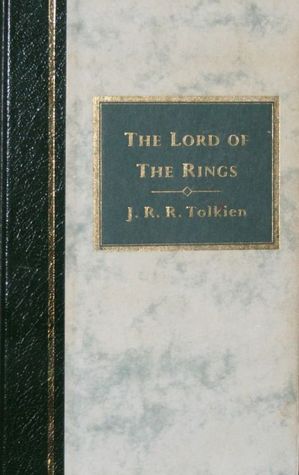
The Lord of the Rings by J R R Tolkien

Last year I began re-reading The Fellowship of the Ring by J R R Tolkien and when I finished it I had to carry on with the other two books of the The Lord of the Rings trilogy. They were first published between 1954 and 1955. I first came across it at the library when I was a teenager. I loved it so much that I decided I needed to buy my own copy for myself and have since read the trilogy several times. The three books are The Fellowship of the Ring, The Two Towers and The Return of the King. Imagine my delight when I went to college and found that so many of the students on my course also loved the trilogy and I read it all again and could talk about it with the others.

What follows is not a review. It is some of my thoughts on reading this epic fantasy story about the quest undertaken by Frodo and the Fellowship of the Ring to destroy the One Ring of Power in the Mountain of Fire, Mount Doom in Mordor and thus prevent the Dark Lord, Sauron from conquering Middle-earth.

Re-reading The Lord of the Rings, I was delighted to find that it had lost none of the magic I found the first time. It is one of my all time favourite books and this time round I was struck by Tolkien’s world building and his powers of description of the characters and the locations, but most of all by Tolkien’s storytelling – superb. I read it slowly, taking my time over it, just a small section each day – letting the story soak into my mind.

The members of the Fellowship are Gandalf the Grey, a wizard; the hobbits Frodo, Merry, Pippin, and Sam; Gimli the Dwarf; Legolas the Elf; Boromir of Gondor; and a tall, mysterious stranger called Strider (later revealed as Aragorn, the heir of Isildur, an ancient King of Arnor and Gondor). And there’s a whole host of other characters.

Alongside my reading I also watched Peter Jackson’s three films, adaptations of the trilogy. When I watched these when they first came out I wasn’t surprised that they didn’t live up to my visualisation of the characters, except that Ian McKellen was just perfect as Gandalf, or of the locations, beautiful as the locations in the films are, Lothlorien is nowhere nearly as magical as I had imagined from reading the book. But the main difference I noticed this time is that the book is very descriptive, going into great detail about the routes of the journeys, of the places and of the characters, it is very long – The Fellowship of the Ring alone took me a month to read. Whereas the films are very much action movies with long and violent battle scenes, against the backdrop of the locations and the running time of each one is approximately three hours – with the extended versions being even longer.

So, inevitably there are changes from the books rearranging the sequence of events in places and cutting scenes – most notably for me the hobbits’ meeting with Tom Bombadil, one of my favourite episodes. Tom is a nature spirit and like the wizards he appears like a man. I loved that episode – when Tom rescued Merry and Pippin from Old Man Willow, the malevolent tree in the Old Forest that had grabbed them and enclosed them within the folds of his trunk. He lives in the Old Forest, near the Barrow-downs, with his wife Goldberry, ‘Daughter of the River’. Goldberry says he ‘He is the master of wood, water, and hill.‘ He has lived in Middle Earth from its earliest days and when Frodo asks him who he is he says

Eldest, that’s what I am. … Tom was here before the river and the trees; Tom remembers the first raindrop and the first acorn. He made paths before the Big People, and saw the little People arriving. He was here before the Kings and the graves and the Barrow-wights. When the Elves passed westward, Tom was here already, before the seas were bent. He knew the dark under the stars when it was fearless – before the Dark Lord came from Outside. (page 171)

Other characters and episodes that stand out for me are:

Frodo and Sam, two hobbits. I prefer to think of them both as they are in the books, rather than in the films, because the actors are totally different from how I first visualised the characters. Frodo was adopted by Bilbo Baggins, a distant relative and lived with him at Bag End as his heir and so he inherited Bag End and the One Ring. He and Bilbo shared the same birthday and the same party to celebrate Bilbo’s 111th birthday and Frodo’s coming of age birthday at the age of 33. On his 50th birthday Frodo left Bag End with Sam, his gardener, beginning his quest to destroy the One Ring. So, the depiction of the hobbits by the actors wasn’t right at all, they are far too young, and I had to remember that the films and the books are two separate creations (but it still rankles).

My favourite characters, in no particular order, are Gandalf the Grey, later known as Gandalf the White, especially his battle with the Balrog at the Bridge of Khazad-dûm, Strider/Aragorn, Gollum, all the Elves and the Ents.

This post is left over from last year when I stopped writing it just before I went into hospital and I have now finished it. I had intended it to be more detailed but it was not to be …
Aftermath by Peter Robinson – a brief review

A house of horror. A despicable serial killer. Banks’s darkest case.

When a concerned neighbour calls the police to number 35 The Hill after a domestic disturbance, the two constables are led to a truly horrific scene. They unwittingly uncover an elusive serial killer known as the Chameleon. With the killer finally in custody it appears the nightmare is over.

Not for Banks though. Too many questions remain unanswered at the house of horrors. And then they discover there are more bodies than victims. Is the Chameleon killer just one monster of many? Banks must solve his darkest case yet

Aftermath is the 12th book in Peter Robinson’s Inspector Banks series. The synopsis does not indicate the real nature of this book. There is much more to it than ‘truly horrific’. I agree that it is Banks’ darkest case in the series so far, but it is more than that. I didn’t like it right from the start; there is too much violence and graphic detail for me. It is harrowing and deeply disturbing with some scenes of physical abuse, child abuse, and rape. However the characters are well written and the story is gripping and despite hating it I read all 512 pages.

I’ve read some of the later books in the series and don’t remember that any of them were as dark and disturbing as this one, so I’m hoping the next book in the series, The Summer That Never Was, is not like Aftermath.

  • ASIN ‏ : ‎ B003DWC6NQ
  • Publisher ‏ : ‎ Pan; New Edit/Cover edition (4 Sept. 2008
  • Print length ‏ : ‎ 512 pages
  • My Rating: 3* not for the storyline but for the writing
  • Source: I bought the e-book