Book Beginnings: The Outcast Dead

Book Beginnings ButtonEvery Friday Book Beginnings on Friday is hosted by Gillion at Rose City Reader where you can share the first sentence (or so) of the book you are reading, along with your initial thoughts about the sentence, impressions of the book, or anything else the opener inspires.

This week’s book is The Outcast Dead by Elly Griffiths, which I’m planning to read soon. It begins:

‘And we ask your abundant blessing, Lord, on these, the outcast dead.

There is a murmured response from the group gathered on the bank below the castle walls. But Ruth Galloway, standing at the back, says nothing. She is wearing the expression of polite neutrality she assumes whenever God is mentioned. This mask has stood her in good stead over the years and she sees no reason to drop it now. But she approves of the Prayers for the Outcast Dead. This brief ecumenical service is held every year for the unknown dead of Norwich: the bodies thrown into unmarked graves, the paupers, the plague victims, forgotten, unmourned, except this motley collection of archaeologists, historians and sundry hangers-on.

Friday 56Also every Friday there is The Friday 56, hosted by Freda at Freda’s Voice.

These are the rules:

  1. Grab a book, any book.
  2. Turn to page 56, or 56% on your eReader.
  3. Find any sentence (or a few, just don’t spoil it) that grabs you.
  4. Post it.
  5. Add the URL to your post in the link on Freda’s most recent Friday 56 post.

Page 56:

Ruth drinks her cold cappuccino and wonders how Cathbad always manages to make her feel so guilty. It’s not her fault that his friend’s been arrested.

Blurb:

Forensic archaeologist Ruth Galloway has excavated a body from the grounds of Norwich Castle, once a prison. The body may be that of Victorian murderess Jemima Green. Called Mother Hook for her claw-like hand, Jemima was hanged for the murder of five children.

DCI Harry Nelson has no time for long-ago killers. Investigating the case of three infants found dead, one after the other, in their King’s Lynn home, he’s convinced that their mother is responsible.

Then a child goes missing. Could the abduction be linked to the long-dead Mother Hook? Ruth is pulled into the case, and back towards Nelson.

I always enjoy the Ruth Galloway books, despite the fact that they are written in the present tense, so I’m hoping this one is just as good as the earlier books. This is the sixth in the series. (I’m behind with this series ‘“ the seventh book was published earlier this year.) They are a mix of modern day murder mysteries and archaeology, with an added element of the supernatural.
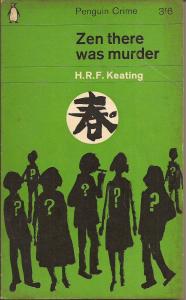
Zen There Was Murder by H. R. F. Keating

I don’t think I’ve read anything like Zen There Was Murder, a mixture of Zen Buddhism and murder. It was the second book H R F Keating wrote, first published in 1960 and then published in 1963 by Penguin Books in their green Penguin Crime series. (This cover is much more appropriate than the Bloomsbury Reader e-book cover showing guns)

It was the Zen Buddhist setting that made it difficult for me to get to grips with the murder. In fact it is practically halfway into the book before the murder actually takes place. The first half is taken up with introducing the characters, gathered together for a course on Zen Buddhism.  There is a schoolteacher, Alasdair Stuart, a clergyman, the Rev. Cyprian Applecheek, Miss Olive Rohan, Miss Flaveen Mills, Honor Brentt, a jounalist and her husband, Gerry Manvers, and Jim Henderson, an Irishman from Ulster.

None of them know anything about Zen and much time is spent with them trying to understand what it is. Mr Utamaro, the lecturer comes out with various sentences, such as ‘Books about Zen are legs on a snake‘, saying you cannot understand Zen by reading a book about it and applying the principles of logic to what you read, and tweaking Alasdair’s nose saying, ‘this is Zen‘, as well as using koans, such as ‘what is the sound of one hand clapping?‘ But they fail to understand, saying it is nonsense. Mr Utamaro agrees.

Mr Utamaro shows them a sword, locked in a glass showcase. The sword, a wakizashi, is one of pair used by samurai for hari-kiri, and on the evening of the first day Mr Utamaro discovers that the sword has been taken from the case, leaving it intact and without setting off the alarm. And then Flaveen is found dead, the sword driven into her body up to the hilt.

The clue to discovering the identity of the murderer is in solving who is telling lies  and why.  For most of the time I was completely bamboozled and kept wondering just how the two German girls employed to make the beds and do the cooking fitted into the mystery. Their conversations regularly interrupt the narrative as they comment on the characters and the events taking place.

All in all this book has a surreal feel about it. It’s not just a puzzle type of murder mystery but as Keating explained in an interview with Dale Salwek in Mystery Voices: Interviews with British Crime Writers it is also making a point about something you believed:

And the thing I believed in, one of the things that bugged me most, was the subject of telling lies, which is fine for a detective story. And that was how I came to write my second, Zen There Was Murder, which is really more about telling lies than about Zen.

When writing the second book, I thought I could say something about telling lies. At that time, too, Zen Buddhism was a fad over here, and so for the background of the book, I took Zen, which does reflect very much on lies. I found I could say things about lies by giving each of the characters a different viewpoint on telling lies – ranging from one of those people who absolutely objects to lying in any way to the sort of pathological liar. And I made the whole book turn on that. (pages 64-65)

H R F Keating (1926 – 2011) was chairman of the Crime Writers’ Association (CWA) (1970’“71), chairman of the Society of Authors (1983’“84) and president of the Detection Club (1985’“2000). He was a fellow of the Royal Society of Literature.  His most famous novels are the Inspector Ghote books (I have just one on my TBR shelves – Inspector Ghote’s Good Crusade, the second in the series).  For more information about Keating see this article by Martin Edwards.

I’ve had this book for about three years, so it qualifies for the Mount TBR Reading Challenge 2015 and it is also one of the books I listed for the 10 Books of Summer Challenge, and the TBR Pile Challenge.

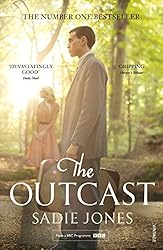
The Outcast by Sadie Jones: Book and TV

The Outcast

As I wrote earlier The Outcast by Sadie Jones is a book that has sat unread on my shelves for seven years until I noticed that it was being broadcast as a TV drama. I read half the book before the first episode and finished it before the second episode was broadcast.

First of all the blurb from Goodreads:

1957, and Lewis Aldridge is travelling back to his home in the South of England. He is straight out of jail and nineteen years old. His return will trigger the implosion not just of his family, but of a whole community. A decade earlier, his father’s homecoming casts a different shape. The war is over and Gilbert has recently been demobbed. He reverts easily to suburban life – cocktails at six thirty, church on Sundays – but his wife and young son resist the stuffy routine. Lewis and his mother escape to the woods for picnics, just as they did in wartime days. Nobody is surprised that Gilbert’s wife counters convention, but they are all shocked when, after one of their jaunts, Lewis comes back without her. Not far away, Kit Carmichael keeps watch. She has always understood more than most, not least from what she has been dealt by her own father’s hand. Lewis’s grief and burgeoning rage are all too plain, and Kit makes a private vow to help. But in her attempts to set them both free, she fails to predict the painful and horrifying secrets that must first be forced into the open. As menacing as it is beautiful, The Outcast is a devastating portrait of small-town hypocrisy from an astonishing new voice.

The TV adaptation, also written by Sadie Jones is faithful to the book, so for once I could enjoy them both – although maybe enjoy isn’t quite the right word. The TV drama is, of course a condensed version and whilst the cast was good the characters didn’t, of course, match up to my mental image of them whilst reading the book. I thought the boy (Finn Elliot) playing the young Lewis was excellent, whereas the adult Lewis (George MacKay) just didn’t seem to be right physically in episode one. However, he was much more convincing in the second episode. Overall, the themes of the book and the drama are relentlessly depressing, in post-war Britain, the men all maintaining a stiff upper lip, emotions securely repressed. Lewis witnessing his mother’s drowning is unable to express his grief and things just go from bad to worse as he resorts to self-harm.

Meanwhile, the Carmichael family, not fully portrayed in episode one, have a secret, again closely guarded in a world where child abuse is just not acknowledged. In episode two the secret comes out in a dramatic scene, which I thought was really well done. Nathaniel Parker as Dicky Carmichael made a terrifying bully and Jessica Barden as the teenager, Kit was impressive.

The book is written in the passive 3rd person narrative, which I wasn’t keen on. I didn’t like most of the characters, I didn’t like what happened to them and I’m not sure the ending is believable – it left me wondering what really happened next. But the descriptive passages are good, the characters of Lewis and Kit are well-defined, emotions are racked up high and it is truly tragic.

I’m glad I read the book before watching the drama – and I’m glad I watched it, the scenery is beautiful and the repressed and yet emotional atmosphere came over better than in the book.  I did have to watch behind my fingers at some scenes, which I was able to read without visualising them completely, but when it’s there in front of you on the screen it’s not so easy to cast a blind eye. Although you get an insight into Lewis’ mind and feelings when you read a description of him cutting his arm, it’s not as real as seeing it happen.

So, a powerful story, which compelled me to read on and also to watch. This was Sadie Jones’ debut novel. She has since written Small Wars (2009), The Uninvited Guests (2012) and Fallout (2014). I have Small Wars amongst my TBRs – I must dig that one out soon.

Reading challenges: Mount TBR 2015 and the Historical Fiction Reading Challenge 2015.

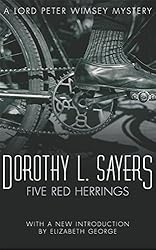
Five Red Herrings by Dorothy L Sayers

Five Red Herrings by Dorothy L Sayers  was first published in 1931, the seventh Lord Peter Wimsey murder mystery. Wimsey is on holiday in Kirkcudbright and Gatehouse of Fleet in Galloway, Scotland, in a fishing and painting community where he is known and where he is

… received on friendly and even affectionate terms. He could make a respectable cast, and he did not pretend to paint, and therefore, although English and an ‘incomer’, gave no cause of offence. The Southron is tolerated in Scotland on the understanding that he does not throw his weight about, and from this peculiarly English vice Lord Peter was laudably free. True, his accent was affected and his behaviour undignified to a degree, but he had been weighed in the balance over many seasons and pronounced harmless, and when he indulged in any startling eccentricity, the matter was dismissed with a shrug and a tolerant, ‘Christ, it’s only his lordship.’ (page 2)

When Campbell, a local landscape painter and fisherman is found dead in a burn near Newton Stewart, it seems he must have slipped whilst painting near to the edge of a ravine, a steep and treacherous granite slope. At first it looks as though it was an accident, but  Wimsey is convinced it was murder and an autopsy reveals that Campbell was dead before he fell into the burn. Campbell was not a popular man, described as ‘ a devil when he is drunk and a lout when he is sober.’ There are 6 possible suspects – all of whom had quarrelled with or been assaulted by Campbell, all of them artists.

What follows is an intricately plotted story as Wimsey and the police investigate the mystery. It is complicated by immense detail about train times, routes, bicycles, moving the body, alibis, and varying styles of painting – I gave up trying to understand it all and just read along enjoying the puzzle.

The five red herrings are, of course, the five innocent suspects, and Wimsey introduces another possibility that it might not be any of the six suspects, when having heard the case against each of them, he announces that all the theories are wrong, before he gives his verdict. And then he sets in motion a re-enactment of the crime from beginning to end to show how it was carried out, down to the most minute detail.

Sayers doesn’t play fair with the reader in not revealing a clue Wimsey noticed at the scene of the crime whilst he was searching through the contents of Campbell’s pockets and satchel and announced something was missing. In an added note Sayers explained that Wimsey

… told the Sergeant what he was look for and why, but as the intelligent reader will readily supply these details for himself, they are omitted from this page. (page 21)

I didn’t ‘readily supplied the details’  for myself but eventually I guessed what it was. But overall, that is just a minor complaint and I thoroughly enjoyed this mystery, the characters are striking and the setting is well grounded.

Five red herrings map 001

There is a map at the beginning of the book that helped me follow the action and in the Foreword Sayers explained that

All the places are real places and all the trains are real trains, and all the landscapes are correct, except that I have run up a few new houses here and there.

and goes to clarify that

… none of the people are in the least like real people, and that no Galloway artist would ever think of getting intoxicated or running away from his wife or bashing a fellow citizen over the head. All that is just for fun and to make it more exciting.

The Gateway of Fleet website has an interesting page on ‘Dorothy L Sayers in Galloway‘, which states that she and her husband Mac Fleming first visited  Galloway in 1928 when they stayed at the Anwoth Hotel (mentioned in Five Red Herrings) in Gatehouse of Fleet and from 1929 they rented a studio in The High Street, Kirkcudbright next door to the well-known artist Charles Oppenheimer. They got to know Galloway well, especially the artistic community in Kirkcudbright and Gatehouse, on which her detective novel Five Red Herrings is based.http://Dorothy L Sayers in Galloway

I realised after I’d read Five Read Herrings that it fits into a couple of reading challenges – the Colour Coded Challenge (a book with ‘red’ in the title) and the Read Scotland Challenge (a book set in Scotland).

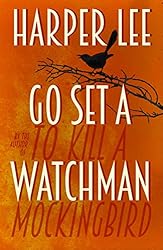
First Chapter, First Paragraph: Go Set a Watchman

Every Tuesday Diane at Bibliophile by the Sea hosts First Chapter, First Paragraph Tuesday Intros, where you can share the first paragraph, or a few, of a book you are reading or thinking about reading soon.

My choice this week is Go Set a Watchman by Harper Lee which is published today. It begins:

Since Atlanta, she had looked out the dining-car window with a delight almost physical. Over her breakfast coffee, she watched the last of Georgia’s hills recede and the red earth appear, and with it tin-roofed houses set in the middle of swept yards, and in the yards the inevitable verbena grew, surrounded by whitewashed tires. She grinned when she saw her first TV antenna atop an unpainted Negro house; as they multiplied her joy rose.
Jean Louise Finch always made this journey by air, but she decided to go by train from New York to Maycomb Junction on her fifth annual trip home. For one thing, she had the life scared out of her the last time she was on a plane: the pilot had elected to fly through a tornado. For another, flying home meant her father rising at three in the morning, driving a hundred miles to meet her in Mobile, and doing a full day’s work afterwards: he was seventy-two now and this was no longer fair.

I loved To Kill a Mockingbird when I read it a couple of years ago but I’m still not sure I want to read Go Set a Watchman, so I downloaded a sample on my Kindle to have a look at the beginning.

What do you think? Are you going to read it?

The Outcast by Sadie Jones

I noticed trailers for a new drama on BBC for The Outcast and wondered if it’s based on the book of the same name by Sadie Jones ‘“ a book that has sat on my shelves for a few years (well nearly 7 years) and I still haven’t read it. That’s what happens when you move house, box the books and then double shelve them, putting this one at the back! It was shortlisted for the Orange Broadband Prize for Fiction in 2008.

And it is the same book (although my copy being much older has a different cover) ‘“ the TV version begins tomorrow on BBC One at 9 pm. It’s been adapted by Sadie Jones, so I hope this means it’s faithful to the book. I’ve started to read it ‘“ won’t finish it by tomorrow night but will definitely finish it before the second episode is broadcast the following Sunday.

It’s set in the 1950s, when Lewis Aldridge aged nineteen, is released from jail, and returns to the village where he grew up: the village where, a decade earlier, tragedy tore his family apart, leaving him to a troubled adolescence with a father he barely knew.