My Tuesday Post: The Pursuit of Happiness

Every Tuesday Diane at Bibliophile by the Sea hosts First Chapter First Paragraph Tuesday Intros to share the first paragraph sometimes two, of a book that she’s reading or planning to read soon.

The Pursuit of Happiness by Douglas Kennedy has been sitting on my bookshelves for so long I can’t remember when I bought it. It was one of the first books I recorded on LibraryThing in 2007, so I already had it then. I must have bought it sometime between 2002 when it was published and 2007. It is one of those chunky books, 646 pages, that I keep thinking I’ll read one of these days, and then I pick up a shorter book, or a book I’ve just bought or borrowed and it stays on the shelf. It’s time to decide whether to read it or not.

The Pursuit Of Happiness by [Kennedy, Douglas]Blurb:

New York, 1945 – Sara Smythe, a young, beautiful and intelligent woman, ready to make her own way in the big city attends her brothers Thanksgiving Eve party. As the party gets into full swing, in walks Jack Malone, a US Army journalist back from a defeated Germany and a man unlike any Sara has ever met before – one who is destined to change Sara’s future forever.

But finding love isn’t the same as finding happiness – as Sara and Jack soon find out. In post-war America chance meetings aren’t always as they seem, and people’s choices can often have profound repercussions. Sara and Jack find they are subject to forces beyond their control and that their destinies are formed by more than just circumstance. In this world of intrigue and emotional conflict, Sara must fight to survive -against Jack, as much as for him.

In this mesmerising tale of longing and betrayal, The Pursuit of Happiness is a great tragic love story; a tale of divided loyalties, decisive moral choices, and the random workings of destiny.

Chapter One

I first saw her standing near my mother’s coffin. She was in her seventies – a tall, angular woman, withe fine grey hair gathered in a compact bun at the back of her neck. She looked the way I hope to look if I ever make it to her birthday. She stood very erect, her spine refusing to hunch over with age. Her bone structure was flawless. Her skin had stayed smooth. Whatever wrinkles she had didn’t cleave her face. Rather they lent it character, gravitas. She was still handsome – in a subdued, patrician way. You could tell that, once upon a time, men probably found her beautiful.

Every Tuesday, Jenn from Books And A Beat hosts Teaser Tuesdays at which time participants grab their current read, open to a random page, and share two or three “teaser” sentences from that page while avoiding any spoilers.

From page 77:

‘Good afternoon Kate,’ she said, her voice controlled and untroubled by my outburst. ‘I’m glad you came.’

‘Who the hell are you? And what the hell is this?’ I said, again holding up the photo album as if it was the smoking gun in a murder trial.

What do you think? Would you keep on reading?

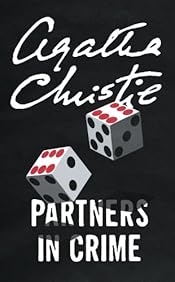
Partners in Crime by Agatha Christie

Tommy and Tuppence Beresford first appeared in Agatha Christie’s The Secret Adversary (first published in 1922) when they had just met up after World War One, both in their twenties. Their next appearance is in Partners in Crime, a collection of short stories, first published in 1929.

Life has become a little dull, especially for Tuppence. Tommy works for the Secret Service but wants to see more action, so when Tommy’s boss Mr Carter offers them both a new assignment they jump at the opportunity. It’s to take over for six months the running of the International Detective Agency under the name of Mr Theodore Blunt. It had been a front for Bolshevist-spying activity and in particular they were to look out for blue letters with a Russian stamp on them. They were also free to undertake any other detective work that comes their way.

All of the stories first appeared in magazines between 1923 and 1928 and they are parodies of fictional detectives of the period, some of whom I recognised and some I didn’t. When she came to write her autobiography many years later, even Agatha Christie couldn’t recognise some of them, noting that whilst some had become household names, others had ‘more or less perished in oblivion. Those I recognised include Sherlock Holmes, Father Brown, The Old Man in the Corner, and Hercule Poirot, himself.

Most of the stories are self-contained adventures. They are slight and brief, and not really taxing or difficult to solve. I enjoyed reading them, because they are written with a light touch, and a sense of humour and fun. Tommy and Tuppence are likeable characters; Tommy is not as dizzy as David Walliams played him in the recent TV series. I’ve now read all the Tommy and Tuppence stories. There are four full length novels as well as Partners in Crime (Tommy and Tuppence 2) and unlike Poirot and Miss Marple Tommy and Tuppence age with each book:

  1. 1922 The Secret Adversary (Tommy and Tuppence 1)
  2. 1941 N or M? (Tommy and Tuppence 3)
  3. 1968 By the Pricking of My Thumbs (Tommy and Tuppence 4)
  4. 1973 Postern of Fate (Tommy and Tuppence 5)

Reading Challenges: the Agatha Christie Reading ChallengeMount TBR Reading Challenge, and the Golden Age Vintage Cover Scavenger Hunt.

My copy is the current edition with this cover:


The first UK edition, however, has this cover, which I prefer.


So I’m choosing this cover for the Vintage Scavenger Hunt, in the category of a book showing a Shadowy Figure on its cover.

My Friday Post: Sunshine on Scotland Street

Book Beginnings ButtonEvery Friday Book Beginnings on Friday is hosted by Gillion at Rose City
Reader
 where you can share the first sentence (or so) of the book you are reading, along with your initial thoughts about the sentence, impressions of the book, or anything else the opener inspires.

I’ve just started reading Sunshine on Scotland Street by Alexander McCall Smith, one of his 44 Scotland Street novels.

It begins:

Even if she had not been an anthropologist, Domenica Macdonald would have understood the very particular significance of weddings. Anthropologists – and sociologists too, perhaps even more so – often tell us what we already know, or what we expect to hear, or what we are not surprised to learn. And so we all know, as did Domenica, that weddings are far more than marriage ceremonies; we know that they are occasions for family stock-taking and catharsis; that they furnish opportunities for naked displays of emotion and unscheduled tears; that they are a stage for sartorial and social ostentation; that they are far from the simple public exchange of vows they appear to be.

Also every Friday there is The Friday 56, hosted by Freda at Freda’s Voice.

Friday 56

These are the rules:

  1. Grab a book, any book.
  2. Turn to page 56, or 56% on your eReader.
  3. Find any sentence (or a few, just don’t spoil it) that grabs you.
  4. Post it.
  5. Add the URL to your post in the link on Freda’s most recent Friday 56 post.

Page 56:

He looked at his watch. That brief encounter with the two girls on Queen’s Street had taken place about twenty minutes previously. That gave him forty minutes to have a necessary cup of coffee, unpack his clothes and products, and have a quick shower before the girls arrived – if they arrived. They had laughed when he had shouted out the invitation, but it had been, he thought, a laugh of delight rather than a dismissive laugh.

The 44 Scotland Street books form a serial novel about the residents of 44 Scotland Street, a fictitious building in a real street in the author’s home town of Edinburgh. It first appeared in daily episodes in the Scotsman newspaper in 2004 and I read a few of them online some years ago.

I felt in the mood for something light and not about murder, psychologically disturbed characters, or full of doom and gloom and this seems to be just that – ‘a joyous, charming portrait of city life and human foibles‘ according to the Sunday Express (quoted on the back cover).

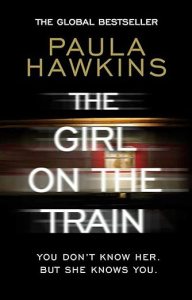
The Girl on the Train by Paula Hawkins

The Girl on the Train by Paula Hawkins has won a lot of awards and is a very popular book. It has good reviews, Stephen King for example describes it as a “Really great suspense novel. Kept me up most of the night. The alcoholic narrator is dead perfect.”

I thought it sounded good, so I decided to read it. But it didn’t live up to the hype for me. I wasn’t enthralled.
It began well with Rachel on the train each morning looking out at the houses on the road where she used to live before she was divorced. As the train stops at the same signal each day she enviously watches a young couple who are living the perfect life, or so she imagines. Then something happens that shocks her and everything changes and she begins to get involved in their lives, with disastrous results.

But I couldn’t easily distinguish between the three main characters, Rachel, Anna and Megan. Each one is an unreliable narrator and not very likeable. I had to keep referring to the chapter headings and dates to remind myself who was who and what happened when. I didn’t find it chilling or thrilling and any suspense rapidly disappeared with the repetition of Rachel being drunk, then being sorry, but unable to stop drinking. Then there are all the phone calls, text messages and emails that she sends when she is drunk. She has blackouts and can’t remember what happened, or what she said. Added to that she dreams and is unable to distinguish between them and reality. Overall it’s dreary and depressing.

So after a good start, the narrative lost impetus and dragged on to its conclusion, which by comparison seemed rushed, with a twist right at the end that took me by surprise. I suppose it is a ‘page-turner’ as I did want to know what what going to happen, but it left me feeling unsatisfied, irritated and rather out of sorts.

I’ve seen this book compared to Gone Girl, another book I have sitting waiting to be read. Now, I’m wondering if I’ll find that one disappointing as well. Do let me know your views on both or either of these books.

Reading challenges: Bev’s Mount TBR Reading Challenge 2016, 20 Books of Summer 2016 and although I didn’t find this book particularly perilous, Carl’s RIP XI (Readers Imbibing Peril), because plenty of other people have.

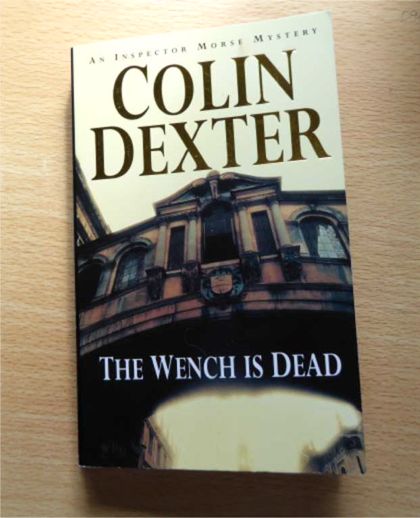
The Wench is Dead by Colin Dexter

An Inspector Morse book, The Wench is Dead is the 8th in the series, first published in 1989. This is a bit different from the other Morse books in that it is historical crime fiction – no current cases are investigated.

The wench is dead


Morse is in hospital being treated for a perforated ulcer. Whilst recovering he is given a book called Murder on the Oxford Canal by the wife of a recently deceased patient at the hospital. It’s an account of the investigation and trial that followed the death of Joanna Franks in 1859. She had been found at Duke’s Cut on the Oxford Canal. As he reads, Morse becomes convinced that the two boatmen hanged for her murder and a third man who had been transported to Australia were innocent.

Dexter based his book on an account of a Victorian murder in 1839, that of 37-year-old Christina Collins as she travelled the Trent and Mersey Canal atRugeley, Staffordshire, on the Staffordshire Knot en route to London. It reminded me of Josephine Tey’s novel, The Daughter of Time in which Inspector Alan Grant, also recovering in hospital, investigates the murder of the Princes in the Tower.

Morse enlists the help of Sergeant Lewis as well as that of Christine Greenaway, the beautiful daughter of one of the other patients. She works as a librarian at the Bodleian Library. So he is able to study original source material as well as the account in the published book. Morse finds it an absorbing puzzle, like a tricky cryptic crossword, and the more he read and thought about it the more questions came to his mind. He was not satisfied that the conclusions drawn at the trial about the forensic and pathological evidence were right. He felt uneasy about reported conversations between the various people involved:

… all of it was wrong somehow. Wrong if they were guilty. It was if some inexperienced playwright had been given a murder-plot, and then had proceeded to write page after page of inappropriate, misleading and occasionally contradictory dialogue. (page 133)

I thought it was ingenious and compelling reading, very well constructed and very clever. By the time he leaves the hospital Morse is convinced that he has solved the mystery. It’s a tale of  intrigue, lust and deception, with more than a few twists and turns.

Reading Challenges: Mount TBR Reading Challenge, 20 Books of Summer 2016 , Vintage Cover Silver Age Scavenger Hunt: in the category of a Building (not a house) – the front cover of my copy shows the Hertford Bridge, popularly known as the Bridge of Sighs, which joins two parts of Hertford College over New College Lane in Oxford.

R.eaders I.mbibing P.eril XI

It’s time for the annual R. (eaders) I. (mbibing) P. (eril) event, hosted by Carl  at Stainless Steel Droppings, taking place between September 1st and October 31st.
(Much thanks to Hugo Award winning artist Abigail Larson for the use of her art)

This event involves reading books from these categories: Mystery, Suspense, Thriller, Dark Fantasy, Gothic, Horror, Supernatural or other closely-related fields. Reviews, while not required, may be posted on Carl’s blog.

I shall be attempting:


Peril the First: Read at least four books, any length, that you feel fit (the very broad definitions) of R.I.P. literature. I have plenty of Mystery, Suspense, Thriller and Gothic books on my shelves and Kindle to choose from, including these four:

The Girl in a Swing by Richard Adams

The Taxidermist’s Daughter by Kate Mosse

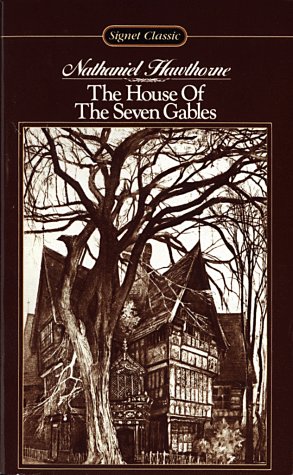
The House of the Seven Gables by Nathaniel Hawthorne

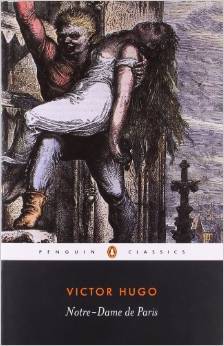
The Hunchback of Notre Dame by Victor Hugo

30600