Today is the last day of September and as I shan’t finish any of the books I’m currently reading today, my total for the month is eight books – all fiction.
I wrote posts about five of them. Three are books from my TBR piles (books I owned before 1 January this year), one is a library book, two are review books and two are books I bought this year:
The Wench is Dead by Colin Dexter (TBR) – an Inspector Morse book in which he investigates the account of death of Joanna Franks in 1859. An enjoyable book.
The Girl on the Train by Paula Hawkins – a psychological thriller in which Rachel spots a couple from the train window and sees a shocking event. I was not enthralled.
Partners in Crime by Agatha Christie (Tommy & Tuppence short stories) (TBR). I enjoyed reading them, because they are written with a light touch, and a sense of humour and fun.
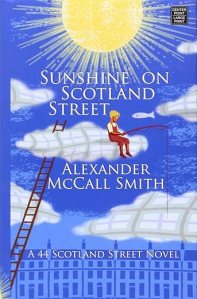
Sunshine on Scotland Street by Alexander MCall Smith (LB) – This is an easy read, meandering from one character to the next. It has a light, humorous tone that I enjoyed, along with thoughts about friendship, religion, spirituality and happiness.
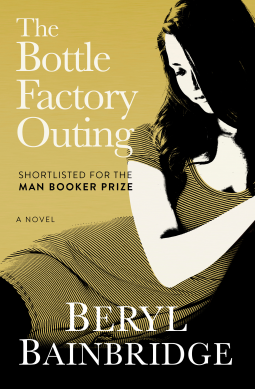
The Bottle Factory Outing by Beryl Bainbridge (RB) – I enjoyed this immensely. It is a tragicomedy, the story of two unlikely friends, Freda and Brenda. I was completely taken by surprise at the bizarre twist at the end, which I thought was brilliant.
I shall write a review of The Black Friar by S G MacLean (RB) later next week.
Here are some brief notes of the other two books:
Extremely Loud and Incredibly Close by Jonathan Safran Foer – I enjoyed this unusual story about a boy whose father is killed in the September 11th attacks on the World Trade Centre. Oskar is is trying to discover the facts about his father’s death and also to solve the mystery of a key he discovers in his father’s closet by attempting to search for which of the 162 million locks in New York it might open.
Oskar is an extremely bright nine-year old, most likely on the Autism Spectrum. The narrative, streams of consciousness in parts, switches between Oskar and his grandparents, touches on the bombing of Dresden during the Second World War where his grandparents were living and on the bombing of Hiroshima. The text is interspersed with what at first appear to be random photos. I thought it was fascinating and moving without being sentimental.
A Prayer for Owen Meany by John Irving – I have mixed feelings about this book, parts of it are brilliant, fascinating and funny, but parts of it are tedious and boring. It is about Owen Meany, a very small boy with a strange voice who believes his life is directed by God, and his friend Johnny Wheelwright. Owen accidentally kills Johnny’s mother during a baseball game, setting in motion most of the rest of the story. Johnny doesn’t know who his father is and the two boys try to discover his identity. One of the main themes of the book is the conflict between faith and doubt.
It begins quite slowly and there were times when I was about to give up reading it, but then it picked up pace and grabbed my attention – such as the scenes where Owen plays the part of Baby Jesus in a church nativity, which is hilarious, and the Ghost of the Future (the Ghost of Christmas Yet to Come) in a performance of A Christmas Carol. But I got increasingly irritated by the capitalisation of everything Owen said and of the enormous amount of description of everything in the minutest detail – and I normally enjoy descriptive writing! Even so, I just had to read to the end, intrigued to find out what would happen.
I’ve recently read The Bottle Factory Outing by Beryl Bainbridge and I enjoyed it immensely.
It is the story of two unlikely friends, Freda and Brenda. Their relationship is the central focus of this book – it’s basically a friendship of convenience as they are complete opposites. Their backgrounds and personalities are very different. They met by chance in a butcher’s shop, where Brenda having left her drunken brute of a husband and a mad mother-in-law was in floods of tears. They share a room and work together in an Italian wine factory in London, gluing labels onto the bottles. Freda is sixteen stone, with blonde hair and blue eyes, Brenda has reddish shoulder-length stringy hair, with a long thin face and short sighted eyes who never looks properly at people. The difference between them is epitomised in Bainbridge’s description,
At night when they prepared for bed Freda removed all her clothes and lay like a great fretful baby, majestically dimpled and curved. Brenda wore her pyjamas and her underwear and a tweed coat.
Brenda desperately tries to escape the the amorous attentions of Rossi, the factory manager – as Freda says Brenda is a born victim, who’s asking for trouble. But it’s not just Brenda who runs into trouble. Freda, who is in love with Vittorio, the trainee manager and nephew of the factory owner, organises a factory outing in the hope that she can seduce him, but the outing goes from bad to worse.The van arranged to take them to a stately home fails to turn up so only those who can fit into two cars set off, then there are fights at Windsor Castle, and a bizarre visit to a safari park. Passions rise, tempers flare, barrels of wine are consumed and it ends in violence and tragedy.
The book begins as a comedy, but then continues with an uneasy undercurrent as the outing gets under way before descending into a dark tragedy that is surreal and farcical and also desperately sad. Beryl Bainbridge’s writing, so easily readable, is rich in descriptions. The book is superbly paced; the tension rises in an atmosphere of seediness, and frustration, before reaching an unbelievable and grotesque climax. I had no idea how Bainbridge could draw this story to an end and was completely taken by surprise at the bizarre twist at the end, which I thought was brilliant. It’s savagely funny, full of pathos, touching moments, frustrations, shame, stress and unhappiness, all combining to make this a most entertaining book.
Beryl Bainbridge (1932 ‘“ 2010) was made a Dame in 2000. She wrote 18 novels, three of which were filmed, two collections of short stories, several plays for stage and television, and many articles, essays, columns and reviews. Five of her novels were nominated for the Booker Prize, but none of them won it. Years ago before I began writing BooksPlease I read two of her books, historical novels, one being According to Queenie, published in 1999, a novel about the life of Samuel Johnson as seen through the eyes of Queeney, Mrs Thrale, and the other Master Georgie, published in 1998, set in the Crimean War telling the story of George Hardy, a surgeon.
Since then I have read three more of her books and loved each one – A Quiet Life, published in 1976, a semi-autobiographical novel, using her own childhood and background as source material; An Awfully Big Adventure, another semi-autobiographical novel set in 1950, based on Beryl Bainbridge’s own experience as an assistant stage manager in a Liverpool theatre, published in 1989 and shortlisted for the Booker Prize; and The Birthday Boys, a novel about Captain Scott’s last Antarctic Expedition, published in 1991.
The Bottle Factorywas inspired by Beryl Bainbridge’s experience working part time in a bottle factory in 1959. It was first published in 1974 and was shortlisted for the Man Booker Prize in that year.
Thanks to the publishers, Open Road Integrated Media, via NetGalley for my copy of this ebook edition, featuring an illustrated biography of Beryl Bainbridge including rare images from the author’s estate. It’s due to be released in the US on 4 October.
From top to bottom: the first seven in the pile are from Barter Books in Alnwick, my favourite bookshop where you can either swap or buy books. I took seven books in and came home with another seven. I love browsing at Barter Books and always find books I want to read.
Absent in the Spring by Mary Westmacott – I had to search round the various places fiction is shelved in Barter Books before I found this book in the Romance section. It’s by Agatha Christie, writing as Mary Westmacott. The books she wrote under this pseudonym are a complete change from her crime fiction – she was such a versatile writer. Her daughter, Rosalind, called them ‘bitter-sweet stories about love’. It was first published in 1944.
Arms and the Women by Reginald Hill – I’ve been collecting his books in an attempt to read them in chronological order. This is the 18th Dalziel and Pascoe mystery in which Ellie, Pascoe’s wife is in danger at a decaying seacoast mansion.
An April Shroud by Reginald Hill – the 4th Dalziel and Pascoe mystery, set in a solitary mansion in the Lake District where Pascoe is spending his honeymoon.
The House by the Churchyard by Sheridan Le Fanu – the Horror section is right next to Crime Fiction and I don’t usually look there but as I walked past this book caught my eye as it was displayed in one of the holders on the side of the bookcase, maybe because I’m taking part in the R.I.P. event at the moment. Le Fanu was described by Henry James as in the ‘first rank of ghost writers‘. Set in the 1760s in Ireland, it begins with the accidental disinterment of an old skull and an eerie late-night funeral.
A Game of Sorrows by Shona MacLean – the second book in the Alexander Seaton series. I’ve read the first and the third so I was pleased to find this one. It’s set in 1628 in Ulster as Seaton investigates a family curse – a family divided by secrets and bitter resentments.
The Collector by John Fowles – another author whose books I’ve enjoyed in the past. This could also be a choice for the R.I.P. event. It’s described as a thriller with psychological and social overtones, the story of a kidnapping.
A Walk Along the Wall by Hunter Davies – I was really pleased to find this book Hadrian’s Wall is the most important Roman monument in Britain. Hunter Davies grew up at one end of the wall and was inevitably drawn to walk its length. It’s part history, part guidebook and part personal experience and gives readers a taste of what life was like in this remote part of Britain 2000 years ago.
The bottom two books in the pile aren’t from Barter Books:
The Black Caravel by Harry Nicholson is a book the author sent to me for review. It’s his second novel, a sequel to ‘Tom Fleck‘ which I reviewed in 2011. It begins and ends at Hartlepool in 1536, the year of The Pilgrimage of Grace, as Barbary corsairs are raiding northwards.
and finally a birthday present (in August):
Rowan’s Well by C J Harter – a psychological thriller (another one for R.I.P. maybe). Rowan’s Well is a remote house on the north-east coast of England, home to the charismatic Brooke family, the scene of murder and betrayal.
I’ve read a few of Alexander McCall Smith’s Isabel Dalhousie books, which I enjoyed – but not any of his 44 Scotland Street novels. So when I saw Sunshine on Scotland Street in the library, going off the blurb on the back cover, I thought it would be a change from the crime fiction and historical novels I’ve been reading recently.
From the back cover:
Scotland Street witnesses the wedding of the century of Angus Lordie to Domenica Macdonald, but as the newlyweds depart on honeymoon Edinburgh is in disarray. Recovering from the trauma of being best man, Matthew is taken up by a Dane called Bo, while Cyril eludes his dog-sitter and embarks on an odyssey involving fox-holes and the official residence of a cardinal. Narcissist Bruce meets his match in the form of a sinister doppelganger; Bertie, set up by his mother for fresh embarrassment at school, yearns for freedom; and Big Lou goes viral. But the residents of Scotland Street rally, and order – and Cyril – is restored by the combined effects of understanding, kindness, and, most of all, friendship.
My thoughts:
Even though I haven’t read the seven books before this one I had no difficulty in following the storylines, although it is obvious that the characters all have backstories and previous relationships that are hinted at in this book. In a way it’s very like the Isabel Dalhousie books as the action is interspersed with McCall Smith’s philosophical and ethical musings, his thoughts about human nature and relationships, which in general I liked more than the story.
It begins with an amusing account of the preparations for Angus and Domenica’s wedding, which Angus seems to think will just happen without much preparation by him – a hole in his kilt, his lack of a ring, and he has given no thought at all about where to go for thier honeymoon. But his bestman, Matthew helps him sort out the kilt and ring problem and Domenica has arranged both the reception and the honeymoon.
After that Angus and Domenica disappear from the book until the last chapter, leaving Cyril, Angus’s dog in the care of the Pollock family, the insufferable Irene, her long-suffering husband, Stuart, 6 year-old son Bertie and baby Ulysses. Cyril and Bertie are my favourite characters in the book and their ‘adventures’ caused me much concern, as Irene does not like Cyril and stifles both Bertie and Stuart. In fact I wasn’t too bothered about any of the other characters, apart from Bertie’s spindly-legged friend from cub scouts, Ranald Braveheart Macpherson and his mother who has no difficulty in putting Irene firmly in her place.
This is an easy read, meandering from one character to the next. It has a light, humorous tone that I enjoyed, along with thoughts about friendship, religion, spirituality and happiness. At the end as Angus looks round the group of people gathered for their homecoming party it strikes him that they are an ‘infinitely precious band of souls’:
And this realisation that he had was not specifically religious – although it could easily and appropriately be that. It was, rather, a spiritual notion – the idea that each of us, even the least of us, has a rich hinterland of value behind us: the lives we have led, the thoughts we have had, the love we have given and received – the little things of our lives that may not mean much to others unless and until they are granted the insight that brings love into the heart, sudden, exalting love. To see another as a soul was to acknowledge the magnifcent, epic course that life is for each of us, and to experience sympathy for the other in his or her negotiation of that course. It was quite different from seeing others simply as people. (pages 294 – 295)
Agatha Christie is one of my favourite authors. I first began reading her books when I was in my teens but it was in 2008 when Kerrie at Mysteries in Paradise launched the Agatha Christie Reading Challenge that I began to read my way through all her books. There are 66 mystery and detective novels and numerous collections of short stories. In February of this year I completed my reading of her 66 mystery and detective novels and some but not all of her short stories.
The Short Stories
There is some confusion over how many short stories Agatha Christie wrote. The Agatha Christie website records that she wrote 150 stories, whereas Wikipedia records that she wrote 153 short stories, published in 14 collections in the UK and in the US. By my reckoning she wrote 157 short stories, published in a number of collections, but I may have included duplications as some stories were published under different names in the US Collections. I’m hoping that as I read the stories the actual number will become clear. For my list of her short stories see my Agatha Christie Short Stories Page.
But whatever the real total may be there can be no doubt that it is an impressive collection of stories originally published in several magazines and then in a number of collections. They do vary in quality, some are very short, almost skeletal, with the puzzle element given greater emphasis than characterisation.The first collection of her short stories, Poirot Investigates was published in 1924, when Agatha Christie was 34.
As today’s topic in this Blogathon is dedicated to anything about or by Agatha Christie not related either to Poirot or Miss Marple this post is about one collection of short stories:
The Mysterious Mr Quin
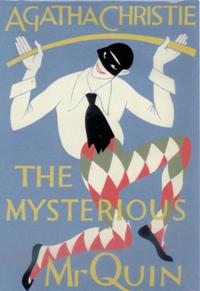
The Mysterious Mr Quin First Edition Cover
This was first published in 1930 featuring Mr Harley Quin and Mr Satterthwaite. This is my favourite of her collections, containing some of her very best short stories.
In her Autobiography Agatha Christie said these stories were her favourites too. The stories were not written as a series, but one at a time at intervals of three or four months or longer and were first published in magazines. They are set in the 1920s and have a paranormal element to them, as well as a touch of romance. I found them all most entertaining.
In the Foreword she describes Mr Quin as:
… a figure invisible except when he chose, not quite human, yet concerned with the affairs of human beings and particularly of lovers. He is also the advocate for the dead.
Mr Satterthwaite, who was in his sixties, a little man, with an elf-like face, is Mr Quin’s friend:
Mr Satterthwaite, the gossip, the looker-on at life, the little man who without ever touching the depths of joy and sorrow himself, recognizes drama when he sees it, and is conscious that he has a part to play.
The titles are
1. The Coming of Mr. Quin
2. The Shadow on the Glass
3. At the “Bells and Motley”
4. The Sign in the Sky
5. The Soul of the Croupier
6. The Man from the Sea
7. The Voice in the Dark
8. The Face of Helen
9. The Dead Harlequin
10. The Bird with the Broken Wing
11. The World’s End
12. Harlequin’s Lane
In the opening story, The Coming of Mr Quin, Mr Satterthwaite first meets him on New Year’s Eve, at a house party when talk had turned to the suicide of Mr Capel, the man who had originally owned the house. The enigmatic Mr Quin, a tall, slender man, appears in the doorway. The light shining through the stained glass above the door makes it appear that he is dressed in every colour of the rainbow but when he moves the effect fades and Mr Satterthwaite can see that he is dressed conventionally. Whenever he appears in the stories, some trick of the light initially produces the same effect. Mr Quin subtly steers Mr Satterthwaite into discovering the truth behind Mr Capel’s suicide.
In the following eleven stories Harley Quin always appears unexpectedly and suddenly, and then just as suddenly disappears, having influenced Mr Satterthwaite to change people’s lives, and solve mysteries by producing clues and asking pointed questions, making the solution obvious. He is, without doubt, the most mysterious and unusual character in all of Agatha Christie’s books.
One of my favourite stories is The Man From The Sea. Mr Satterthwaite, who is a wealthy man, althought the source of his wealth is not revealed, is on a Mediterranean island. Walking along the cliffs he meets Anthony Cosden, about to leap to his death. He’d been planning to do so the previous evening but had been prevented when he’d met someone else at the edge of the cliff – a mysterious man in fancy dress, ‘ a kind of Harlequin rig‘. Anthony reveals he only had six months to live and doesn’t want a lingering end and in any case he has no one in the world belonging to him – if only he had a son …
Mr Satterthwaite next meets a woman in black in the quiet garden of what seems to be an empty house. The woman asks him if he would like to see inside the house and clearly needs someone to talk to, someone to hear the tragic story of her life. It’s a touching story of remorse and the desire to make amends.
Mr Quin’s role in this and in other stories is to help Mr Satterthwaite to see beneath the surface, to see things in a different light. At the end he takes his leave, and all Mr Satterthwaite see is his friend walking towards the edge of the cliff.
The final story, Harlequin’s Lane is another bittersweet tale of lost love and fate and rather eerie. Mr Satterthwaite goes to visit a married couple, the Denmans, who live at Ashmead, on Harlequin’s Lane. Mrs Denman is a Russian refugee whom John Denman had married after escaping Russia on the outbreak of the revolution.
They are out when he arrives and he takes a walk down the Lane, wondering about its name and was not surprised when he meets his elusive friend, Harley Quin, who tells him the Lane belongs to him; it’s a Lovers’ Lane. It ends at waste ground covered with a rubbish heap where they meet Molly who is to be Pierrette in the masquerade the Denmans have planned for the weekend. A car accident interrupts the arrangments injuring some of the dancers, until Mr Satterthwaite intervenes, but still tragedy strikes. Mr Quin, seems to have cast a magical air of unreality over Mr Satterthwaite:
Mr Satterthwaite quailed. Mr Quin seemed to have loomed to enormous proportions … Mr Satterthwaite had a vista of something at once menacing and terrifying … Joy, Sorrow, Despair.
And his comfortable little soul shrank back appalled.
Truly a mystifying collection of stories. I enjoyed it immensely.
Each month I’ve been looking back at some of my favourite books I read during the years 2007 – 2010. These are some of my favourite books I read in September in each of those years. September seems to have been a great month for books as I rated so many 5/5, but I’m highlighting just one for each month in this post. Revisiting these books makes me want to re-read all of them.
Click on the titles to see my original reviews.
2007
Crow Lakeby Mary Lawson – this tells the story of a family of four children living at Crow Lake in the north of Canada in an isolated house miles away from any town, with just a few other families in the vicinity. The narrator is Kate Morrison and the story unfolds as she looks back on her life, triggered by an invitation to her nephew’s 18th birthday party.
When she was seven her parents were killed in a car crash, leaving her, her baby sister and two teenage brothers, orphaned. The trauma of their parents’ death affects the children in different ways and as Kate looks back on the events that followed she begins to see that not everything was as it seemed to her at the time.
Convincing characters combined with beautiful descriptions of Crow Lake and its ponds make this a memorable and lyrical novel.
2008
The Gravedigger’s Daughter byJoyce Carol Oates made a great impression on me in 2008 and I wrote three posts about it – see here and here for the first two and here for my final thoughts.
This is a melodramatic and memorable book depicting a grim, dark world, a violent and pessimistic world, gothic and grotesque. In some ways it reminds me of Hardy’s novels ‘“ you know something terrible will happen whatever the characters do to try to avert tragedy.
The main character is Rebecca Schwart, born in New York Harbor, the daughter of Jacob and Anna escaping from Nazi Germany in 1936. They live a life of abject poverty whilst Jacob can only find work as a caretaker of Milburn Cemetery, a non-demoninational cemetery at the edge of the town.
Soon the town’s prejudice and the family’s own emotional frailty results in unspeakable tragedy. In the wake of this loss, and in an attempt to put her past behind her, Rebecca moves on, across America and through a series of listless marriages, in search of somewhere, and someone, to whom she can belong.
The ending both surprised and touched me enormously.
2009
Pardonable Lies by Jacqueline Winspear – the third book in her Maisie Dobbs series. This one is set in 1930 when Maisie is asked by Sir Cecil Lawton to prove that his son, Ralph really did die in 1917 during the First World War. Sir Cecil’s wife, who had recently died, had been convinced that Ralph was still alive and on her deathbed made him promise to search for their son. This takes Maisie on a traumatic and dangerous trip to France ‘“ to the battlefields where she had been a nurse.
I like the Maisie Dobbs books. They’re easy to read, but not simple, the plots are nicely complicated and Maisie’s own story is seamlessly interwoven with the mystery. They give a good overall impression of the period, describing what people were wearing, the contrast between the rich and the poor and the all-pervading poisonous London smog. The horror of the War is still strong, people are still grieving for friends and relations killed or missing, visiting the battlefields and working to improve life for the soldiers who had returned home injured, and for the homeless children forced into life on the streets.
2010
The Fallby Simon Mawer – beautifully written, I was enthralled by this book. This is the story of Rob Dewar and Jamie Matthewson from their childhood up to Jamie’s death 40 years later and also the story of their parents and how their lives are interlinked.
The narrative moves between the two generations beginning in the present day, when Rob hears on the news that Jamie, a renowned mountaineer has fallen to his death in Snowdonia. No one is sure whether it was an accident or suicide. Then it moves back 40 years to the time when the two boys met, both fatherless ‘“ Jamie’s dad, Guy went missing when climbing Kangchenjunga and Rob’s parents are divorced, and back yet further again to 1940 when Guy Matthewson met the boys’ mothers ‘“ Meg (later calling herself Caroline) and Diana. And so the drama unfolds in the mountains of Wales and the Alps, culminating on the North Face of the Eiger.






 BooksPlease