An Uncertain Place by Fred Vargas

An Uncertain Place (Commissaire Adamsberg, #8)

I loved An Uncertain Place, a clever and also a confusing book. It’s the sixth in Fred Vargas’ Commissaire Adamsberg series in which he investigates a macabre murder. I say confusing because I got a bit lost in the middle of the book, and looking back I think it’s because Adamsberg is not your normal detective – he works by intuition and I simply hadn’t followed his train of thought. With a bit of concentration I was back on track and caught up with him.

I say clever because it is such a convoluted plot, with what I thought could be red herrings, but which turned out to be vital clues. I think the blurb on the back cover summarises the story better than I could:

Commissaire Adamsberg leaves Paris for a three-day conference in London. With him are Estalere, a young sergeant, and Commandant Danglard, who is terrified at the idea of travelling beneath the Channel. It is a welcome change of scenery, until a macabre and brutal case comes to the attention of their colleague Radstock from New Scotland Yard.

Just outside the gates of the baroque Highgate cemetery a pile of shoes is found. Not so strange in itself, but the shoes contain severed feet. As Scotland Yard’s investigation begins, Adamsberg and his colleagues return home and are confronted with a massacre in a suburban home. Adamsberg and Danglard are drawn in to a trail of vampires and vampire-hunters that leads them all the way to Serbia, a place where the old certainties no longer apply.

My thoughts:

This is one of those books that once I begin reading I don’t want to put down. I had to, of course, and it’s not a book to dash through to the end or you’ll miss so much. Adamsberg is a very likeable detective, although he must be a nightmare to work with, as his colleagues find his methods of working just as bewildering and confusing as I do. But they are used to him and trust his leaps of intuition.

The mystery of who left the shoes outside the gates of Highgate Cemetery is a theme throughout the book:

The smell was ghastly, the scene appalling, and even Adamsberg stiffened, standing back a little behind his English colleague. From the ancient shoes, with their cracked leather and trailing laces, projected decomposed ankles, showing dark flesh and white shinbones which had been cleanly chopped off. The only thing that didn’t match Clyde-Fox’s account was that the feet were not trying to get into the cemetery. They were just there, on the pavement, terrible and provocative, sitting inside their shoes at the historic gateway to Highgate Cemetery. They formed a carefully arranged and unspeakable pile. (page 23)

 The scene that confronts Adamsberg on his return to Paris is even more gruesome. Pierre Vaudel, a former journalist who specialised in legal affairs, had been murdered, or rather it looked as though his body had exploded and had been strewn around the room. The only way to identify the body was by DNA. Suspicion falls on the gardener, who reported the death and who inherited all of Vaudel’s property and also on Vaudel’s son.

After a similar murder occurs in Austria, Adamsberg is eventually led to a village on the Serbian/Romanian border, finding himself immersed in the weird world of vampires. Books featuring vampires (with the exception of Dracula) are not part of my preferred reading, but I found this aspect of the book fascinating. Adamsberg, himself, is sceptical and ignores warnings not to start meddling or even visit the tomb of Petar Blagojevic who had died in 1725. Blagojevic/Plogojowitz was said to be a ‘vampyr‘, and the clearing in the wood, where he was buried is known by the locals as ‘the place of uncertainty.’ Adamsberg’s disregard for his own safety puts him in danger of losing his own life.

This book is full of wonderful and unique characters, the plot, as I said, is clever and completely bamboozled me, the settings are easily imagined from Vargas’ descriptions, and the suspense is maintained throughout. It’s a complicated book – one of the most intriguing aspects is the sudden appearance of a man claiming to be Adamsberg’s son. Maybe this is not a book everyone will enjoy, but I think it’s a most satisfying and surreal mystery, and one that I enjoyed immensely.

  • Paperback: 416 pages
  • Publisher: Vintage (5 April 2012)
  • Language: English
  • ISBN-10: 009955223X
  • ISBN-13: 978-0099552239
  • Source: I bought my copy
  • My Rating: 4.5*

Reading challenges: Mount TBR Reading Challenge 2017
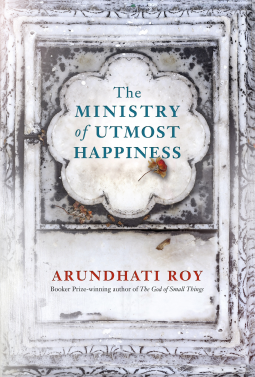
The Ministry of Utmost Happiness by Arundhati Roy

I wanted to read Arundhati Roy’s second novel, The Ministry of Utmost Happiness because I’d loved her first novel, The God of Small Things when it won the Booker Prize in 1997.

Blurb:

The Ministry of Utmost Happiness takes us on an intimate journey across the Indian subcontinent from the cramped neighbourhoods of Old Delhi and the glittering malls of the burgeoning new metropolis to the snowy mountains and valleys of Kashmir, where war is peace and peace is war, and from time to time ‘normalcy’ is declared. Anjum unrolls a threadbare Persian carpet in a city graveyard that she calls home.

We encounter the incorrigible Saddam Hussain, the unforgettable Tilo and the three men who loved her – including Musa whose fate as tightly entwined with hers as their arms always used to be. Tilo’s landlord, another former suitor, is now an Intelligence officer posted to Kabul. And then there are the two Miss Jebeens: the first born in Srinagar and buried, aged four, in its overcrowded Martyrs’ Graveyard; the second found at midnight, in a crib of litter, on the concrete pavement of New Delhi.

At once an aching love story and a decisive remonstration, a heart-breaker and a mind-bender, The Ministry of Utmost Happiness is told in a whisper, in a shout, through tears and sometimes with a laugh. Its heroes are people who have been broken by the world they live in and then rescued, patched together by acts of love-and by hope. For this reason, fragile though they may be, they never surrender. Braiding richly complex lives together, this ravishing and deeply humane novel reinvents what a novel can do and can be. And it demonstrates on every page the miracle of Arundhati Roy’s storytelling gifts.

My thoughts:

My initial reaction to it was one of disappointment. After a good beginning I struggled with it because there is so much description, so little plot and such a large cast of characters. At times I was on the verge of abandoning the book, but then first one episode and then another and another held my imagination and I read on. Now, though, I’m glad I finished it as the ending is clearer and more understandable than the middle, where quite frankly I was for the most part bewildered.

It’s a difficult book to read firstly because of its structure (or lack of structure) and secondly because of its content. It’s not a straight narrative, as it moves backwards and forwards in time and place and between different narrators, both in the third and first person, all of which makes it a disjointed and fragmentary book. There are stories within stories, some of which at first appear to be totally unconnected to anything else, but looking back I can see how they become interwoven into the whole (I think).

I preferred the beginning, the story about Anjum, to the rest of the book but by the end it’s as though Roy decided to bring all the strands together, to come back full circle to Anjum and the community she established in the old graveyard in Delhi. Maybe it’s because she spent 10 years or so to write it. For more details about why it took over 20 years for Arundhati Roy to write her second novel see this article, Fiction Takes Its Time in The Guardian.

I’m sure that I didn’t pick up all the political and cultural references, but the issues surrounding caste, nationalism, gender and religious conflict are clear. It’s a book about love and loss, death and survival, grief, pain and poverty. There are outcasts, the hijras – transgender individuals, rape victims, addicts and abandoned babies; and there is a lot of violence, massacres, beatings, tortures and rapes. It’s a heartbreaking book, which doesn’t spare the details. I was relieved to finish it.

Thanks to the publisher for an ARC via NetGalley.

  • Format: Kindle Edition
  • File Size: 2822 KB
  • Print Length: 417 pages
  • Publisher: Penguin; 01 edition (6 Jun. 2017)
  • My rating: 2.5

The Ministry of Utmost Happiness is the first book for my 10 Books of Summer Challenge.

My Week in Books: 7 June 2017

This Week in Books is a weekly round-up hosted by Lypsyy Lost & Found, about what I’ve been reading Now, Then & Next.

IMG_1384-0

A similar meme,  WWW Wednesday is run by Taking on a World of Words.

Now: I’m currently reading two books, both of which were published yesterday. I’ve nearly finished The Ministry of Utmost Happiness by Arundhati Roy. I’ve struggled with this book, on the verge of abandoning it several times. For now, all I’m saying is that I loved her first novel, The God of Small Things and I’m deeply disappointed by this, her second. I’ll write more when I’ve finished it.

Blurb:

The Ministry of Utmost Happiness takes us on an intimate journey across the Indian subcontinent – from the cramped neighbourhoods of Old Delhi and the glittering malls of the burgeoning new metropolis to the snowy mountains and valleys of Kashmir, where war is peace and peace is war, and from time to time ‘normalcy’ is declared. Anjum unrolls a threadbare Persian carpet in a city graveyard that she calls home.

We encounter the incorrigible Saddam Hussain, the unforgettable Tilo and the three men who loved her – including Musa whose fate as tightly entwined with hers as their arms always used to be. Tilo’s landlord, another former suitor, is now an Intelligence officer posted to Kabul. And then there are the two Miss Jebeens: the first born in Srinagar and buried, aged four, in its overcrowded Martyrs’ Graveyard; the second found at midnight, in a crib of litter, on the concrete pavement of New Delhi.

At once an aching love story and a decisive remonstration, a heart-breaker and a mind-bender, The Ministry of Utmost Happiness is told in a whisper, in a shout, through tears and sometimes with a laugh. Its heroes are people who have been broken by the world they live in and then rescued, patched together by acts of love-and by hope. For this reason, fragile though they may be, they never surrender. Braiding richly complex lives together, this ravishing and deeply humane novel reinvents what a novel can do and can be. And it demonstrates on every page the miracle of Arundhati Roy’s storytelling gifts.

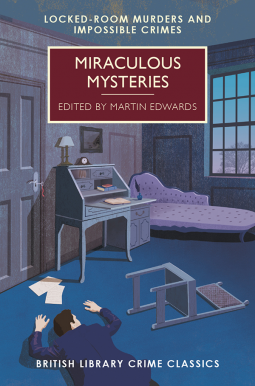
The other book I’m reading is Miraculous Murders: Locked-RoomMurders and Impossible Crimes edited by Martin Edwards and I’m glad to say this is not disappointing.

Blurb:

Impossible crime stories have been relished by puzzle-lovers ever since the invention of detective fiction. Fiendishly intricate cases were particularly well suited to the cerebral type of detective story that became so popular during the ‘˜golden age of murder’ between the two world wars. But the tradition goes back to the days of Edgar Allan Poe and Wilkie Collins, and impossible crime stories have been written by such luminaries as Arthur Conan Doyle, G.K. Chesterton, Dorothy L. Sayers and Margery Allingham. This anthology celebrates their work, alongside long-hidden gems by less familiar writers. Together these stories demonstrate the range and high accomplishment of the classic British impossible crime story over more than half a century.

Then: The last book I finished reading was Past Encounters by Davina Blake, which I really enjoyed. My review will follow soon (I hope, as I’m a bit behind with writing reviews).

Past EncountersBlurb
From the moment Rhoda Middleton opens one of her husband’s letters and finds it is from another woman, she is convinced he is having an affair. But when Rhoda tracks her down, she discovers the mysterious woman is not his lover after all, but the wife of his best friend, Archie Foster. There is only one problem – Rhoda has never even heard of Archie Foster.

Devastated by this betrayal of trust, Rhoda tries to find out how and why her husband, Peter, has kept this friendship hidden for so long. Her search leads her back to 1945, but as she gradually uncovers Peter’s wartime secrets she must wrestle with painful memories of her own. For if they are ever to understand each other, Rhoda too must escape the ghosts of the past.

Taking us on a journey from the atmospheric filming of Brief Encounter, to the extraordinary Great March of prisoners of war through snow-bound Germany, this is a novel of friendship, hope, and how in the end, it is the small things that enable love to survive.

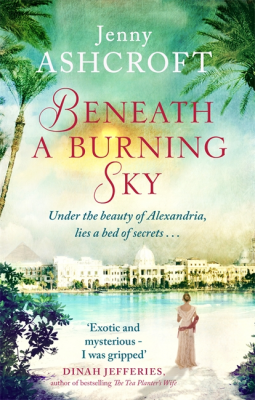
Next: I think I’ll read Beneath a Burning Sky by Jenny Ashcroft, with the usual proviso that when the time comes I may decide to read a different book.

Blurb:

When twenty-two-year-old Olivia is coerced into marriage by the cruel Alistair Sheldon she leaves England for Egypt, his home and the land of her own childhood. Reluctant as she is to go with Alistair, it’s in her new home that she finds happiness in surprising places: she is reunited with her long-estranged sister, Clara, and falls – impossibly and illicitly – in love with her husband’s boarder, Captain Edward Bertram.

Then Clara is abducted from one of the busiest streets in the city. Olivia is told it’s thieves after ransom money, but she’s convinced there’s more to it. As she sets out to discover what’s happened to the sister she’s only just begun to know, she falls deeper into the shadowy underworld of Alexandria, putting her own life, and her chance at a future with Edward, the only man she’s ever loved, at risk. Because, determined as Olivia is to find Clara, there are others who will stop at nothing to conceal what’s become of her . . .

Beneath a Burning Sky is a novel of secrets, betrayal and, above all else, love. Set against the heat and intrigue of colonial Alexandria, this beautiful and heart-wrenching story will take your breath away.

Have you read any of these books? What do you think about them?

First Chapter, First Paragraph: The Escape

Every Tuesday Diane at Bibliophile by the Sea hosts First Chapter First Paragraph Tuesday Intros to share the first paragraph sometimes two, of a book that she’s reading or planning to read soon. Diane is having a summer break at the moment, but I enjoy doing this meme anyway.

This week’s first paragraph is from The Escape by C L Taylor.

Blurb:

“Look after your daughter’s things. And your daughter’¦”

When a stranger asks Jo Blackmore for a lift she says yes, then swiftly wishes she hadn’t.

The stranger knows Jo’s name, she knows her husband Max and she’s got a glove belonging to Jo’s two year old daughter Elise.

What begins with a subtle threat swiftly turns into a nightmare as the police, social services and even Jo’s own husband turn against her.

No one believes that Elise is in danger. But Jo knows there’s only one way to keep her child safe ‘“ RUN.

It begins:

Someone is walking directly behind me, matching me pace for pace. Her perfume catches in the back of my throat: a strong, heady mix of musk and something floral. Jasmine maybe, or lily. She’s so close she’d smack into me if I stopped abruptly. why doesn’t she just overtake? It’s a quiet street, tucked round the back of the university, with space for half a dozen cars to park but the pavement is easily wide enough for two people to walk abreast of each other.

My friend has read this book – she said she couldn’t put it down – so I want to read it even though it’s written in the present tense, which I often find so irritating.

What do you think? Would you carry on reading?

My Friday Post: An Uncertain Place

Book Beginnings ButtonEvery Friday Book Beginnings on Friday is hosted by Gillion at Rose City
Reader
 where you can share the first sentence (or so) of the book you are reading, along with your initial thoughts about the sentence, impressions of the book, or anything else the opener inspires.

My opening this week is from An Uncertain Place by Fred Vargas*, another book that has sat unread on my shelves for a while.

An Uncertain Place (Commissaire Adamsberg, #8)

Commissaire Adamsberg knew how to iron shirts. His mother had shown him how you should flatten the shoulder piece and press down the fabric round the buttons. He unplugged the iron and folded his clothes into his suitcase. Freshly shaved and combed, he was off to London, and there was no getting out of it.

Also every Friday there is The Friday 56, hosted by Freda at Freda’s Voice.

Friday 56

These are the rules:

  1. Grab a book, any book.
  2. Turn to page 56, or 56% on your eReader.
  3. Find any sentence (or a few, just don’t spoil it) that grabs you.
  4. Post it.
  5. Add the URL to your post in the link on Freda’s most recent Friday 56 post.

From Page 56:

Since London, and perhaps since Danglard had presented such an encyclopedic account of Highgate Cemetery, the commissaire had been feeling he ought perhaps to try harder to remember names, phrases, sentences. His memory for them had always been poor, though he could recall a sound, a facial expression or a trick of the light years later.

Blurb (Goodreads):

Commissaire Adamsberg leaves Paris for a three-day conference in London. With him are a young sergeant, Estalère, and Commandant Danglard, who is terrified at the idea of travelling beneath the Channel. It is the break they all need, until a macabre and brutal case comes to the attention of their colleague Radstock from New Scotland Yard.

Just outside the baroque and romantic old Highgate cemetery a pile of shoes is found. Not so strange in itself, but the shoes contain severed feet. As Scotland Yard’s investigation begins, Adamsberg and his colleagues return home and are confronted with a massacre in a suburban home. Adamsberg and Danglard are drawn in to a trail of vampires and vampire-hunters that leads them all the way to Serbia, a place where the old certainties no longer apply.

I have just started to read this book this morning and so far it looks very promising, rather quirky and bizarre.

*Fred Vargas is the pseudonym of the French historian, archaeologist and writer Frédérique Audoin-Rouzeau.  Her crime fiction policiers have won three International Dagger Awards from the Crime Writers Association, for three successive novels: in 2006, 2008 and 2009.

A Place of Execution by Val McDermid

For years I’ve steered clear of reading any of Val McDermid‘˜s books and the reason is that I can’t stand to watch the violence and torture scenes in TV series such as Wire in the Blood, based on her Tony Hill/Carol Jordan series. But then I thought that maybe I wasn’t being fair to judge a writer’s work on films based on the books, and I read Cleanskin, one of the Quick Reads series, aimed at ‘adults who’ve stopped reading or find reading tough, and for regular readers who want a short, fast read.’ I enjoyed it and I’ve been meaning to read one of her full length books ever since.

There are many to choose from but I decided to read A Place of Execution, one of her standalone books. The book was made into a 3-part TV drama shown on ITV 1 in 2008, which I didn’t see. It is one of my TBRs.

A Place of Execution

Blurb:

In the Peak District village of Scarsdale, thirteen-year-old girls didn’t just run away. So when Alison Carter vanished in the winter of ’63, everyone knew it was a murder.

Catherine Heathcote remembers the case well. A child herself when Alison vanished, decades on she still recalls the sense of fear as parents kept their children close, terrified of strangers.

Now a journalist, she persuades DI George Bennett to speak of the hunt for Alison, the tantalising leads and harrowing dead ends. But when a fresh lead emerges, Bennett tries to stop the story ‘“ plunging Catherine into a world of buried secrets and revelations.

My thoughts:

This is an excellent psychological thriller, full of tension and suspense, set in the Derbyshire village of Scardale, an isolated community of about ten houses, where everyone is related, a place that had a reputation of being a law unto itself. So everyone could tell Detective Inspector George Bennett the time that Alison Carter left home taking her dog for a walk. But despite extensive searches her body is never found, although they do find her dog in the woodland, tied to a tree with elastoplast wound round its muzzle.

A Place of Execution spans the years from 1963 when Alison went missing up to 1998 when Catherine Heathcote, a journalist decided to write a book about the case. It had Bennett’s first major investigation and he’d been determined to find out what had happened to Alison. The majority of the book is about his investigation and the meticulous searches he and his team carried out until the case was resolved. But why in 1998 after going over the details of the case with Catherine did he suddenly write to her begging her to abandon the book?

The sense of place and time is so well done in this book and the characterisation is so good that I felt I knew these people. Even when the case appears to have been resolved there is something more, something hidden that still needs to be revealed. I had an inkling about what it was but I had by no means guessed all of it. But the clues were all there.

There are many layers in A Place of Execution. The villagers are a close-knit community suspicious of outsiders and reluctant to talk to the police. I realised towards the end of the book that the way that Val McDermid has structured the book allows for a great deal of deception and that things are not always what they seem. I loved it and I shall definitely be reading more of her books.

Paperback, 624 pages
Published February 6th 2006 by Harper Collins (first published June 7th 1999)